
Orchestrate AI insights into action

Trending
Categories
US and Europe Accelerate Development of Urban Air Mobility Infrastructure
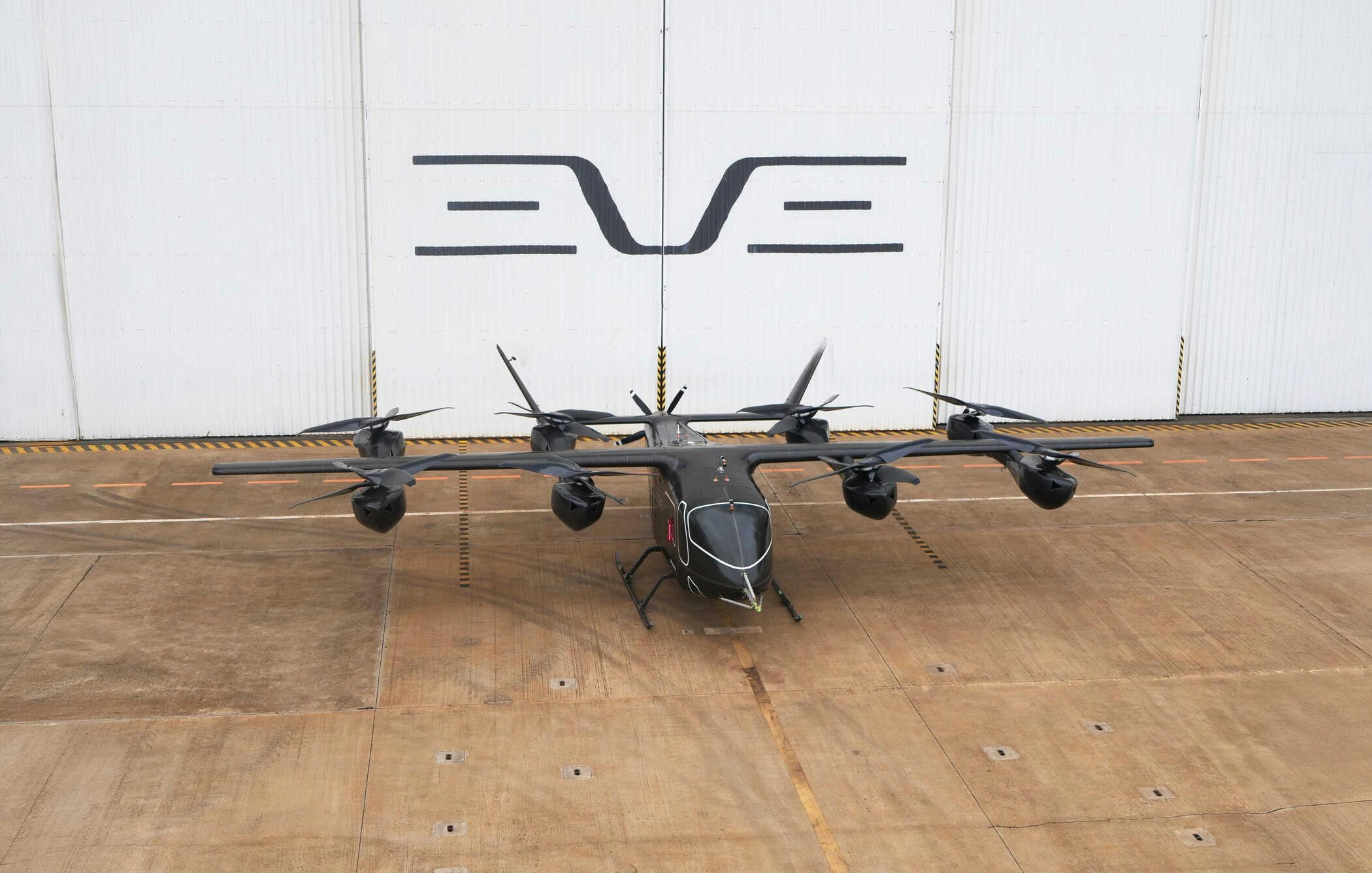
US and Europe Accelerate Development of Urban Air Mobility Infrastructure
Electric air taxis are transitioning swiftly from experimental prototypes to operational trials as governments in the United States and Europe intensify efforts to integrate these innovative aircraft into existing aviation frameworks. These electric vertical take-off and landing (eVTOL) vehicles, often referred to as “flying taxis,” utilize electric propulsion combined with vertical flight capabilities, enabling short-distance passenger and cargo transport without the need for conventional runways. Proponents view eVTOLs as a promising solution to urban congestion, emissions reduction, and the establishment of new transport corridors within and between cities.
Advancing Connected Infrastructure and Regulatory Frameworks
The widespread adoption of eVTOLs presents a complex challenge, primarily due to the necessity for safe and efficient operations. This depends on continuous, seamless data exchange among vehicles, operators, airports, vertiports, and air traffic management systems. In response, authorities are accelerating the development of connected infrastructure and regulatory frameworks designed to accommodate this new generation of electric and autonomous aircraft alongside traditional aviation.
In Europe, the EU-backed SESAR Joint Undertaking has initiated VERTI-GO, a €6.8 million industrial research project led by Honeywell Aerospace. This initiative unites 12 partners, including UK-based Vertical Aerospace, NATS, EUROCONTROL, ENAIRE, and AENA, to develop and validate technologies for digital flight planning, vertiport reservation management, complex airspace operations, and automation in air traffic management. Demonstrations using Vertical Aerospace’s Valo aircraft are scheduled in southern Spain, with aviation authorities closely monitoring these operations to build confidence in future deployments.
Jolana Dvorská, senior technical manager at Honeywell Aerospace, emphasized the evolving nature of airspace integration: “Integrating new aircraft types into already busy airspace requires new procedures, new levels of automation, and new ways of managing traffic. The question is no longer whether these aircraft can fly and perform, but how they can operate safely at large scale within Europe’s existing airspace.”
VERTI-GO will also explore remotely operated cargo drone operations, with Odys Aviation conducting demonstrations in Germany. The project aims to inform future standards and regulations for advanced air mobility across Europe.
Parallel Developments in the United States and Global Competition
Across the Atlantic, the United States is pursuing a comparable approach. The Federal Aviation Administration (FAA) recently marked a significant milestone in its Electric Vertical Takeoff and Landing (eVTOL) Integration Pilot Program (eIPP). In a demonstration involving BETA Technologies and United Therapeutics Corporation, an electric aircraft successfully transported an animal organ from Virginia to Maryland, testing the reliability of eVTOLs for critical medical deliveries. The FAA described the eIPP as providing “a real-world environment to safely test and integrate the next generation of aircraft into our airspace system.”
Despite this momentum, substantial challenges remain. Infrastructure capacity, regulatory approval processes, and the establishment of new landing and takeoff zones outside existing airports are pressing concerns. Market anticipation is high, with executives from companies such as Joby Aviation and Electra Aero highlighting the vast potential for air taxis. In response, competitors are forging strategic partnerships, exemplified by Eve Air Mobility’s collaboration with Hitachi Energy to develop electric infrastructure tailored for eVTOLs. Meanwhile, global competition is intensifying, with Chinese cities like Shenzhen and Shanghai emerging as major hubs in urban air mobility, underscoring the worldwide race to establish leadership in this transformative sector.
Comments

Etihad Deploys Widebody Fleet to Meet Strong Demand

Korean Air Finalizes $36.2 Billion Deal with Boeing

Australia’s RFDS Queensland Section Orders Six King Air 260Cs

Korean Air Finalizes Order for 103 Boeing Jets and Engines

Embraer E195-E2 Features Distinctive Engine Placement Among Regional Jets

What Passengers Can Expect on Boeing’s New 777X Jet

How Ethiopian Airlines Became Africa’s Leading Carrier Amid Gulf Competition

Joby Aviation Extends Autonomous Flight Capabilities with Cross-Country Tour

Strengthening Europe's Aviation Supply Chain Amid Uncertainty
The Evolution of the Aircraft Maintenance Engineer Role
