
Orchestrate AI insights into action

Trending
Categories
US Restores Zero Tariffs on Aircraft Parts from Korea and Switzerland
US Restores Zero Tariffs on Aircraft Parts from Korea and Switzerland
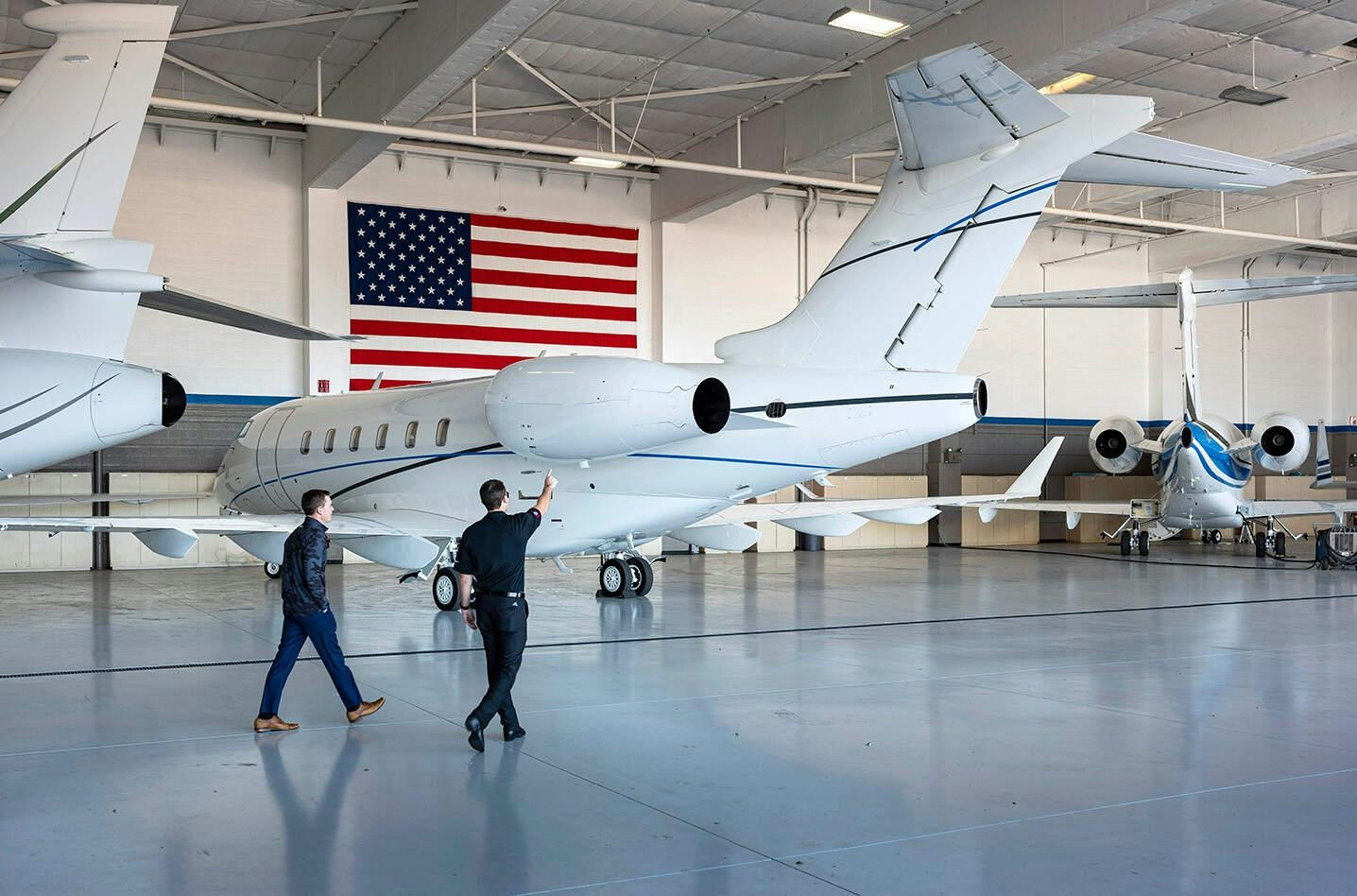
The United States has reinstated zero tariffs on imports of aircraft and related parts from South Korea and Switzerland, in accordance with the 1979 Agreement on Trade in Civil Aircraft. This development follows recent trade negotiations aimed at reducing tariffs and bolstering key industries in both nations. Although the precise implementation dates have not yet been announced, the tariff relief is expected to take effect promptly, offering significant support to sectors previously burdened by elevated tariffs.
Trade Agreements with South Korea and Switzerland
On November 13, the White House announced that President Donald Trump, during a state visit to South Korea, agreed to eliminate tariffs on certain aircraft and parts imported from the country. This decision coincides with Korean Air’s substantial purchase order in August for 103 Boeing aircraft, valued at $36 billion, underscoring the importance of the aerospace trade relationship between the United States and South Korea.
The following day, the Trump administration revealed a framework for a trade agreement with Switzerland and Liechtenstein. Under this non-binding arrangement, the United States will reduce import tariffs on Swiss goods from 39% to a maximum of 15%. In exchange, Swiss companies have pledged to invest $200 billion in the United States. The restoration of zero tariffs on aircraft parts forms a critical element of this broader agreement.
Industry Impact and Economic Implications
The tariff reductions have been positively received across various industries. In Switzerland, the watchmaking sector, which has faced challenges due to volatility in the Chinese market, is expected to benefit from enhanced access to the US market. Additionally, Switzerland’s largest export sector, pharmaceuticals, stands to gain from the agreement, which caps US tariffs on pharmaceutical products and semiconductors at 15%. These measures aim to support Swiss exporters and provide greater stability amid ongoing global market uncertainties.
US officials emphasize that these agreements will not only deepen trade relations with South Korea and Switzerland but also reaffirm the United States’ commitment to maintaining open markets in vital sectors such as aerospace, pharmaceuticals, and advanced manufacturing. The anticipated swift implementation of the new tariff rates is expected to deliver immediate advantages to both American and international companies operating within these industries.
Further information regarding the timeline for the adoption of the new tariff structures is expected in the coming weeks as the agreements progress toward formal ratification.

Etihad Airways Suspends Airbus A380 Flights on Key Route

Aditya Birla Group Seeks Approval for Aircraft Leasing in GIFT City

Qatar Airways Highlights Innovation and Connectivity at Arabian Travel Market 2026

Hong Kong's Five-Year Plan Includes Andrew Fan's Aircraft Parts Processing Hub Proposal

ACIA Aero Leasing Delivers ATR72-600 to Air Nostrum

RTX Appoints Jill Albertelli as Head of Pratt & Whitney

TAT Technologies Joins Beyond Aero Hydrogen Aircraft Program

AURAK Study Highlights Barriers to Air Taxi Adoption in Emerging Economies

Xiamen Air Selects Altitude for 787 Maintenance at Heathrow

Etihad and Swissport Extend Global Partnership
