
Orchestrate AI insights into action

Trending
Categories
USB-C Deskradar: ESP32-C3 ADS-B Flight Tracker with 1.28-Inch Round Display
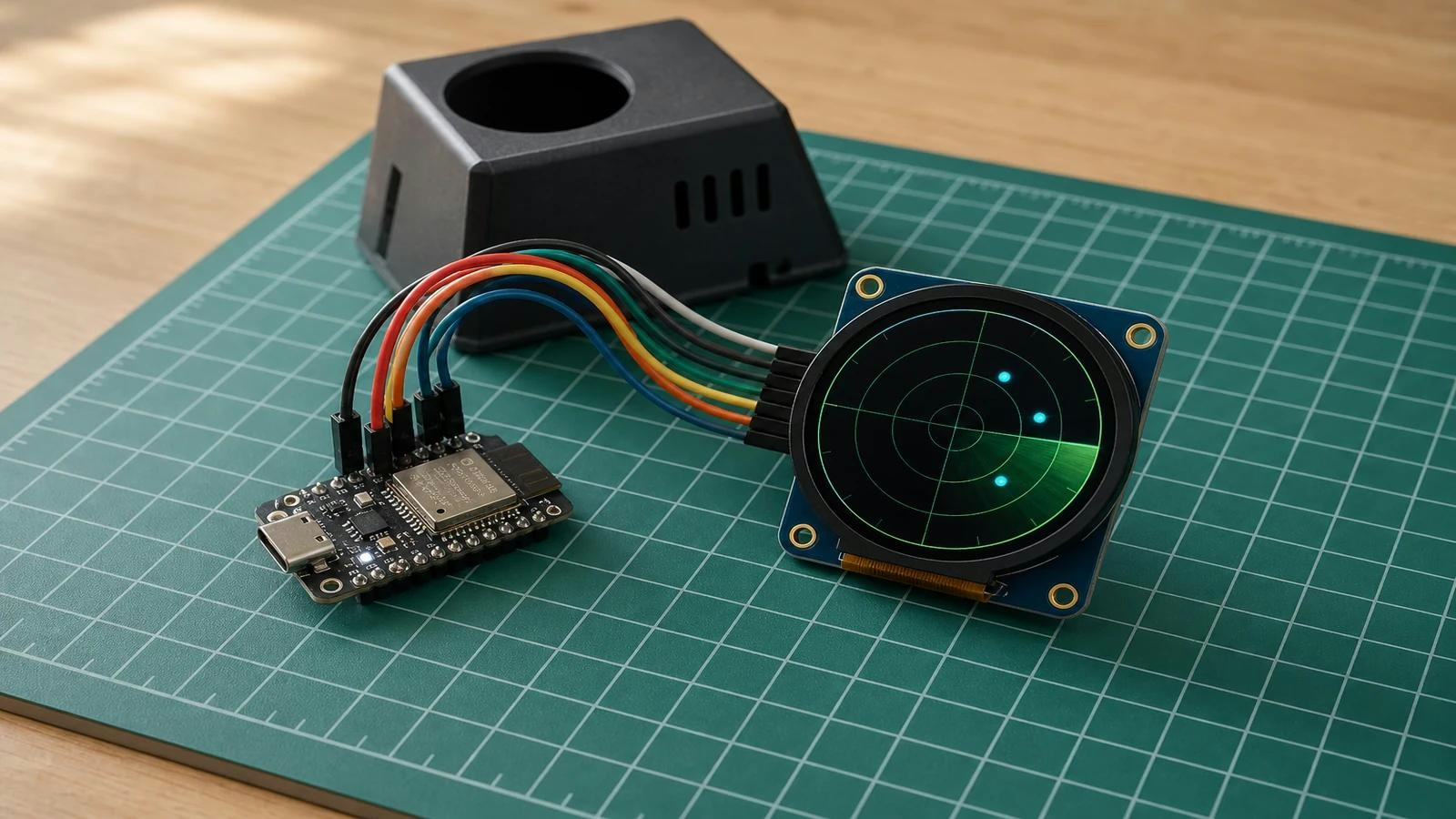
USB-C Deskradar: A Compact Flight Tracker with Real-Time Radar Visualization
The USB-C Deskradar is a compact, aviation-themed flight tracking device built around the ESP32-C3 microcontroller. Designed to display live aircraft positions on a sonar-style circular grid, it features a 1.28-inch round TFT color display housed within a custom 3D-printed enclosure. This device offers real-time visualization of flights near a user-defined location, making it a distinctive desktop gadget for aviation enthusiasts seeking an accessible and interactive way to monitor air traffic.
Design and Technical Specifications
At its core, the Deskradar utilizes the Espressif Systems ESP32-C3FH4 processor, a single-core 32-bit RISC-V chip running at up to 160 MHz, supported by 400 KB of SRAM and 4 MB of flash memory. Wireless connectivity is provided through a 16-pin ESP32-C3 Super Mini module. The display is a 1.28-inch round TFT LCD with a 240×240 resolution, controlled by the GC9A01 driver and interfaced via SPI. Power and programming are facilitated through a USB Type-C port, while a ceramic antenna ensures reliable signal reception.
User interaction is managed through a hardware button that cycles through radar range presets and resets Wi-Fi or location credentials. The device is encased in a custom 3D-printed housing, with STL files freely available for enthusiasts interested in fabricating their own cases. It operates on a 5V supply delivered via USB Type-C.
The Deskradar’s software suite handles flight tracking, radar visualization, and device configuration. It retrieves live ADS-B flight data from sources such as adsb.fi and the OpenSky Network, presenting aircraft information including heading, speed, callsign, altitude, and type on a dark blue radar interface. Additional features include runway overlays for major airports, a Wi-Fi manager with a captive portal, and customizable settings for location and distance units.
Open-Source Origins and Commercial Availability
Initially developed as an open-source project, the Deskradar has since been adopted by Chinese vendors and is commercially available on platforms like AliExpress for approximately $27. The hardware closely aligns with two prominent GitHub repositories—arvis91/deskradar and MatixYo/ESP32-Plane-Radar—though the firmware implemented in commercial units remains unspecified. Both open-source versions support frequent updates of flight data, refreshing every five seconds via adsb.fi or through the OpenSky Network API, and enable browser-based firmware flashing using esptool-js.
For do-it-yourself enthusiasts, assembling a Deskradar can cost under $10 by sourcing an ESP32-C3 Super Mini and a compatible 1.28-inch round display. The device also supports alternative development boards such as the ESP32-2424S012 or Makerfabs ESP32-S3 Round SPI TFT with minor firmware adjustments. Free 3D-printable case files are accessible through MakerWorld, facilitating customization and personal fabrication.
Compatibility Considerations and Market Context
The Deskradar’s reliance on USB-C for both power and programming necessitates strict adherence to USB-C standards to ensure broad compatibility. Users may encounter driver-related challenges, particularly when integrating the device into multi-monitor setups or utilizing advanced USB-C features. The market increasingly favors plug-and-play USB-C devices that operate without additional drivers, exemplified by products like Plugable’s USB-C docking station.
Competitors are likely to enhance their USB-C offerings by focusing on multi-display support and advanced charging capabilities, as seen in devices such as the Werewolf VFLEX dongle. The Deskradar’s market success will depend on its ability to provide a seamless user experience free from compatibility issues, positioning it as both an affordable and innovative addition to the expanding ecosystem of USB-C desktop gadgets.

Etihad Deploys Widebody Fleet to Meet Strong Demand

Korean Air Finalizes $36.2 Billion Deal with Boeing

Australia’s RFDS Queensland Section Orders Six King Air 260Cs

Korean Air Finalizes Order for 103 Boeing Jets and Engines

Embraer E195-E2 Features Distinctive Engine Placement Among Regional Jets

What Passengers Can Expect on Boeing’s New 777X Jet

How Ethiopian Airlines Became Africa’s Leading Carrier Amid Gulf Competition

Joby Aviation Extends Autonomous Flight Capabilities with Cross-Country Tour

Strengthening Europe's Aviation Supply Chain Amid Uncertainty

The Evolution of the Aircraft Maintenance Engineer Role
