
Orchestrate AI insights into action

Trending
Categories
What Is the Average Lifespan of a Jet Engine?
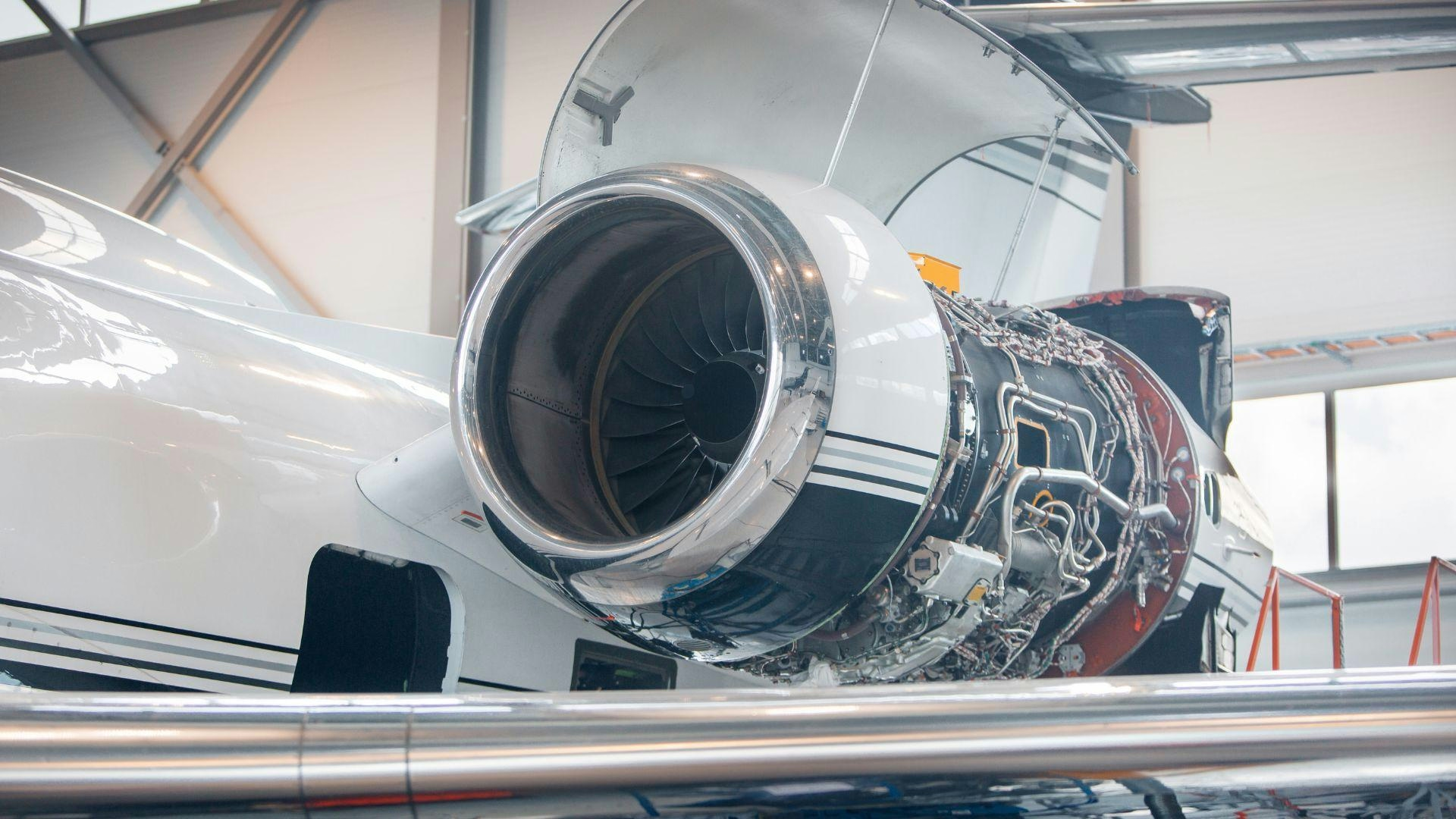
The Average Lifespan of a Jet Engine
The advent of the jet age transformed commercial aviation, enabling faster and more affordable travel while significantly enhancing safety standards. Over the years, aircraft have grown larger and more efficient, with millions of flights conducted annually and fatal accidents becoming increasingly rare. Despite this, occasional incidents involving engine failures—such as the February 2026 JetBlue flight that returned to Newark and the Delta Air Lines flight that caused a grass fire near Savannah/Hilton Head International Airport—continue to draw public attention. Importantly, investigations into these events have not attributed the failures to engine age.
Design and Operational Lifespan
Modern commercial jet engines are typically designed to last between 25 and 35 years, or approximately 150,000 flight hours, assuming they undergo proper maintenance. This contrasts sharply with military jet engines, which operate under more strenuous conditions and are generally retired after 5,000 to 10,000 mission hours. The lifespan of a jet engine, however, is not a fixed metric; it is influenced by a complex combination of design specifications, maintenance regimes, and the operational environments in which the engines function.
Challenges in Engine Durability and Reliability
Recent developments in the aviation sector have highlighted the challenges associated with engine durability. The GE9X engine, which powers Boeing’s 777X, has come under scrutiny due to potential issues with a critical seal, raising concerns about its long-term reliability. Similarly, Southwest Airlines has reported difficulties related to the availability of CFM Leap-1B engines, citing durability problems with disk components that could result in engine shortages and operational disruptions.
Next-generation engines, such as those installed on the Airbus A320neo and Boeing 737 MAX, have also faced reliability challenges. Reports of early removals and retrofits have surfaced, sometimes compromising the anticipated fuel efficiency gains these advanced engines were designed to provide. These instances underscore the ongoing technical and logistical obstacles that manufacturers and airlines must navigate to ensure both the longevity and dependability of jet engines.
Balancing Innovation and Durability
While commercial jet engines are engineered for decades of service, their actual operational lifespan depends on numerous factors, including technological innovation, manufacturing quality, real-world operating conditions, and stringent maintenance practices. As the aviation industry continues to evolve, achieving an optimal balance between performance, efficiency, and durability remains a critical challenge for the future of air travel.

Etihad Airways Suspends Airbus A380 Flights on Key Route

Aditya Birla Group Seeks Approval for Aircraft Leasing in GIFT City

Qatar Airways Highlights Innovation and Connectivity at Arabian Travel Market 2026

Hong Kong's Five-Year Plan Includes Andrew Fan's Aircraft Parts Processing Hub Proposal

ACIA Aero Leasing Delivers ATR72-600 to Air Nostrum

RTX Appoints Jill Albertelli as Head of Pratt & Whitney

TAT Technologies Joins Beyond Aero Hydrogen Aircraft Program

AURAK Study Highlights Barriers to Air Taxi Adoption in Emerging Economies

Xiamen Air Selects Altitude for 787 Maintenance at Heathrow

Etihad and Swissport Extend Global Partnership
