
Orchestrate AI insights into action

Trending
Categories
What Passengers Should Know About Booking Lie-Flat Seats on Domestic US Flights
What Passengers Should Know About Booking Lie-Flat Seats on Domestic US Flights
The vast expanse of the United States, spanning from the Atlantic to the Pacific and sharing borders with Canada, Mexico, and the Caribbean, often blurs the distinction between domestic and international air travel. While premium services such as lie-flat seats are traditionally associated with international long-haul flights, certain domestic routes—particularly prestigious transcontinental ones—now offer comparable high-end amenities.
International-Quality Comfort on Select Domestic Routes
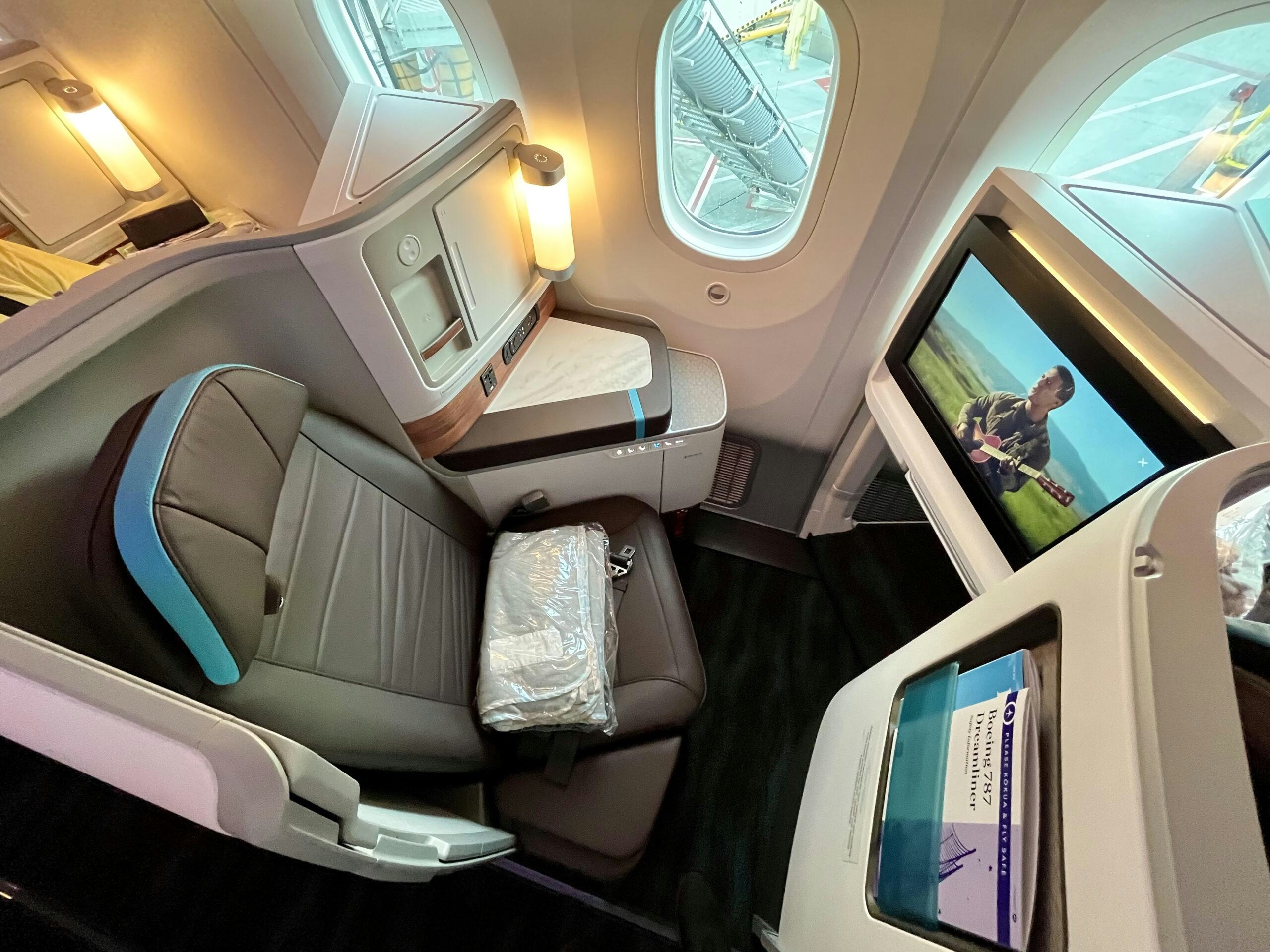
Some of the longest domestic flights, including routes like Boston to Honolulu which covers over 4,400 nautical miles, are operated using widebody aircraft configured similarly to those on international journeys. For instance, United Airlines deploys Boeing 787s between Los Angeles and Newark that feature the Polaris lie-flat seats found on their transatlantic flights to Europe. Likewise, American Airlines and Delta Air Lines utilize widebody jets equipped with lie-flat seating on key transcontinental routes.
Delta’s “Delta One” lie-flat product is available on widebody aircraft serving major corridors such as New York to Los Angeles, New York to San Francisco, Boston to Los Angeles, and New York to Seattle. Additionally, Delta offers lie-flat seats on select flights to Hawaii from cities including Minneapolis, New York, Seattle, Detroit, and Atlanta, as well as on the Atlanta to Anchorage route. However, this premium experience is not consistent across all routes; for example, United’s flights to Anchorage generally do not feature lie-flat seats, and Air Canada’s international services to Anchorage often operate with standard short-haul cabins.
Widebody Aircraft and Lie-Flat Seating
By mid-2026, all widebody passenger aircraft in regular service with US-based airlines are equipped with lie-flat seats. This encompasses Delta’s fleet of approximately 179 widebodies, as well as those operated by United and American Airlines. Passengers booking these aircraft on domestic routes can typically expect a premium experience akin to international flights.
Industry Challenges and the Evolution of Premium Offerings
Despite the increasing availability of lie-flat seats, passengers may face challenges stemming from shifting airline strategies, regulatory complexities, and evolving fare structures. United Airlines, for example, has reconsidered plans to introduce lie-flat seats on its Boeing 737 Max 10 aircraft due to certification delays. Globally, airlines encounter lengthy approval processes for new premium cabins, which can temporarily restrict the availability of these sought-after seats even as demand grows.
The competitive landscape is also evolving. JetBlue has restructured its fare system to accommodate its Mint premium cabin, which features lie-flat seating on select routes. Meanwhile, Allegiant Air is entering the premium market for the first time by introducing first-class seats, reflecting a broader trend among low-cost carriers to enhance onboard offerings.
Considerations for Passengers
Lie-flat seats are most commonly found on transcontinental and select long-haul domestic routes, rather than across all domestic flights. Widebody aircraft almost invariably feature lie-flat seating, whereas narrowbody planes typically do not. Given the fluid nature of regulatory approvals and operational decisions, seat availability can vary; passengers are advised to verify the aircraft type and seat configuration before booking. Furthermore, new premium offerings often come with revised fare structures, making it essential to compare options carefully.
As airlines continue to adapt to passenger preferences and regulatory requirements, the availability and quality of lie-flat seats on domestic US flights remain in flux. Travelers seeking the comfort of lie-flat seating should remain informed about route offerings, aircraft types, and fare changes to secure the best possible experience.

Etihad Airways Suspends Airbus A380 Flights on Key Route

Aditya Birla Group Seeks Approval for Aircraft Leasing in GIFT City

Qatar Airways Highlights Innovation and Connectivity at Arabian Travel Market 2026

Hong Kong's Five-Year Plan Includes Andrew Fan's Aircraft Parts Processing Hub Proposal

ACIA Aero Leasing Delivers ATR72-600 to Air Nostrum

RTX Appoints Jill Albertelli as Head of Pratt & Whitney

TAT Technologies Joins Beyond Aero Hydrogen Aircraft Program

AURAK Study Highlights Barriers to Air Taxi Adoption in Emerging Economies

Xiamen Air Selects Altitude for 787 Maintenance at Heathrow

Etihad and Swissport Extend Global Partnership
