
Zet AI‑inzichten om in gerichte actie

Trending
Categories
Airline Becomes Largest Operator of Airbus A330neo
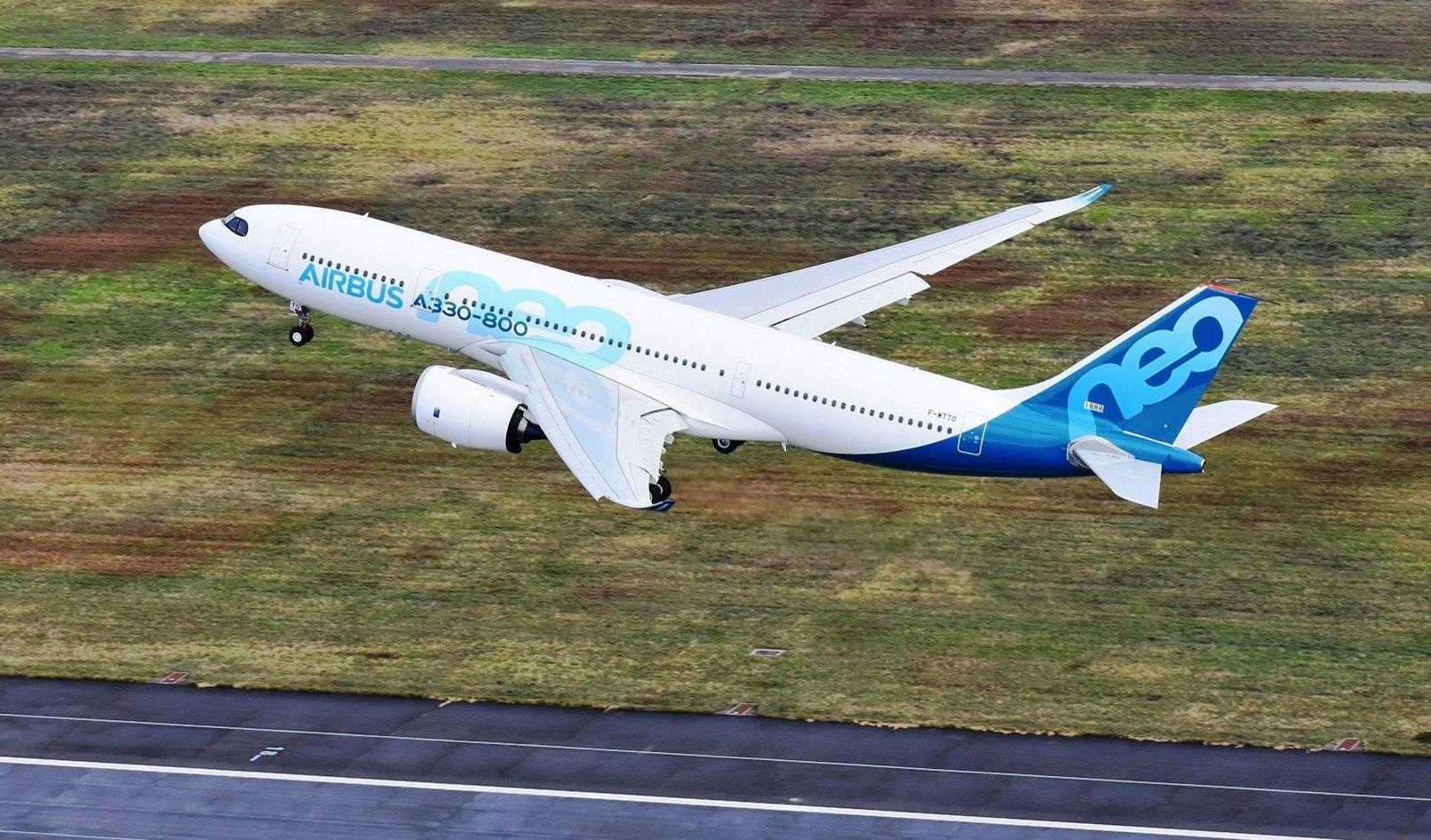
Delta Air Lines Becomes the Largest Operator of the Airbus A330neo
Delta Air Lines has established itself as the world’s largest operator of the Airbus A330neo, specifically the A330-900neo variant. The airline deploys these aircraft across routes spanning five continents from its major U.S. hubs. The A330neo, equipped with new engines, redesigned wings, and a range of technological enhancements, marks a significant advancement over the previous-generation A330ceo. Designed to serve long-haul, mid-sized routes that do not warrant larger widebody aircraft such as the Airbus A350 or Boeing 777, the A330neo aligns well with Delta’s network strategy, which relies on multiple, geographically dispersed hubs.
Fleet Composition and Configuration
According to data from ch-aviation, Delta currently operates 39 Airbus A330-900neos, with 37 actively in service and two temporarily grounded for maintenance. The average age of this fleet is approximately 5.4 years, as reported by Planespotters.net. In total, Delta’s A330 fleet comprises 81 aircraft, including 11 A330-200s and 31 A330-300s. The A330neo family includes two variants: the shorter-range, higher-capacity A330-900neo and the longer-range, lower-capacity A330-800neo. However, the A330-900neo has overwhelmingly dominated orders globally, with over 430 units ordered compared to only about eight for the A330-800. Many airlines, including Hawaiian Airlines, have opted for alternative models rather than the A330-800.
Delta’s A330-900neos are configured to balance passenger comfort with operational efficiency. Each aircraft features 29 Delta One business class seats arranged in a 1-2-1 configuration, offering 22-inch width and 18.5-inch touchscreens. The 28 Delta Premium Select seats are arranged 2-3-2, with an 18.5-inch width, 38-inch pitch, and 13.3-inch touchscreens. The economy cabin includes 224 seats, of which 56 are Delta Comfort+ seats configured 2-4-2, providing 18-inch width and 34-inch pitch.
Operational and Market Challenges
As Delta expands its A330neo operations, the airline faces several operational challenges. Maintaining a large, modern fleet demands extensive maintenance and support infrastructure, particularly as the A330neo’s new Rolls-Royce Trent 7000 engines have attracted industry-wide scrutiny regarding reliability. Integrating the A330neo into Delta’s existing operations requires meticulous planning to maintain service consistency and operational efficiency.
The competitive landscape is also evolving, with carriers such as Etihad Airways and Hainan Airlines expanding their A330neo fleets, intensifying competition on long-haul routes. This increased competition may prompt airlines to adjust their fleet strategies or operational models to protect market share. Rolls-Royce, the engine manufacturer, is actively working to improve the Trent 7000’s durability and performance to better compete with Boeing’s 787 Dreamliner.
Delta’s strategic investment in the A330neo positions the airline to efficiently serve a diverse range of international routes. However, the airline’s ability to leverage its status as the world’s largest A330neo operator will depend on how it navigates ongoing operational, competitive, and technical challenges.

Etihad Airways Suspends Airbus A380 Flights on Key Route

Aditya Birla Group Seeks Approval for Aircraft Leasing in GIFT City

Qatar Airways Highlights Innovation and Connectivity at Arabian Travel Market 2026

Hong Kong's Five-Year Plan Includes Andrew Fan's Aircraft Parts Processing Hub Proposal

ACIA Aero Leasing Delivers ATR72-600 to Air Nostrum

RTX Appoints Jill Albertelli as Head of Pratt & Whitney

TAT Technologies Joins Beyond Aero Hydrogen Aircraft Program

AURAK Study Highlights Barriers to Air Taxi Adoption in Emerging Economies

Xiamen Air Selects Altitude for 787 Maintenance at Heathrow

Etihad and Swissport Extend Global Partnership
