
Превращайте аналитические выводы ИИ в реальные действия

В тренде
Categories
AI Training Program for Aircraft Mechanics
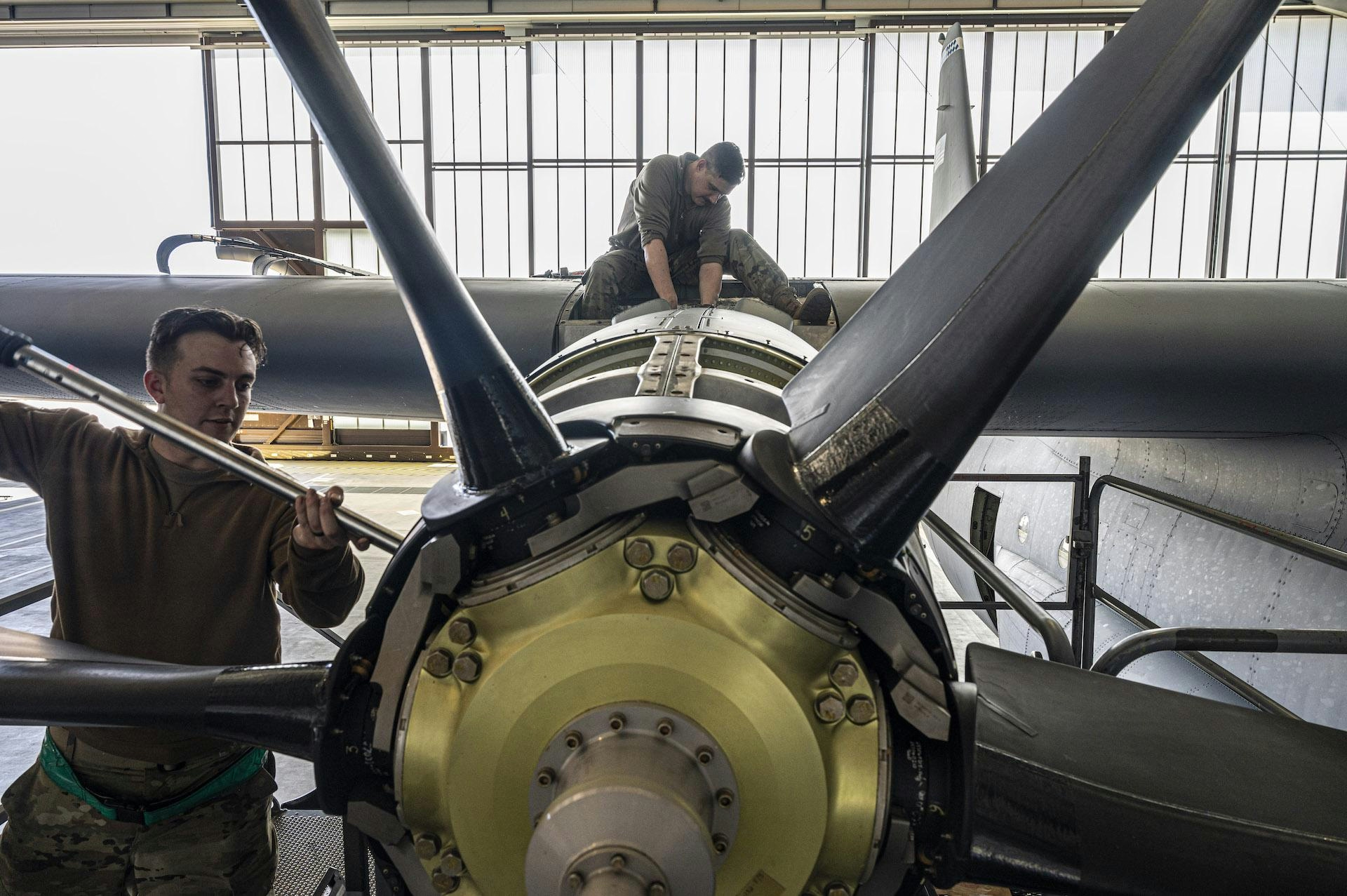
AI Training Program for Aircraft Mechanics Faces Scrutiny Over Safety and Quality Concerns
Canada’s aviation industry is confronting a looming shortage of qualified aircraft mechanics, with projections indicating a deficit of thousands in the near future. In response, the federal government has committed $25 million to support industry-led training initiatives designed to bridge this gap and uphold the safety standards of Canadian air travel.
Allegations of Plagiarized and Inaccurate Training Materials
Despite these efforts, a recent investigation by Canadaland has revealed serious concerns regarding the use of this funding. A whistleblower alleges that some training materials acquired with government support were plagiarized and subsequently processed through ChatGPT, an AI language model. This process reportedly produced content fraught with inaccuracies and so-called “AI hallucinations,” errors that could have dire consequences if incorporated into aviation training programs. Jeff Weeks, an aviation executive, emphasized the gravity of the situation, stating, “Everybody needs to know about this. We need to shut this down. This is aviation. This is training. There are safety issues here.”
The Challenges of Integrating AI in Aviation Training
The adoption of artificial intelligence in training programs is not confined to Canada; it reflects a broader global trend within the aviation sector. AI-driven solutions are increasingly viewed as tools to streamline operations, modernize outdated curricula, and address workforce shortages. However, the development of effective AI-based training requires access to extensive, high-quality data and substantial computational resources. Ensuring the accuracy and reliability of AI-generated content is especially critical in aviation, where safety cannot be compromised.
The recent controversy underscores the risks associated with deploying AI tools without stringent oversight and validation. The aviation industry’s cautious approach to AI integration reflects concerns about maintaining rigorous safety standards amid rapid technological change.
Industry Reactions and the Path Forward
Reactions within the market have been mixed. Established training providers express skepticism, fearing that AI could disrupt traditional methods and potentially undermine quality standards. Some competitors have begun incorporating AI into their own programs to enhance efficiency, while others resist, perceiving AI as a threat to their established roles.
As the aviation sector evolves, the debate over AI’s role in mechanic training highlights the urgent need for robust quality controls and transparent governance. While the government’s investment aims to secure the future of Canada’s aviation workforce, the current controversy raises critical questions about the implementation of new technologies and accountability when safety is at stake.

Etihad Airways Suspends Airbus A380 Flights on Key Route

Aditya Birla Group Seeks Approval for Aircraft Leasing in GIFT City

Qatar Airways Highlights Innovation and Connectivity at Arabian Travel Market 2026

Hong Kong's Five-Year Plan Includes Andrew Fan's Aircraft Parts Processing Hub Proposal

ACIA Aero Leasing Delivers ATR72-600 to Air Nostrum

RTX Appoints Jill Albertelli as Head of Pratt & Whitney

TAT Technologies Joins Beyond Aero Hydrogen Aircraft Program

AURAK Study Highlights Barriers to Air Taxi Adoption in Emerging Economies

Xiamen Air Selects Altitude for 787 Maintenance at Heathrow

Etihad and Swissport Extend Global Partnership
