Изображение

Превращайте аналитические выводы ИИ в реальные действия

Присоединяйтесь к списку ожидания AeroGenie уже сегодня!

В тренде

Categories

The Economics Behind Reviving British Airways’ Retired Boeing 747-400 Fleet
June 15, 2026By ePlane AI
The Economics Behind Reviving British Airways’ Retired Boeing 747-400 Fleet
0
0
British Airways
Boeing 747-400
Fleet Renewal

The Economics Behind Reviving British Airways’ Retired Boeing 747-400 Fleet

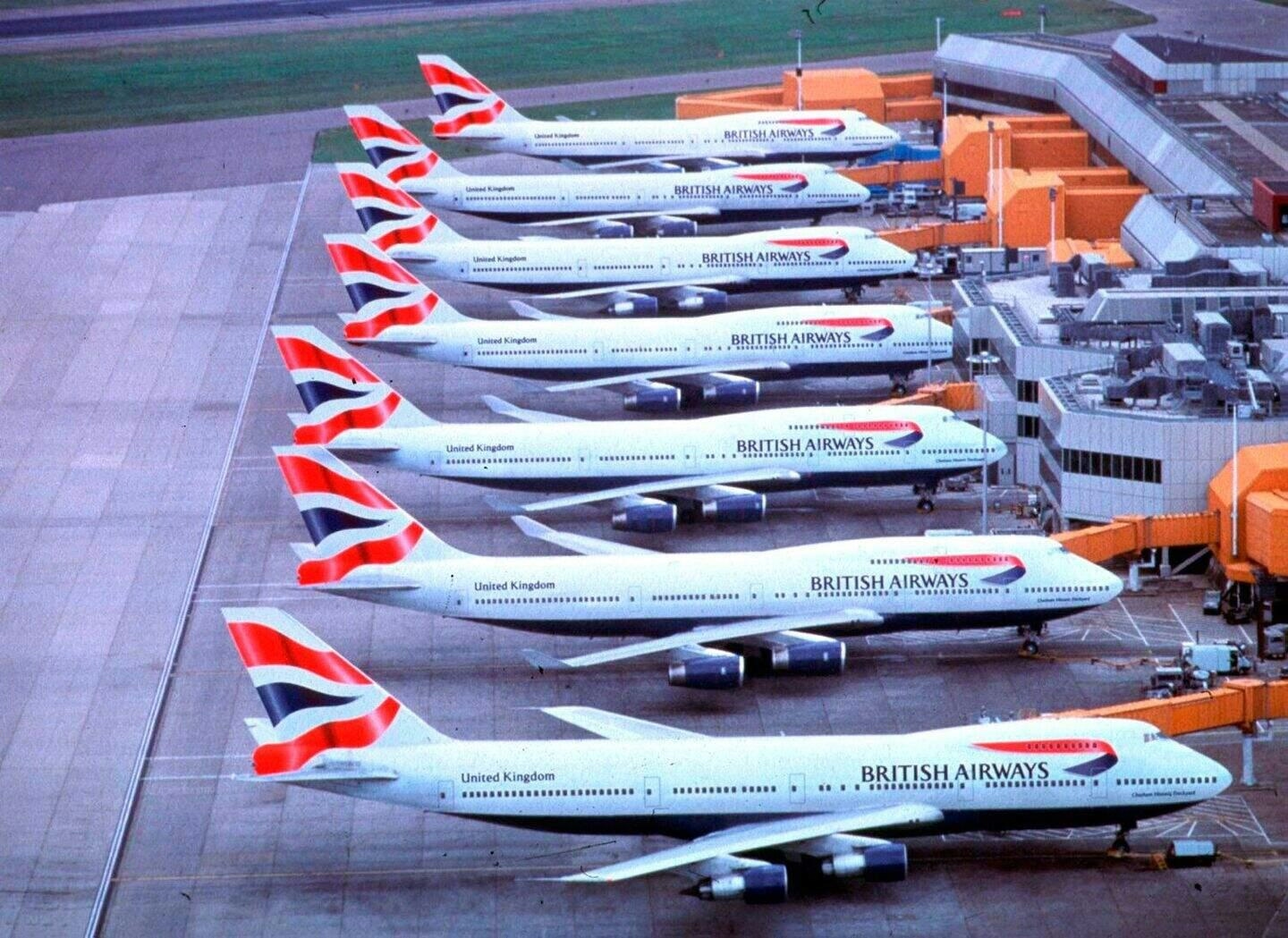
After British Airways retired its final 31 Boeing 747-400 aircraft in 2020, many viewed this as the definitive end of an iconic chapter in aviation history. These quadjets, once a symbol of long-haul travel, were subsequently stored in arid locations such as Victorville, California, and Teruel, Spain. The airline’s strategic shift towards more fuel-efficient twin-engine models like the Boeing 787 and Airbus A350—offering approximately 25% greater fuel efficiency per seat—was widely regarded as a prudent response to escalating environmental concerns and financial pressures.

Capacity Constraints and Market Realities

The post-pandemic aviation environment, however, has challenged these assumptions. A global shortage of new widebody aircraft, caused by ongoing production delays at Boeing and Airbus, has left airlines struggling to satisfy a surge in passenger demand. This shortage is especially pronounced at slot-restricted international hubs, where regulatory limits prevent airlines from simply increasing flight frequencies. In such markets, maximizing passenger capacity per departure has become critical. With delivery schedules for new aircraft extending several years into the future, airlines face the risk of forfeiting billions in potential revenue if they cannot expand capacity.

This scarcity has altered the economics of fleet management. While modern jets remain more fuel-efficient and cost-effective in daily operations, the urgent need to deploy available seats has shifted priorities. In the current high-demand context, the financial penalty of operating less efficient aircraft like the 747-400 may be offset by the revenue losses incurred from canceled or curtailed services.

Challenges of Reactivating the 747-400 Fleet

Reactivating the retired 747s, however, presents significant challenges. Although British Airways stored these aircraft in controlled environments to minimize corrosion, returning them to operational status would require extensive engineering work, involving thousands of labor hours per plane. This process is a complex industrial endeavor rather than routine maintenance.

Furthermore, the economic viability of such a move is uncertain. Fuel prices remain volatile, and industry forecasts indicate that rising fuel costs could reduce airline profits by up to 50% by 2026. Passing these increased costs onto consumers is difficult in a competitive market, and it is unclear whether passengers would be willing to pay a premium for the experience of flying on a 747.

Industry Trends and Competitive Dynamics

The broader aviation industry continues to move away from older, less efficient aircraft. Airlines such as KLM are accelerating the retirement of their quadjet fleets, citing not only fuel inefficiency but also noise restrictions and capacity limitations at major airports. This trend reflects mounting regulatory pressures and a growing market preference for quieter, more sustainable aircraft.

In light of these factors, any decision by British Airways to reactivate its 747-400 fleet would constitute a calculated risk. While the current capacity shortage makes the prospect more conceivable than before, the high operational costs, uncertain consumer acceptance, and evolving industry standards present formidable obstacles. For now, the economics of reviving the Queen of the Skies remain firmly grounded in practical considerations.
More news
Linking Ireland’s Aircraft Leasing Industry to Elite Football
Linking Ireland’s Aircraft Leasing Industry to Elite Football

Linking Ireland’s Aircraft Leasing Industry to Elite Football Teddy Murphy, founder and CEO of Miagen, has established a consultancy and technology firm that manages over €100 billion in global aviation assets. Since its inception in 2003, Miagen has become a pivotal player in the aircraft leasing sector through its LeaseGen platform, which currently models one in five of the world’s leased aircraft and 30% of future orders from Boeing and Airbus. Building on this expertise, Murphy is now applying Miagen’s advanced financial modelling capabilities to the realm of elite football with the launch of SportsGen. From Aviation Leasing to Football Finance SportsGen repurposes the sophisticated financial tools originally developed for the complex aviation leasing market to address the equally intricate financial environment of professional football. The platform allows football clubs to simulate various financial scenarios, including wages, transfers, and revenues, while ensuring compliance with increasingly stringent financial fair play regulations. Miagen is actively engaged in discussions with several Serie A clubs regarding the adoption of this innovative technology. Murphy notes that the company has experienced steady growth over the past two years, despite challenges faced by both the aviation and sports sectors. He acknowledges that fluctuations in funding and acquisitions can impede progress. Reflecting on Miagen’s journey, Murphy highlights the difficulties encountered in gaining early traction as a start-up, navigating economic downturns, and managing the impact of the Covid-19 pandemic. “There are learnings all the way through,” he says. “While you occasionally look back thinking we haven’t done too badly, you are always looking ahead thinking we should be doing better than we are.” Industry-Specific Innovation and Future Prospects Miagen’s strategy centers on developing industry-specific applications rather than generic solutions. With a team predominantly composed of accountants, the company empowers finance professionals to model scenarios in real time, a capability Murphy describes as “a sat-nav for business.” This focused approach has enabled Miagen to expand beyond aviation into areas such as ESG and sustainability reporting, and now into professional sports. However, integrating Ireland’s aircraft leasing expertise with elite football finance presents significant complexities. The company must navigate diverse regulatory frameworks, ensure compliance with both aviation and sports industry standards, and manage the financial risks inherent in these sectors. Investor skepticism remains a challenge, particularly among those unfamiliar with the synergy between aviation and sports. Competitors may respond with strategic partnerships or heightened competition across both markets. Additionally, recent fluctuations in aircraft engine values and maintenance costs are influencing lessor strategies and financial planning, adding further complexity to Miagen’s core business. Looking forward, Murphy envisions technology, especially artificial intelligence, as a transformative force in financial decision-making. He anticipates the evolution of the CFO role into that of a “Chief Decision Officer,” a concept Miagen is integrating into SportsGen through AI-driven player valuation and scouting insights. “The advent of technology has been incredible,” Murphy remarks. “Nowadays, finance and business users are actually defining the technology themselves with AI. I really could say that I have never been as excited as I am now.” As Miagen continues to bridge the worlds of aviation and elite sport, its trajectory underscores both the opportunities and challenges inherent in cross-industry innovation within a rapidly evolving global landscape.
Airbus A380 at Tarbes Yields Over 90% of Parts for Active Fleets Through Careful Dismantling
Airbus A380 at Tarbes Yields Over 90% of Parts for Active Fleets Through Careful Dismantling

Airbus A380 at Tarbes Yields Over 90% of Parts for Active Fleets Through Careful Dismantling The Decline of the A380 and the Rise of Aircraft Recycling The Airbus A380, once hailed as the pinnacle of long-haul air travel, symbolized a new era with its double decks, four engines, and capacity to carry over 500 passengers. As the largest passenger aircraft ever constructed, it was designed to dominate the busiest global routes for decades. However, less than two decades after its introduction, the A380’s future has become uncertain. Its value increasingly lies not in active service but in the careful dismantling and recycling of its components. At Tarbes, located in the foothills of the French Pyrenees, the specialist firm Tarmac Aerosave is leading this transformation. The company is responsible for dismantling retired A380s, including those formerly operated by Singapore Airlines, which have struggled to find new operators amid declining demand for the superjumbo. Over several months, these 250-ton aircraft are methodically broken down into sorted piles of reusable parts and recyclable metals, with less than 10% of the material ultimately discarded as waste. Economic and Operational Factors Driving Dismantling The economic realities underpinning this shift are clear. The A380’s operation is expensive, with four fuel-intensive engines and a cabin configuration optimized for a hub-and-spoke model that many airlines have moved away from. As demand for used A380s has sharply declined, their resale value has plummeted. Nevertheless, with approximately 190 A380s still in service worldwide, the demand for spare parts remains robust. For grounded aircraft, the aggregate value of their components now surpasses that of the intact airframe. The engines are the most valuable assets. Each of the A380’s four Rolls-Royce Trent 900 engines can command prices in the millions or generate significant monthly revenue when leased to airlines continuing to operate the type. These engines are removed first, followed by landing gear, avionics, hydraulic systems, and thousands of other parts. The fate of each component depends on its maintenance history and certification status; only parts with proper documentation are refurbished or resold, while others are scrapped. Recycling and Sustainability in Aviation After the removal of valuable systems, the airframe itself is dismantled. The A380 contains roughly 120 tons of aluminum, which is carefully sorted and melted down to re-enter the supply chain as raw material. Tarmac Aerosave, a joint venture partly owned by Airbus, reports that it recovers more than 90% of each aircraft by weight, often exceeding 92% across its operations. Only a small portion, primarily composites and hazardous materials, is discarded as waste. This exceptionally high recovery rate is particularly notable given the complexity of wide-body jets. Nearly every part that once flew is either returned to service or recycled, reflecting a broader industry trend toward sustainability and resource optimization. Rising maintenance costs and parts shortages have prompted airlines to reconsider the viability of the A380, as exemplified by Qantas’ decision to retire its fleet four years ahead of schedule, by 2028. While some carriers continue to operate the superjumbo, others are scaling back, favoring more fuel-efficient models such as the Airbus A320neo and Boeing 737 Max. These newer aircraft are also increasingly dismantled for parts by recycling specialists like Tarmac Aerosave, underscoring a growing commitment to environmental responsibility within the aviation sector. At Tarbes, the meticulous disassembly of the A380 represents not merely an end but a transformation, ensuring that even as the era of the superjumbo wanes, its legacy endures through the fleets that continue to take to the skies.
BBN Airlines Becomes IATA Member

BBN Airlines Becomes IATA Member

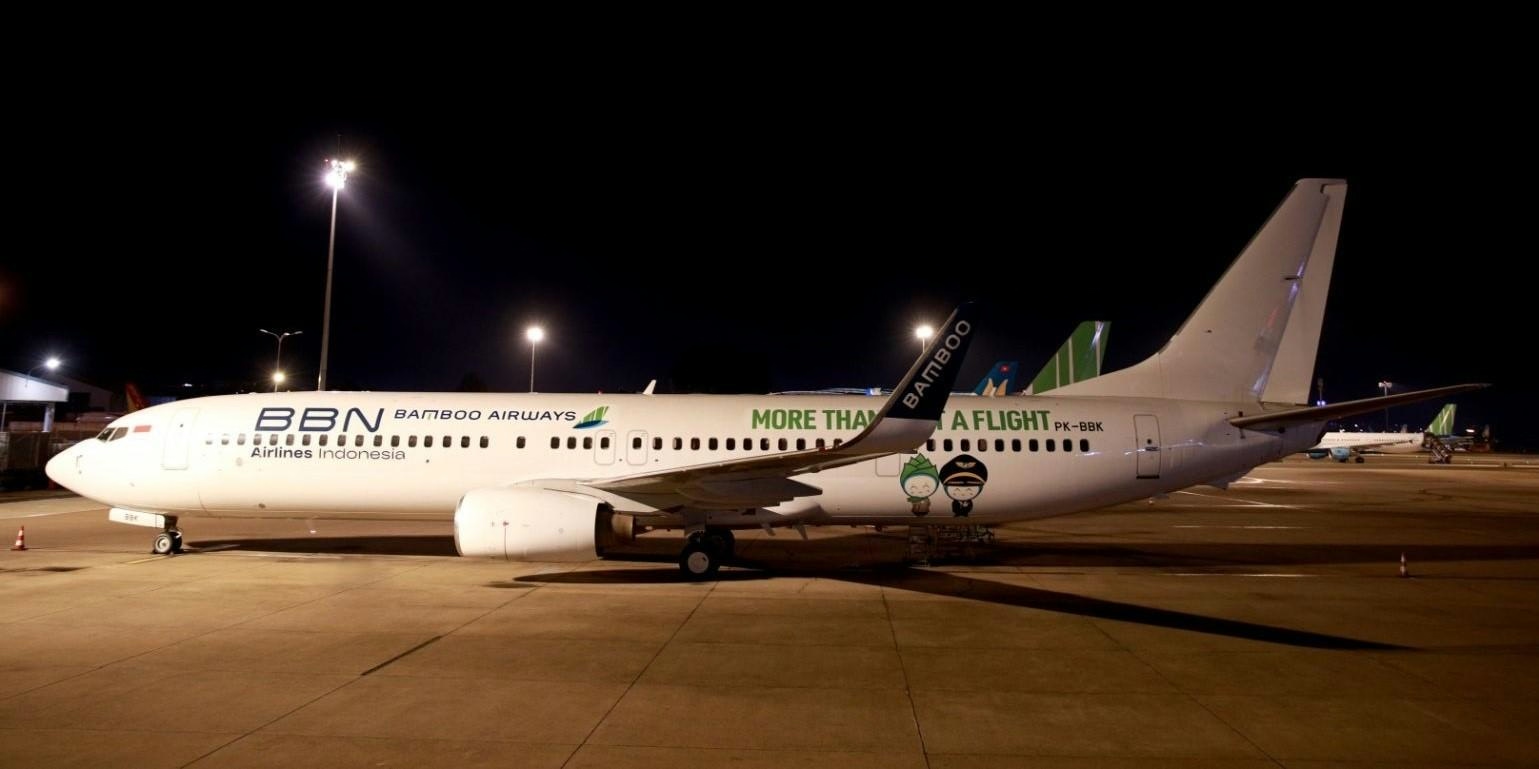
BBN Airlines Indonesia Joins IATA Amid Ambitious Growth Plans JAKARTA, 14 September 2026 — BBN Airlines Indonesia has officially become a member of the International Air Transport Association (IATA), joining a global alliance that represents over 370 airlines across more than 120 countries. Collectively, IATA members account for approximately 85% of worldwide air traffic, marking a significant milestone for the Jakarta-based carrier. Founded in 2022, BBN Airlines Indonesia focuses on wet-lease and charter services, serving airlines and aviation clients throughout Indonesia and the broader Asia-Pacific region. The airline currently operates two Boeing 737-800 aircraft, registered as PK-BBF and PK-BBG, and has plans to expand its fleet with the addition of an Airbus A320, expected to commence commercial operations in December 2026. Strategic Implications of IATA Membership Membership in IATA is contingent upon maintaining an IATA Operational Safety Audit (IOSA) registration, a standard BBN Airlines Indonesia achieved in 2025. This certification enabled the airline’s entry into the association, allowing it to engage more deeply in industry discussions, advisory groups, and initiatives centered on safety, operational efficiency, and regulatory development. Werry Orbani, Chief Executive Officer of BBN Airlines Indonesia, emphasized the significance of this development, stating, “This membership represents an important step in our development as we continue expanding our wet-lease and charter operations. It strengthens our connection with the international aviation community and allows us to contribute to industry discussions while providing reliable capacity solutions to our partners across Indonesia and the wider Asia-Pacific region.” However, the timing of BBN Airlines’ IATA membership coincides with increased regulatory scrutiny in critical markets such as Russia, which may complicate efforts to secure international routes. Navigating these evolving regulatory landscapes will be essential as the airline seeks to broaden its global presence. Additionally, the aviation sector is currently facing challenges related to aircraft delivery delays, which are impeding progress toward decarbonization goals and could affect BBN Airlines’ operational and strategic planning. Market responses to BBN Airlines’ IATA membership have been varied. While some investors view the affiliation as a positive move toward global recognition and operational standardization, others express concerns about the heightened compliance obligations that accompany IATA membership. Competitors’ reactions also differ; established carriers may perceive BBN Airlines as a potential disruptor to market dynamics, whereas others might see opportunities for codeshare partnerships and expanded route networks. Parent Company and Industry Positioning BBN Airlines Indonesia operates as a subsidiary of Avia Solutions Group, the world’s largest provider of ACMI (aircraft, crew, maintenance, and insurance) services. The group manages a fleet of 136 aircraft across six continents and employs over 11,000 aviation professionals through more than 250 subsidiaries. Its extensive portfolio includes maintenance, repair and overhaul (MRO), pilot and crew training, ground handling, and other aviation services worldwide. As BBN Airlines Indonesia integrates into the IATA framework, its capacity to adapt to regulatory changes and industry challenges will be critical to sustaining growth and enhancing its competitive position within the Asia-Pacific aviation market.
FAA Orders Breeze Airways and Delta to Inspect Airbus A220 Fuel Hoses

FAA Orders Breeze Airways and Delta to Inspect Airbus A220 Fuel Hoses

FAA Mandates Inspections of Airbus A220 Fuel Hoses for U.S. Operators The Federal Aviation Administration (FAA) has issued a proposed airworthiness directive requiring inspections of motive-flow flexible fuel lines on select Airbus A220-100 and A220-300 aircraft operated within the United States. This directive specifically targets aircraft flown by Delta Air Lines, Breeze Airways, and JetBlue Airways, prompted by concerns that improperly installed fuel hoses may twist, causing abrasion and increasing the risk of fuel leaks. Safety Concerns and Inspection Requirements The FAA highlighted that the affected fuel lines are situated near electrical harness connectors, which could pose a significant fire hazard if a fuel leak occurs. The proposed directive serves as a preventive measure and does not mandate grounding of any aircraft. It expands upon a 2021 directive by including four additional aircraft, bringing the total number of U.S.-registered A220s subject to inspection to 13. Operators will be required to conduct visual inspections of the relevant fuel-line assemblies and replace any components found to be damaged. The FAA estimates that each inspection will require approximately 10 labor hours per aircraft, with an associated cost of around $850. Should replacement be necessary, the expense could reach up to $10,005 per pylon. The root cause of the issue lies in a production configuration change that was not accompanied by an updated installation procedure, allowing the flexible hose to be installed in a twisted position. Over time, this twist can cause the hose to rub against its protective shroud, leading to abrasion and the potential for fuel leaks near critical electrical components. Industry Response and Broader Implications Delta Air Lines responded to the FAA’s proposal by affirming its commitment to regulatory compliance, stating, “At Delta, we fully comply with directives from our regulators as nothing is more important than safety.” Breeze Airways and JetBlue Airways are also expected to adhere to the new inspection requirements. This FAA action follows a similar directive issued by Transport Canada in September 2025, which expanded inspection requirements after identifying additional affected aircraft. The Canadian directive covers both A220-100 and A220-300 models, mandating general visual inspections of the left and right motive-flow flexible fuel-line assemblies, including hoses and shrouds, with replacements required if any damage or permanent deformation is detected. For Breeze Airways and Delta, the directive introduces both financial and operational challenges, necessitating the allocation of resources to inspect and potentially replace fuel hoses across their A220 fleets. The increased regulatory focus on fuel hose safety is expected to influence the global aviation turbine fuel transfer hoses market. Industry analysts predict heightened scrutiny, which may drive increased demand and pricing for these components as airlines worldwide reassess their maintenance protocols. Competitors operating similar aircraft models may soon face comparable inspection mandates, potentially sparking broader industry discussions on safety standards and maintenance best practices. The global market for aviation turbine fuel transfer hoses is projected to grow at a compound annual rate of 5.2% from 2026 through 2035, reflecting ongoing demand driven by safety priorities and regulatory compliance. Comments on the FAA’s proposed directive are due by October 19, after which the agency will review feedback before issuing a final rule.
Philippine Aviation Navigates Expansion and Costs Amid Fuel Price Volatility
Philippine Aviation Navigates Expansion and Costs Amid Fuel Price Volatility

Philippine Aviation Navigates Expansion and Costs Amid Fuel Price Volatility Industry Challenges Amid Geopolitical Tensions The Philippine aviation sector is currently navigating a complex landscape marked by expansion ambitions tempered by stringent cost management. Volatile jet fuel prices, compounded by ongoing geopolitical disruptions, continue to exert significant pressure on airline margins, fare structures, and network strategies, even as passenger traffic shows signs of growth. The recent conflict in the Middle East has underscored the aviation industry's susceptibility to external shocks. Elevated fuel costs, airspace restrictions, extended flight routes, and rising operating expenses have collectively strained airline profitability. Roderick M. Danao, Chairperson of PwC Philippines, emphasized that despite a recent easing of fuel prices from their peaks, these factors persistently challenge fare stability and profit margins. For Philippine carriers, the primary challenge lies in sustaining demand and maintaining profitable capacity amid cost fluctuations largely beyond their control. Nigel Paul C. Villarete, senior adviser on public-private partnerships at Libra Konsult, Inc., noted the intrinsic link between fuel prices and transportation costs, highlighting that any significant change in fuel expenses directly impacts overall operating costs across land, sea, and air transport sectors. Fuel Price Volatility and Operational Responses Jet fuel constitutes approximately 25 to 30 percent of airline operating costs, according to the International Air Transport Association (IATA), making fuel price fluctuations a critical determinant of airline profitability. Although global jet fuel prices experienced a slight decline of 0.8 percent week-on-week as of July 31, they remain nearly 78.4 percent higher than the previous year. This persistent volatility influences key operational decisions, including route selection, flight frequency adjustments, fare pricing, and promotional activities. Rene S. Santiago, former president of the Transportation Science Society of the Philippines, explained that airlines typically respond to such volatility by discontinuing unprofitable routes, reducing flight frequencies, and increasing fares on high-demand corridors to safeguard margins. He further observed that carriers with robust cash reserves may adopt a more balanced approach, combining defensive measures with targeted promotions, loyalty incentives, and network realignments to retain customer loyalty. In line with these strategies, major Philippine airlines such as Philippine Airlines, Cebu Pacific, and AirAsia Philippines have initiated seat sales aimed at sustaining travel demand. Villarete underscored the importance of continuous adjustment, prioritization, and optimization, stressing that profitability remains the fundamental driver of transportation economics and service level maintenance. The Civil Aeronautics Board recently implemented a Level 19 passenger fuel surcharge for the period of April 16 to 30, marking the highest surcharge since 2022 and approaching the maximum allowable rate. Despite these cost pressures, fuel supply has not emerged as an immediate concern. Data from the Department of Energy indicated that the country maintained sufficient jet fuel reserves to meet approximately 68 days of demand as of August 3. Market Expansion Amid Competitive Dynamics Simultaneously, the Philippine aviation sector is responding to evolving competitive dynamics and shifting market demands. Vietjet has announced plans to introduce three new routes connecting Vietnam and the Philippines, while airlines are increasing capacity on routes between Turkey and the Philippines, offering more seats in August 2026 compared to the previous year. These expansion initiatives occur against a backdrop of ongoing volatility in upstream crude oil markets and fluctuating gasoline demand, factors that continue to shape fuel pricing and operational strategies across the industry. As Philippine airlines confront these multifaceted challenges, their strategic focus remains firmly on preserving profitability and maintaining competitiveness within an unpredictable global environment.
On April 26, 1971, an SR-71 Blackbird Flew Over 15,000 Miles in 10.5 Hours, Limited by Liquid Nitrogen Supply
On April 26, 1971, an SR-71 Blackbird Flew Over 15,000 Miles in 10.5 Hours, Limited by Liquid Nitrogen Supply

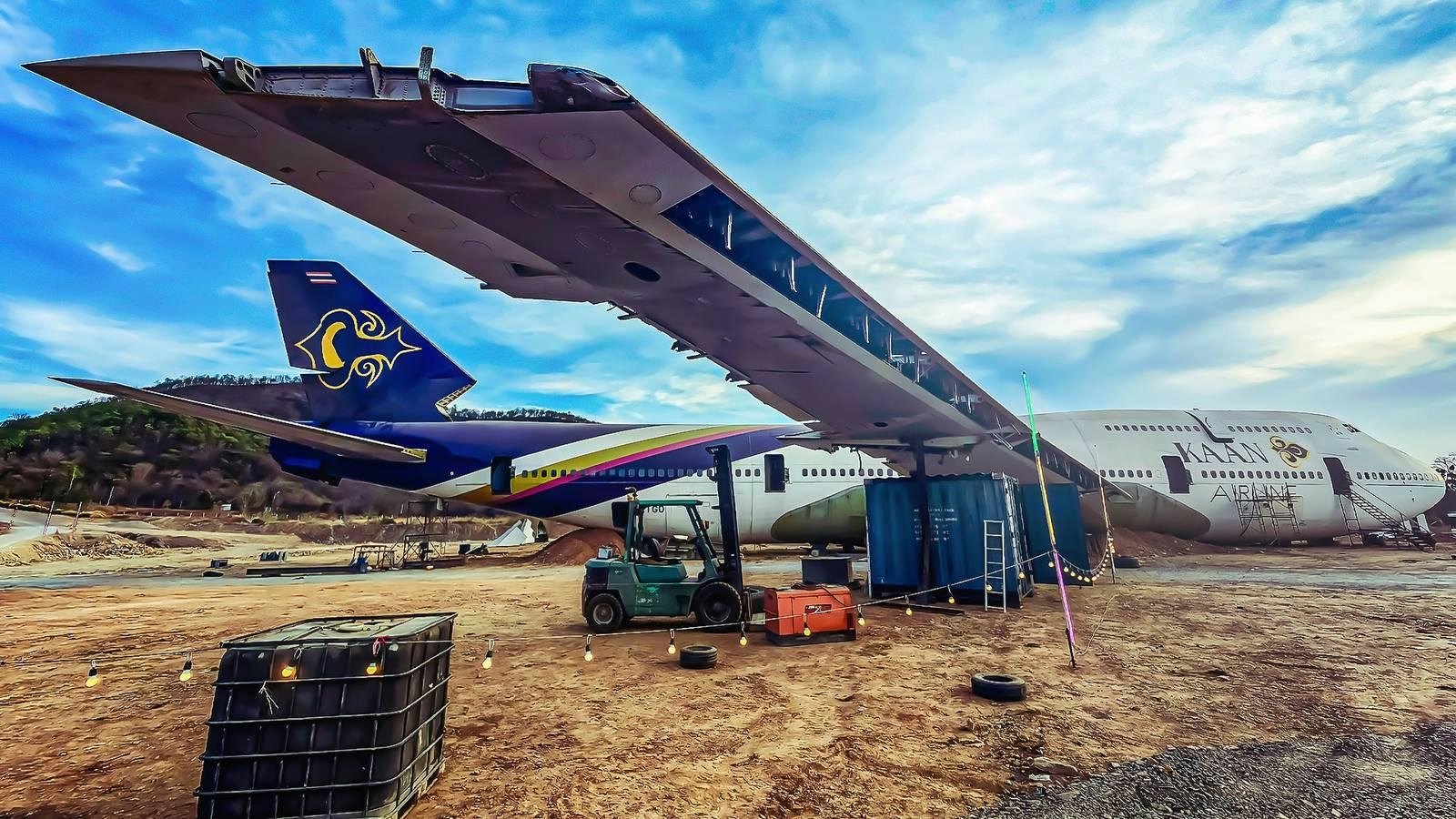
The Record-Breaking SR-71 Blackbird Flight of April 26, 1971 In the early hours of April 26, 1971, the SR-71 Blackbird, tail number 61-7968, departed Beale Air Force Base in California on a mission that would test the limits of the world’s fastest reconnaissance aircraft. While the Blackbird’s remarkable speed and altitude capabilities were well documented, its maximum endurance had yet to be fully explored. The flight sought to determine how long the aircraft could remain airborne, a question that ultimately hinged not on fuel capacity or crew endurance, but on the availability of liquid nitrogen. The mission was initiated by General P.K. Carlton, commander of the Fifteenth Air Force, who authorized the 9th Strategic Reconnaissance Wing to conduct the first publicly recorded endurance flight of the SR-71. Piloted by Thomas B. Estes with reconnaissance systems officer Dewain C. Vick, the flight was officially intended to evaluate the performance of the J58 engines and airframe under extended operational stress. However, the underlying objective was to fly continuously until the aircraft’s supply of liquid nitrogen was depleted, with aerial refueling conducted as necessary to sustain fuel levels. The Crucial Role of Liquid Nitrogen in SR-71 Operations The SR-71’s dependence on liquid nitrogen was a direct consequence of the extreme thermal environment encountered at Mach 3 cruise speeds. The aircraft’s titanium skin could reach temperatures as high as 800 degrees Fahrenheit, while its six unlined fuel tanks contained JP-7 fuel, a substance that could become dangerously volatile if exposed to oxygen. To mitigate this risk, liquid nitrogen stored in Dewar flasks was vaporized and used to purge oxygen from the fuel tanks, maintaining an inert atmosphere at approximately 1.5 psi above ambient pressure. This inerting process was essential not only during flight but also during descent, preventing the tanks from collapsing due to external pressure changes. On this historic flight, the Blackbird carried two 106-liter flasks of liquid nitrogen, which ultimately defined the mission’s duration. Once the nitrogen supply was exhausted, the flight was concluded regardless of remaining fuel or engine condition. The aircraft’s endurance was further constrained by other specialized consumables, including triethylborane, a chemical required to ignite the stable JP-7 fuel during afterburner relights, particularly following aerial refueling operations. Flight Path and Strategic Impact The meticulously planned flight path involved two complete loops around the continental United States, beginning at Beale Air Force Base and extending north to Montana, eastward to Ohio, down the Atlantic coast, west through Texas, and back to California. A shortened third lap was completed before the mission concluded. Over the course of ten and a half hours, the SR-71 covered more than 15,000 miles, supported by five aerial refuelings. This extraordinary demonstration of endurance and technological prowess resonated deeply within the context of the Cold War, underscoring American air superiority and the advanced capabilities of the SR-71 program. The success of the mission likely influenced defense procurement strategies and prompted rival nations to accelerate their own reconnaissance aircraft development efforts. At the same time, the flight highlighted the operational complexities of such cutting-edge technology, particularly the critical limitation imposed by the finite supply of liquid nitrogen, which demanded precise logistical planning to fully exploit the aircraft’s exceptional performance.
Boeing 747 Airframe Valued Less Than One Landing Gear Component
Boeing 747 Airframe Valued Less Than One Landing Gear Component

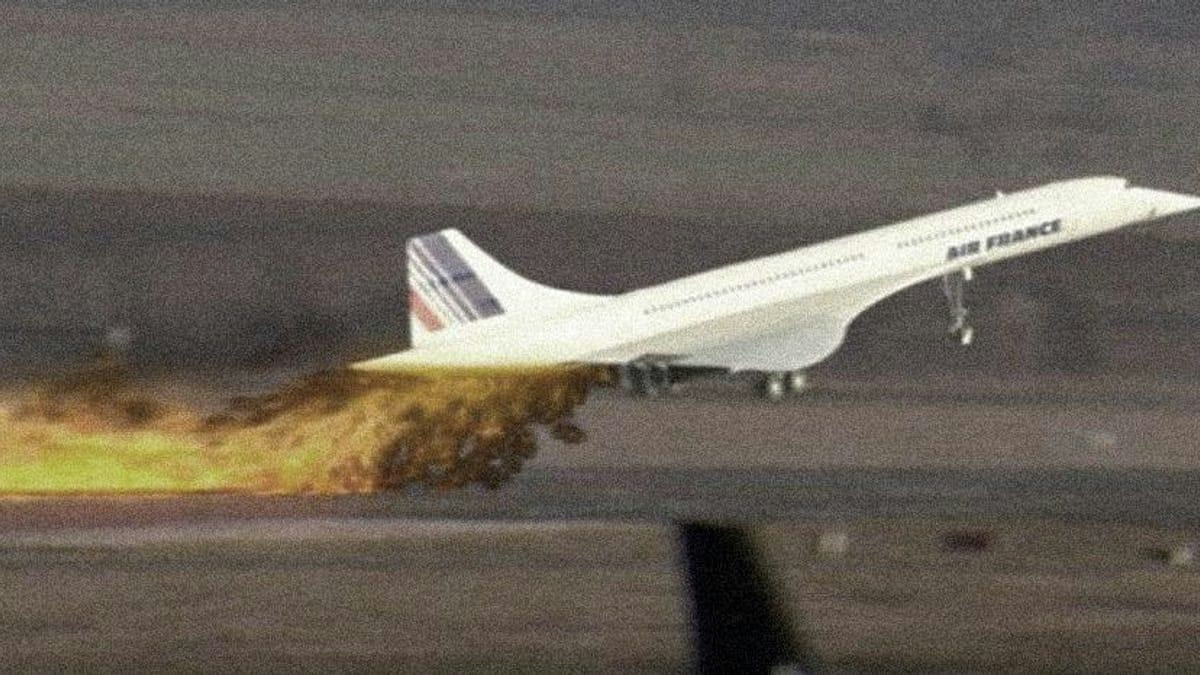
Boeing 747 Airframe Valued Less Than Its Landing Gear Component Disparities in Component Valuation As Boeing 747 aircraft reach the end of their operational lives, they are typically retired to aircraft boneyards where they undergo a detailed dismantling process. During this phase, scrappers and recyclers carefully drain fluids, deactivate evacuation slide explosives, and extract high-value components for resale or reuse. Although the 747 has been out of production for over three years, demand for its parts remains strong, largely driven by the continued operation of numerous 747 freighters worldwide. The value of individual components, however, varies significantly. Engines top the list, commanding prices of approximately $2 million each. Landing gear, often outfitted with advanced technology from suppliers such as IAI Aviation Group, can fetch nearly $300,000—remarkably exceeding the scrap value of the entire airframe. Cockpit displays are valued at around $30,000 apiece, while auxiliary power units (APUs) typically sell for about $25,000. In stark contrast, the raw scrap metal from the remainder of the 747 is generally worth only about $55,000. Compounding this, the cost of storing a 747 at a boneyard can reach approximately $60,000 per month. Technological Advances and Industry Implications This pronounced disparity highlights a broader trend within the aviation industry: as technology advances, certain components such as landing gear are becoming increasingly sophisticated and valuable, sometimes surpassing the worth of the airframe itself. This evolution presents significant challenges for manufacturers like Boeing, which may face mounting pressure to innovate or risk losing competitive ground. Rival companies, including Airbus and emerging firms specializing in composite materials, are well-positioned to exploit these market shifts by offering more advanced and cost-effective alternatives. Consequently, Boeing may need to reconsider its material selections and production strategies to sustain its market position. Efficiency in the Scrapping Process The dismantling of a Boeing 747 is a highly efficient operation. Each aircraft contains roughly six million parts, 170 miles (274 kilometers) of wiring, and approximately 147,000 pounds (66,680 kilograms) of aluminum. Around 30 percent of the components recovered from scrapped 747s are reused in active aircraft, with only 10 to 15 percent of the airframe typically discarded as waste. Airlines frequently acquire used aircraft and engines specifically to harvest parts, enabling them to source components more rapidly and at lower cost than purchasing new ones. For instance, United Airlines acquired several Airbus A319s in the late 2010s solely to salvage their engines and parts, never placing the aircraft into service. Evolving Economics of Aircraft Components The economics surrounding aircraft components continue to evolve. While engines remain the most valuable and complex parts, the increasing worth of landing gear and other advanced systems is reshaping industry dynamics. As scrutiny intensifies on cost management and operational efficiency, both manufacturers and airlines must adapt to a landscape where select components can exceed the value of the airframes they support.
The Rear-Fan Engine Behind the Crash of the World's Fastest Airliner
The Rear-Fan Engine Behind the Crash of the World's Fastest Airliner

The Rear-Fan Engine Behind the Crash of the World’s Fastest Airliner Innovation Amidst Aviation’s Formative Years During the late 1950s and early 1960s, commercial aviation stood at a crossroads, with competing engineering philosophies shaping its future trajectory. While some manufacturers pursued supersonic airliners such as the Concorde, others experimented with novel engine designs, including aft-fan turbofans. This period of innovation and uncertainty bears resemblance to contemporary debates surrounding blended wing bodies, open-fan engines, and hybrid propulsion systems. General Dynamics’ Convair division took a distinctive approach with its Convair 880 and 990 airliners, emphasizing speed over passenger capacity and operational economy. The Convair 990 Coronado, introduced between 1961 and 1963, was engineered to surpass its competitors—the Boeing 707 and Douglas DC-8—by cruising 25 to 35 miles per hour faster. Despite this speed advantage, the aircraft accommodated fewer passengers and faced challenges related to higher operating costs. Responding to American Airlines’ demand for improved fuel efficiency, Convair developed a stretched variant of the 880, increasing seating capacity from 88 to as many as 121 passengers. The Rear-Fan Engine: Innovation and Challenges Central to the Convair 990’s design was its unconventional General Electric CJ805-23 engine. Departing from the prevalent front-fan turbofan configuration, the CJ805-23 employed a rear-mounted fan, aiming to merge the fuel efficiency of turbofans with the high performance of turbojets. While innovative, this rear-fan architecture introduced significant technical complexities. Managing airflow within the engine proved challenging, and maintenance demands increased, leading to persistent reliability issues. These technical difficulties extended beyond engineering theory into regulatory and operational realities. Aviation authorities in both Europe and the United States intensified scrutiny of rear-fan engines, particularly concerned about the risk of dual in-flight shutdowns. Such incidents raised serious safety alarms, prompting heightened oversight. Airlines, in turn, reevaluated their engine configurations, especially on older aircraft models like the Airbus A330 and Boeing 777, where oil pump malfunctions led some carriers to de-pair certain engines as a risk mitigation strategy. Market Impact and Legacy The operational drawbacks of the Convair 990 ultimately eclipsed its speed advantage. Both the aircraft and its rear-fan engines failed to secure a lasting foothold in the commercial aviation market. Meanwhile, competitors such as Boeing and Douglas, equipped with Pratt & Whitney’s more conventional and dependable engines, consolidated their dominance. This episode also intensified competition within the aircraft fan frame sector, motivating industry leaders including Safran Aircraft Engines, GE Aerospace, Pratt & Whitney, and Rolls-Royce to accelerate the development of safer and more efficient engine technologies. Although GE Aerospace is now the world’s largest jet engine manufacturer, its commercial aviation presence in the 1960s was largely limited to the Convair 880 and 990, with a primary focus on military aviation. Pratt & Whitney, by contrast, powered the majority of major airliners during that era. The failure of the Convair 990 and its rear-fan engine underscored the inherent risks of prioritizing speed and unconventional technology at the expense of reliability and efficiency—a cautionary lesson that continues to influence the evolution of commercial aviation.
Morphing Aircraft Skin Improves Safety and Fuel Efficiency

Morphing Aircraft Skin Improves Safety and Fuel Efficiency

Morphing Aircraft Skin Improves Safety and Fuel Efficiency Innovative Adaptive Wing Technology Researchers at the Indian Institute of Technology Madras (IIT Madras) have developed a groundbreaking "morphing skin" technology for aircraft wings, drawing inspiration from the adaptive flight mechanisms of birds. This novel technology enables the wing surface to dynamically reshape in real time, with the primary objective of preventing aerodynamic stalls—a critical hazard in aviation—and enhancing both flight safety and fuel efficiency. Aerodynamic stalls occur when airflow separates from the wing surface, resulting in a sudden loss of lift that can jeopardize aircraft stability. The IIT Madras team, led by Dr. Rinku Mukherjee and supported by alumni Antony Samuel B and Dr. Aritras Roy, has engineered an adaptive external skin that responds instantaneously as airflow begins to detach. Rather than allowing a stall to develop, the flexible skin adjusts its shape to maintain smooth airflow, thereby stabilizing the aircraft even at higher angles of attack. This innovation improves lift, reduces drag, and enables safer operation across a wider range of flight conditions. Practical Applications and Industry Implications The immediate applications of this technology are particularly relevant to commercial aviation, where safer take-offs and landings are paramount, especially on congested or short runways. By enhancing lift and minimizing drag, the morphing skin not only improves operational safety but also contributes to significant fuel savings and reduced emissions, aligning with the aviation sector’s sustainability objectives. Additionally, unmanned aerial vehicles (UAVs) stand to benefit from increased endurance and enhanced maneuverability afforded by this adaptive wing surface. The research findings, published in the *European Journal of Mechanics - B/Fluids*, have been substantiated through computational simulations and wind tunnel testing. The team reports that the technology is now prepared for real-world flight trials and holds potential for retrofitting onto existing aircraft fleets. Challenges and Industry Outlook Despite its promising advantages, the widespread adoption of morphing skin technology faces considerable challenges. Integrating advanced materials and adaptive mechanisms into current aircraft structures involves complex engineering hurdles. Furthermore, regulatory approval processes are anticipated to be rigorous and time-consuming, necessitating extensive validation to ensure safety and reliability. The aviation market has responded positively, with airlines expressing interest in innovations that enhance safety and operational efficiency. Aerospace competitors may pursue similar adaptive technologies or invest in complementary advancements to maintain competitive advantage. Nevertheless, current assessments indicate that morphing aircraft skin remains in the developmental phase, with full-scale implementation expected to require additional time and testing. Future Prospects As the aviation industry continues to pursue safer, more environmentally friendly, and efficient flight solutions, the morphing skin technology developed by IIT Madras represents a significant advancement. Pending successful integration and regulatory approval, this innovation has the potential to transform aircraft design and operation, delivering measurable benefits to both commercial and unmanned aviation sectors.
BRICS Nations Commit to Enhanced Cooperation on Sustainable Transport and Green Aviation

BRICS Nations Commit to Enhanced Cooperation on Sustainable Transport and Green Aviation

BRICS Nations Commit to Enhanced Cooperation on Sustainable Transport and Green Aviation BRICS countries have reaffirmed their dedication to advancing cooperation in sustainable transport and green aviation, focusing on policy development, investment, technology, and capacity building among member states. This commitment was articulated during a BRICS summit chaired by India in New Delhi on September 12 and 13, where leaders underscored the vital role of resilient transport infrastructure in fostering economic growth, enhancing connectivity, and promoting environmental sustainability. New Delhi Declaration and Strategic Initiatives The New Delhi Declaration, titled "Building for Resilience, Innovation, Cooperation and Sustainability," emphasized the integration of circular economy principles into the development and maintenance of transport systems. It also highlighted the promotion of sustainable aviation fuels and low-carbon alternatives as essential strategies to reduce carbon emissions in international aviation. The declaration stated, “We reaffirm the commitment of BRICS countries to deepen cooperation in the areas of transport policy, investment, technological and capacity building with a view to develop sustainable and resilient transport infrastructure.” Several initiatives were introduced to support these goals. The BRICS Forum on Sustainable Aviation Fuels and the BRICS Framework of Cooperation for Exchange of Knowledge on Transport Decarbonisation were welcomed as platforms to foster collaboration. Additionally, the establishment of the BRICS Urban Mobility Hub aims to facilitate knowledge exchange and cooperation on accessible, affordable, inclusive, and smart urban transport solutions. The declaration also announced the creation of the BRICS Logistics Supply-Chain Cooperation Framework and encouraged further discussions on the proposed BRICS Railway Research Network. These efforts are designed to enhance the transport capabilities of BRICS nations while respecting the sovereignty and territorial integrity of all members. Challenges and International Engagement Despite the ambitious agenda, the implementation of uniform green aviation policies faces challenges, particularly due to regulatory differences among BRICS countries. These disparities could complicate the harmonization of standards and practices, potentially impeding progress. Nevertheless, the commitment to deepen cooperation in transport policy and renewable energy markets is expected to attract increased investor interest in sustainable transport initiatives. Concurrently, non-BRICS countries may respond by strengthening their own green aviation frameworks to maintain competitiveness in the evolving global market. The BRICS leaders also welcomed the expansion of the International Civil Aviation Organization (ICAO) Council, which will add four seats to better represent regions such as Africa and Asia Pacific. The candidatures of Ethiopia, endorsed by the African Union as the sole African candidate, and Indonesia were acknowledged ahead of the upcoming elections during the 43rd (Extraordinary) ICAO Assembly. As a key United Nations body, ICAO plays a central role in shaping international aviation standards. Looking forward, BRICS countries expressed their intention to continue promoting dialogue in transport, including civil aviation, to address the needs of all stakeholders and support sustainable development across member states.
line