
AeroGenie — 您的智能副驾驶。

热门趋势
Categories
Air India Flight AI-171 Investigation Focuses on Tail Section for Electrical Malfunction Clues

Investigation into Air India Flight AI-171 Focuses on Tail Section Amid Electrical Malfunction Concerns
Authorities investigating the crash of Air India Flight AI-171 on June 12 have concentrated their efforts on the aircraft’s tail section, which is believed to hold vital evidence regarding the incident that occurred just 26 seconds after takeoff from Sardar Vallabhbhai Patel International Airport. Preliminary findings indicate a possible power failure in the main electrical system shortly after liftoff, prompting questions about the Boeing 787-8 Dreamliner’s electrical and fuel systems.
Tail Section Under Detailed Examination
Officials involved in the investigation report that the empennage, or tail assembly, exhibited signs of a contained electrical fire. Unlike the rest of the aircraft, which was extensively damaged by the post-crash explosion, the tail separated during impact and remained relatively intact. Components recovered from this section have been secured in Ahmedabad for thorough analysis. Investigators are exploring whether an electrical malfunction in the tail occurred during takeoff, potentially triggering a cascade of system failures.
The tail houses several critical systems, including the Auxiliary Power Unit (APU), transducers, and rudders. The APU was recovered largely intact, and its function is under close review, particularly since it may have automatically activated during takeoff to augment thrust—a standard procedure in hot weather conditions. Notably, the technical log from the previous flight recorded a Pilot Defect Report concerning a fault with the Stabilizer Position Transducer, another component located in the tail. Although engineers had cleared this issue before departure, investigators are now considering whether a recurrence could have caused an electrical cascade, possibly misleading the Engine Control Unit (ECU) into cutting off the fuel supply.
Black Box Damage and Data Recovery
The Aircraft Accident Investigation Bureau (AAIB) recovered the rear Enhanced Airborne Flight Recorder (EAFR), commonly known as the black box, from the rooftop of a nearby building. However, it sustained extensive thermal damage, rendering conventional data retrieval impossible. The forward black box, found days later amid the debris, provided valuable flight data from six flights, including AI-171, as well as a two-hour cockpit audio recording. While both recorders are designed to withstand extreme conditions, the rear black box depends on the main aircraft power supply, raising concerns that it may have been compromised by an electrical fault prior to the crash.
Fuel System and FADEC Under Scrutiny
The investigation has also focused on the aircraft’s fuel systems and cockpit controls. Data extracted from the black box indicates that both engines were deprived of fuel seconds after takeoff. Investigators are examining whether a sequence of electrical faults led the Full Authority Digital Engine Control (FADEC) system to erroneously shut off the fuel supply, resulting in catastrophic engine failure. The positioning and operation of fuel switches in the cockpit are being closely reviewed, although the Federal Aviation Administration (FAA) and Boeing have affirmed the safety of the fuel switch locks.
Broader Safety and Regulatory Implications
The crash has sparked broader discussions regarding aviation safety and the reliability of aircraft systems. The European Union Aviation Safety Agency is currently investigating Air India Express for failing to comply with a directive to replace certain engine parts and for allegedly falsifying maintenance records. These developments have intensified scrutiny of both airline operational procedures and manufacturer safeguards.
As the investigation progresses, officials stress that unraveling the sequence of electrical and mechanical failures in the tail section will be crucial to determining the root cause of the AI-171 tragedy.

GAF 2025 Highlights Innovations and Investments Shaping the Future of Aviation

Wings India 2026: Advancing the Future of Aviation
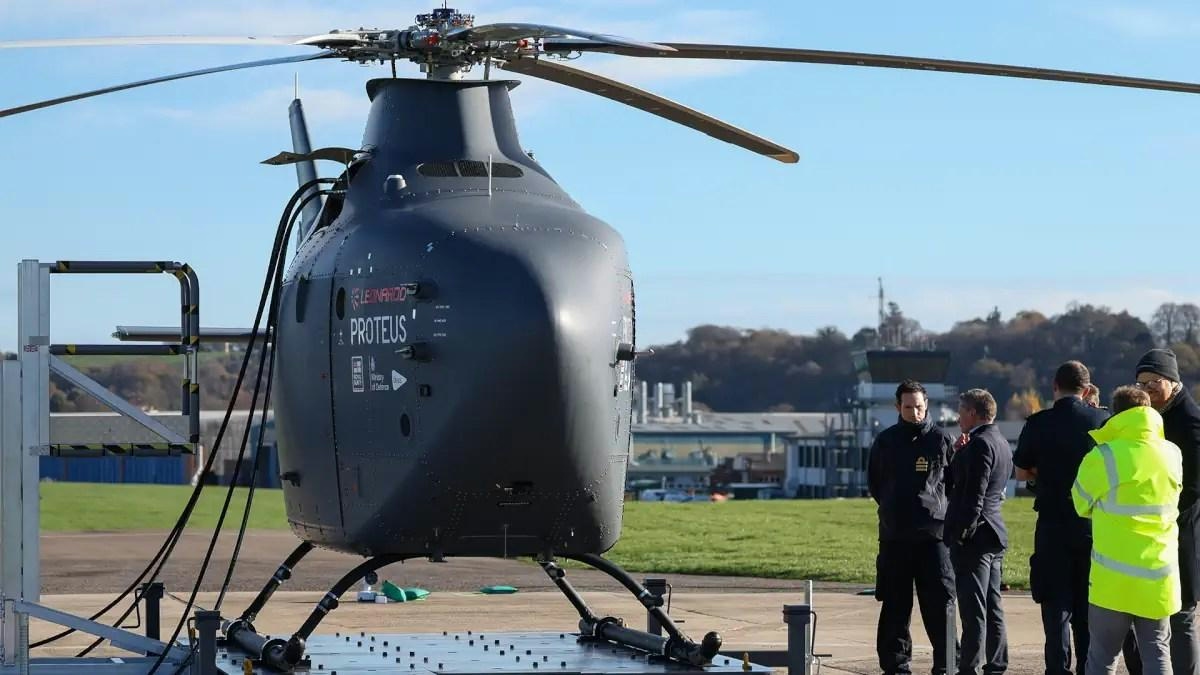
Cornwall Unveils the Leonardo Proteus Uncrewed Helicopter

FTAI Aviation Ltd. Faces Decline Amid Market Challenges
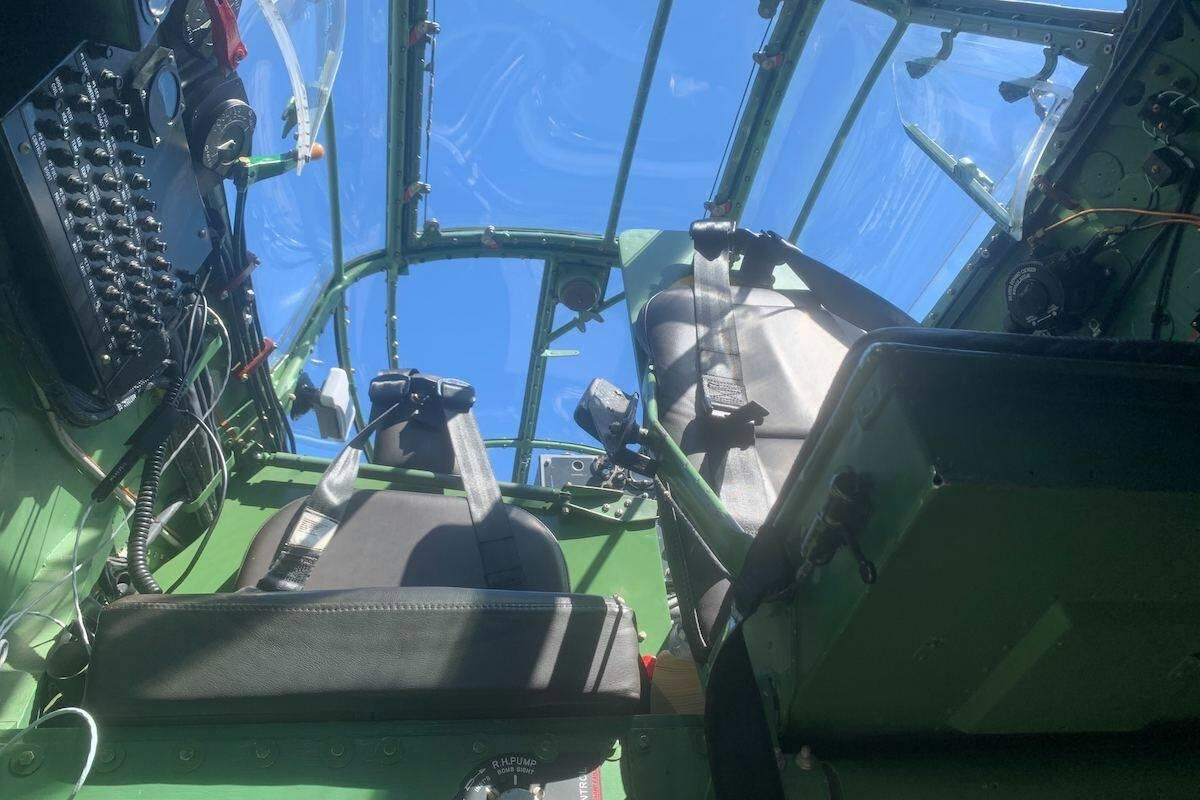
Mosquito Aircraft Engine Run Demonstrated in Kelowna

Boeing Outpaces Airbus in Orders for First Time Since 2018
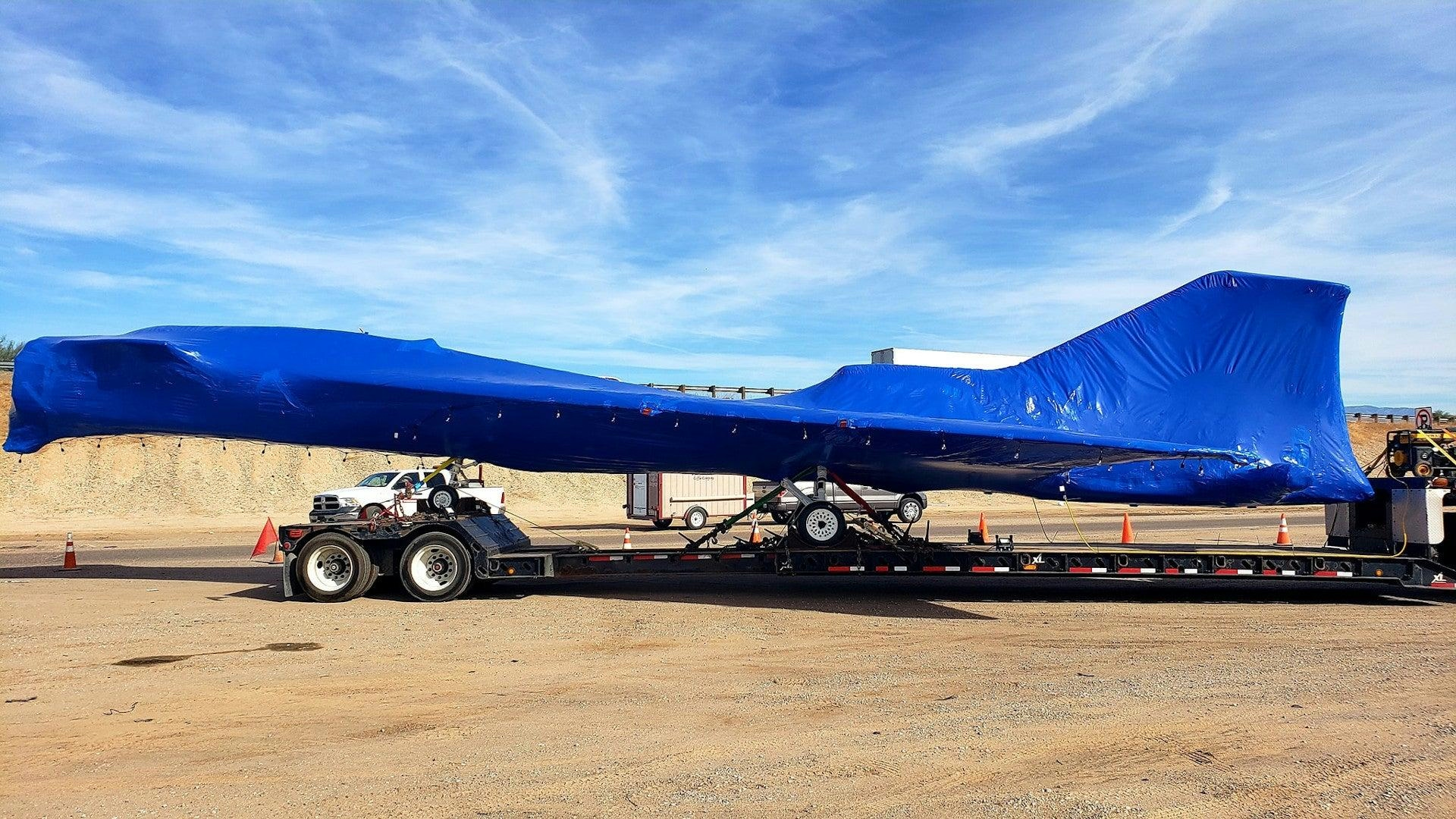
Engine Tests Advance on Russian Civil Supersonic Demonstrator
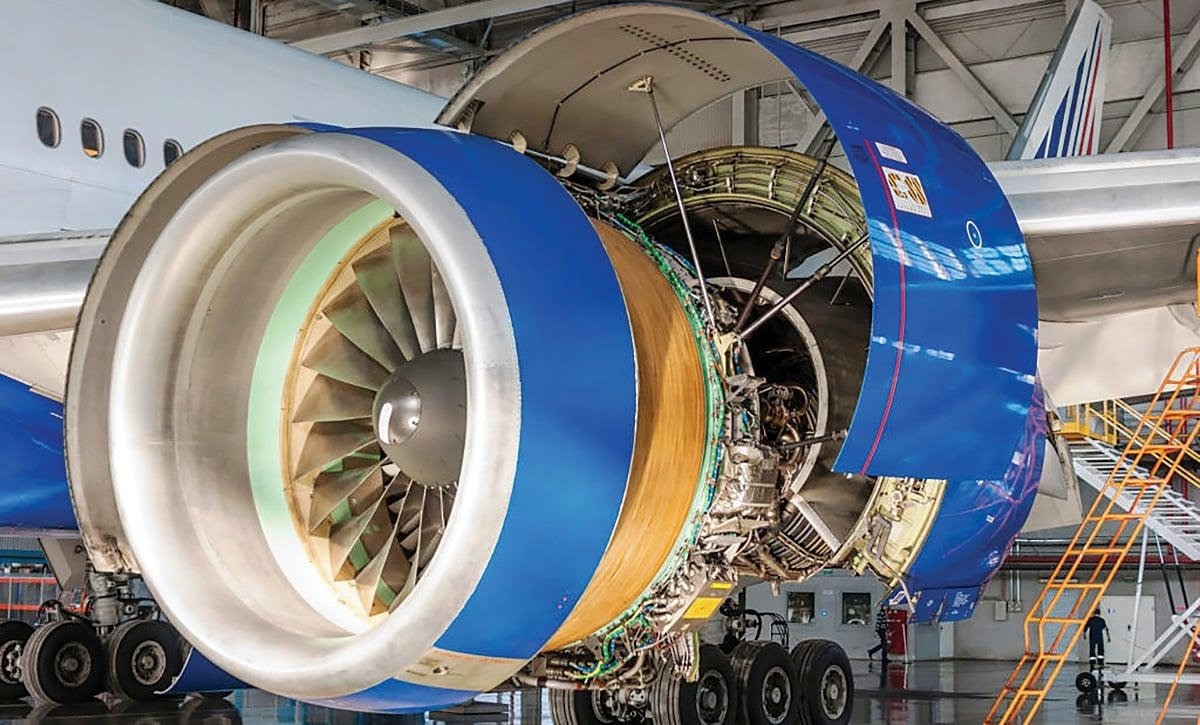
TransDigm to Acquire Victor Sierra Aviation in $2.2 Billion Jet Parts Deal

How AI Is Helping American Airlines Hold Flights For Passengers

U.S. EXIM Bank Provides $15 Million Loan to Embraer’s Air Taxi Unit
