
أيروجيني — مساعدك الذكي للطيران.

الرائج الآن
Categories
King’s Advances Jet Zero Initiative with Hydrogen Engine Project
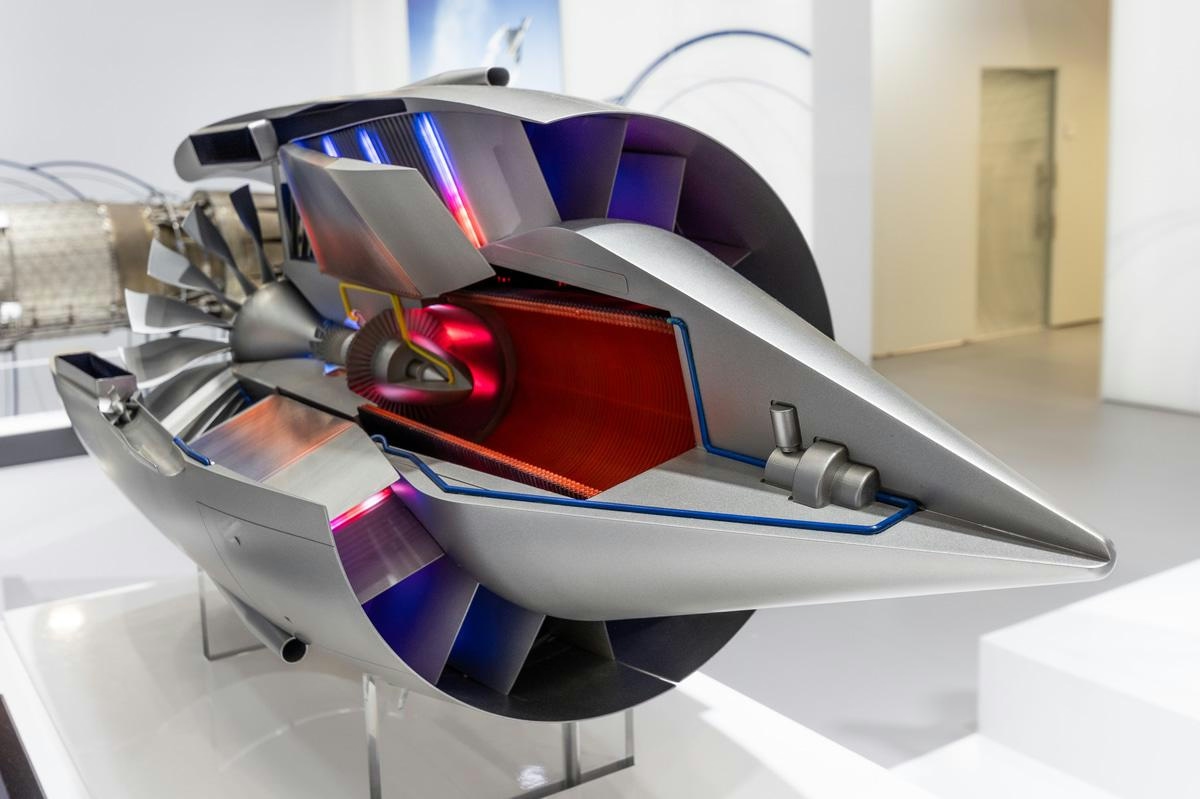
King’s College London Leads Hydrogen Engine Development for Jet Zero Initiative
King’s College London has partnered with the University of Oxford, Imperial College London, and Loughborough University to develop hydrogen-powered jet engines under a £9.5 million project funded by the Engineering and Physical Sciences Research Council (EPSRC). This collaborative research effort targets the aviation sector’s substantial environmental impact, as commercial aviation currently contributes approximately 2.5% of global carbon dioxide emissions. The United Kingdom ranks among the top five countries in passenger-related emissions, underscoring the urgency of sustainable innovation in this field.
Advancing the UK’s Jet Zero Ambition
The project aligns with the UK government’s ambitious Jet Zero strategy, which aims to achieve net-zero aviation emissions by 2050. Central to this vision is the development of gas turbines fueled by cryogenic liquid hydrogen. Unlike conventional aviation kerosene, hydrogen combustion produces only water vapor, offering the potential for zero-carbon mid-range commercial flights. Success in this endeavour could mark a transformative step toward decarbonising air travel and meeting stringent climate targets.
Technical and Regulatory Challenges
Despite its promise, hydrogen propulsion presents significant technical challenges. Efficient storage requires maintaining hydrogen at extremely low temperatures and high pressures, while the rapid temperature fluctuations during engine operation complicate fuel management. Hydrogen’s low density and propensity for rapid diffusion can cause material embrittlement, increasing the risk of structural cracks and raising critical safety concerns, particularly regarding the possibility of mid-flight engine failure.
Beyond engineering obstacles, the project must contend with high research and development costs and the complexities of regulatory approval. The aviation industry remains cautious, with some stakeholders expressing skepticism about the risks and uncertainties inherent in adopting hydrogen technology. Navigating these concerns will be essential to the successful integration of hydrogen propulsion into commercial aviation.
A Competitive and Collaborative Industry Landscape
The pursuit of hydrogen-powered flight is gaining momentum across the aerospace sector. Major companies and startups alike are investing in similar technologies. Airbus, for instance, is collaborating with MTU Aero Engines to explore hydrogen fuel cell propulsion, while the UK government continues to support hydrogen research initiatives. Partnerships such as ZeroAvia’s collaboration with Loganair and GKN’s involvement in ICEFlight’s hydrogen power project exemplify the broader industry shift toward sustainable aviation solutions.
As King’s College London and its partners progress with this EPSRC-supported project, they confront not only the scientific and engineering complexities of hydrogen propulsion but also a rapidly evolving market and regulatory environment. Their work will be pivotal in determining whether hydrogen can fulfill its potential as a sustainable, zero-carbon fuel source and contribute meaningfully to the UK’s Jet Zero objectives.

Capital A Completes Sale of Aviation Business to AirAsia X

Four Gateway Towns to Lake Clark National Park

PRM Assist Secures €500,000 in Funding

Should Travelers Pay More for Human Support When Plans Go Wrong?

InterGlobe Aviation Shares Rise 4.3% Following January Portfolio Rebalancing

Key Market Segments Shaping Airline Route Profitability Software

Locatory.com Gains Traction Among Aviation MROs and Suppliers

JetBlue Flight Makes Emergency Landing Following Engine Failure

58 Pilots Graduate from Ethiopian University

The Engine Behind Boeing’s Latest Widebody Aircraft
