
KI-Erkenntnisse in konkrete Maßnahmen überführen

Trends
Categories
AirAsia Approaches 100-Plane Deal for Airbus A220s
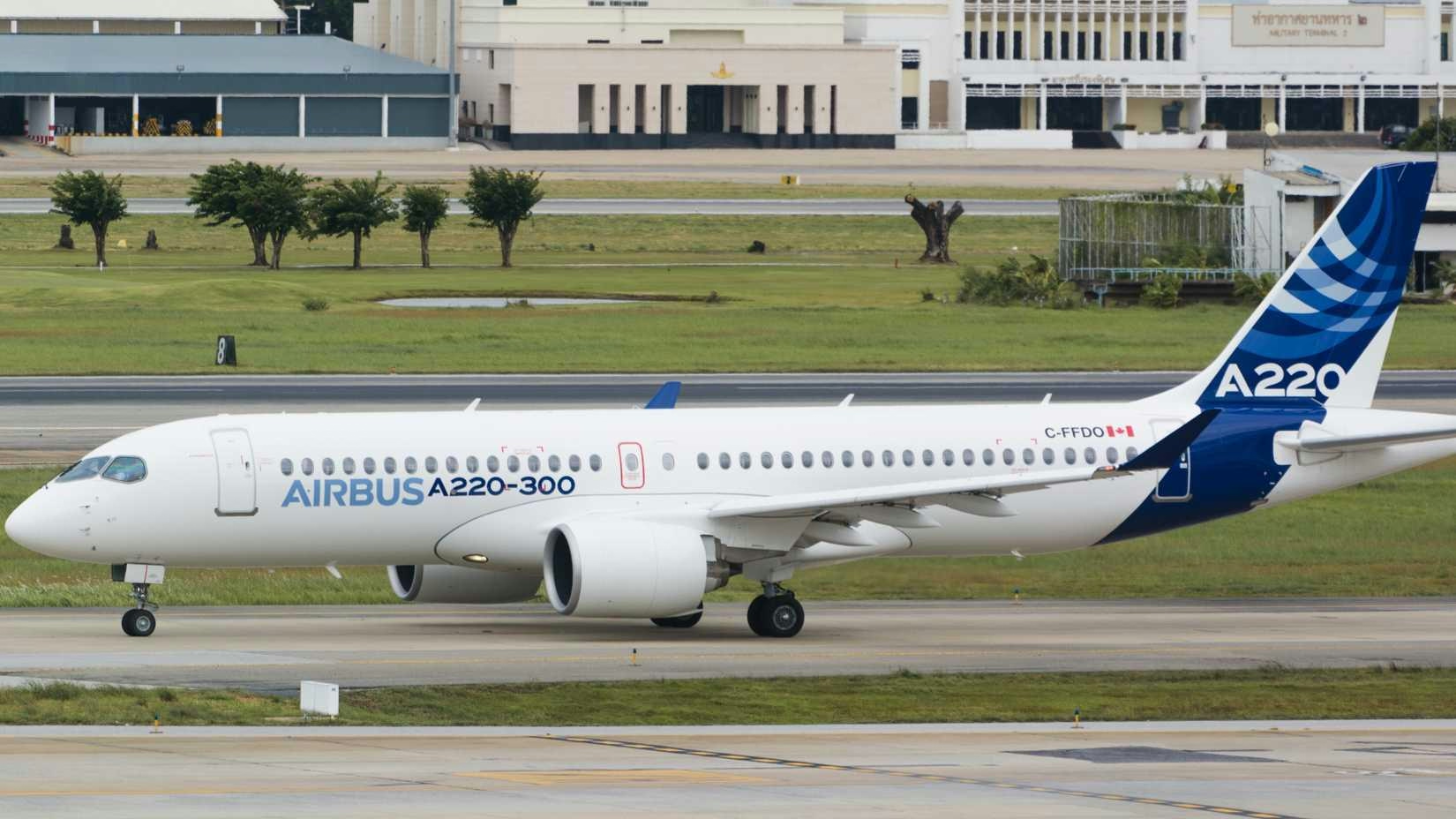
AirAsia Nears Landmark 100-Airbus A220 Deal Amid Industry Shifts
AirAsia is reportedly close to finalizing an order for approximately 100 Airbus A220 aircraft, a development that could significantly influence Airbus’s production strategies, profit margins, and delivery schedules for years ahead. Airbus shares have responded positively to the news, closing recently at €206.75, near their recent highs. Investor sentiment remains closely tied to the confirmation of the deal, its pricing structure, and the broader implications for Airbus’s production ramp-up.
Strategic Implications of AirAsia’s A220 Order
According to Reuters, Airbus is on the verge of securing a major contract with AirAsia for around 100 A220 jets. This order would not only extend the visibility and longevity of the A220 program but also diversify Airbus’s customer portfolio. The A220, a narrowbody aircraft optimized for short- and medium-haul routes with enhanced fuel efficiency, aligns well with AirAsia’s ambitions to expand its presence in regional markets.
A commitment of this magnitude over multiple years would strengthen the A220 backlog, support pricing discipline, and potentially improve profit margins as production volumes increase. For Airbus, clarity regarding delivery schedules, discounting policies, and contract options will be critical to maintaining positive market perception. Additionally, a bolstered order book would underpin future revenue streams from after-sales services.
This potential deal emerges amid broader industry challenges. Airbus CEO Guillaume Faury has recently emphasized significant trade-related risks and production recalls, highlighting the geopolitical tensions and supply chain complexities confronting major aircraft manufacturers. Ensuring supplier readiness and managing lead times remain essential as Airbus seeks to balance new orders with timely deliveries.
Market Dynamics and Competitive Landscape
The timing of AirAsia’s anticipated order coincides with its ongoing divestment from parent company Capital A, a strategic move expected to sharpen the airline’s focus on fleet expansion and network growth. This repositioning could enable AirAsia to better leverage new aircraft deliveries and capitalize on emerging regional opportunities.
At the same time, competition within the industry is intensifying. Air France-KLM continues to pursue fleet renewal alongside strategic investments in Scandinavian Airlines and TAP Air Portugal. These initiatives reflect a broader trend toward modernization and alliance-building, factors that may influence pricing and delivery slot availability across major carriers.
A near-100 aircraft commitment from AirAsia would further constrain A220 delivery slots, potentially impacting other buyers and enhancing Airbus’s negotiating leverage. As the A220 program scales, efficiencies gained through the learning curve and improved supplier terms could enhance unit economics. However, the balance between the A220 and the higher-margin A320neo family will remain a key consideration for Airbus’s overall profitability.
Airbus Stock Performance and Investor Considerations
Airbus shares recently closed at €206.75, approaching the year’s high of €221.30, with a market capitalization of €163.24 billion and a price-to-earnings ratio of 32.26. Technical indicators suggest a strong upward trend, with an RSI of 71.92 indicating overbought conditions, a MACD of 2.06, and an ADX of 26.13. Volatility remains elevated, as reflected by the Bollinger upper band at €209.82 and an average true range of €4.14.
For investors, particularly those in markets such as India where euro exposure is a factor, key catalysts include the formal confirmation of the deal, pricing relative to list prices, delivery phasing, and any embedded contract options. Airbus’s forthcoming earnings report on 19 February 2026, which will provide updates on deliveries and the A220 program, will be closely watched. Management commentary on supply chain stability and cash flow generation will also be pivotal.
As the aerospace industry contends with geopolitical uncertainties and competitive fleet renewal efforts, the outcome of AirAsia’s potential 100-plane order could set a significant precedent for Airbus and its global competitors in the decade ahead.

Etihad Airways Suspends Airbus A380 Flights on Key Route

Aditya Birla Group Seeks Approval for Aircraft Leasing in GIFT City

Qatar Airways Highlights Innovation and Connectivity at Arabian Travel Market 2026

Hong Kong's Five-Year Plan Includes Andrew Fan's Aircraft Parts Processing Hub Proposal

ACIA Aero Leasing Delivers ATR72-600 to Air Nostrum

RTX Appoints Jill Albertelli as Head of Pratt & Whitney

TAT Technologies Joins Beyond Aero Hydrogen Aircraft Program

AURAK Study Highlights Barriers to Air Taxi Adoption in Emerging Economies

Xiamen Air Selects Altitude for 787 Maintenance at Heathrow

Etihad and Swissport Extend Global Partnership
