
KI-Erkenntnisse in konkrete Maßnahmen überführen

Trends
Categories
Business Jet Market Forecast: Trends and Growth Drivers Through 2034
Business Jet Market Forecast: Trends and Growth Drivers Through 2034
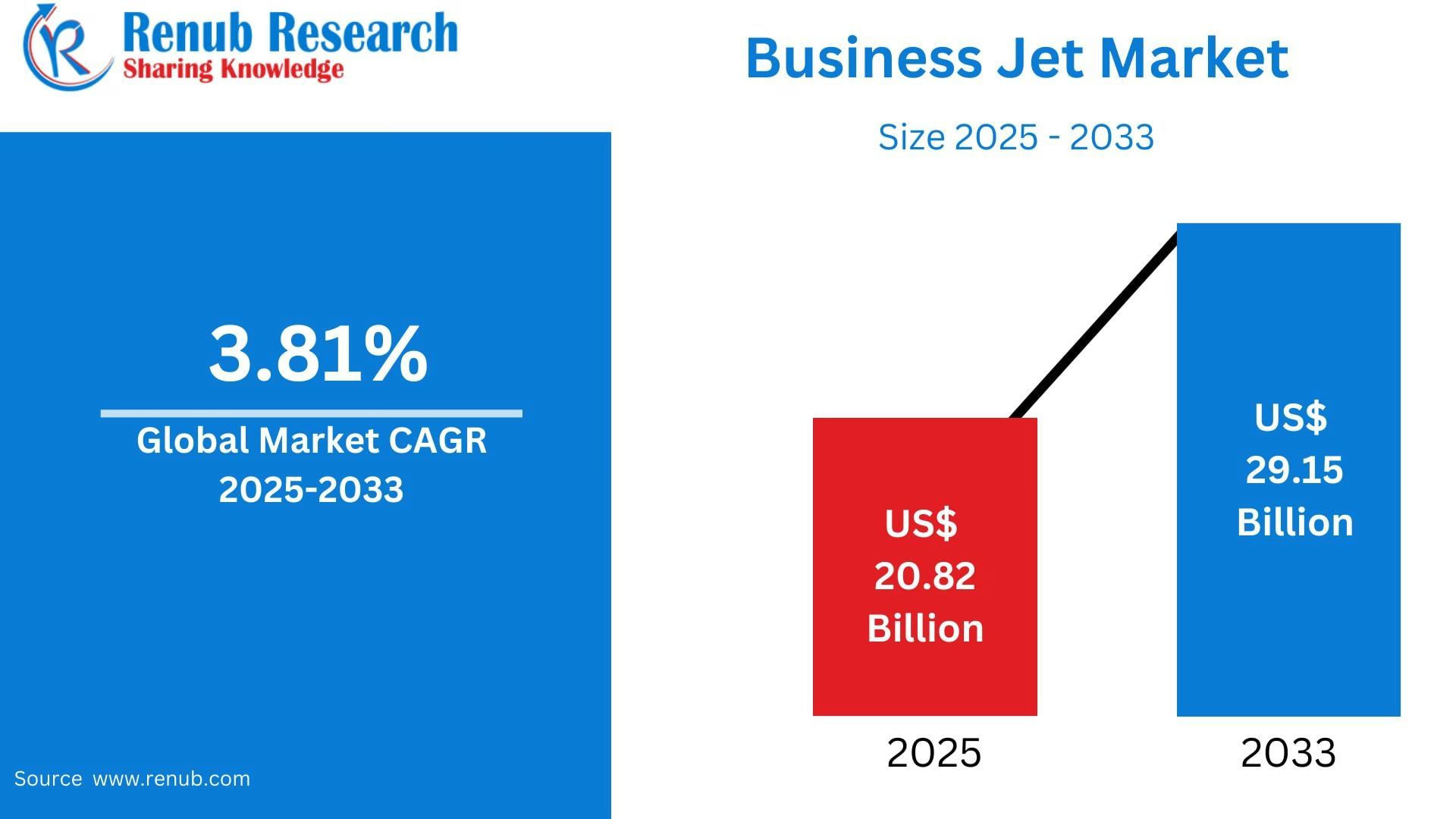
The global business jet market is set to experience steady expansion, transitioning from a symbol of luxury to a critical mobility solution for corporations, governments, and high-net-worth individuals. According to Renub Research, the market value is expected to grow from US$20.82 billion in 2025 to US$29.15 billion by 2034, representing a compound annual growth rate (CAGR) of 3.81% between 2026 and 2034.
Market Dynamics and Industry Overview
This anticipated growth is driven by increasing demand for time-efficient travel, a rising population of high-net-worth individuals (HNWIs), and continuous advancements in aircraft technology. As globalization deepens and corporate travel becomes more complex, business jets provide unparalleled flexibility, privacy, and direct access to thousands of secondary airports—advantages that commercial airlines cannot match.
The business jet sector encompasses the design, manufacturing, and operation of aircraft ranging from very light jets (VLJs) to large-cabin and ultra-long-range jets. These aircraft serve a diverse clientele, including entrepreneurs, multinational corporations, government officials, and VIP travelers. Beyond passenger transport, business jets play a vital role in medical evacuation, government missions, disaster response, and specialized cargo operations.
Technological Innovation and Sustainability
Modern business jets are outfitted with advanced avionics, fuel-efficient and quieter engines, extended range capabilities, and luxurious, connected cabin interiors. Predictive maintenance and digital monitoring systems are increasingly standard, enhancing reliability and operational efficiency. Sustainability has become a central focus, with manufacturers investing in sustainable aviation fuels (SAF), lightweight materials, and next-generation propulsion technologies to address environmental concerns.
Key Growth Drivers
The demand for time-efficient travel remains a primary growth driver. Business jets enable executives and entrepreneurs to bypass congested hubs, fly directly to smaller airports, and schedule multiple meetings across cities within a single day. This efficiency is particularly valuable for multinational corporations, private equity firms, government officials, and ultra-high-net-worth individuals. For personal use, privacy, security, and comfort further stimulate demand among affluent families and leisure travelers.
Technological advancements continue to propel the industry forward. New-generation jets feature cutting-edge avionics, improved fuel efficiency, reduced operating costs, and digitally connected cabins. Manufacturers are exploring hybrid-electric propulsion, AI-based flight management systems, and eco-friendly materials, enhancing both passenger experience and operational economics.
Evolving ownership and charter models are also expanding market accessibility. Fractional ownership, jet cards, and on-demand charter services allow customers to enjoy private jet travel without the full commitment of ownership, supporting broader adoption across different customer segments.
Market Challenges and Outlook
Despite promising growth prospects, the business jet market faces challenges, notably supply chain disruptions affecting critical materials such as steel, aluminum, and rare earth minerals. These disruptions can impact production schedules and increase operational costs. Nevertheless, the market has demonstrated resilience; for instance, short-term operational challenges like fuel supply interruptions have often resulted in heightened demand for business aviation services.
Manufacturers are responding by improving inventory management and strengthening supply chain resilience to adapt to evolving conditions. Financing activity remains robust, with JetLoan Capital reporting US$250 million in business jet transactions in 2025, underscoring sustained market confidence despite potential disruptions.
As business aviation becomes more accessible and technologically advanced, the sector is poised to maintain its growth trajectory through 2034. Continued innovation, evolving ownership models, and a strong emphasis on sustainability will shape the industry’s future, while proactive strategies to mitigate supply chain risks will be essential to sustaining momentum.

Etihad Airways Suspends Airbus A380 Flights on Key Route

Aditya Birla Group Seeks Approval for Aircraft Leasing in GIFT City

Qatar Airways Highlights Innovation and Connectivity at Arabian Travel Market 2026

Hong Kong's Five-Year Plan Includes Andrew Fan's Aircraft Parts Processing Hub Proposal

ACIA Aero Leasing Delivers ATR72-600 to Air Nostrum

RTX Appoints Jill Albertelli as Head of Pratt & Whitney

TAT Technologies Joins Beyond Aero Hydrogen Aircraft Program

AURAK Study Highlights Barriers to Air Taxi Adoption in Emerging Economies

Xiamen Air Selects Altitude for 787 Maintenance at Heathrow

Etihad and Swissport Extend Global Partnership
