
画像

エアロジニー — あなたのインテリジェントな副操縦士。

何でも尋ねてください。全てを分析してください。即座に行動してください。

現在のトレンド

Categories

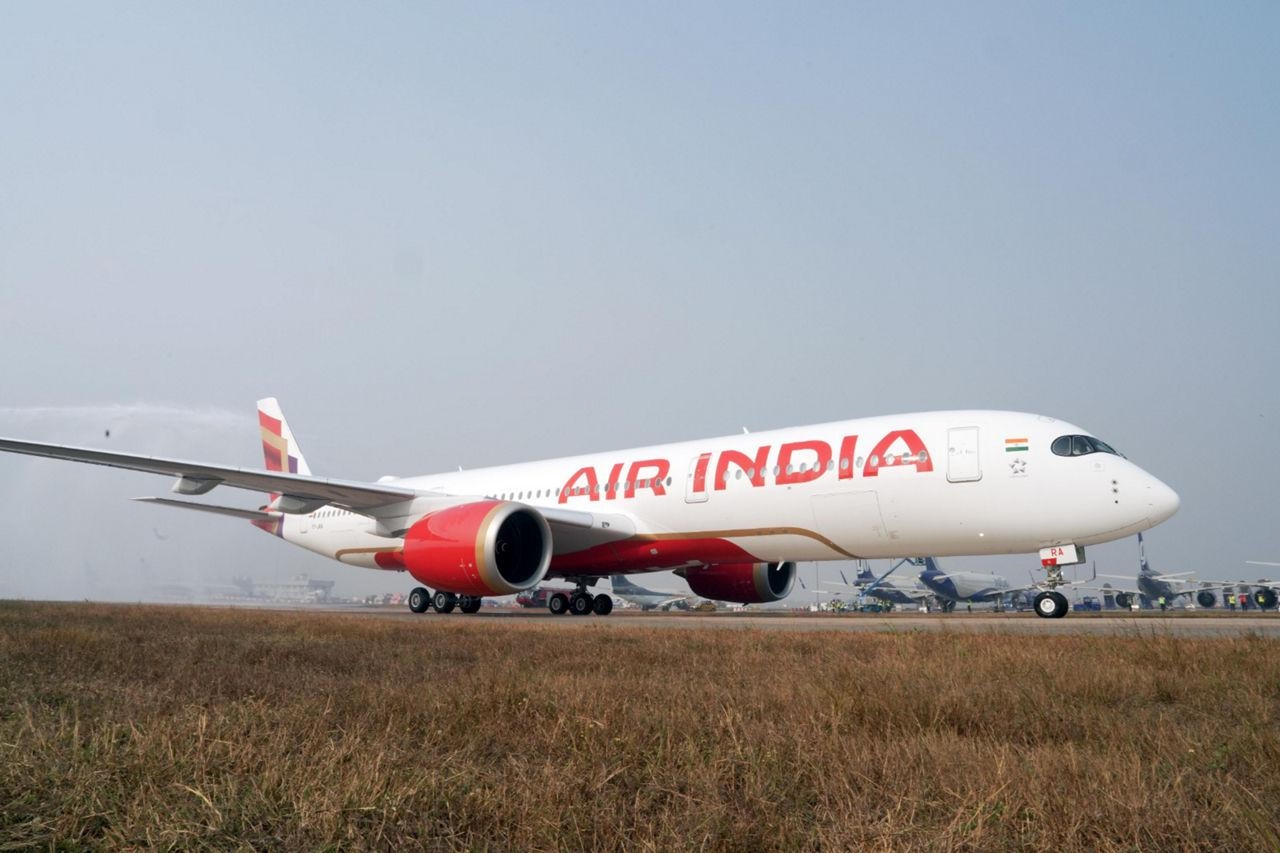
Air India Announces Delivery Schedule for A321neo, A350-1000, and 787-9 Aircraft
April 13, 2025By ePlane AI
Air India Announces Delivery Schedule for A321neo, A350-1000, and 787-9 Aircraft
0
0
Air India
A321neo
A350-1000

Air India Announces Delivery Schedule for A321neo, A350-1000, and 787-9 Aircraft

Major Fleet Modernization Underway

Air India Group, now under the ownership of the Tata Group, is advancing a landmark fleet renewal initiative that promises to transform its operational capabilities and competitive positioning within the Indian aviation sector. Central to this effort is an unprecedented order of 570 aircraft, among the largest in the history of commercial aviation. This extensive acquisition includes the latest models from Airbus and Boeing, notably the A321neo, A350-1000, 787-9 Dreamliner, and 777-9. These additions are expected to significantly expand Air India’s capacity and modernize its fleet.

Delivery Timeline and Deployment Plans

To date, the Air India Group—which comprises both Air India (AI) and Air India Express (IX)—has taken delivery of six Airbus A350-900s alongside more than 40 Boeing 737 MAX aircraft. The next phase of this fleet expansion is scheduled to commence in mid-2025, with the introduction of the first A321neo, A350-1000, and 787-9 Dreamliner aircraft. This phase represents a critical step in the airline’s strategy to increase capacity and enhance service offerings.

Air India Express will be the initial operator of the new A321neo, launching scheduled services from April 15, 2025. The inaugural routes will connect Delhi (DEL) with Bengaluru (BLR) and Srinagar (SXR), with subsequent expansions on April 20 to include Ayodhya (AYJ) and Jaipur (JAI). The A321neo will be configured with 180 economy seats and 12 business class seats, providing improved passenger options on key domestic routes. Currently, Air India operates two A321neos (registrations VT-RTC and VT-RTD) in a 192-seat dual-class layout.

Supply Chain Challenges and Operational Adjustments

Despite the progress, Air India continues to grapple with significant supply chain disruptions. CEO Campbell Wilson has acknowledged ongoing difficulties in procuring essential components such as engines, fuselages, and premium cabin seats. These challenges are expected to cause delivery delays from both Airbus and Boeing, potentially affecting the airline’s growth trajectory for the next four to five years. In response, Air India is extending the operational lifespan of older aircraft, which entails increased maintenance costs, and is facing obstacles in leasing additional planes due to global shortages. The airline is also exercising prudence regarding further Boeing orders amid manufacturing and regulatory constraints.

Widebody Fleet Expansion: A350-1000 and 787-9

The first A350-1000 destined for Air India is nearing completion at Airbus’s Toulouse facility and is anticipated to be delivered in 2026. Currently registered as F-WZFI, the aircraft will soon be re-registered under the VT-series for Indian operations. Concurrently, the initial Boeing 787-9 Dreamliners from the 2023 order are expected to arrive by the end of 2025. Three 787-9s are presently in production at Boeing’s Charleston, South Carolina plant, equipped with General Electric GEnx-1B engines.

Order Composition and Market Implications

Air India’s comprehensive 570-aircraft order includes 20 A350-900s, 20 A350-1000s, 140 A320neos, and 70 A321neos from Airbus, alongside 20 787-9 Dreamliners, 10 777X, and 190 737-8 MAX aircraft from Boeing. Additionally, a 2024 order comprises 10 more A350s and 90 A320 Family aircraft. This sweeping modernization is anticipated to provoke strategic responses from rival carriers, who may reassess their fleet plans in light of Air India’s expanded capacity. Industry analysts expect this development to intensify competition and elevate passenger service standards across the Indian aviation market.

Commitment to Sustainability and Efficiency

Air India’s investment in next-generation aircraft reflects a strong commitment to operational efficiency, passenger comfort, and environmental stewardship. The new A350 and 787-9 models offer substantial fuel savings and reduced emissions, aligning with global efforts to promote sustainable aviation. As these aircraft enter service from mid-2025 onward, Air India is positioned to lead the industry’s transition toward eco-friendly, high-capacity air travel.

Comments

  • A

    Anonymous

    Air india shame on you with so many poor people in your country.

More news
India’s Aviation Growth Hampered by Aircraft Delivery Delays

India’s Aviation Growth Hampered by Aircraft Delivery Delays

India’s Aviation Growth Hampered by Aircraft Delivery Delays Prolonged Delivery Delays Threaten Expansion India’s aviation sector, which has been experiencing rapid growth, now faces significant challenges as aircraft delivery delays extend up to 15 years. Despite Indian airlines placing orders for nearly 1,700 new planes, the expansion is being hindered by persistent backlogs. Civil Aviation Minister K. Rammohan Naidu has highlighted that these delays are largely due to ongoing global supply-chain disruptions that originated during the pandemic and continue to affect aircraft manufacturing worldwide. Recent setbacks, such as Boeing’s postponement of 737 Max deliveries caused by wiring issues, have further exacerbated the situation, demonstrating how manufacturing problems can disrupt delivery schedules and airline operations on a global scale. Financial Strain and Competitive Risks for Indian Carriers The impact of these delays extends beyond operational inconvenience, imposing substantial financial burdens on Indian airlines. To maintain service levels, carriers are compelled to keep aging aircraft in operation, resulting in increased leasing and maintenance costs. This financial strain is evident in the sector’s performance, with Indian airlines collectively reporting losses amounting to $576 million in the 2024-25 fiscal year, despite strong passenger demand. The inability to expand capacity by adding new routes or increasing flight frequencies also raises concerns about potential market share erosion, as more nimble domestic competitors and international carriers capitalize on these limitations. Government Initiatives: Balancing Imports and Domestic Production In response to the delivery bottleneck, the Indian government has adopted a dual approach. In the short term, efforts are underway to expedite aircraft imports to alleviate immediate shortages. Concurrently, there is a strategic emphasis on developing domestic manufacturing capabilities to reduce dependence on global supply chains. This includes collaborations with international aerospace firms such as Embraer and a joint venture between Hindustan Aeronautics Limited (HAL) and Russian partners aimed at producing the Sukhoi Superjet 100 within India. These initiatives are designed not only to enhance supply resilience but also to generate employment and foster long-term industry sustainability. Infrastructure Expansion Outpaces Fleet Growth While aircraft deliveries face delays, India’s airport infrastructure is expanding at a remarkable pace. The country currently operates 165 airports, with plans to add 50 more over the next five years and a target of exceeding 350 airports by 2047. Regional projects, including runway expansions like the one at Bhavnagar, are progressing steadily. However, the limited availability of new aircraft threatens to undermine the full utilization of this growing infrastructure, potentially constraining the sector’s overall capacity and efficiency. Workforce Challenges and Market Dynamics The delivery delays are also impacting the broader aviation ecosystem. Policymakers estimate that India will require approximately 30,000 new pilots in the coming years to support anticipated growth. The disparity between expanding infrastructure and constrained fleet size is affecting multiple facets of the industry, including route development, cargo operations, crew training, and commercial planning. In light of these challenges, some airlines may consider diversifying their supplier base or revising expansion strategies to adapt to the uncertain delivery timelines. Navigating a Complex Future India’s aviation industry now stands at a critical juncture. The government’s commitment to fostering domestic aircraft production marks a significant strategic shift toward self-reliance, but establishing local manufacturing capabilities will demand considerable time and investment. Meanwhile, airlines, investors, and infrastructure planners must contend with an environment where large aircraft orders do not necessarily translate into timely deliveries. The sector’s growth trajectory will increasingly depend on the ability to overcome these delivery constraints and ensure that new planes are available to meet rising demand.
Delta Air Lines A330 Engine Catches Fire During Takeoff in São Paulo

Delta Air Lines A330 Engine Catches Fire During Takeoff in São Paulo

Delta Air Lines A330 Engine Catches Fire During Takeoff in São Paulo Delta Air Lines flight DL104 experienced a critical engine failure on Monday shortly after departing from São Paulo’s Guarulhos International Airport. The Airbus A330-300 suffered a catastrophic malfunction in its left engine, resulting in the ejection of burning debris and a subsequent fire in the grass adjacent to the runway. Despite the severity of the incident, the flight crew successfully executed an emergency return and landing, with no injuries reported among the 288 passengers and crew members on board. Incident Details and Initial Investigation The aircraft was powered by Pratt & Whitney PW4168A engines. Preliminary assessments suggest that the engine failure may have been caused by the ingestion of foreign objects or a bird strike, as bird activity had been reported near the airport minutes before takeoff. Brazil’s Aeronautical Accidents Investigation and Prevention Center (CENIPA) has launched a formal inquiry to determine the precise cause of the malfunction. Due to maintenance work closing runway 10R/28L, the A330 was forced to land on the same runway 10L from which it had departed just ten minutes earlier. Airport operations were temporarily disrupted while emergency teams contained the fire near the runway. Broader Context and Industry Implications This incident comes amid heightened scrutiny of aviation safety following similar engine-related emergencies involving other carriers such as Southwest Airlines and Air Canada. These events have prompted regulatory authorities to intensify oversight and have led airlines to reexamine their maintenance and safety protocols. For Delta Air Lines, the event presents immediate challenges, including the technical investigation and potential repair or replacement of the damaged engine. Additionally, the airline faces the task of managing passenger confidence and safeguarding its public reputation. Industry analysts note that such incidents can lead to a short-term decline in the airline’s stock value, while competitors like United Airlines may leverage the situation to emphasize their own safety records and attract market share. Delta Air Lines has reaffirmed its commitment to safety and pledged full cooperation with Brazilian authorities throughout the investigation. Passengers affected by flight DL104 have been accommodated on alternative flights and provided with necessary assistance following the incident.
A. Lulki Design Bureau Awaits Development of Anti-Gravity Engines for Fighters

A. Lulki Design Bureau Awaits Development of Anti-Gravity Engines for Fighters

A. Lulki Design Bureau Anticipates Breakthroughs with Anti-Gravity Engines for Fighter Aircraft The A. Lulki Design Bureau, a prominent division within the United Engine Corporation (UEC), is preparing for a transformative shift in fighter aircraft propulsion. Evgeny Marchukov, the bureau’s General Designer, emphasized that while current combat aircraft engines have service lives extending up to 50 years, the future of aviation power plants lies in fundamentally new physical principles. He envisions anti-gravity engines—operating not through conventional reactive thrust but via the interaction of fields—as the next significant advancement in aerospace technology. Marchukov drew parallels between this prospective innovation and the revolutionary insights of Einstein, underscoring the necessity of forward-looking research in engine development. “It is already necessary to look into the future and think about promising engines,” he stated, highlighting the bureau’s commitment to pioneering technologies beyond the present paradigm. Technological Achievements and Ongoing Challenges The bureau has made notable progress in propulsion technology, including the development of controlled thrust vectoring, a capability credited to domestic engineers. Despite these advances, Marchukov acknowledged persistent technical challenges, particularly in maintaining the stable operation of the low-pressure compressor and the engine as a whole. He remarked on the complexity of these tasks, noting that such engineering feats are rare even among foreign competitors. “Perhaps, therefore, I assume that our foreign colleagues do not have such pirouettes on airplanes. It’s not that simple, but we succeeded, and we will continue to develop this technology,” he explained. Currently, Russia’s most advanced fighter engine, known as “Product 30” or the “second stage” engine, exemplifies the bureau’s capabilities. This engine achieves a thrust-to-weight ratio of 1.36 and delivers 18,000 kgf in afterburner mode, setting a high benchmark for modern combat aircraft propulsion. Competitive and Collaborative Landscape Despite its ambitions, the Lulki Design Bureau faces significant competition from established aerospace firms such as Dassault, which is advancing its Vortex spaceplane project. Market responses to anti-gravity propulsion remain cautious, with some investors expressing skepticism regarding its feasibility and practical application in conventional fighter jets. Meanwhile, traditional aerospace companies continue to invest heavily in proven propulsion technologies, even as they explore emerging concepts like hypersonic engines. International collaboration further complicates the bureau’s prospects. The challenges encountered by the French-German fighter program illustrate the difficulties inherent in multinational defense projects, potentially impacting Lulki’s partnerships and funding avenues. As the aerospace sector advances, the Lulki Design Bureau’s pursuit of anti-gravity engines embodies both the ambition and uncertainty that accompany efforts to redefine the future of aviation technology.
Airport360 Expo 2026 to Highlight India’s Aviation Growth and Innovation

Airport360 Expo 2026 to Highlight India’s Aviation Growth and Innovation

Airport360 Expo 2026 to Highlight India’s Aviation Growth and Innovation India’s aviation sector is on the cusp of significant expansion, with domestic passenger traffic expected to reach 300 million by 2030 and the commercial aircraft fleet projected to nearly double to around 1,100 aircraft by 2027. Against this backdrop, the Airport360 Expo 2026, scheduled for April 23–24 at the Bombay Exhibition Centre in Mumbai, is positioned as a crucial platform for industry stakeholders to engage with the next phase of airport development and passenger mobility. A Global Gathering of Aviation Stakeholders The expo will bring together airport operators, airlines, aviation authorities, technology providers, and infrastructure developers from more than ten countries, including Germany, Nepal, Singapore, Oman, and Thailand. Organizers anticipate over 2,200 attendees, more than 50 exhibitors, and upwards of 100 aviation professionals and decision-makers, underscoring the event’s international significance. This convergence aims to foster collaboration across the global aviation value chain, facilitating dialogue on innovation and infrastructure development. Taher Patrawala, Managing Director of Media Fusion, highlighted the sector’s rapid transformation, noting that India will require nearly 37,000 pilots and 38,000 maintenance technicians over the next two decades. He emphasized the critical need for coordinated innovation spanning infrastructure, technology, and human capital to sustain this growth trajectory. Challenges Amidst Rapid Growth Despite the promising outlook, India’s aviation sector faces notable challenges. Industry analysts, including the travel intelligence firm Skift, have identified persistent infrastructure and policy hurdles that could impede the country’s ability to fully capitalize on its tourism and aviation potential. Enhancing connectivity and streamlining travel processes remain urgent priorities. These challenges resonate with global market experiences, such as in Brazil, where Azul CEO John Rodgerson has pointed to structural barriers and a high incidence of passenger lawsuits as significant constraints on aviation market development. Such examples may serve as cautionary tales for India as it scales its aviation industry. Innovation and Regulatory Focus The competitive landscape is also evolving, with Airbus recently expanding its Bengaluru technology hub to bolster India’s engineering and maintenance talent pool. This strategic investment supports both domestic growth and global aircraft programs, reflecting a broader industry trend toward strengthening local capabilities to meet rising demand for skilled aviation professionals. Innovation will be a central theme at Airport360 Expo 2026, with regulatory discussions on emerging technologies such as drones and autonomous aircraft expected to take prominence. Panels like Verticon, which focus on the evolving regulatory framework for unmanned and autonomous aviation, are anticipated to influence the sector’s innovation trajectory and policy environment. As India’s aviation sector accelerates, Airport360 Expo 2026 is set to provide a comprehensive forum for addressing the opportunities and challenges that will shape the industry’s future.
The Six Commercial Aircraft with the Largest Wingspans in Operation

The Six Commercial Aircraft with the Largest Wingspans in Operation

The Six Commercial Aircraft with the Largest Wingspans in Operation The evolution of commercial aviation continues to be marked by a pursuit of greater fuel efficiency and increased payload capacity, driving manufacturers to design aircraft with ever-larger wingspans. This trend reflects the industry's response to shifting demands for enhanced performance, operational efficiency, and environmental sustainability. Leading the Field: Airbus A380 and Boeing 747 At the forefront of this category stands the Airbus A380, the world’s largest passenger aircraft by seating capacity. Despite its remarkable size and range, the A380 has experienced a decline in orders as airlines increasingly prioritize smaller, more fuel-efficient jets. Similarly, the iconic Boeing 747, once a symbol of long-haul travel, is witnessing reduced demand, mirroring a broader industry shift away from four-engine aircraft in favor of more economical twin-engine models. The Antonov An-225 Mriya, which previously held the record for the largest commercial wingspan, was destroyed during the Russian invasion of Ukraine in 2022. Although there is hope that a second unfinished prototype may eventually be completed, the following six aircraft currently represent the widest commercial jets in active service. The Six Largest Commercial Aircraft by Wingspan The Airbus A350-1000, with a wingspan of 212 feet, is the largest and most advanced member of the A350 family. As a clean-sheet, next-generation widebody, it incorporates advanced composite materials and is powered by Rolls-Royce Trent XWB-97 engines, delivering exceptional fuel efficiency and range. Airlines such as Qantas are preparing to deploy specially modified A350-1000ULR variants for ultra-long-haul routes, including the world’s longest nonstop flights from Australia to London and New York, scheduled to commence in 2027. Passenger comfort is a key feature of the A350, which offers the Airspace cabin with lower cabin altitude, enhanced air quality, quieter interiors, and customizable LED lighting. Qatar Airways is currently the largest operator, with 28 aircraft in service. The Boeing 777-300ER also features a wingspan of 212 feet and has been instrumental in the transition from four-engine to twin-engine long-haul aircraft. Equipped with powerful GE90-115B engines, it has enabled reliable transoceanic flights and remains a favorite among airlines. With approximately 700 units still in active service, the 777-300ER is one of the most significant widebodies in commercial aviation history. Market Trends and Industry Responses The mixed market reception to large aircraft reflects evolving airline strategies. While some carriers continue to value the capacity and range offered by superjumbos, many are shifting toward more modern and efficient models. Manufacturers are responding with innovative designs such as the Boeing 777X, which features folding wingtips to maximize wingspan while maintaining compatibility with existing airport infrastructure. Similarly, the Airbus A350 XLR targets ultra-long-range routes with enhanced efficiency. Environmental considerations are increasingly shaping the competitive landscape, with growing interest in electric and hybrid-electric propulsion technologies. These advancements have the potential to further transform the market as airlines strive to balance capacity, range, and sustainability. As the aviation industry advances, the six commercial aircraft with the largest wingspans remain engineering marvels, embodying both the ambition of past decades and the ongoing pursuit of smarter, greener flight.
Airbus Wins Air China Cargo Order Despite Boeing Share Gains

Airbus Wins Air China Cargo Order Despite Boeing Share Gains

Airbus Secures Major Air China Cargo Order Amid Intensifying Competition with Boeing Air China Cargo has placed a significant order for up to ten Airbus A350 freighters, marking a notable development in the ongoing rivalry between Airbus and Boeing. This deal, reportedly secured at a substantial price discount, highlights the increasingly aggressive pricing strategies and shifting airline preferences that are reshaping the global widebody freighter market. Air China Cargo’s Strategic Shift to Airbus The agreement involves six firm orders for Airbus A350F aircraft, with options for an additional four, carrying a list price valuation exceeding $4 billion. However, Air China Cargo has emphasized that the final negotiated price reflects a considerable reduction from the list figures, offering rare insight into the commercial pressures affecting widebody freighter sales. The A350F, expected to enter service later this decade, is positioned as a next-generation freighter designed to meet stringent emissions regulations while delivering improved fuel efficiency and payload capabilities. This acquisition represents a strategic diversification for Air China Cargo, which currently operates a fleet dominated by Boeing 777 freighters. By incorporating the A350F, the airline is broadening its fleet composition, signaling a shift in procurement strategy that challenges Boeing’s historical dominance in the cargo sector, particularly with its 747 and 777 freighter models. The deal underscores how competitive pricing and delivery availability can influence airline decisions, even when existing fleet loyalties might suggest otherwise. Boeing’s Resilience Amid Market Challenges Despite losing this high-profile contract, Boeing’s shares have risen in recent trading sessions, reflecting investor confidence in the company’s broader operational and financial outlook. The firm’s performance in February, which saw deliveries reach a nine-year high, alongside ongoing efforts to stabilize production lines, has bolstered market sentiment. Boeing is also intensifying production of its 737 MAX to maintain competitiveness in the single-aisle segment, while focusing on generating positive free cash flow and reducing debt levels. These initiatives are critical as Boeing navigates supply chain challenges and responds to sustained demand for both passenger and cargo aircraft. The company’s ability to restore margins and ramp up output will be pivotal in maintaining its market position amid Airbus’s aggressive pricing and delivery strategies. Broader Market Implications and Competitive Dynamics The Air China Cargo order is part of a wider trend in the aviation industry, with other carriers such as Atlas Air Worldwide Holdings also opting for Airbus freighters. This shift reflects Airbus’s success in leveraging delivery performance and competitive pricing to capture market share in segments traditionally dominated by Boeing. For investors, the modest appreciation in Boeing’s stock price suggests confidence in the company’s long-term fundamentals, including the recovery of global air travel and ongoing fleet renewal demands. The evolving strategies of both manufacturers—Airbus’s discounting approach and Boeing’s production ramp-up—are set to continue shaping the competitive landscape as airlines adapt to new regulatory requirements and operational priorities.
Why Airlines Choose Airbus or Boeing, Not Both

Why Airlines Choose Airbus or Boeing, Not Both

Why Airlines Choose Airbus or Boeing, Not Both As global air travel recovers and aircraft orders increase, a distinct pattern has emerged within the aviation industry: airlines are increasingly committing to either Airbus or Boeing, rather than dividing their fleets between the two manufacturers. This trend reflects not only the dominance of these two aerospace giants but also the strategic, financial, and operational factors that influence contemporary fleet management decisions. The Duopoly Shaping Commercial Aviation For many decades, Airbus and Boeing have effectively controlled the commercial aircraft market, supplying the overwhelming majority of jets worldwide. Recent industry data confirms their sustained dominance, with Airbus currently leading in overall deliveries, particularly in the high-demand single-aisle segment, while Boeing retains a strong position in the long-haul widebody category. Between 2015 and 2024, Airbus secured more orders, yet Boeing delivered a comparable number of aircraft, underscoring the close competition between the two manufacturers. This duopoly provides airlines with both advantages and limitations. The extensive production capabilities and substantial order backlogs of Airbus and Boeing guarantee long-term support, parts availability, and ongoing development of new models well into the 2040s. However, the absence of similarly sized competitors means that selecting one manufacturer carries significant implications across all facets of an airline’s operations. Strategic Considerations and Market Dynamics Airlines’ preferences for Airbus or Boeing are shaped by the distinct strengths each company offers. Airbus has cultivated a strong reputation for its widebody aircraft, while Boeing is often favored for its narrowbody jets. These choices are influenced by factors such as fleet compatibility, maintenance expenses, and specific aircraft performance characteristics. The market closely monitors major fleet decisions, which can have notable impacts on investor sentiment. For example, Airbus’s robust delivery figures reported in February 2026 and Boeing’s best January delivery performance since 2019 were met with positive investor reactions. Competitors also respond strategically; GOL’s recent decision to incorporate Airbus A330-900s into its fleet exemplifies a tactical move to maintain competitiveness in a shifting market. The Importance of Fleet Commonality A compelling rationale for airlines to concentrate their fleets with a single manufacturer is the operational efficiency gained through fleet commonality. Operating a homogeneous fleet enables airlines to standardize pilot training, maintenance protocols, spare parts inventories, and cabin configurations. This standardization reduces operating costs and enhances scheduling flexibility. For instance, pilots trained on the Airbus A320neo can transition to other Airbus models with minimal additional training, a benefit similarly observed within Boeing’s product families. Maintenance operations also become more streamlined. Airlines can minimize the number of spare engines, landing gear components, and avionics units required when their fleet shares common designs. Engineering teams operate more efficiently, and technicians can service multiple aircraft types with greater expertise. These efficiencies are particularly valuable as airlines expand capacity to meet growing passenger demand. Future Outlook Industry forecasts indicate that narrowbody aircraft will continue to represent approximately three-quarters of global deliveries through the early 2030s, reinforcing the central role of the Airbus A320neo and Boeing 737 MAX families. Given the significant future seat capacity tied to these platforms, airlines are incentivized to consolidate orders with a single supplier to secure more favorable pricing and earlier delivery schedules. Ultimately, the choice between Airbus and Boeing extends beyond the acquisition of aircraft; it represents a long-term strategic partnership that will influence an airline’s competitive position for decades.
Air India Withdraws A350-900 from Domestic Routes to Focus on London, New York, and Newark for Summer 2026

Air India Withdraws A350-900 from Domestic Routes to Focus on London, New York, and Newark for Summer 2026

Air India Withdraws A350-900 from Domestic Routes to Prioritize London, New York, and Newark for Summer 2026 In a notable realignment of its fleet strategy, Air India has announced the withdrawal of its Airbus A350-900 aircraft from domestic routes, redirecting these widebody jets to key international services for the Summer 2026 schedule. Official flight program documents and airline deployment data confirm that the A350-900s will now primarily serve the Delhi-London Heathrow, Delhi-New York JFK, and Delhi-Newark Liberty corridors. This strategic shift reflects the airline’s ongoing fleet modernization efforts and a renewed focus on high-yield long-haul markets. Strategic Shift Amid Changing Aviation Landscape This decision coincides with broader transformations within India’s aviation sector. Government statistics reveal a 10% reduction in weekly domestic flights across all carriers for Summer 2026, signaling shifting demand patterns that have compelled airlines to reassess their resource allocation. Air India’s redeployment of the A350-900, an aircraft optimized for extended range, enhanced passenger comfort, and premium cabin configurations, aligns with this trend by concentrating its most advanced aircraft on international routes that promise greater revenue potential. Previously, the A350-900 had been sporadically deployed on major domestic trunk routes such as Bengaluru, Mumbai, Hyderabad, and Chennai, primarily for crew training and aircraft familiarization purposes. However, these deployments were not formalized in published schedules. The Summer 2026 timetables now clearly designate the A350-900 exclusively for international operations, where the aircraft’s capabilities can be fully leveraged to meet complex regulatory requirements and passenger expectations. This reallocation occurs amid regulatory pressures aimed at making domestic air travel more affordable, including mandates that at least 60% of seats be sold without additional fees. Air India’s decision to limit the use of widebody aircraft like the A350 on domestic routes may invite scrutiny from regulators and passengers concerned about diminished domestic capacity and fewer premium travel options within India. Financial and Competitive Context The airline’s move also reflects the financial and competitive challenges facing Indian carriers. Despite strong growth in domestic air travel demand, the sector collectively reported losses amounting to $576 million in the 2024-25 fiscal year, underscoring persistent operational difficulties. Concurrently, international competitors such as China Eastern Airlines are expanding their presence on Europe-Asia routes, potentially capturing market share as Indian airlines concentrate resources on select international sectors. Implications for Domestic Services Earlier industry reports had suggested the possibility of A350 services to Bengaluru and Hyderabad, with daily and twice-weekly frequencies respectively. However, these plans have not been incorporated into Air India’s official Summer 2026 schedules or government filings. Aviation analysts interpret these earlier projections as preliminary and not indicative of confirmed service allocations. The absence of these routes in booking systems further highlights Air India’s strategic prioritization of international sectors, where the A350’s advanced features and premium offerings can be most effectively utilized. As Air India advances its fleet transformation, the redeployment of the A350-900 underscores the airline’s commitment to strengthening its international network, even as it contends with regulatory expectations and a challenging domestic financial environment.
Delta Air Lines Revives the 'Queen of the Skies' Aircraft

Delta Air Lines Revives the 'Queen of the Skies' Aircraft

Delta Air Lines Revives the ‘Queen of the Skies’ Aircraft The Final Chapter of the Boeing 747 at Delta In its final years of service with Delta Air Lines, the Boeing 747—fondly known as the ‘Queen of the Skies’—experienced a notable resurgence in popularity. Aviation enthusiasts and frequent travelers alike sought the opportunity to fly aboard the iconic jumbo jet before its retirement from U.S. passenger service. Announcements of farewell tours and final routings generated significant demand, culminating in a sold-out last flight from Detroit to Seoul in December 2017. Despite strong passenger loads and profitable cargo operations on transoceanic routes, the aircraft’s retirement was ultimately driven by economic considerations rather than a lack of demand. The Boeing 747-400, when compared to the newer Airbus A350-900s that Delta had on order, consumed approximately 25% more fuel per seat and required increasingly complex and costly maintenance. As the fleet dwindled to fewer than ten aircraft, the looming expenses associated with heavy-maintenance checks rendered continued operation financially unsustainable. Although the 747 remained beloved by passengers, employees, and aviation enthusiasts, its operating costs no longer aligned with Delta’s evolving financial priorities. Strategic Importance and Industry Shifts Delta’s decision to retain the 747-400s was closely tied to its 2008 merger with Northwest Airlines. This merger significantly expanded Delta’s Pacific network, inheriting routes from Detroit, Minneapolis, and Seattle to major Asia-Pacific hubs such as Tokyo, Seoul, and Shanghai. At that time, the 747-400 was the only aircraft capable of sustaining Northwest’s transpacific schedule without compromising seat or cargo capacity. Delta’s largest existing aircraft, the 777-200ER, was considerably smaller and lacked the 747’s cargo volume, making the continued use of the 747s essential for maintaining network continuity, especially at slot-constrained airports like Tokyo Narita and Seoul Incheon. Since then, the airline industry has undergone profound changes. Volatile fuel prices, intensified by geopolitical tensions such as the conflict involving Iran, have posed ongoing challenges for carriers operating fuel-intensive aircraft. Delta, however, benefits from a unique strategic advantage: ownership of the Monroe Energy refinery. This vertical integration allows the airline to better manage fuel costs relative to competitors, mitigating the impact of price surges that have affected the broader industry. Navigating Challenges and Sustaining Competitiveness Delta’s focus on premium services has further strengthened its market position. Even amid rising fuel prices, the airline has outperformed many rivals, prompting competitors to enhance their own premium offerings in response. Recent leadership changes within Delta’s executive ranks underscore a commitment to sustaining the airline’s business model and competitive edge well into the future. Broader industry challenges, including operational disruptions caused by Department of Homeland Security shutdowns, continue to influence the environment in which Delta operates. Nevertheless, the airline’s proactive strategies—ranging from fleet modernization to vertical integration in fuel supply—have positioned it to navigate these headwinds more effectively than many of its peers. While the retirement of the Boeing 747 marked the end of a significant era for Delta, the airline’s capacity to adapt both operationally and strategically remains a defining feature of its role in a rapidly evolving aviation industry.
Inside MRO: Key Maintenance Deals Shaping March–April 2026

Inside MRO: Key Maintenance Deals Shaping March–April 2026

Inside MRO: Key Maintenance Deals Shaping March–April 2026 The maintenance, repair, and overhaul (MRO) sector is experiencing a notable surge in activity during March and April 2026, driven by airlines and aerospace companies striving to secure capacity and support for the coming decade. This period has seen significant developments ranging from expanded airframe support pools to the adoption of advanced digital maintenance systems, reflecting the industry's response to evolving market demands. Airlines Secure Long-Term Support Amid Fleet Expansion Recent weeks have witnessed airlines strengthening their partnerships with established MRO providers, underscoring confidence in sustained fleet growth and the necessity of securing shop capacity well into the 2030s. Industry analysts observe that the commercial aircraft MRO market is closely aligned with rising global air traffic and the expansion of narrowbody fleets. This trend has prompted carriers to proactively enter into multi-year agreements to ensure maintenance continuity. Notable contracts have been finalized between leading airlines and prominent global MRO firms such as Lufthansa Technik, ST Engineering, AFI KLM E&M, Delta TechOps, and AAR. These agreements typically encompass scheduled shop visits, on-wing support, and access to pooled spare parts, providing airlines with predictable maintenance costs while guaranteeing providers a steady workflow across engine and component portfolios. Increasingly, these long-term contracts are structured around usage and flight-hour metrics, aligning maintenance expenditures with actual aircraft utilization and mitigating volatility linked to traffic fluctuations. The months of March and April 2026 have been particularly active for the signing or extension of these comprehensive frameworks. On the narrowbody front, engines from the CFM56 family and the newer Leap variants remain central to long-term arrangements. MRO providers are investing in additional overhaul lines and capability enhancements, especially in Asia and the Middle East, to meet anticipated demand. Airlines, in turn, are seeking assurances regarding turnaround times and pricing for these high-demand engine types. Regional and Niche Carriers Embrace OEM Pool Programs Beyond the major global airlines, regional and niche operators are increasingly adopting OEM-backed pool programs and integrated support packages. Recent agreements include multi-year maintenance and spares access tailored for regional jet fleets, with Embraer emerging as a key provider of comprehensive component coverage for E-Jet operators. These arrangements typically grant carriers access to centralized inventories of rotable components, repair and overhaul services, and technical support, often structured around fixed monthly fees linked to the number of aircraft in service. For smaller operators, this model reduces capital tied up in parts and simplifies logistics, particularly for aircraft operating in remote or underserved regions. Analysts monitoring the deal flow in March 2026 highlight the growing appeal of these models in emerging markets, where local MRO infrastructure remains limited despite robust traffic growth. By leveraging OEM or global provider networks, smaller carriers can enhance dispatch reliability without the need to develop full in-house maintenance capabilities. Cargo and charter operators are also exploring similar support structures for converted freighter fleets and specialized cabin configurations. Market Challenges and Competitive Responses Despite the sector’s momentum, the MRO industry faces mounting challenges. Intense competition for used aircraft and engine feedstock is driving acquisition costs higher, a concern underscored by AerSale, which has highlighted the hypercompetitive nature of the market for pre-owned assets. This environment is encouraging airlines to diversify their MRO partnerships to better manage unpredictable engine overhaul costs and turnaround times. For instance, StandardAero’s recent agreement with Robinson Helicopter Company exemplifies this broader trend of carriers seeking alternative maintenance providers. In response to these challenges, competitors are expanding their capabilities to capture new business opportunities. Setna iO’s acquisition of J&C Aero, aimed at enhancing aircraft interior services, signals a wider industry push to offer more comprehensive MRO solutions amid shifting market dynamics. As airlines and MRO providers navigate these evolving challenges, the agreements and strategic initiatives established in March and April 2026 are poised to influence the sector’s trajectory for years ahead.
line









