
AIによるインサイトを行動へとつなげる

現在のトレンド
Categories
Air India Orders 30 Boeing 737s, Converts Airbus A321neos to XLRs
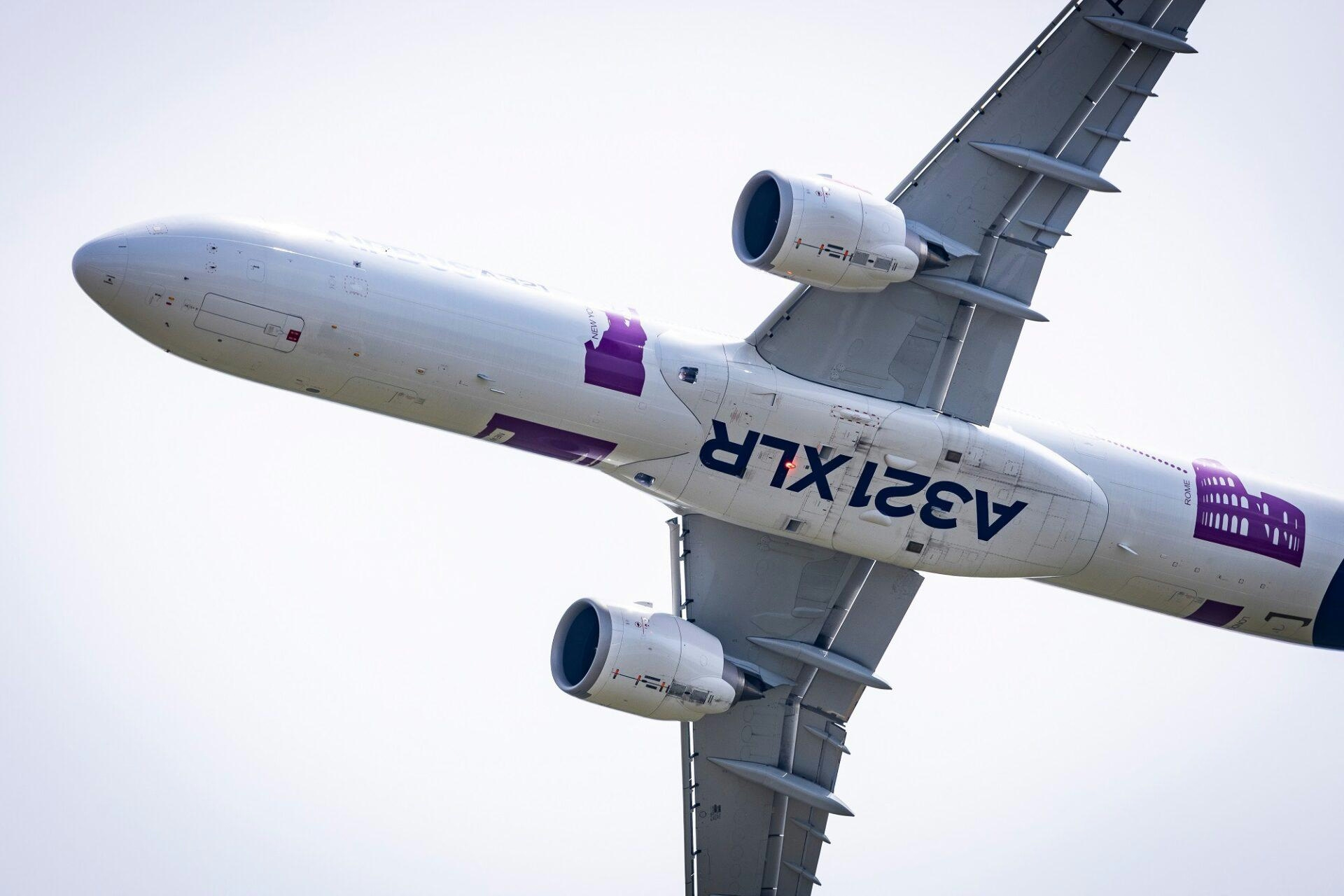
Air India Expands Fleet with New Boeing 737 Orders and Airbus A321XLR Conversions
Air India commenced the Wings India 2026 event in Hyderabad by announcing significant fleet expansion plans, reinforcing its position in the competitive aviation market. On January 29, 2026, the airline declared an order for 30 additional Boeing aircraft, comprising 20 737 MAX 8s and 10 737 MAX 10s. This latest acquisition supplements Air India’s substantial 2023 commitment of 220 Boeing jets, elevating its total Boeing orders to 250 aircraft.
Campbell Wilson, CEO of Air India, described the new order as a critical component of the airline’s long-term fleet strategy. He emphasized that these acquisitions are designed to ensure steady deliveries and facilitate planned fleet upgrades, positioning Air India as a world-class global carrier that meets both national aspirations and international expectations.
To date, Air India has received 52 aircraft from its 2023 Boeing order, including 51 737-8s currently operated by Air India Express. Additionally, a new 787-9 is scheduled to commence service on the Mumbai–Frankfurt route starting February 1, 2026. Paul Righi, Boeing’s Vice President of Commercial Sales and Marketing for Eurasia, India, and South Asia, highlighted the strong performance of Air India’s existing 737-8 fleet and noted that the new order will support the airline’s efforts to expand connectivity across India and the broader South Asia region.
Strategic Shift to Airbus A321XLR Variant
In a parallel development, Air India announced the conversion of 15 of its existing Airbus A321neo orders to the longer-range A321XLR variant. This marks the airline’s first adoption of Airbus’s latest single-aisle model and forms part of its broader Airbus procurement strategy initiated in 2023 and 2024. These orders include 50 A350 widebodies and 300 A320 family aircraft. Of the original 210 A321neos ordered, 15 will now be delivered as A321XLRs, with deliveries anticipated between 2029 and 2030.
Wilson explained that this strategic conversion aligns with Air India’s vision of future-proofing its fleet. He noted that while the airline is accelerating the modernization of its current fleet through new and retrofitted aircraft, it is simultaneously building a versatile and scalable future fleet to meet the evolving demands of travelers to and from India.
As Air India advances its fleet renewal and expansion, it faces the operational challenges of integrating new aircraft types, ensuring comprehensive crew training, and maintaining efficiency across an increasingly diverse narrowbody fleet. The airline’s aggressive procurement strategy is also intensifying competition in the narrowbody segment, prompting both Boeing and Airbus to respond to growing market demand. Rival carriers, including IndiGo, may accelerate their own fleet acquisitions, particularly for long-range narrowbody jets, to capitalize on the shifting dynamics of the Indian aviation market.
With these strategic moves, Air India is positioning itself as a pivotal player in the rapidly evolving Indian and regional aviation sectors, aiming to serve a growing and increasingly globalized passenger base.
Embraer Delivers 2,000th E-Jet as Airbus A220 Seeks Market Share
iniBuilds Releases Second In-Depth A380 Video
Ryanair and Alaska Airlines Apply AI to Operational Decision-Making
Digital Payments, AI, and Aviation Strengthen Philippines-India Relations
PlaneSense Suspends PC-12 Jet Card Sales
How AI Could Transform Bird-Strike Prevention for Business Aviation
American Airlines and Boeing Complete First 737 MAX Landing Gear Swap

Vietjet and Thales sign major MRO and AI deals in Paris
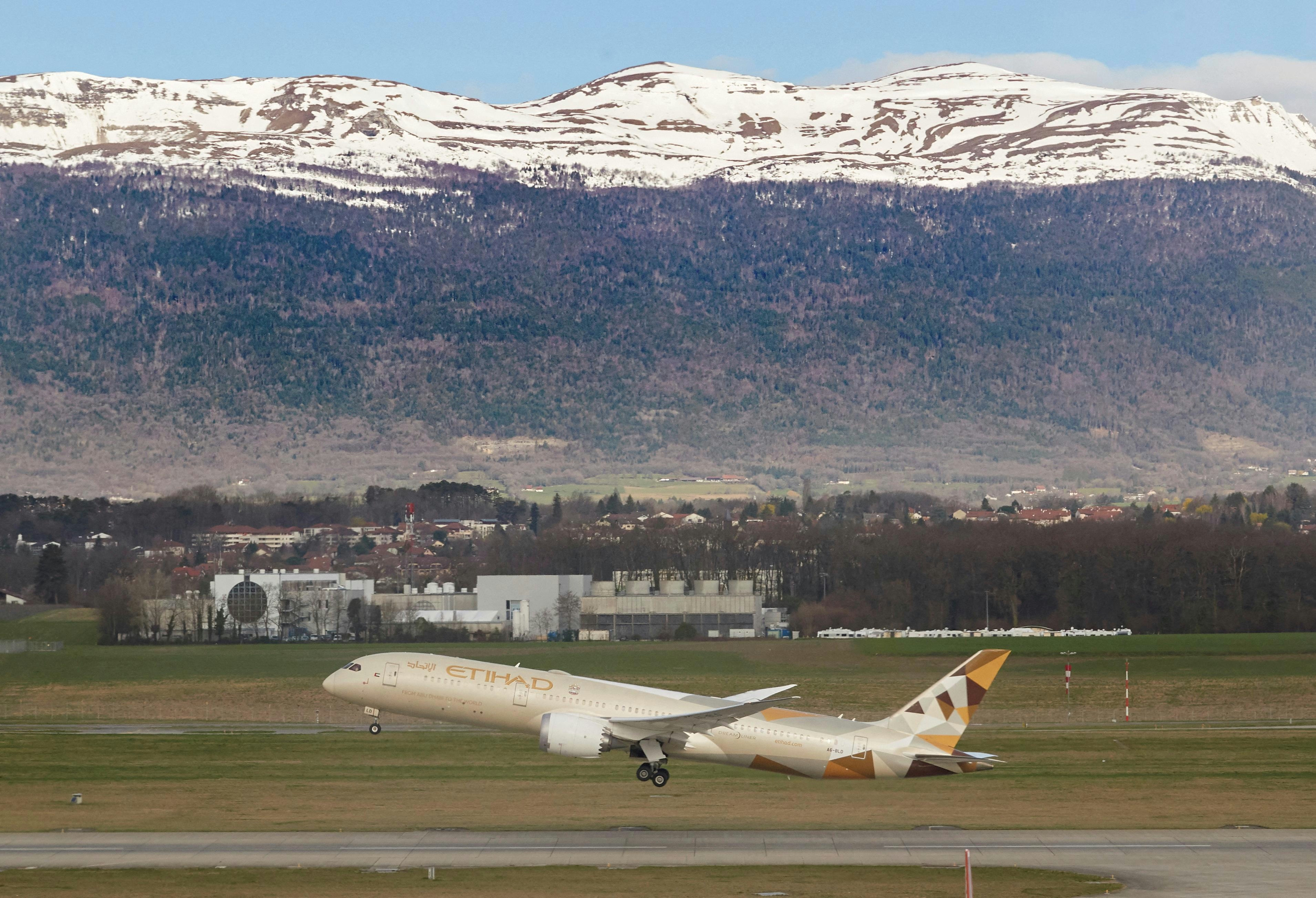
Etihad CEO Cites Aircraft Capacity as Limiting Factor Amid Growth in China and Africa
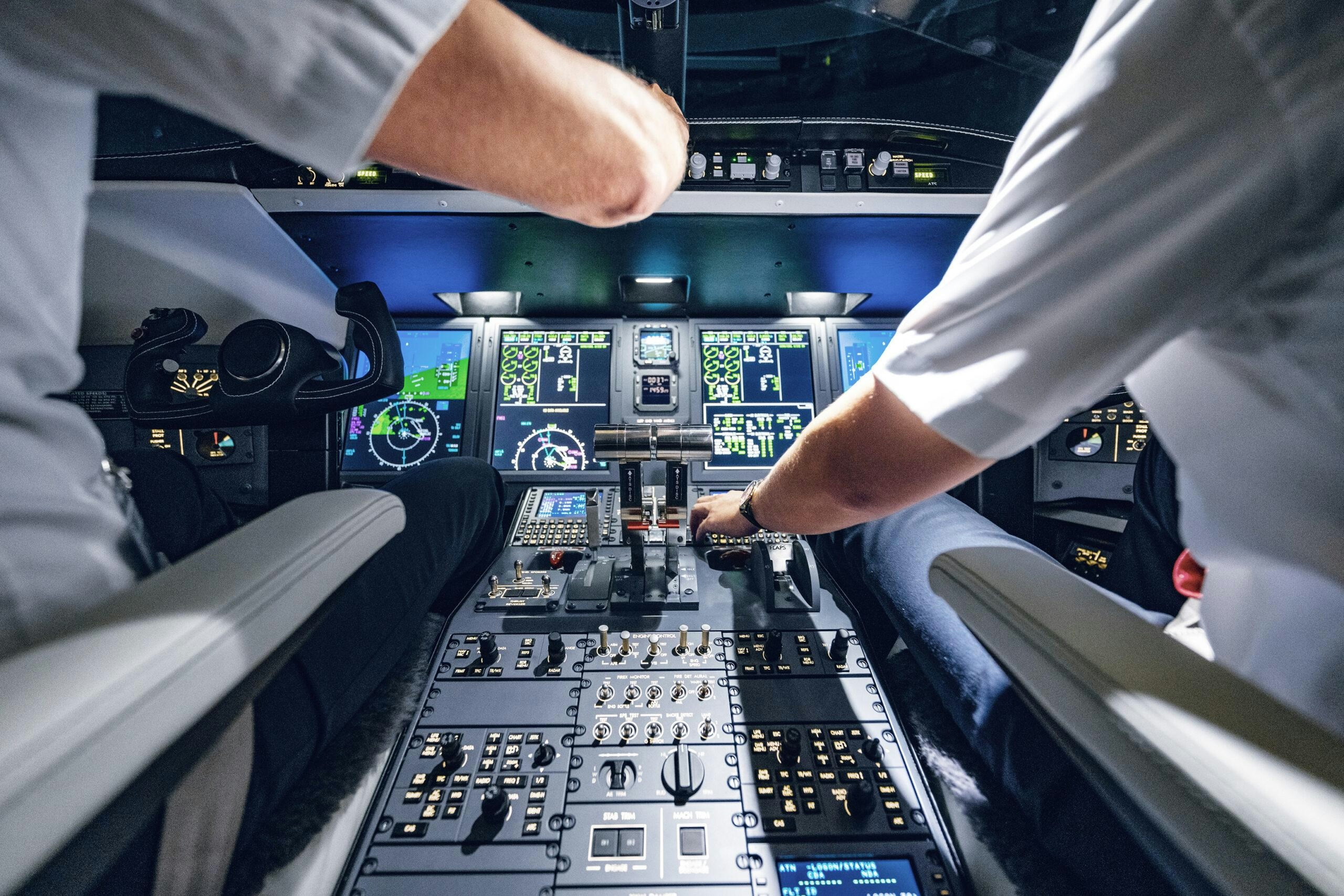
Artificial Intelligence Enters the Cockpit
