
image

AeroGenie — あなたのインテリジェントな副操縦士。

何でも質問してください。すべてを分析し、即座に行動してください。

現在のトレンド

Categories

Airbus and Boeing Have No Immediate Plans for New Commercial Aircraft
October 7, 2025By ePlane AI
Airbus and Boeing Have No Immediate Plans for New Commercial Aircraft
0
0
Airbus
Boeing
New Aircraft Development

Airbus and Boeing Confirm No Immediate Plans for New Commercial Aircraft

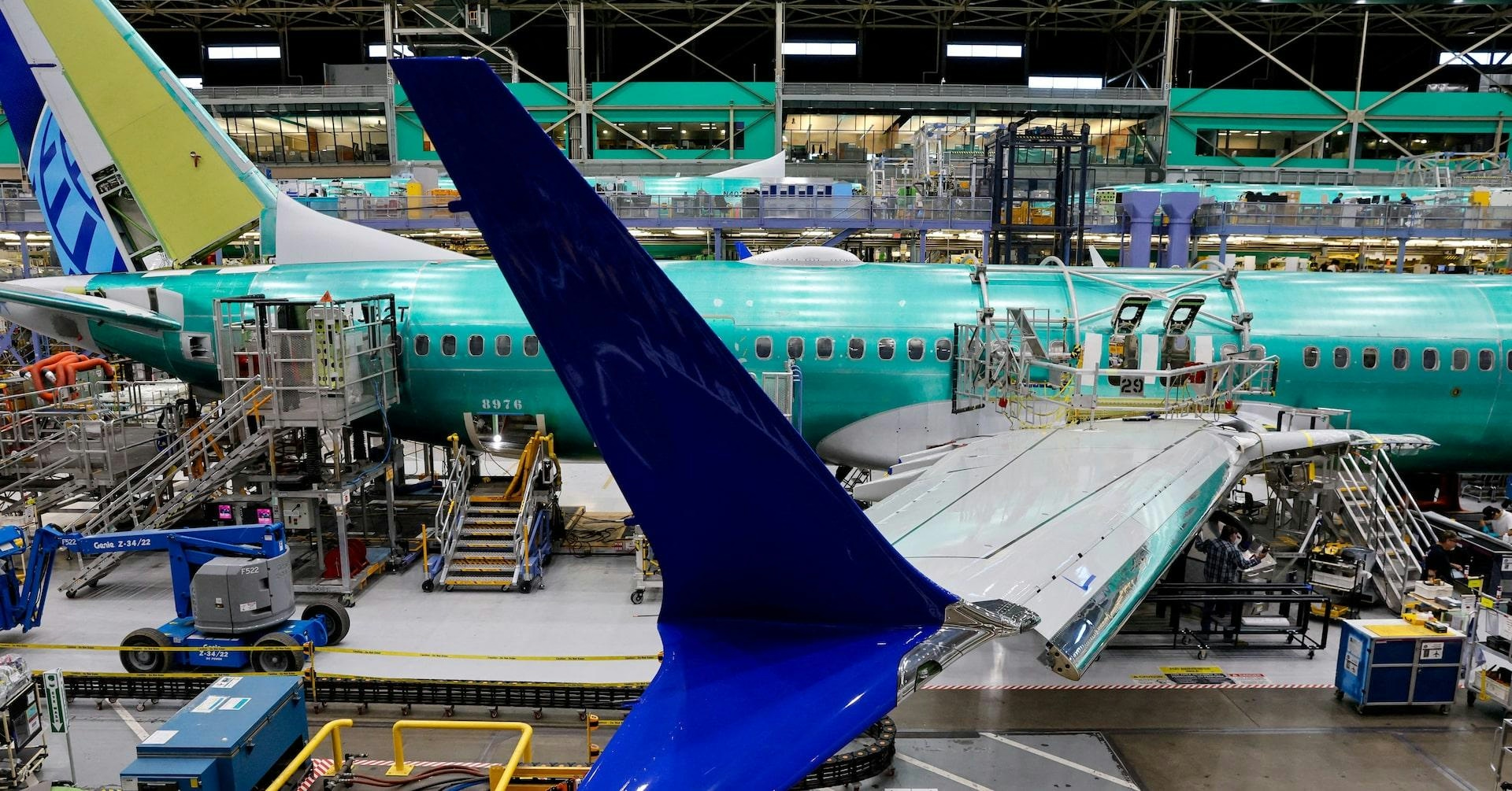
At the recent ISTAT conference in Prague, Airbus and Boeing executives jointly affirmed that neither company intends to launch new next-generation commercial aircraft in the near term. Instead, both manufacturers will continue to rely on their existing single-aisle models—the Boeing 737 MAX and Airbus A320neo families—as the cornerstone of their product offerings for the foreseeable future. This decision reflects a strategic focus on certifying current aircraft variants and stabilizing production amid ongoing financial pressures, supply chain constraints, and the current limitations of propulsion technology.

Strategic Priorities and Market Realities

Boeing’s marketing chief, Darren Hulst, emphasized that a successor to the 737 remains “many years away.” The company’s immediate priorities include completing certification for the remaining 737 MAX variants, as well as advancing the 777X passenger jet and the 777XF freighter programs. These efforts are critical to Boeing’s broader objective of restoring financial stability while managing a debt load approaching $50 billion. In response to recent speculation, Boeing clarified that any new narrowbody program will only proceed when market demand, technological readiness, and internal capabilities are fully aligned.

Airbus has adopted a similarly cautious approach. François Collet, Airbus’s Asset Management Director, highlighted that any new aircraft would need to achieve at least a 25% improvement in fuel efficiency to justify the substantial investment required for development. Given current engine technology, this target remains elusive. Meanwhile, Airbus celebrated a significant milestone as its A320 family surpassed Boeing’s 737 to become the most-delivered aircraft in history, reinforcing its dominant position in the single-aisle market.

Incremental Improvements and Industry Implications

Both manufacturers are concentrating on incremental enhancements to their existing fleets rather than pursuing clean-sheet designs. Airbus is focused on extending the competitiveness of the A320neo family, particularly through the long-range A321XLR variant. Boeing is prioritizing improvements in the reliability and production stability of the 737 MAX family alongside progress on the 777X program. This mutual decision effectively freezes direct competition in the narrowbody segment, with airlines and lessors expected to depend on these established models well into the 2030s.

This conservative strategy contributes to stability within the aviation industry. Aircraft values are likely to remain robust as production capacity remains constrained, benefiting lessors through strong residual values and sustained demand. Engine manufacturers are similarly prioritizing reliability and maintenance efficiency over the introduction of unproven technologies.

Challenges for Decarbonization and Future Outlook

However, the absence of new aircraft programs presents challenges for the industry’s decarbonization goals. Without clean-sheet designs, airlines must rely on incremental fuel-burn improvements rather than achieving significant emissions reductions. Consequently, the transition toward more sustainable propulsion systems and substantial efficiency gains is expected to proceed gradually.

Looking ahead, both Airbus and Boeing are awaiting breakthroughs in efficiency and sustainable technology before committing to next-generation narrowbody programs. For now, the commercial aviation sector should anticipate evolutionary rather than revolutionary changes in aircraft design over the coming decade.

More news
Vietnam Airlines Sells Airbus A321 Fleet to Arena Aviation Capital in Record Deal

Vietnam Airlines Sells Airbus A321 Fleet to Arena Aviation Capital in Record Deal

Vietnam Airlines Sells Airbus A321 Fleet to Arena Aviation Capital in Record Deal Arena Aviation Capital, a leading entity in the global aviation leasing industry, has completed its largest transaction to date by acquiring ten Airbus A321-200 aircraft formerly operated by Vietnam Airlines. The deal, executed in partnership with Vietnam Aircraft Leasing Joint Stock Company (VALC), represents a significant milestone for Arena since its establishment in 2013 and highlights the company’s expanding influence within the competitive aviation market. Strategic Acquisition and Market Implications This acquisition not only broadens Arena’s portfolio of commercial aircraft but also underscores its capability in managing complex, multi-aircraft transactions. Arena’s CEO, Patrick den Elzen, and Chief Commercial Officer, Erik Dahmen, attributed the successful negotiation to the company’s strong local presence and legal expertise in Southeast Asia, which were instrumental in navigating the cultural and structural challenges encountered during the process. The Airbus A321s, recognized for their fuel efficiency and adaptability on short- and medium-haul routes, will now be available for lease to airlines worldwide. This expansion is expected to enhance Arena’s leasing offerings to institutional investors and further consolidate its position as a leader in aviation asset management. Vietnam Airlines’ decision to divest its A321 fleet carries operational consequences, necessitating adjustments to its fleet composition and potentially influencing regional market dynamics. Competitors may respond by accelerating fleet renewal programs or pursuing strategic acquisitions to maintain their market share. This transaction also reflects broader industry trends, exemplified by IndiGo’s recent delivery of its first Airbus A321XLR and United Airlines’ sale-leaseback agreements with SMBC Aviation Capital, illustrating evolving strategies among airlines and lessors to optimize fleet management. Arena’s Expanding Portfolio and Growth Strategy Arena’s acquisition of the A321s follows a series of significant investments. In July 2025, the company entered the regional aircraft segment by purchasing ten Embraer E190-100 LR jets from Aeromexico. The subsequent month saw further expansion with the acquisition of six Airbus A320-200s and two Boeing 737NGs, which are now leased to prominent carriers including easyJet, Air France, Avianca, and Norwegian through a transaction executed with AerCap. Central to Arena’s sustained growth is its strategy of targeting high-quality aircraft with strong airline credits and attractive lease profiles. As the aviation industry continues to adapt to shifting market conditions and evolving fleet management approaches, Arena Aviation Capital’s commitment to expanding and diversifying its portfolio positions the company for continued success in the global aviation leasing market.
American Airlines at 100: A Century of Innovation in Global Travel

American Airlines at 100: A Century of Innovation in Global Travel

American Airlines at 100: A Century of Innovation in Global Travel American Airlines marks its 100th anniversary, commemorating a century of profound transformation in aviation and global tourism. Originating in 1926 as a modest mail route between St. Louis and Chicago, the airline has grown into one of the world’s largest carriers, connecting passengers to over 350 destinations across the globe. This milestone not only honors a rich aviation heritage but also highlights a century of expanding opportunities for travelers to explore diverse cultures, visit iconic landmarks, and embark on international adventures. From Mail Service to a Global Aviation Leader The evolution of American Airlines from a mail carrier to a vast passenger network reflects the broader development of commercial air travel. By the mid-20th century, the airline had established scheduled passenger services throughout the United States, progressively extending its reach to international destinations. Today, American Airlines offers direct flights to major global cities such as London, Tokyo, and Sydney, while also providing access to smaller, previously remote locations. This extensive network has simplified travel planning and made global exploration more accessible to a wide range of passengers. Innovations Enhancing the Passenger Experience Throughout its history, American Airlines has been at the forefront of innovations designed to improve comfort and convenience for travelers. The introduction of loyalty programs enabled frequent flyers to earn rewards, while airport lounges created more comfortable pre-flight environments. Modern amenities, including inflight entertainment, Wi-Fi connectivity, and streamlined booking systems, have further enhanced the travel experience. The transition from propeller-driven aircraft to jet-powered planes significantly reduced travel times, making international tourism more appealing and efficient. The airline’s latest fleet addition, the Airbus A321XLR, exemplifies its commitment to balancing domestic service with international ambitions. Emphasizing premium seating options, American Airlines aims to attract both business and leisure travelers, aligning with a broader industry trend toward elevated passenger experiences. Commitment to Safety and Reliability Safety has remained a fundamental priority for American Airlines throughout its history. Compliance with stringent regulations from authorities such as the Federal Aviation Administration (FAA) ensures that aircraft design, flight operations, and air traffic management adhere to the highest standards. These rigorous safety measures provide travelers with confidence and peace of mind, enabling them to focus on their journeys. Advances in safety protocols have also made international travel more accessible, even for first-time flyers. Connecting Cultures and Supporting Economies Over the past century, American Airlines has played a crucial role in fostering cultural connections and supporting local economies worldwide. Airports have become gateways to new experiences, welcoming visitors from every continent. The airline’s expansive global reach has generated employment opportunities in hospitality, transportation, and tourism sectors, while promoting cultural exchange and mutual understanding among diverse populations. Navigating Contemporary Challenges As American Airlines embarks on its second century, it confronts intensifying competition from rivals such as Delta Air Lines and United Airlines. Economic uncertainties, particularly potential downturns in 2026, could affect price-sensitive travelers and alter market dynamics. Industry analysts are closely monitoring the airline’s premium revenue growth and operational reliability, while rising costs, labor disputes, and regulatory challenges pose ongoing risks to future performance. Competitors are responding with expanded routes and services, including United’s introduction of new destinations and American’s growth initiatives at Chicago O’Hare, as each carrier strives to maintain a competitive advantage. American Airlines’ centennial serves both as a celebration of its past achievements and a reflection on the evolving challenges and opportunities within global travel. Its enduring legacy of innovation and connectivity continues to influence the future trajectory of international tourism.
Hydrogen Combustion vs. Fuel Cells: Evaluating Options for Aviation

Hydrogen Combustion vs. Fuel Cells: Evaluating Options for Aviation

Hydrogen Combustion vs. Fuel Cells: Evaluating Options for Aviation Hydrogen is increasingly recognized as a pivotal element in the quest to decarbonize aviation, owing to its high specific energy and the absence of direct carbon dioxide emissions. Its established safety record and successful application in space technology have inspired ambitions for hydrogen-powered aircraft to become operational within the next decade. Nonetheless, a critical debate persists regarding which technology—hydrogen combustion engines or hydrogen fuel cells—represents the most viable pathway toward achieving carbon-free flight. Comparing Hydrogen Combustion and Fuel Cell Technologies Hydrogen combustion engines function similarly to conventional gasoline engines, utilizing spark ignition to burn hydrogen fuel. This approach benefits from leveraging existing engine design principles but requires sophisticated storage solutions to safely and efficiently carry hydrogen onboard, typically at cryogenic temperatures near -253°C. While hydrogen combustion results in negligible carbon dioxide emissions—primarily limited to those arising from ambient air and lubrication oil—it does produce nitrogen oxides (NOx), necessitating the implementation of exhaust aftertreatment systems to mitigate environmental impact. In contrast, hydrogen fuel cells generate electricity through an electrochemical reaction between hydrogen and oxygen, powering electric motors with water vapor as the sole emission. This technology eliminates both carbon and NOx emissions, presenting a cleaner alternative to combustion engines. However, fuel cells face significant technical challenges related to thermal management. Unlike gas turbines, which benefit from large volumes of airflow to dissipate excess heat, fuel cells lack such inherent cooling mechanisms and therefore require dedicated systems to manage operational heat effectively. Michael Sielemann, Aerospace Industry Director at Modelon, highlights this distinction: “If you have a gas turbine, the gas turbine has much air going through it anyway. So if there is excess heat that the engine generates that you’re not converting into thrust, the air takes it away. That’s no issue. But you don’t have this huge airflow going through the fuel cell. So you need to make up your mind on how to handle heat.” Industry Insights and Practical Considerations Airbus has been a leader in investigating both hydrogen combustion and fuel cell technologies through its ZEROe initiative, launched in 2020. The company’s research underscores hydrogen’s advantageous energy-to-mass ratio as a critical factor in meeting aviation’s net-zero targets. However, the low ambient density of hydrogen, the necessity for cryogenic storage, and the extensive modifications required in aircraft design pose significant challenges for combustion-based propulsion systems. Fuel cells are lauded for their efficiency, scalability, and relatively modest impact on airframe redesign. Airbus’s prototype testing has demonstrated that fuel cells offer considerable advantages over combustion engines, prompting the company in 2025 to designate fuel cells as the most promising technology for future hydrogen-powered aircraft. Despite these technological advancements, the broader adoption of hydrogen in aviation is impeded by regulatory, permitting, and policy uncertainties. The hydrogen mobility sector has encountered difficulties related to operational uptime, fuel costs, and utilization rates, while battery-electric alternatives have progressed in terms of cost-effectiveness, reliability, and infrastructure development. High capital and operating expenses, concerns over lifecycle emissions, and the absence of a dependable hydrogen supply chain have led to the cancellation or scaling back of several projects. Moreover, hydrogen’s low volumetric energy density and the inherent safety risks associated with its storage and handling remain formidable obstacles. The Road Ahead Both hydrogen combustion and fuel cell technologies hold significant promise for the decarbonization of aviation, yet their widespread adoption will depend on overcoming a complex array of technical, economic, and regulatory challenges. As innovation continues within the industry, the ultimate choice between these propulsion methods will likely be influenced by progress in hydrogen storage solutions, infrastructure development, policy frameworks, and the evolving competitive landscape of alternative propulsion technologies.
ANA Introduces The Room FX Business Class on Boeing 787 Dreamliners

ANA Introduces The Room FX Business Class on Boeing 787 Dreamliners

ANA Introduces The Room FX Business Class on Boeing 787 Dreamliners All Nippon Airways (ANA) has announced a significant upgrade to its international Boeing 787-9 Dreamliner fleet with the introduction of The Room FX, a next-generation business class suite designed to elevate comfort, privacy, and technology on mid-sized widebody aircraft. Set to debut in 2026, this new offering represents a major evolution of ANA’s premium product, previously available on its Boeing 777 fleet, and highlights the airline’s dedication to enhancing the long-haul travel experience to and from Tokyo Haneda Airport. At the core of this redesign is a commitment to passenger comfort rather than maximizing seat density, reflecting Japan’s renowned attention to thoughtful design and hospitality. The Room FX business class suites will be accompanied by upgraded premium economy and economy cabins, reinforcing ANA’s broader strategy to improve the overall onboard experience as global tourism recovers. Strategic Vision and Industry Context ANA’s cabin transformation aligns with a wider strategic focus on quality over quantity in its long-haul operations. The Boeing 787-9, valued for its fuel efficiency and range, has traditionally posed challenges due to its narrower fuselage, which limits seat dimensions. Through innovative engineering and collaboration with Safran Seats and Acumen Design Associates, ANA has successfully adapted its business class concept to the 787-9’s constraints, maintaining the spaciousness and privacy that have become synonymous with its premium offering. Despite this progress, the rollout of The Room FX faces potential obstacles. Industry-wide delays in seat certification, which have affected carriers such as Delta and Air India, may impact ANA’s timeline for full implementation and marketing of the new business class. These regulatory and supply chain challenges are part of a broader trend affecting premium cabin upgrades across the aviation sector. Competitive Landscape and Passenger Experience ANA’s introduction of The Room FX comes amid intensifying competition among airlines to enhance premium services, with 2026 expected to witness significant expansion in business class offerings globally. Competitors including United Airlines and Delta Air Lines are likely to respond by upgrading their own business class products or adjusting pricing strategies to maintain market share. ANA’s success will therefore depend not only on overcoming certification and supply chain hurdles but also on its ability to distinguish The Room FX in a crowded marketplace. The redesigned Boeing 787-9 cabins will feature 48 business class suites arranged in a 1-2-1 configuration across 12 rows, ensuring direct aisle access for every passenger—a standard of modern premium travel. The Room FX suites are engineered to maximize space and privacy, incorporating advanced technology and amenities tailored to the needs of both business and leisure travelers on long-haul routes. By investing in The Room FX and comprehensive cabin enhancements, ANA aims to solidify its position in the international premium travel market and support Japan’s broader tourism growth, even as it navigates the operational complexities currently facing the airline industry.
New Three-Cylinder Engine Features Rotating Block and Stationary Head

New Three-Cylinder Engine Features Rotating Block and Stationary Head

New Three-Cylinder Engine Features Rotating Block and Stationary Head A Novel Approach to Engine Design Most internal combustion engines in use today adhere to well-established configurations, typically featuring pistons arranged in inline or V-shaped layouts. While boxer and flat engines are less common and primarily found in aviation, the Wankel rotary engine—with its distinctive spinning triangular rotor—remains a notable exception. The Birotary engine, developed by Vaclav Knob and his team at Knob Engines in Czechia, represents a unique fusion of piston and rotary engine principles. This innovative three-cylinder engine incorporates a rotating block paired with a stationary cylinder head, drawing inspiration from the Wankel’s rotary concept while maintaining piston-driven mechanics. The Birotary’s design is unconventional: its three cylinders are arranged in a star pattern, with the entire block rotating around a fixed head. This configuration aims to produce a lightweight, powerful engine with reduced vibration, qualities that are particularly advantageous for light aircraft applications. Unlike many experimental engines that remain theoretical, the Birotary has progressed to a working prototype stage and has already powered a light aircraft in flight, demonstrating its practical viability. Development and Historical Context Knob Engines, established in 2010, has been refining the Birotary concept since its inception, although Vaclav Knob first conceived the idea in 1988. By 2014, Knob and managing director Jiri Drahovzal secured patents for the engine’s distinctive design and sealing system across 48 countries, underscoring the novelty and technical complexity of the project. The Birotary follows a lineage of complex engine designs developed to address specific engineering challenges. Historical examples include the Napier Deltic’s 18-cylinder, 36-piston diesel engine and the Commer TS3’s opposed-piston truck engine, both of which were engineered to optimize power, weight, and efficiency for demanding applications. Similarly, the Birotary targets the niche market of light aircraft propulsion, where minimizing weight and vibration while maximizing power output are critical considerations. Challenges and Market Considerations Despite its innovative design, the Birotary faces potential hurdles. The complexity of manufacturing such an engine may result in higher production costs compared to conventional powerplants. While the engineering community may appreciate its ingenuity, broader market acceptance will likely depend on factors such as fuel efficiency, affordability, and compliance with evolving regulatory standards. The current economic environment, influenced by factors such as Federal Reserve policy debates and elevated market valuations, adds further uncertainty to consumer demand and investment in novel technologies. Additionally, competitors in the automotive and aviation sectors may accelerate the development of alternative propulsion systems, including hybrid and electric powertrains, to counter the Birotary’s unique advantages. As the industry continues to evolve, the success of unconventional engines like the Birotary will hinge not only on their technical merits but also on their ability to adapt to shifting consumer preferences and regulatory frameworks. For now, the Birotary stands as a compelling example of creative engineering, offering a tangible prototype that challenges conventional engine design and may influence the future of light aircraft propulsion.
Credit Card Rewards Compete with Airline and Hotel Loyalty Programs

Credit Card Rewards Compete with Airline and Hotel Loyalty Programs

Credit Card Rewards Challenge Traditional Airline and Hotel Loyalty Programs Recent research from Skift Research reveals a significant shift in the travel loyalty landscape, with credit card rewards programs increasingly rivaling—and in some cases surpassing—the value offered by traditional airline and hotel loyalty schemes, particularly in the United States. This development reflects changing consumer preferences and the growing impact of artificial intelligence on travel decision-making. Shifting Consumer Preferences and the Role of AI According to the survey, 34% of U.S. travelers now consider credit card rewards to provide the most valuable benefits, outstripping hotel loyalty programs at 22% and airline programs at 21%. This trend is not confined to the U.S. alone but is evident across major travel markets worldwide, where credit card rewards are gaining recognition as a more flexible and attractive alternative to conventional loyalty programs. A major driver behind this shift is the emergence of AI-powered deal discovery tools. More than half of U.S. travelers (53%) indicated a willingness to switch from their preferred travel brands if artificial intelligence identified superior offers from competitors. This technological advancement is fragmenting traditional loyalty structures and intensifying competition, as consumers become more inclined to explore options that maximize value. Responses from Loyalty Programs and the Appeal of Credit Card Rewards In response to these challenges, many travel loyalty programs have introduced exclusive, members-only experiences such as backstage tours and private dinners to enhance customer retention. However, some programs have simultaneously devalued points and reduced benefits, resulting in growing dissatisfaction among members and further weakening brand loyalty. In contrast, credit card rewards programs offer greater flexibility, often featuring transferable points or miles that can be redeemed across a variety of travel options. Premium business credit cards, including the American Express Business Platinum Card and the Capital One Venture X Business Credit Card, provide substantial travel rewards and benefits, making them particularly attractive to frequent travelers seeking versatility and enhanced value. A Fragmented and Dynamic Travel Loyalty Landscape The Skift Research surveys, conducted in December among hundreds of travelers across the U.S., U.K., India, and China, depict a travel industry that remains resilient but increasingly fragmented along regional, generational, and behavioral lines. As competition intensifies and technology empowers consumers to identify the best deals, the contest for traveler loyalty is poised to become even more dynamic and complex.
ExecuJet MRO Installs Starlink on Falcon 8X

ExecuJet MRO Installs Starlink on Falcon 8X

ExecuJet MRO Integrates Starlink on Falcon 8X, Marking a New Era in Business Aviation Connectivity ExecuJet MRO Services, a wholly owned subsidiary of Dassault Aviation, has successfully completed the retrofit of Starlink satellite connectivity on a Falcon 8X at its Belgium facility. This installation, carried out under a Supplemental Type Certificate (STC) developed by Dassault Falcon Jet (DFJ), forms part of a wider initiative benefiting the entire Dassault MRO network. The upgrade equips the Falcon 8X with Starlink’s latest-generation aviation hardware, designed to provide high-speed, low-latency inflight internet capable of supporting video conferencing, cloud-based applications, and large data transfers. To preserve the Falcon 8X’s signature quiet cabin environment and minimize structural modifications, ExecuJet employed an innovative antenna doubler solution. A subsequent test flight confirmed both the system’s performance and the integrity of the cabin environment, underscoring the technical success of the retrofit. Expanding Starlink Installations and Strategic Partnerships Beyond Belgium, additional Starlink installations are underway at Dassault Aviation Business Services in Geneva, Switzerland, and at DFJ service centers across the United States. ExecuJet’s Australian operation has also completed two Starlink retrofits on Bombardier Global aircraft, with the latest installation finalized in November. In a significant development, ExecuJet MRO Services has been appointed as an authorized Starlink dealer by SpaceX. This designation enables the company to supply and install Starlink connectivity solutions wherever the service is available, facilitating similar retrofits across a broad range of business jet models. These include the Falcon 7X, 2000LXS, and 900LX, as well as aircraft from the Bombardier Global and Challenger series, Embraer Legacy, and Gulfstream families. Challenges and Industry Implications Integrating Starlink into sophisticated business jets such as the Falcon 8X presents considerable challenges. ExecuJet must ensure seamless compatibility with existing onboard systems, manage the technical complexities inherent in retrofitting advanced aircraft, and navigate stringent regulatory and certification requirements. Despite these hurdles, the successful installations to date demonstrate the feasibility of such upgrades. This move has generated heightened interest in satellite connectivity solutions within the business aviation sector. Industry observers suggest that competitors, including NetJets, may accelerate their own Starlink installations or explore alternative connectivity options to remain competitive. Some operators might even consider developing proprietary satellite communication systems to maintain a technological edge. ExecuJet MRO Services continues to collaborate with various satellite communication providers to offer tailored connectivity solutions that address the diverse needs of its global clientele. As demand for reliable, high-speed inflight internet intensifies, the successful integration of Starlink positions ExecuJet and Dassault Aviation at the forefront of advancements in business aviation connectivity.
New Airlines Confront Supply Chain and Staffing Challenges

New Airlines Confront Supply Chain and Staffing Challenges

New Airlines Face Persistent Supply Chain and Staffing Obstacles Newly established airlines worldwide are encountering formidable challenges as ongoing supply chain disruptions and staffing shortages continue to strain the aviation industry. Speaking at the Indian Institute of Management Nagpur, former Boeing executive Dinesh Keskar identified the limited availability of aircraft as a primary impediment for emerging carriers, particularly in India. Despite receiving government approvals, these airlines face significant delays due to a shortage of skilled labor in domestic aircraft manufacturing. This shortage complicates production timelines and postpones the launch of carriers such as Al Hind Air and FlyExpress. Global Impact and Market Shifts These difficulties extend beyond India, affecting new entrants in Latin America and the Caribbean as well. In 2026, airlines in these regions are contending with prolonged delivery times for new aircraft caused by persistent supply chain disruptions. The backlog with major manufacturers, including Boeing, now extends through 2032, severely limiting the ability of new airlines to acquire the necessary fleets to begin operations. This uncertainty hampers their capacity to anticipate market changes and maintain profitability. In response to these pressures, market dynamics are evolving. Airlines are increasingly targeting premium travel segments, as affluent customers continue to demonstrate resilience despite broader economic and geopolitical challenges. Conversely, lower-cost carriers such as Spirit Airlines face heightened risks of liquidation or forced mergers, driven by reduced spending among lower-income travelers. The competitive landscape is also undergoing significant transformation. Established airlines are pursuing strategic mergers and acquisitions to consolidate their market positions. Pegasus Airlines’ recent acquisitions of Czech Airlines and Smartwings exemplify this trend toward consolidation. Keskar cautioned that such consolidation could enhance monopoly power within the industry, potentially diminishing competition and limiting consumer choice. Emerging Technologies and Future Prospects Amid these operational and market challenges, Keskar highlighted the potential for emerging aviation technologies to reshape the industry. Innovations such as electric aircraft may introduce new opportunities and alter competitive dynamics in the years ahead, even as current supply chain and staffing constraints persist. As global demand for air travel continues to grow, the ability of new airlines to navigate these complex challenges will be crucial to their success and to the broader development of the aviation sector.
Global Airline Route Planning Software Market Forecasts Through 2035

Global Airline Route Planning Software Market Forecasts Through 2035

Global Airline Route Planning Software Market Forecasts Through 2035 The global airline route planning software market is poised for significant growth over the coming decade. Valued at $8.36 billion in 2025, the market is projected to expand to $9.04 billion by 2026, representing a compound annual growth rate (CAGR) of 8.1%. By 2030, this figure is expected to reach $12.27 billion, driven by a sustained CAGR of 7.9%. This growth is underpinned by technological advancements in early flight scheduling, optimization tools, fuel efficiency analysis, and the integration of real-time weather and operational data, all of which are enhancing the precision and effectiveness of route planning. Market Drivers and Emerging Trends The increasing demand for fuel-efficient route planning and collaborative planning systems is shaping the market landscape. Mobile-based management interfaces are gaining traction, reflecting the industry's shift towards more flexible and accessible software solutions. The surge in global air travel further propels this demand. According to the International Air Transport Association, total air traffic rose by 26.2% year-over-year as of July 2023, with international traffic increasing by 29.6%. This rapid growth highlights the critical need for sophisticated software capable of optimizing flight routes, maximizing fleet efficiency, and improving cost-to-revenue ratios. Leading companies in the sector are capitalizing on satellite-based flight tracking and advanced analytics to maintain competitive advantages. For instance, Cirium has developed tools that leverage satellite data to provide precise assessments of aircraft demand and network growth opportunities. In March 2023, Cirium introduced a new airline routes tool designed to enhance data-driven decision-making for route optimization. Strategic partnerships are also influencing the market’s evolution; notably, Riyadh Air’s collaboration with Sabre Corporation, announced in February 2024, aims to enhance operational efficiency through Sabre’s AirVision technology. Regional Dynamics and Industry Challenges The competitive landscape includes major players such as The Boeing Company, Airbus SE, Honeywell International, and Sabre. While North America currently dominates the market, rapid adoption is occurring in Asia-Pacific and Europe, driven by shifting trade relations and tariff impacts. The global trade environment, particularly the imposition of tariffs, is affecting costs related to essential hardware and cloud infrastructure. These pressures are fostering both challenges and opportunities, encouraging increased domestic software development and the expansion of regional data centers. Despite the promising outlook, the market faces several challenges. Supply-chain disruptions, engine reliability concerns, and geopolitical uncertainties are increasingly influencing airline operations. In response, carriers are emphasizing flexibility in network planning. For example, Air Canada has adopted conservative fleet assumptions to mitigate associated risks. Competitors are refining route optimization algorithms to better navigate volatile operating conditions. Forecasts through 2035 indicate a continued focus on enhancing software capabilities to address these evolving challenges. The comprehensive market report offers detailed analysis of market size, trends, and competitive dynamics across key regions including Asia-Pacific and Western Europe. It examines solutions related to fare management, scheduling, and revenue management, delivered through various platforms and pricing models. The report also provides revenue segmentation and market insights for countries such as Australia, Brazil, China, France, Germany, India, Japan, Russia, the United Kingdom, and the United States, encompassing the sale of related services and hardware. Airline route planning software remains indispensable for efficient route management, resource optimization, and improved customer satisfaction. By accounting for factors such as fuel consumption, air traffic control, and weather conditions, these solutions are critical to the evolving demands of the global aviation industry. As the sector advances, the emphasis will remain on developing resilient, data-driven technologies capable of supporting a rapidly changing and increasingly complex operational environment.
Archer Aviation Shares Rise Premarket Following Nvidia IGX Thor AI Partnership

Archer Aviation Shares Rise Premarket Following Nvidia IGX Thor AI Partnership

Archer Aviation Shares Rise Premarket Following Nvidia IGX Thor AI Partnership **New York, January 9, 2026** — Archer Aviation Inc saw its shares increase by 2.6% to $8.94 in premarket trading on Friday, following the announcement of a strategic partnership with Nvidia. The collaboration, revealed at the CES technology event in Las Vegas, involves integrating Nvidia’s IGX Thor platform—a safety-centric onboard computing system designed for real-time processing in critical environments—into Archer’s next-generation aircraft. Partnership Details and Market Reaction The stock closed Thursday with a 3.4% gain at $8.71, having traded between $8.44 and $9.01 on heavy volume of approximately 50 million shares. This positive market response underscores investor optimism surrounding Nvidia-linked initiatives, particularly those focused on safety and autonomy within emerging sectors such as electric aviation. Archer’s alliance with Nvidia is intended to advance aircraft safety, improve airspace integration, and enable autonomy-ready flight controls. The company plans to demonstrate the integration at its newly acquired Hawthorne airport facility in central Los Angeles. CEO Adam Goldstein emphasized that leveraging Nvidia’s technology will help Archer “accelerate toward safer, smarter aircraft systems,” reinforcing the company’s position as a pioneer in applying advanced AI solutions in aviation. Industry Context and Challenges Ahead Archer is currently developing “Midnight,” an electric vertical takeoff and landing (eVTOL) aircraft designed for short urban routes. The eVTOL market remains highly sensitive to news, with partnerships and regulatory developments often triggering volatile stock movements. Investors are closely monitoring whether advancements in software and computing can help transition prototype aircraft into fully certified, commercially viable operations—a process historically marked by delays and significant costs. Ahead of the market open, competitor responses were mixed: Joby Aviation shares declined by about 2%, Vertical Aerospace rose approximately 4%, and Eve Air Mobility remained largely unchanged. Nvidia’s shares fell roughly 2%. Despite the significance of the Nvidia partnership for Archer, the company continues to face substantial challenges, including regulatory certification, scaling production, and securing adequate funding to achieve revenue generation. Any setbacks in these areas could result in further dilution or extended timelines. The next critical milestone for Archer will be its upcoming quarterly earnings report, with investors seeking updates on certification progress and financial outlook. According to TradingView, Archer’s next earnings release is scheduled for March 4.
Ask AeroGenie









