
AIによるインサイトを行動へとつなげる

現在のトレンド
Categories
Airbus Develops Engine Aiming to Eliminate Aircraft Emissions
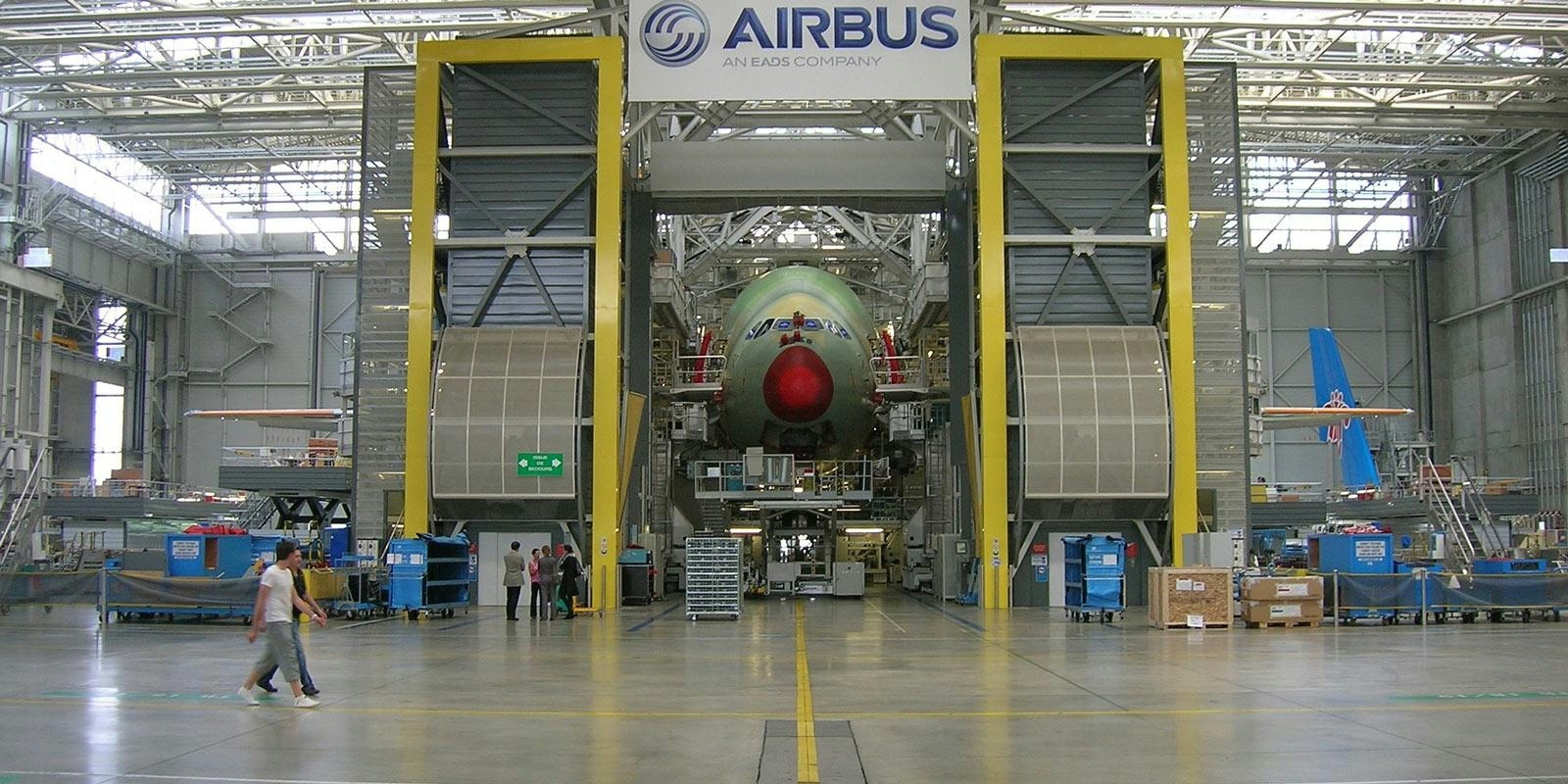
Airbus Develops Engine Aiming to Eliminate Aircraft Emissions
Advancing Hydrogen Fuel Cell Technology in Aviation
The aviation industry, responsible for approximately 2.5% of global carbon dioxide (CO₂) emissions, faces increasing pressure to reduce its environmental impact. In response, Airbus has embarked on an ambitious project to develop a hydrogen fuel cell engine designed to eliminate in-flight CO₂ and nitrogen oxide emissions. This initiative represents a significant step toward transforming air travel into a more sustainable mode of transportation.
In collaboration with MTU Aero Engines, Airbus aims to replace conventional fossil fuel-powered jet engines with hydrogen fuel cell technology. The partnership will oversee the design, testing, and certification phases, with work scheduled to commence in 2027. This project forms a critical component of Airbus’s broader strategy to promote hydrogen-powered flight and drive the aviation sector toward cleaner operations.
Progress and Challenges in Hydrogen-Powered Flight
The new engine development builds on momentum generated at the Airbus Summit last year, where the company updated its roadmap for the ZEROe program—Airbus’s long-term initiative to create its first hydrogen-powered commercial aircraft. Since the program’s launch in 2020, Airbus has completed multiple rounds of component testing and plans to begin ground testing in 2027. After evaluating various hydrogen propulsion concepts, the company selected fuel cells as the primary technology, following encouraging prototype results.
Despite the promise of hydrogen propulsion, significant challenges remain. Key technological obstacles include efficient hydrogen storage and distribution systems, which are critical for practical implementation. Additionally, the high initial costs associated with developing and deploying hydrogen technology may impede rapid adoption. Regulatory hurdles also present complexities, as aviation authorities must rigorously certify the safety and reliability of hydrogen-powered engines before they can be integrated into commercial fleets.
Industry and Market Responses
Market reactions to Airbus’s hydrogen engine initiative have been mixed. Some investors express optimism about the long-term sustainability benefits and the potential for the aviation industry to substantially reduce its environmental footprint. Conversely, others voice concerns regarding the immediate economic feasibility of hydrogen technology and the difficulties involved in transitioning existing aircraft fleets. Competitors’ responses vary as well; some are exploring collaborative efforts to develop alternative green technologies, while others prioritize maintaining their current market positions.
The success of the Airbus and MTU Aero Engines partnership will hinge on overcoming these technological and regulatory challenges, as well as securing market acceptance. As the ZEROe program advances, Airbus engineers continue to develop solutions that could usher in a new era of cleaner, hydrogen-powered flight.

Etihad and Swissport Extend Global Partnership

Sepehran Airlines B737 Returns to Mashhad After Tyre and Engine Issues

Etihad Deploys Widebody Fleet to Meet Strong Demand

Korean Air Finalizes $36.2 Billion Deal with Boeing

Australia’s RFDS Queensland Section Orders Six King Air 260Cs

Korean Air Finalizes Order for 103 Boeing Jets and Engines

Embraer E195-E2 Features Distinctive Engine Placement Among Regional Jets

What Passengers Can Expect on Boeing’s New 777X Jet

How Ethiopian Airlines Became Africa’s Leading Carrier Amid Gulf Competition

Joby Aviation Extends Autonomous Flight Capabilities with Cross-Country Tour
