
AIによるインサイトを行動へとつなげる

現在のトレンド
Categories
Airbus Expands Its Supplier Network in China
Airbus Expands Its Supplier Network in China
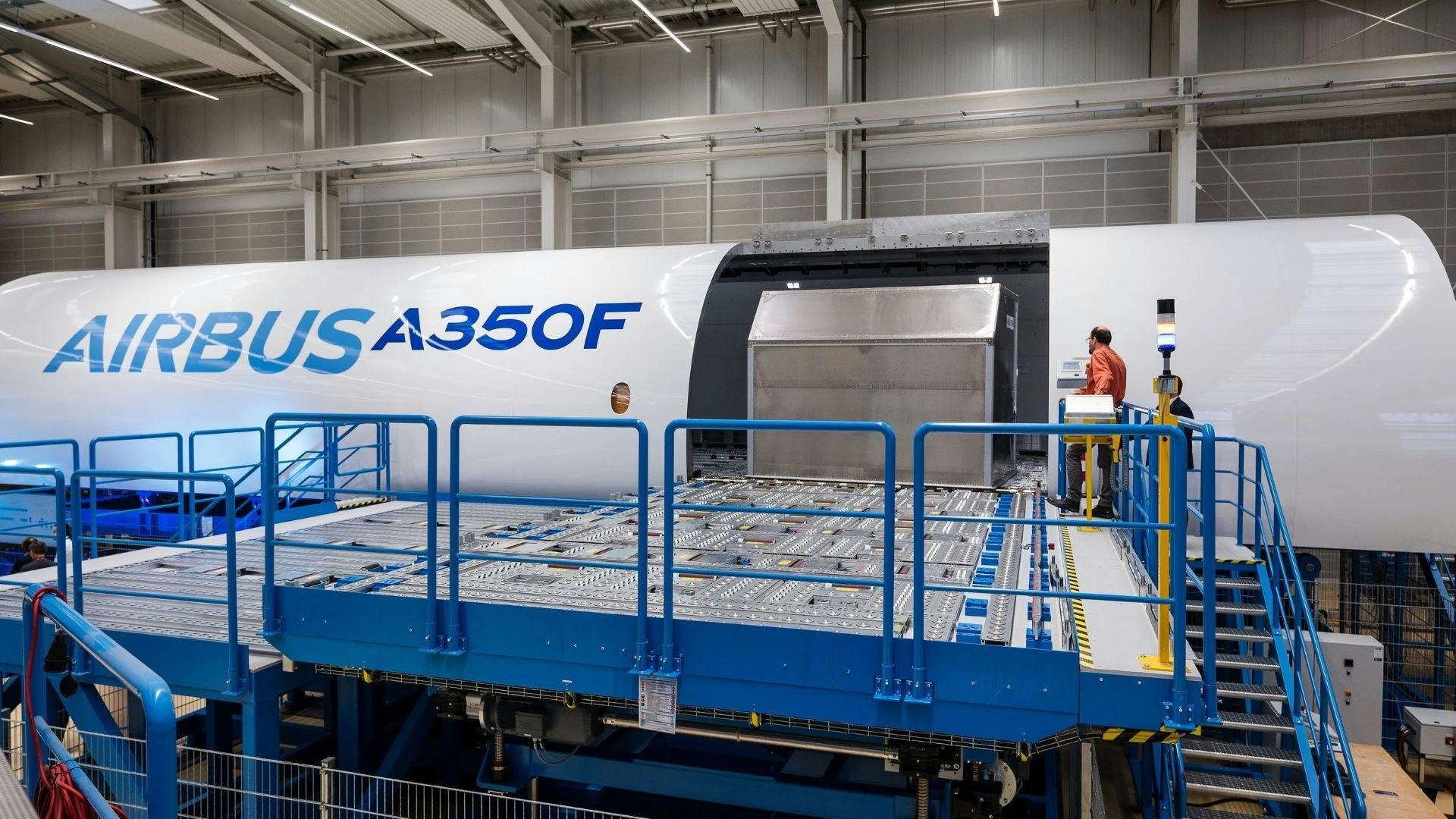
European aerospace giant Airbus is intensifying its collaboration with Chinese suppliers, highlighting China’s growing strategic significance as the company scales up its global aircraft production. At the recent fourth China International Supply Chain Expo in Beijing, Airbus took a leading role as a “chain leader,” showcasing a collaborative network that includes 11 key Chinese and international suppliers specializing in materials, aerostructures, manufacturing, and logistics.
Strengthening Supply Chain Resilience Amid Global Challenges
This expansion occurs against a backdrop of persistent supply chain challenges faced by global aircraft manufacturers, who are striving to meet rising airline demand. Airbus’s strategy to diversify its supplier base within China and neighboring regions aims to foster a more competitive and resilient industrial ecosystem. John Harrison, Airbus’s general counsel and head of public affairs, emphasized China’s dual importance as both a critical market and a production hub during an aerospace supply-chain forum at the expo.
China represents Airbus’s largest single-country market for commercial aircraft, accounting for approximately 20 percent of the company’s annual deliveries. Airbus jets constitute about 55 percent of China’s in-service civil aviation fleet. Over the past four decades, Airbus’s relationship with China has evolved from straightforward aircraft sales to a comprehensive industrial partnership encompassing engineering, manufacturing, final assembly, maintenance, and aircraft recycling. Currently, Airbus collaborates with around 200 Chinese suppliers, integrating locally produced components across its commercial aircraft programs.
Industrial Growth and Strategic Partnerships in China
George Xu, CEO of Airbus China, reported that the company’s industrial cooperation value in China surpassed $1.4 billion in 2025, with expectations for continued growth as production rates increase. More than half of Airbus’s direct procurement spending in China is sourced from the Aviation Industry Corp of China (AVIC), which stands as Airbus’s largest global aerostructures supplier outside of engine manufacturers. The two A320-family final assembly lines in Tianjin are pivotal to Airbus’s global production strategy, supporting the ambitious target of manufacturing 75 single-aisle aircraft per month by 2027.
Among the suppliers featured alongside Airbus at the expo was Zhejiang Xizi Aviation Manufacture Co., a key provider of components for the A220, A320, and A350 aircraft. General Manager Mo Chi noted that Airbus-related business accounts for roughly 80 percent of the company’s operations, driving significant advancements in manufacturing standards and management systems. Zhejiang Xizi also supplies parts to Boeing and China’s domestically developed passenger jets, underscoring its broad industry reach.
Challenges and Competitive Pressures
Despite these advancements, Airbus’s expansion in China faces notable challenges. Recent supply chain disruptions have caused delivery delays, such as those experienced by Qantas, leading to increased scrutiny of Airbus’s production schedules. These setbacks have impacted Airbus’s competitive position, particularly as rival Boeing reported higher delivery rates in May 2026. Additionally, competitors like Brazil’s Embraer are seeking to exploit Airbus’s difficulties with its A220 program.
In response to these pressures, Airbus is also adjusting its supplier relationships. The company, together with Safran, recently acquired Tikehau Capital’s stake in metal supplier Aubert & Duval, reflecting broader efforts to secure critical materials and reinforce supply chain stability.
Despite these headwinds, Airbus remains steadfast in its commitment to expanding its industrial footprint in China, viewing the country as a comprehensive strategic partner across manufacturing, research, and aircraft lifecycle services.

Etihad Airways Suspends Airbus A380 Flights on Key Route

Aditya Birla Group Seeks Approval for Aircraft Leasing in GIFT City

Qatar Airways Highlights Innovation and Connectivity at Arabian Travel Market 2026

Hong Kong's Five-Year Plan Includes Andrew Fan's Aircraft Parts Processing Hub Proposal

ACIA Aero Leasing Delivers ATR72-600 to Air Nostrum

RTX Appoints Jill Albertelli as Head of Pratt & Whitney

TAT Technologies Joins Beyond Aero Hydrogen Aircraft Program

AURAK Study Highlights Barriers to Air Taxi Adoption in Emerging Economies

Xiamen Air Selects Altitude for 787 Maintenance at Heathrow

Etihad and Swissport Extend Global Partnership
