
AIによるインサイトを行動へとつなげる

現在のトレンド
Categories
ANA Boeing 777 Experiences Engine Failure on Tokyo-Sapporo Flight
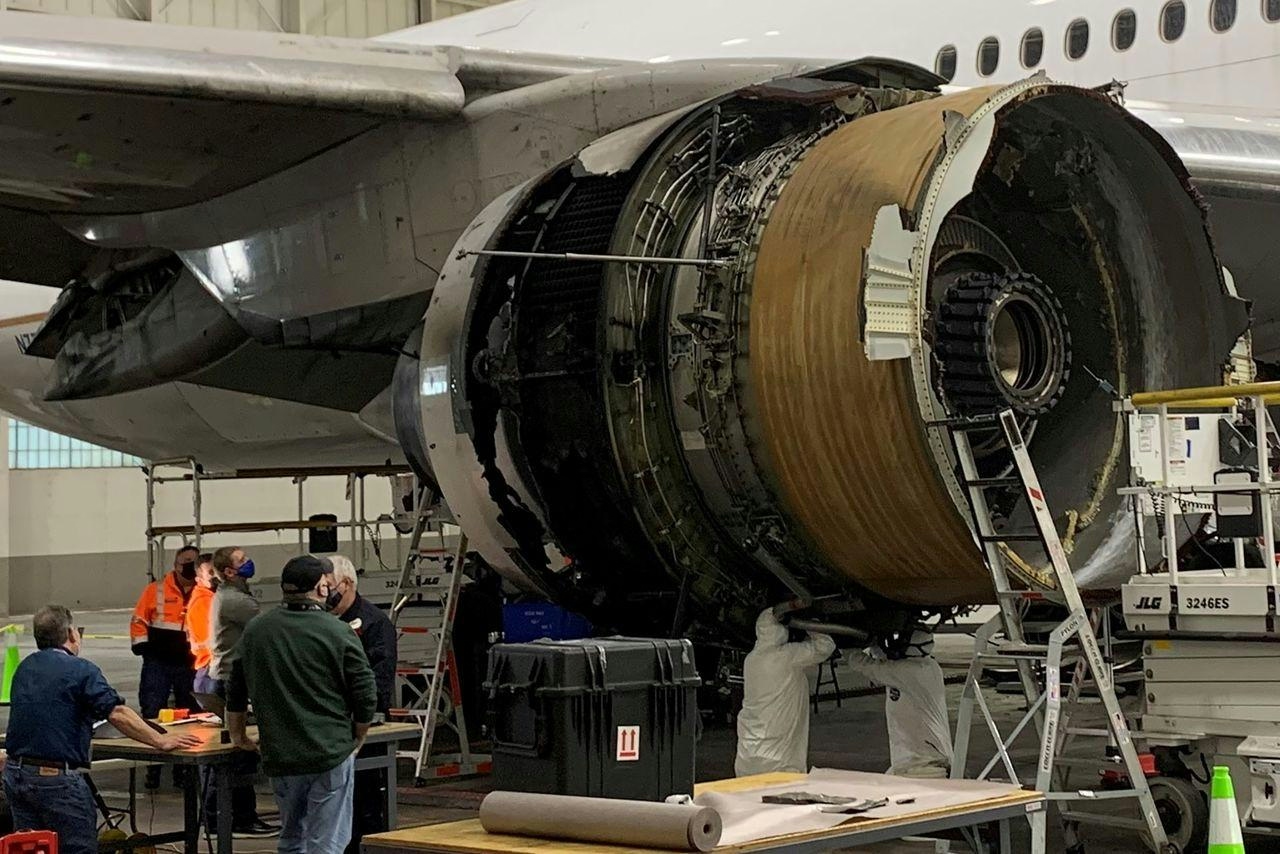
ANA Boeing 777 Experiences Engine Failure on Tokyo–Sapporo Flight
Incident Overview and Response
On June 6, All Nippon Airways (ANA) encountered a technical issue on flight NH65, a Boeing 777-200ER operating between Tokyo Haneda and Sapporo. During the afternoon arrival sequence at New Chitose Airport, the aircraft’s No. 1 engine was shut down after the flight crew detected an abnormally high oil temperature in the left-hand engine shortly following a go-around maneuver on approach to runway 01R. Following established safety protocols, the crew secured the affected engine and requested fire and rescue services to stand by. The aircraft subsequently landed safely on runway 19L at 14:57 local time, remaining on the runway for approximately ten minutes while emergency personnel conducted external inspections. No fire or fluid leakage was observed, and the plane taxied under its own power to the terminal.
ANA clarified that no formal emergency declaration was made, despite some media reports suggesting otherwise. All 327 passengers and crew members were unharmed, and the airline emphasized that the landing was executed safely and in full compliance with operational procedures.
Aircraft Details and Operational Impact
The aircraft involved, registered JA745A, is a 12.8-year-old Boeing 777-200ER that has been in ANA’s fleet since its delivery in 2013. This particular jet has undergone multiple cabin reconfigurations and was previously adorned with ANA’s Demon Slayer promotional livery. It is regularly deployed on high-density domestic routes such as Tokyo–Sapporo, underscoring its importance to ANA’s domestic network.
In the aftermath of the incident, ANA cancelled the return flight NH68 to Tokyo to facilitate thorough inspections and maintenance of the affected engine and associated systems. The airline’s prompt and professional handling of the situation has highlighted the operational resilience of twin-engine widebody aircraft on short-haul domestic routes, as well as the high standards maintained by ANA’s flight crews during abnormal events.
Challenges and Industry Implications
Despite the successful management of the incident, ANA now faces heightened scrutiny from aviation regulators and potential reputational challenges. Passengers may seek reassurances regarding the safety of the airline’s fleet, and competitors could leverage the event to emphasize their own safety records in a competitive market. Financial repercussions may also arise from repair costs and possible compensation claims.
The timing of the incident is significant, as ANA has recently been focusing on product enhancements and expanding its long-haul service offerings to maintain a competitive edge. The airline’s approach to communication and safety assurances in the coming weeks will be closely monitored by both regulatory bodies and the traveling public.
ANA reiterated its commitment to safety and transparency as investigations continue. The event underscores the critical importance of rigorous operational procedures and the professionalism required to manage technical challenges during crucial phases of flight.

Etihad Airways Suspends Airbus A380 Flights on Key Route

Aditya Birla Group Seeks Approval for Aircraft Leasing in GIFT City

Qatar Airways Highlights Innovation and Connectivity at Arabian Travel Market 2026

Hong Kong's Five-Year Plan Includes Andrew Fan's Aircraft Parts Processing Hub Proposal

ACIA Aero Leasing Delivers ATR72-600 to Air Nostrum

RTX Appoints Jill Albertelli as Head of Pratt & Whitney

TAT Technologies Joins Beyond Aero Hydrogen Aircraft Program

AURAK Study Highlights Barriers to Air Taxi Adoption in Emerging Economies

Xiamen Air Selects Altitude for 787 Maintenance at Heathrow

Etihad and Swissport Extend Global Partnership
