
AIによるインサイトを行動へとつなげる

現在のトレンド
Categories
Asia-Pacific Aviation Faces a Defining Decade Shaped by Technology, Capacity, and Strategy
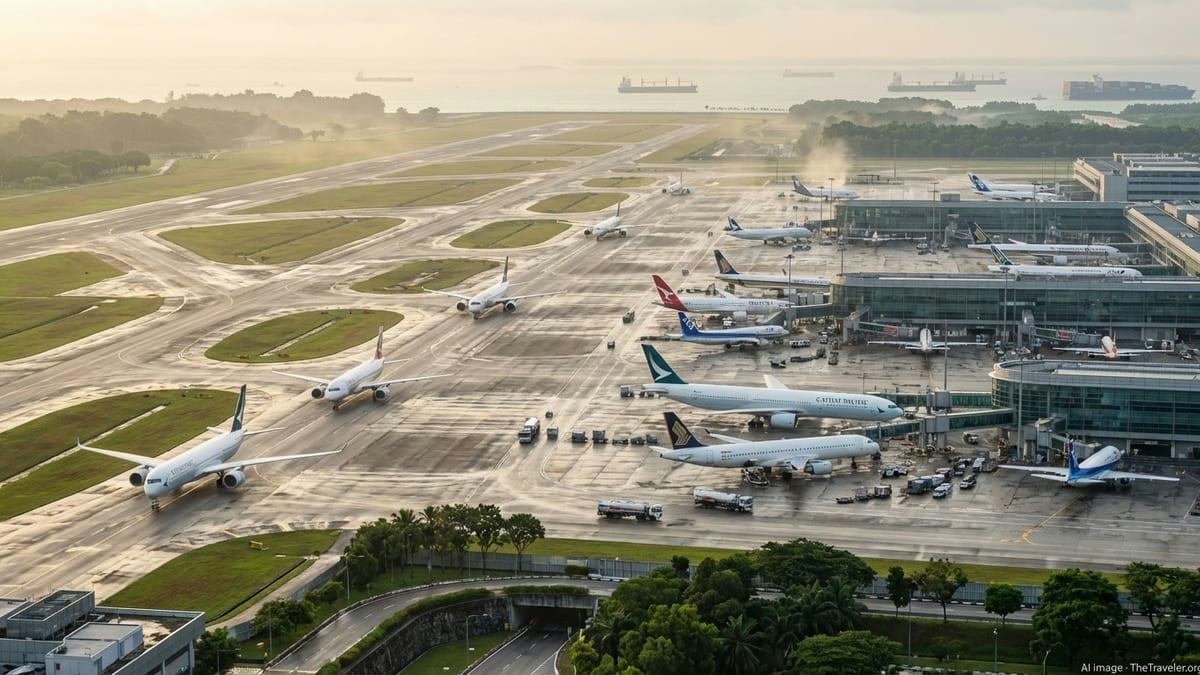
Asia-Pacific Aviation Faces a Defining Decade Shaped by Technology, Capacity, and Strategy
The Asia-Pacific aviation sector is poised to enter a transformative decade characterized by rapid technological advancements, expanding capacity, and strategic realignments that will shape the future leadership of the industry. Passenger traffic has not only recovered but surpassed pre-pandemic levels, driven by resilient domestic markets and a strong resurgence in international travel. Despite this growth, airlines continue to grapple with persistent challenges, including narrow profit margins, escalating operational costs, and volatile geopolitical conditions.
Domestic Markets and International Expansion
Domestic air travel remains the cornerstone of the Asia-Pacific aviation industry, representing nearly three-quarters of total capacity. This robust domestic demand underpins overall traffic growth but also intensifies competition, resulting in congested routes and downward pressure on fares. In response, airlines are strategically recalibrating their networks to emphasize international expansion. Cross-border routes, particularly in premium market segments, have now exceeded pre-pandemic volumes. Notably, markets such as Japan–South Korea have experienced significant growth, propelled by the rise of low-cost carriers and strategic alliances that enhance operational efficiency and streamline services.
China’s Pivotal Influence
China continues to play a central role in shaping the region’s aviation landscape. This winter, nearly 390 million seats are scheduled in China alone, a figure that is three times greater than India’s capacity and far surpasses smaller hubs like Singapore. Government policies regarding route allocation and fleet acquisition exert considerable influence over capacity flows both within Asia and on a global scale. Recent policy adjustments have compelled airlines to redirect flights and expand long-haul services to destinations in Europe, Oceania, and South America, highlighting the sector’s increasing need for strategic flexibility in response to regulatory shifts.
Fleet Modernization and Infrastructure Development
The forthcoming decade will be marked by substantial fleet modernization and airport infrastructure expansion. Globally, the addition of approximately one billion seats is anticipated, with Southeast Asia and India capturing a significant portion of this growth. The introduction of new-generation narrow-body aircraft, such as the Airbus A321XLR, is facilitating direct flights between secondary cities, bypassing traditional hubs and reducing travel times. These aircraft are disrupting established market dynamics and production processes, enabling airlines to explore new route opportunities.
Major infrastructure projects are reshaping regional capacity, including the development of Western Sydney International Airport, expanded terminals in Mumbai and Delhi, the construction of 18 new airports across China, the opening of Singapore Changi’s Terminal 5, and new facilities at Hong Kong International Airport. The proliferation of ultra long-haul routes is connecting cities without layovers, catering to the growing demand among premium travelers for seamless, direct services.
Technological Innovation and Industry Evolution
Technological innovation is redefining the future of aviation in the Asia-Pacific region. Advances in artificial intelligence, automation, and predictive analytics are transforming passenger experiences, capacity management, and revenue optimization. The region is also emerging as a leader in the electric vertical takeoff and landing (eVTOL) market, with carriers such as Japan Airlines and AirAsia demonstrating strong interest. Manufacturers like Embraer are targeting growth in both defense and eVTOL sectors, while Saab’s recent development of a ‘software-defined’ fuselage flight exemplifies ongoing innovation.
Meanwhile, Airbus and Boeing face divergent challenges: Airbus maintains a lead in single-aisle aircraft sales, whereas Boeing is striving to regain market share in the narrowbody segment. Industry discussions, such as those highlighted in the MRO Middle East 2026 podcast, emphasize the sector’s focus on scaling capacity, addressing workforce shortages, and advancing engine maintenance capabilities.
Navigating a Complex and Dynamic Future
As the Asia-Pacific aviation sector contends with supply chain disruptions and geopolitical uncertainties, its success will depend on disciplined capacity management, the adoption of cutting-edge technologies, and the agility to adapt networks and fleets in a rapidly evolving environment. The coming decade promises to be one of both complexity and opportunity in one of the world’s most dynamic aviation markets.

Etihad Airways Suspends Airbus A380 Flights on Key Route

Aditya Birla Group Seeks Approval for Aircraft Leasing in GIFT City

Qatar Airways Highlights Innovation and Connectivity at Arabian Travel Market 2026

Hong Kong's Five-Year Plan Includes Andrew Fan's Aircraft Parts Processing Hub Proposal

ACIA Aero Leasing Delivers ATR72-600 to Air Nostrum

RTX Appoints Jill Albertelli as Head of Pratt & Whitney

TAT Technologies Joins Beyond Aero Hydrogen Aircraft Program

AURAK Study Highlights Barriers to Air Taxi Adoption in Emerging Economies

Xiamen Air Selects Altitude for 787 Maintenance at Heathrow

Etihad and Swissport Extend Global Partnership
