
AIによるインサイトを行動へとつなげる

現在のトレンド
Categories
Aviation Maintenance in Combat: How AI Could Have Made a Difference
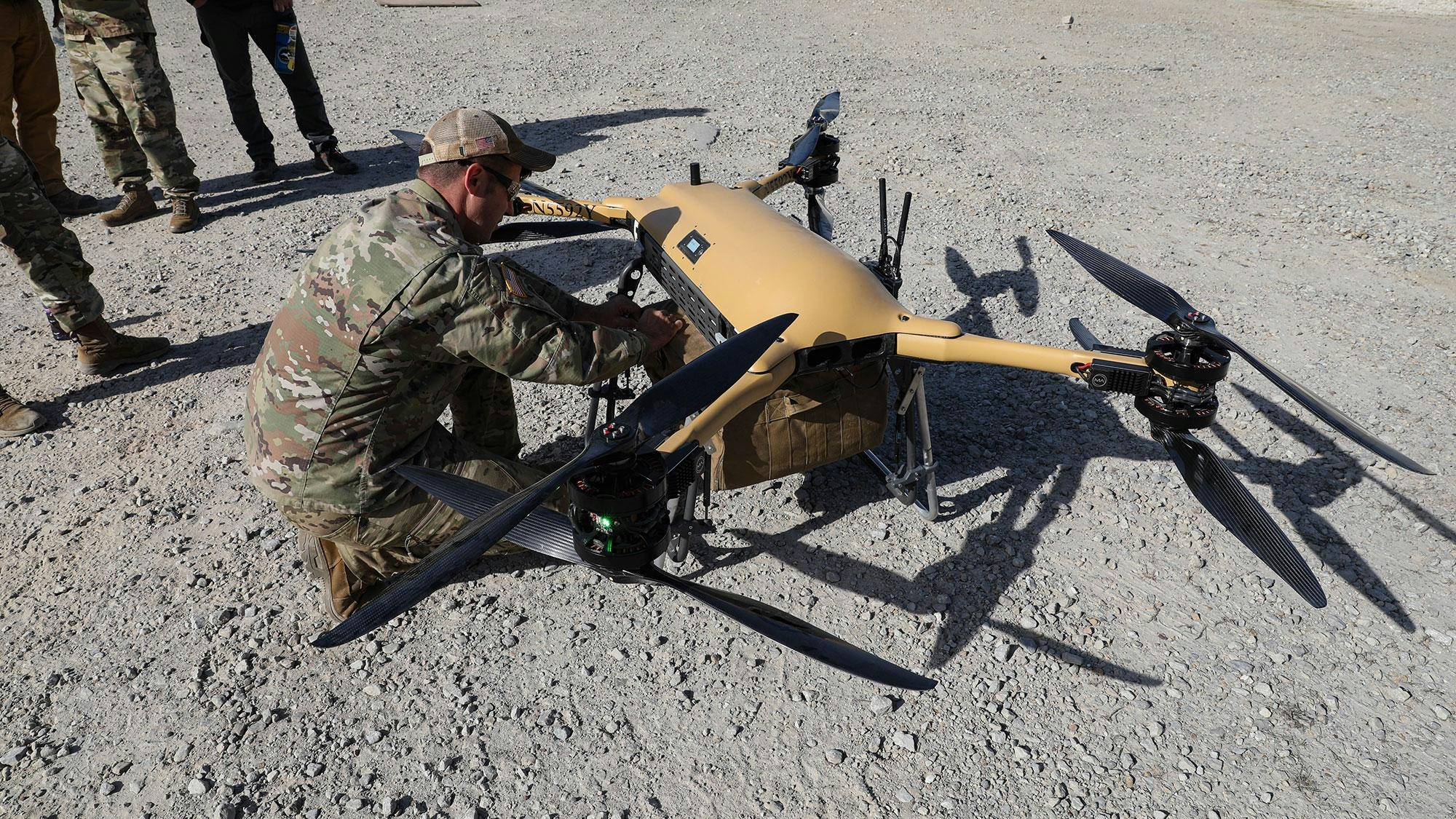
Aviation Maintenance in Combat: The Transformative Potential of AI
Chris Morton, Global Industry Director for Aerospace & Defence at IFS, emphasizes the critical role of maintenance in ensuring operational success. Drawing from his experience as a young aviation officer, Morton understands that mission outcomes depend heavily on the readiness of complex weapon systems such as helicopters. This reality has become increasingly urgent amid a growing shortage of skilled technicians and engineers within the defense sector.
Workforce Shortages and the Erosion of Experience
The European defense market alone faces a pressing demand for over 250,000 additional engineers and technicians within the next five years, representing a more than 25% increase, according to Oliver Wyman. Compounding this challenge, CAE reports that 83% of global technicians are expected to retire within the next decade. In response, the U.S. Air Force has initiated comprehensive reforms to its maintenance training programs to address these looming shortages.
One common proposal to mitigate the workforce gap is to accelerate promotions. However, this approach neglects the indispensable value of hands-on experience. Senior maintainers develop an intuitive ability to diagnose and resolve complex issues rapidly—expertise that cannot be expedited or easily transferred to junior technicians, who often depend on manuals or guidance from seasoned colleagues. Closing this experience gap demands innovative methods to effectively transfer knowledge to the next generation of maintainers.
Modernization and the Challenge of New Technologies
Global defense budgets are reaching unprecedented levels, fueling significant investments in new aircraft. Ukraine has announced plans to acquire up to 150 Gripens from Saab and 100 Rafale jets from France, while the United States aims to expand its fleet with 1,000 Collaborative Combat Aircraft. Poland and Canada are also integrating F-35s alongside their existing platforms. Although newer engines tend to be more efficient to maintain, each new airframe introduces fresh training and certification requirements, further straining maintenance resources.
Engaging Digital Natives in Maintenance Roles
Attracting younger talent to aviation maintenance remains a complex challenge. A 2022 U.S. study revealed that while most teenagers are aware of labor shortages, only about one-third express interest in pursuing careers in this field. Today’s recruits, as digital natives, are accustomed to augmented reality (AR), virtual reality (VR), and artificial intelligence (AI) technologies in their daily lives. To appeal to this demographic and enhance operational efficiency, maintenance environments must evolve by integrating these advanced digital tools.
The Promise and Challenges of AI Integration
The imperative for transformation is clear. AI, combined with digital solutions, offers a promising avenue to address workforce shortages and improve maintenance outcomes. Unlike popular AI models such as Large Language Models (LLMs), which primarily target white-collar roles, industrial AI can deliver tangible benefits directly on the flight line. For Morton, AI could have been a decisive factor in overcoming maintenance challenges, and it may prove essential in resolving the sector’s chronic workforce issues.
However, integrating AI into aviation maintenance—particularly in combat scenarios—presents significant complexities. Ensuring the reliability of AI-driven systems under high-stress conditions is paramount, as is protecting these systems from cyber threats. Robust cybersecurity measures are critical to safeguarding advanced AI tools from adversarial attacks.
The defense industry is responding swiftly. Contractors are increasing investments in AI technologies, while competitors accelerate their own programs to maintain strategic advantages. Recent developments, such as Anduril’s advancements in mission autonomy and sensor technology, highlight a competitive race toward autonomous combat capabilities. Honeywell’s efforts to expand its defense footprint in the Asia-Pacific region further underscore the strategic importance of AI in military aviation maintenance.
As the defense sector continues to evolve, leveraging AI to bridge the skills gap, enhance operational readiness, and secure technological superiority will be crucial for sustaining future combat effectiveness.
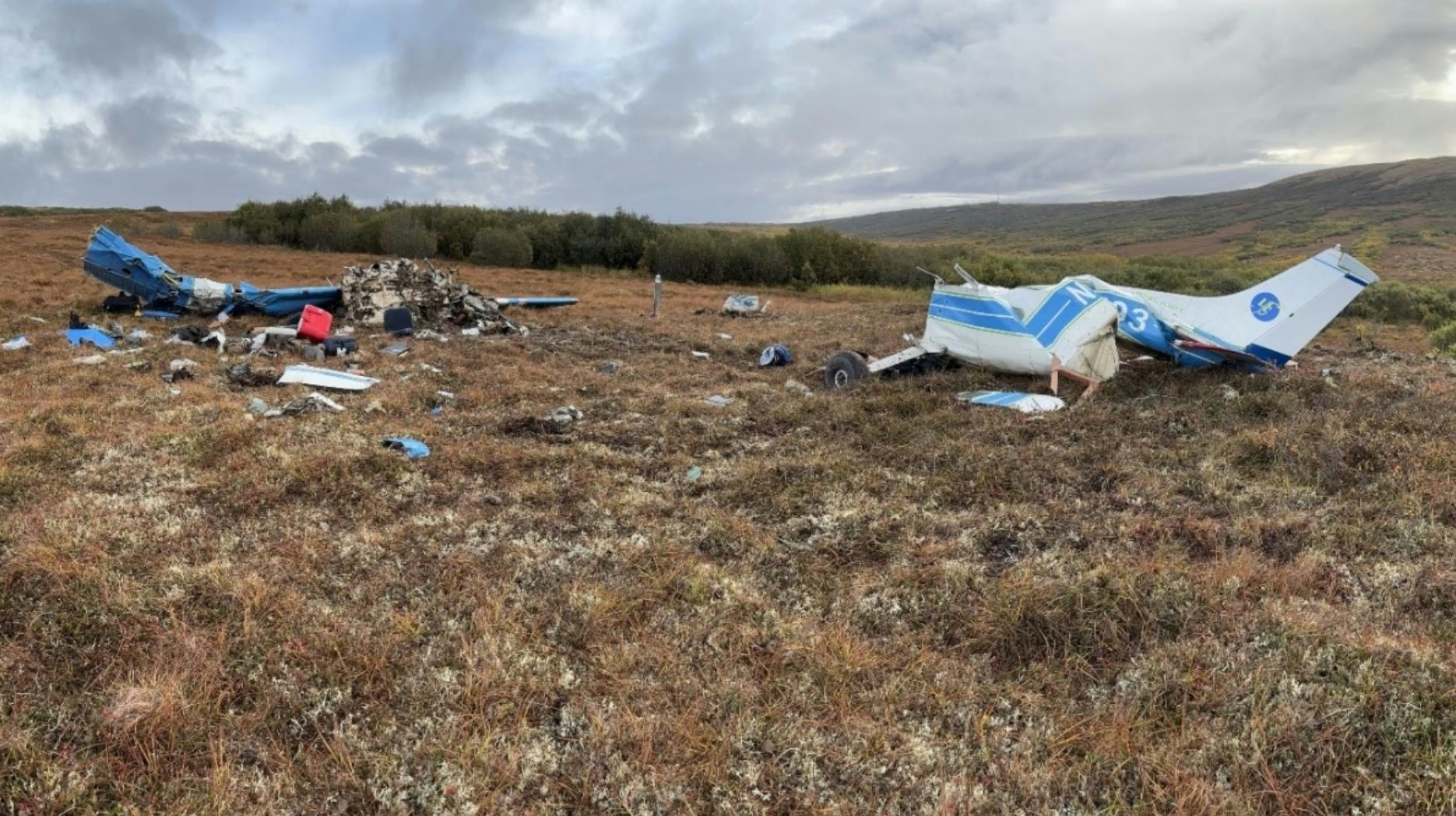
Eight Aboard Twin-Engine Cessna Crash in Remote Alaska
American Airlines Plans to Receive New Aircraft Deliveries in 2026
Delta Flight Returns to Atlanta Airport Due to Engine Trouble

Samoa Airways Recovers Damaged DHC-6-300 Aircraft

Man Ingested by Frontier Airlines Engine Marks Denver’s Sixth Airfield Security Breach in Three Years

The Advantages and Disadvantages of Owning Versus Leasing a Private Jet
Former Spirit Employees Express Concerns Over AI Partnership With Google
China Certifies Pilotless Air Taxi for Export; Sri Lanka First Buyer
US Pilot Hourly Pay Ranges from $90 for Regional to $465 for Widebody Flights
NASA Chooses University Teams to Support Aviation Research
