
AIによるインサイトを行動へとつなげる

現在のトレンド
Categories
Boeing Explains Why the 777X Will Remain Relevant at Launch
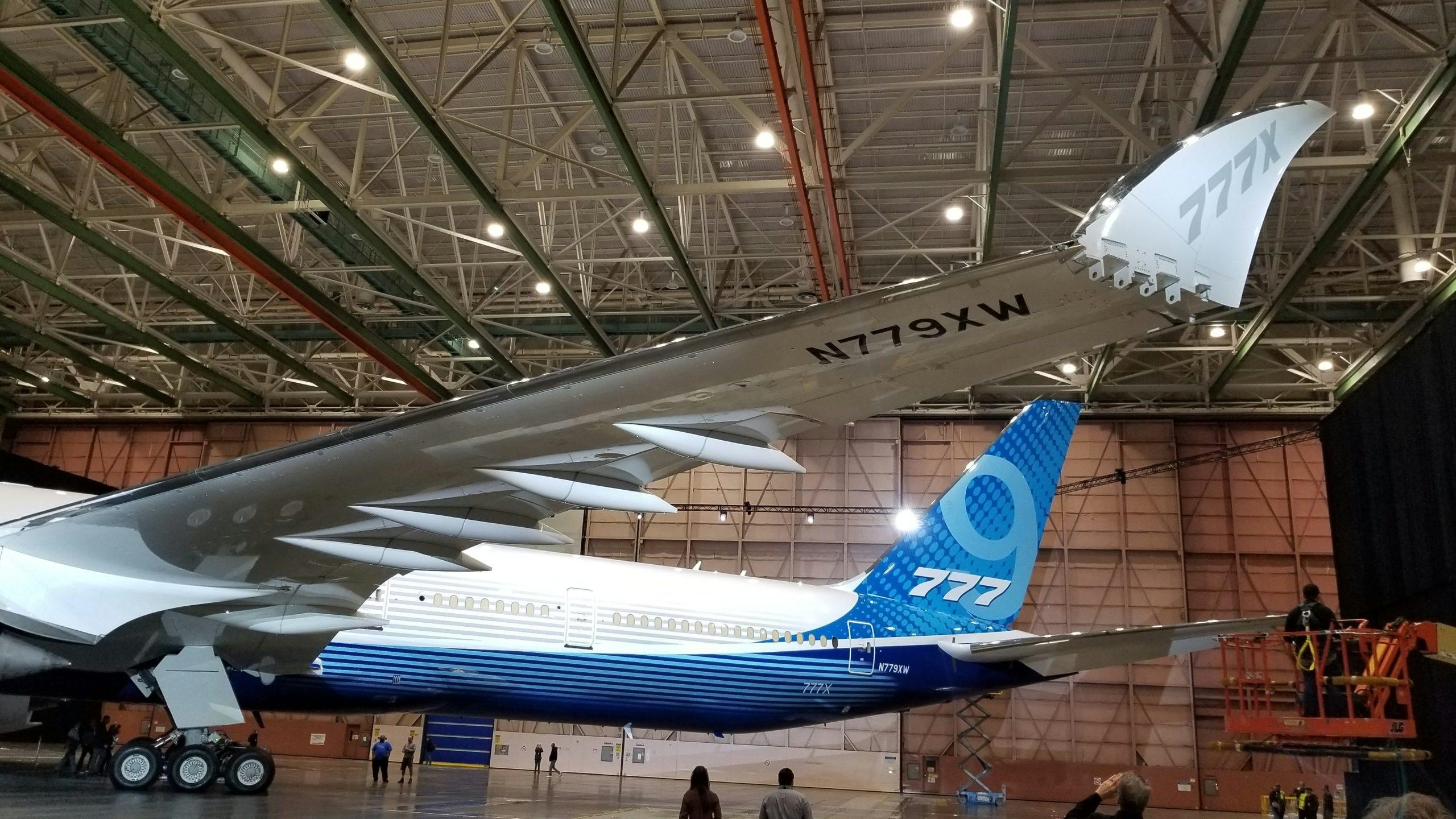
Boeing Defends 777X Relevance Amid Delays and Market Shifts
Boeing’s 777X program, initially scheduled for a 2020 debut, now anticipates its first commercial delivery in 2027, marking a 14-year span since its launch in 2013. The rollout will begin with the 777-9, followed by the 777-8F freighter two years later, and the 777-8 passenger variant at a later date. This extended timeline means the 777X will enter service approximately 25 years after the introduction of the first 777-300ER, prompting questions about the aircraft’s relevance in a rapidly evolving aviation market.
Despite these concerns, Boeing insists that the 777X will remain competitive and technologically advanced at launch. Darren Hulst, Boeing’s Vice President of Communications and Marketing, emphasized that the aircraft incorporates cutting-edge technologies and is far from obsolete. He underscored that the 777X’s innovations ensure it remains a strong contender in the widebody segment.
Navigating Delays and Industry Challenges
The development of the 777X has been significantly affected by regulatory challenges and the global COVID-19 pandemic, which disrupted research, development, and supply chains, resulting in a loss of approximately three years of progress. When the program began, the 777-300ER was still relatively young, having been in service for only nine years, which allowed Boeing to avoid rushing a premature replacement.
The first flight of the 777X is now scheduled for April 2026, with Federal Aviation Administration certification still pending. Recent reports have raised concerns about a potential durability issue with the GE9X engine’s seal, adding complexity to the certification process. Nevertheless, Boeing’s recent “industrial reset” and increased production rates for the 737 MAX demonstrate the company’s renewed focus on safety and operational stability. These efforts position Boeing as a resilient competitor, even as Airbus currently leads in widebody deliveries.
Market Position and Customer Demand
Boeing asserts that the 777X is well-positioned to meet the demands of the post-pandemic aviation market. The aircraft’s spacious cabin is designed to accommodate premium seating configurations, addressing growing demand for first, business, and premium economy classes. Its size allows it to serve as both an upgrade from the 777-300ER and a more efficient alternative to the now-retired Airbus A380.
Hulst estimates that the 777X could replace up to 1,500 aircraft in the coming years. The program has already secured significant interest from major Asia-Pacific carriers, including Singapore Airlines, Cathay Pacific, All Nippon Airways, and Air India. Boeing’s flexible approach to cabin design, which contrasts with Airbus’s standardized Airspace cabin, offers airlines the ability to customize interiors to their specific requirements, enhancing the aircraft’s appeal.
Outlook
While the 777X continues to face certification hurdles and technical scrutiny, market sentiment remains cautiously optimistic. Boeing’s commitment to safety, combined with its industrial reset and strong order book, suggests the 777X will maintain its relevance, provided it meets the revised 2027 delivery timeline. The coming years will be critical in determining whether Boeing’s confidence in the 777X is warranted, but for now, the company remains steadfast that its flagship widebody will fulfill the evolving needs of the global aviation market.

Etihad Airways Suspends Airbus A380 Flights on Key Route

Aditya Birla Group Seeks Approval for Aircraft Leasing in GIFT City

Qatar Airways Highlights Innovation and Connectivity at Arabian Travel Market 2026

Hong Kong's Five-Year Plan Includes Andrew Fan's Aircraft Parts Processing Hub Proposal

ACIA Aero Leasing Delivers ATR72-600 to Air Nostrum

RTX Appoints Jill Albertelli as Head of Pratt & Whitney

TAT Technologies Joins Beyond Aero Hydrogen Aircraft Program

AURAK Study Highlights Barriers to Air Taxi Adoption in Emerging Economies

Xiamen Air Selects Altitude for 787 Maintenance at Heathrow

Etihad and Swissport Extend Global Partnership
