
AIによるインサイトを行動へとつなげる

現在のトレンド
Categories
Boeing Leads Airbus in January Aircraft Deliveries
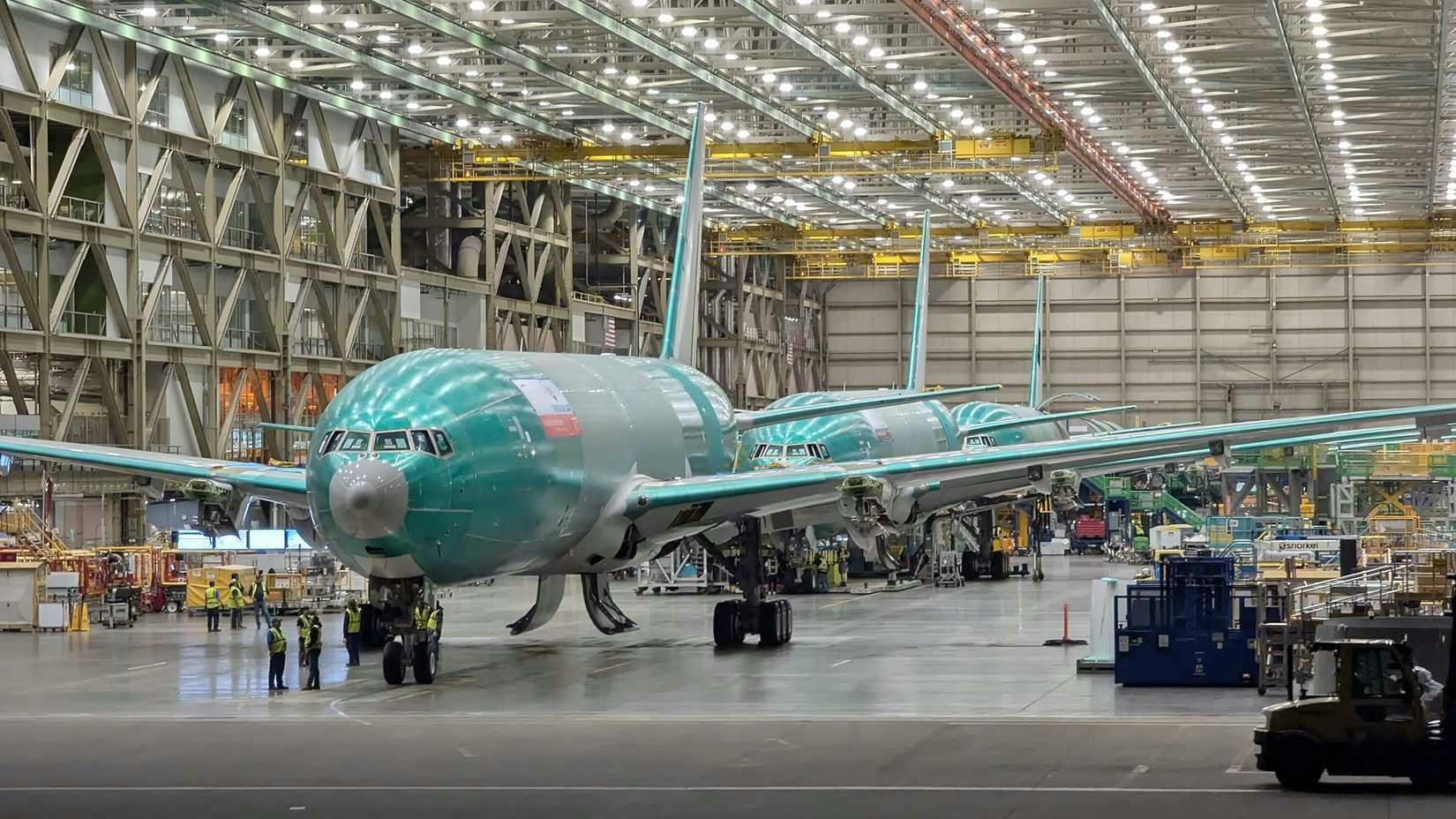
Boeing Surpasses Airbus in January Aircraft Deliveries
In January 2026, the commercial aviation manufacturing sector witnessed a pronounced divergence between its two dominant players. Boeing delivered 46 aircraft, more than double Airbus’s 19, signaling a strong operational momentum for the American manufacturer amid ongoing industry challenges. These figures come as airlines worldwide accelerate fleet expansions in response to a robust recovery in travel demand following the pandemic. The contrasting performances of Boeing and Airbus in the opening month set a compelling precedent for the year ahead.
Airbus’s Modest Start Amid Supply Chain Challenges
Airbus began 2026 with a subdued delivery performance, handing over only 19 jets to 15 customers. The majority of these deliveries were narrowbody aircraft, with 15 units from the A320neo family—comprising 10 A321neos and 5 A320neos—alongside three A220-300s and a single widebody A350-900. Notably, Airbus did not deliver any A330 models, highlighting ongoing production bottlenecks in its widebody segment. This delivery total represents Airbus’s slowest January in recent years, down from 25 aircraft in January 2025 and 30 in January 2024.
Airbus CEO Guillaume Faury has attributed the slowdown primarily to persistent supply chain disruptions, including supplier quality issues that emerged late last year. Despite the delivery shortfall, Airbus secured 49 gross orders during the month. These included significant commitments from IAG for A320neo and A321neo aircraft, as well as an order from low-cost carrier Spring Airlines for 30 narrowbodies. While these orders reflect confidence in Airbus’s long-term prospects, the delivery delays could exert pressure on cash flows, as final payments are typically received upon aircraft handover.
Boeing’s Strong Performance and Order Momentum
In contrast, Boeing delivered 46 aircraft in January, marking its third-strongest start to a year on record and the highest monthly total since 2019. The bulk of Boeing’s deliveries consisted of its 737 MAX narrowbody models, with 37 to 38 units handed over. Additionally, Boeing delivered five 787 Dreamliners and several widebody aircraft, including four 777 Freighters and one 767-2C designated for the U.S. Air Force tanker program. Although this figure was lower than December 2025’s 63 deliveries, Boeing’s January output significantly outpaced Airbus, providing a notable financial boost through milestone payments.
Boeing’s order book also demonstrated strength, with 107 gross orders (103 net after cancellations) recorded in January. This included a landmark 30-aircraft 787-10 deal from Delta Air Lines and commitments from leasing companies such as Aviation Capital Group. This order intake represents Boeing’s best January since 2012 and underscores a resurgence in demand for widebody aircraft amid global route expansions.
The divergence in January deliveries can be attributed to Boeing’s progress in resolving previous production crises, including the 737 MAX grounding and 787 Dreamliner manufacturing halts. These resolutions have enabled Boeing to steadily ramp up output, capitalizing on recovering market demand.
Market Trends and Industry Outlook
Both manufacturers continue to see narrowbody aircraft dominate deliveries, accounting for over 80% of the total, reflecting the market’s emphasis on short-haul travel recovery. However, Airbus faces significant challenges in scaling A320 production to its target of 75 units per month by 2027, hindered by shortages of engines and other critical components.
Looking ahead, industry forecasts anticipate the global commercial fleet nearly doubling by 2045, driven largely by growth in emerging Asian markets and the adoption of sustainable aviation fuels. Nevertheless, persistent supply chain constraints are expected to limit production growth in 2026. While Boeing currently holds an early lead in deliveries, this advantage may diminish if Airbus successfully addresses its production bottlenecks, potentially reclaiming its delivery dominance as seen in previous years.

Etihad Airways Suspends Airbus A380 Flights on Key Route

Aditya Birla Group Seeks Approval for Aircraft Leasing in GIFT City

Qatar Airways Highlights Innovation and Connectivity at Arabian Travel Market 2026

Hong Kong's Five-Year Plan Includes Andrew Fan's Aircraft Parts Processing Hub Proposal

ACIA Aero Leasing Delivers ATR72-600 to Air Nostrum

RTX Appoints Jill Albertelli as Head of Pratt & Whitney

TAT Technologies Joins Beyond Aero Hydrogen Aircraft Program

AURAK Study Highlights Barriers to Air Taxi Adoption in Emerging Economies

Xiamen Air Selects Altitude for 787 Maintenance at Heathrow

Etihad and Swissport Extend Global Partnership
