
AIによるインサイトを行動へとつなげる

現在のトレンド
Categories
Boeing Tests Autonomous Landing System on CH-47F Chinook Helicopter
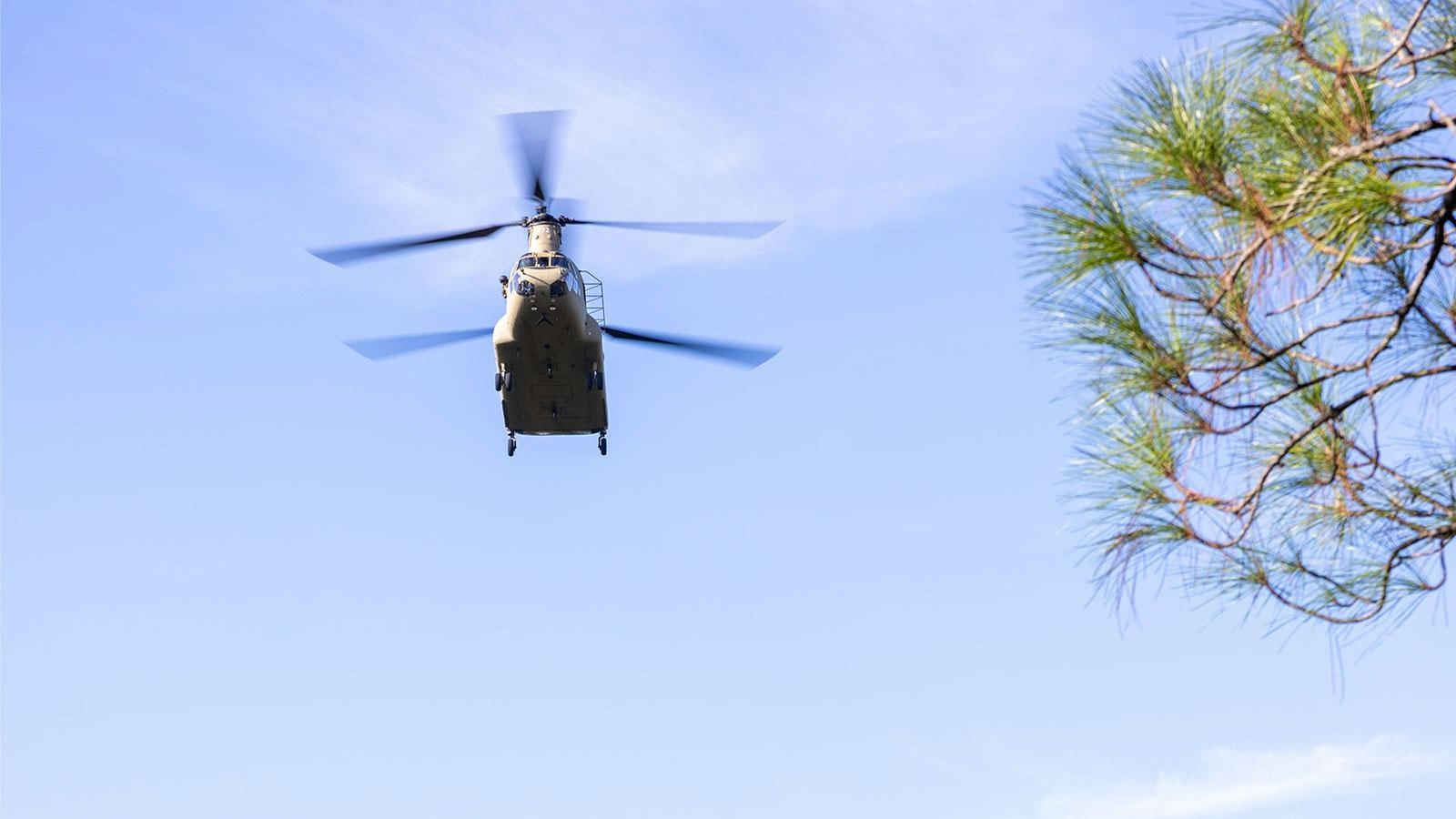
Boeing Advances Autonomous Landing System on CH-47F Chinook Helicopter
Boeing has achieved a significant milestone in autonomous flight technology by successfully completing the first fully automated approach and landing of a CH-47F Chinook helicopter. This accomplishment highlights the progress of Boeing’s Approach-to-X (A2X) technology, integrated with an upgraded Digital Automated Flight Control System (DAFCS), which enables the helicopter to land precisely with all four wheels touching down without any pilot intervention.
Flight Testing and System Capabilities
Since its initial flight on a U.S. Army CH-47F in January, the autonomous system has undergone more than 150 approaches under various conditions, ranging from 100-foot hovers to full landings. These tests have demonstrated remarkable precision, with an average final positioning error of less than five feet. The system allows pilots to input key parameters such as landing zone, final altitude, approach angle, and starting speed, while the software autonomously manages the approach and landing sequence. Pilots retain the ability to override or adjust the flight path and glide slope if operational circumstances require it.
Deanna DiBernardi, Boeing’s H-47 Human Factors Engineering lead, explained that the interface and control laws were designed to align with how pilots naturally conduct an approach. The primary objective is to reduce pilot workload, enabling crews to maintain greater situational awareness during tactical operations. By automating the landing process, the system allows pilots to focus more on monitoring their environment, enhancing overall mission safety and effectiveness.
Industry Context and Future Prospects
Boeing plans to continue flight testing before delivering a finalized software package to the U.S. Army, which may consider integrating the technology across its Chinook fleet. While the system has received positive market feedback and reflects the Army’s growing confidence in autonomous capabilities, Boeing faces challenges related to regulatory approval and integration with existing military protocols.
The competitive landscape is intensifying, with rivals such as Sikorsky developing similar autonomous systems for platforms like the UH-60 Black Hawk, currently under Army evaluation. Sikorsky’s unmanned variant, capable of transporting heavier payloads, further underscores the evolving race in military aviation autonomy.
Boeing’s recent return to profitability and ongoing industrial restructuring position the company well to navigate these challenges. However, broader geopolitical tensions, particularly with China, may influence future development trajectories and market opportunities.
As the pursuit of autonomous military aircraft accelerates, Boeing’s advancements with the CH-47F Chinook exemplify both the potential and complexity inherent in integrating advanced automation into defense aviation.

Etihad Airways Suspends Airbus A380 Flights on Key Route

Aditya Birla Group Seeks Approval for Aircraft Leasing in GIFT City

Qatar Airways Highlights Innovation and Connectivity at Arabian Travel Market 2026

Hong Kong's Five-Year Plan Includes Andrew Fan's Aircraft Parts Processing Hub Proposal

ACIA Aero Leasing Delivers ATR72-600 to Air Nostrum

RTX Appoints Jill Albertelli as Head of Pratt & Whitney

TAT Technologies Joins Beyond Aero Hydrogen Aircraft Program

AURAK Study Highlights Barriers to Air Taxi Adoption in Emerging Economies

Xiamen Air Selects Altitude for 787 Maintenance at Heathrow

Etihad and Swissport Extend Global Partnership
