
画像

AIによるインサイトを行動へとつなげる

今すぐAeroGenieのウェイティングリストに登録しよう!

現在のトレンド

Categories

China Develops New Air-Breathing Engine for Aviation and Missiles
March 31, 2026By ePlane AI
China Develops New Air-Breathing Engine for Aviation and Missiles
0
0
Air-Breathing Engine
Contra-Rotary Ramjet
Hypersonic Propulsion

China Develops New Air-Breathing Engine for Aviation and Missiles

Breakthrough in Propulsion Technology

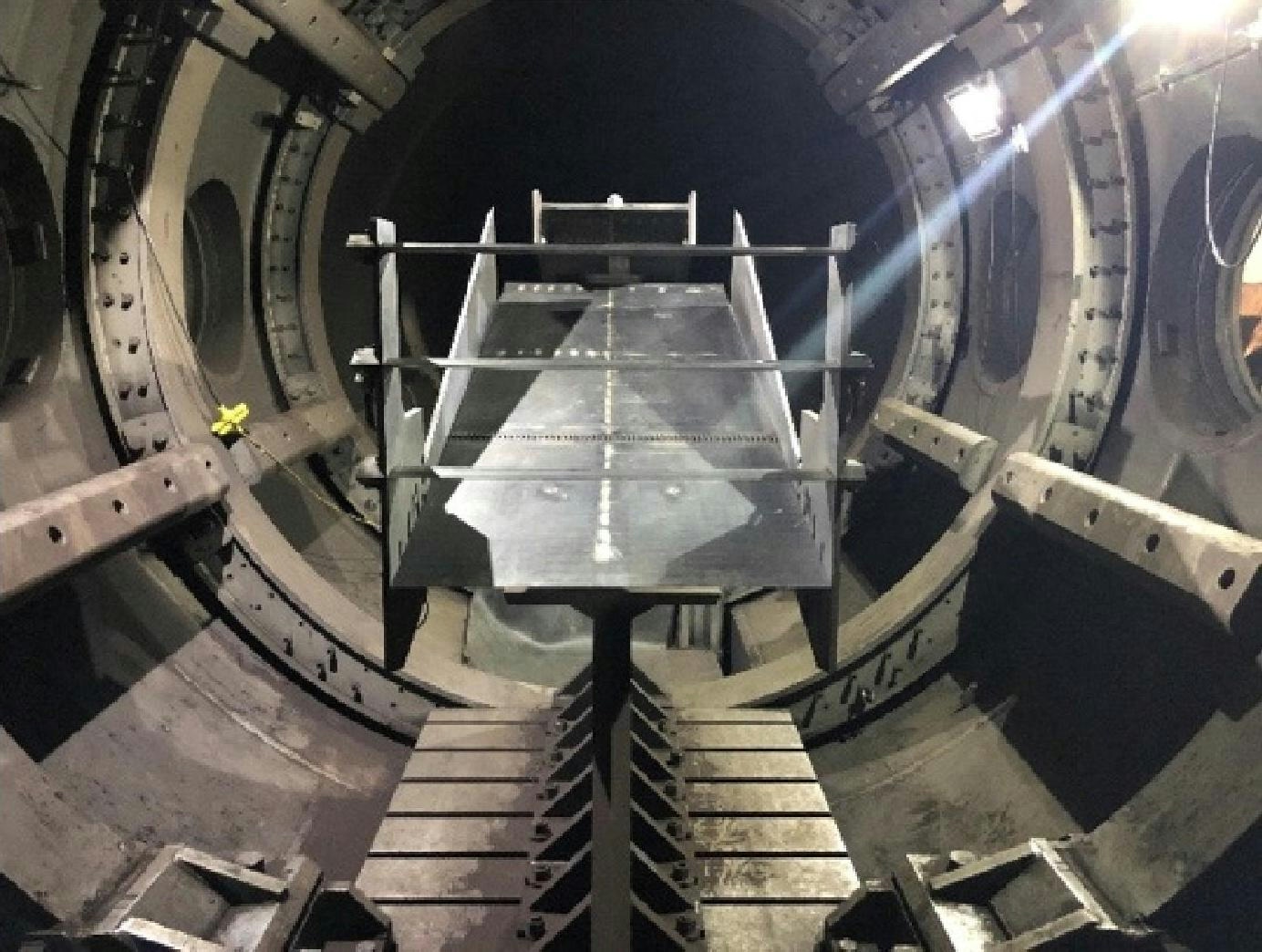
China has announced a major advancement in propulsion technology with the successful experimental verification of a novel air-breathing engine, known as the contra-rotary ramjet engine. Developed over more than thirty years, this engine is capable of operating continuously from a stationary start to speeds exceeding Mach 6. This capability offers a seamless transition across a broad velocity range, potentially revolutionizing both military aviation and missile systems.

The contra-rotary ramjet engine is poised to replace the existing combined turbine-ramjet propulsion systems currently employed in high-speed flight. By streamlining engine design, it promises to enhance the performance and efficiency of next-generation fighter jets and hypersonic missiles. Chinese researchers have confirmed the completion and experimental validation of the prototype, marking a significant milestone toward practical engineering applications.

Accelerated Development and Global Implications

A critical factor enabling this rapid progress is China’s development of advanced simulation software, which has dramatically shortened the time required for scramjet engine modeling from several years to mere weeks. This acceleration in research and development is expected to expedite the deployment of hypersonic technologies, intensifying the global competition for technological supremacy in this domain.

The unveiling of China’s new engine has attracted considerable international attention due to its potential impact on global security and defense strategies. Experts suggest that this breakthrough may compel other nations to intensify their hypersonic research efforts to maintain a competitive edge. In response, the U.S. Air Force has announced plans to reactivate a specialized hypersonic wind tunnel, while private aerospace companies such as Stratolaunch are investing heavily in the development of air-breathing hypersonic vehicles.

These developments reflect a broader global trend of increased focus and investment in hypersonic technology. As countries compete for leadership in this strategically vital sector, analysts anticipate heightened competition, increased defense expenditures, and a rapid pace of innovation.

Challenges and Future Prospects

Despite the significant progress represented by the contra-rotary ramjet engine, challenges remain in scaling the technology for operational deployment and integrating it into existing aerospace platforms. Nevertheless, the successful demonstration underscores China’s growing capabilities in advanced aerospace engineering and its determination to influence the future trajectory of high-speed flight.

More news
AFI KLM E&M Extends Component Support Agreement for Boeing 737

AFI KLM E&M Extends Component Support Agreement for Boeing 737

AFI KLM E&M Extends Component Support Agreement for Boeing 737 Air France Industries KLM Engineering & Maintenance (AFI KLM E&M) and LOT Polish Airlines have renewed their longstanding component support agreement for LOT’s Boeing 737 fleet. The extended contract now encompasses 31 Boeing 737 MAX aircraft and secures the partnership through 2033, underscoring the strong collaboration between the two companies and LOT’s sustained confidence in AFI KLM E&M’s maintenance capabilities. Strengthening a Strategic Partnership Under the terms of the renewed agreement, AFI KLM E&M will continue to provide LOT with a dedicated Boeing 737NG/MAX component pool solution. This arrangement guarantees reliable component availability, streamlined logistics, and enhanced operational performance for the Polish carrier’s growing fleet. Marcel Kuijn, Vice President Sales Europe at AFI KLM E&M, highlighted the significance of the extension, stating that it reflects LOT’s trust in their expertise and commitment to supporting the airline’s operational efficiency and expansion plans over the coming decade. Dorota Dmuchowska, Chief Operating Officer of LOT Polish Airlines, emphasized the critical role of stable partnerships in the current aviation environment. She noted that extending the agreement with AFI KLM E&M allows LOT to build upon a proven cooperation model, ensuring consistent component support that underpins the safe, reliable, and cost-effective operation of its fleet. This collaboration, she added, forms a solid foundation for the airline’s continued growth. Navigating a Changing Aviation Landscape The contract extension arrives amid significant shifts in the global aviation market. Boeing is increasing production of its 737 series, aiming for a monthly output of 70 aircraft. This surge presents challenges for maintenance, repair, and overhaul (MRO) providers like AFI KLM E&M, which must maintain supply chain resilience and meet rising component demand. Concurrently, competition within the MRO sector is intensifying, with Airbus ramping up its production rates and other service providers vying for long-term contracts with airlines operating Boeing fleets. Recent industry developments further illustrate the robust demand for the 737 series. Vietnam Airlines, for instance, has secured a $2.9 billion loan to finance an order for 50 Boeing 737 MAX 8 aircraft, highlighting the model’s enduring popularity and the escalating need for dependable maintenance and component support services worldwide. As airlines expand their fleets and manufacturers accelerate production, the renewed agreement between AFI KLM E&M and LOT Polish Airlines positions both companies to effectively manage evolving market dynamics, ensuring operational stability and supporting future growth.
Kazakhstan Implements New Regulations for Air Taxis and Drones

Kazakhstan Implements New Regulations for Air Taxis and Drones

Kazakhstan Implements New Regulations for Air Taxis and Drones On June 24, 2026, President Kassym-Jomart Tokayev enacted significant amendments to Kazakhstan’s aviation laws, introducing a comprehensive regulatory framework for air taxis, drones, and other emerging transport technologies. These changes update the Law on the Use of the Airspace of the Republic of Kazakhstan and Aviation Activities, reflecting the country’s commitment to modernizing its approach to digitalization, personal data protection, road traffic management, and the integration of innovative aviation technologies. Establishing a Legal Framework for Advanced Air Mobility The Civil Aviation Committee has highlighted that the new legislation formally establishes the legal foundation for Kazakhstan’s urban air mobility (UAM) market. This move aligns Kazakhstan with global leaders such as the United States, the European Union, South Korea, and China, all of which have developed regulations for electric vertical takeoff and landing (eVTOL) aircraft. Central to the amendments is the introduction of the Advanced Air Mobility (AAM) concept, which categorizes both urban and regional air mobility. The law provides a clear legal framework for the operation of eVTOL aircraft and other vehicles approved for advanced air mobility. For the first time, vertiports—essential infrastructure for air taxi operations—are granted legal status, with detailed operational requirements outlined. New certification procedures have been established for aircraft developers, manufacturers, urban air mobility operators, and civil remotely piloted aircraft systems. Furthermore, the legislation introduces a framework for an Unmanned Traffic Management (UTM) system, enabling digital oversight of unmanned aircraft flights, including remote identification, routing, and airspace coordination. To ensure the safety and security of unmanned operations, enhanced cybersecurity and digital infrastructure standards have been incorporated. The amendments also strengthen government oversight of civil drone activities by updating rules on registration, certification, operation, and flight management. These measures aim to transition innovative aviation technologies from experimental stages into a fully regulated environment, fostering transparency, attracting investment, and accelerating technological advancement within Kazakhstan’s high-tech aviation sector. Navigating Challenges and Market Implications While these regulatory changes position Kazakhstan at the forefront of advanced aviation, they also introduce complex challenges. The evolving legal landscape will require careful navigation, as illustrated by ongoing international disputes such as the court battle between Archer and Joby, two prominent eVTOL developers. The new framework is expected to stimulate competition and innovation within Kazakhstan’s air taxi sector, while also influencing the rapidly growing precision agriculture drone market. Industry stakeholders are already adapting to the emerging opportunities and regulatory requirements. National carrier Air Astana is likely to adjust its growth strategies to leverage the expanding air mobility market. Meanwhile, technology firms such as Tytan Technologies are anticipated to broaden their counter-drone solutions to address increasing demands for security and airspace management. The Civil Aviation Committee has emphasized that these legislative reforms create transparent and predictable conditions conducive to industry growth. As Kazakhstan advances its regulatory support for advanced aviation, it aims to attract investment and establish itself as a regional leader in innovative air transport. Notably, Qazinform has reported that the first air taxi tests have commenced in Alatau City, marking the beginning of a new chapter in Kazakhstan’s aviation industry.
AI-Driven Overhaul of Air Traffic Control Underway in $875 Million Project

AI-Driven Overhaul of Air Traffic Control Underway in $875 Million Project

AI-Driven Overhaul of Air Traffic Control Underway in $875 Million Project The Federal Aviation Administration (FAA) has initiated a comprehensive modernization of the United States’ air traffic control system through a 12-year, $875 million contract awarded to Boston-based Air Space Intelligence (ASI). This ambitious project seeks to harness advanced, cloud-based artificial intelligence to address systemic flight delays and enhance capacity management across the National Airspace System. A Data-Driven Transformation of Air Traffic Management This initiative represents a fundamental shift from the traditional air traffic control paradigm, which has long been hindered by fragmented data and reactive operational practices. Historically, regional controllers operated in isolation, resulting in disconnected timelines among airlines, airports, and control towers. The legacy system’s inability to anticipate and mitigate the ripple effects of severe weather or unexpected runway closures frequently led to widespread cancellations and delays. The FAA’s collaboration with ASI introduces a unified, AI-powered platform designed to transition air traffic management from a reactive to a proactive model. Central to this transformation are two integrated, cloud-native systems: the Flow Management Data System (FMDS) and the System-Wide Market Analysis and Review Tool (SMART). Both platforms are built upon the Flyways AI architecture, enabling the creation of a live digital twin of the entire U.S. aviation network. The Mechanics of the AI System The newly deployed software continuously processes over 100 real-time data streams, including federal weather reports, aircraft transponder signals, and airline schedules. This data fusion generates highly accurate, four-dimensional simulations of the airspace, capable of forecasting conditions days, weeks, or even months in advance. By identifying potential bottlenecks early, the system can recommend optimal routing strategies before flights depart, thereby minimizing disruptions. Industry stakeholders are closely monitoring the rollout, utilizing ASI’s product directory to track development milestones and system performance. The overarching objective is to dynamically manage airspace capacity and reduce operational disruptions, potentially setting a new global benchmark for air traffic management. Challenges and Industry Response Despite the promise of enhanced efficiency through AI, the project faces considerable challenges. Integrating these sophisticated systems with existing infrastructure demands seamless data interoperability among a wide array of stakeholders. Resistance is expected from established players within the air traffic control market, as the shift threatens entrenched roles and traditional business models. Airlines have expressed reservations regarding the system’s readiness and reliability, voicing concerns about the accuracy of AI predictions and the risk of unforeseen technical complications during implementation. Meanwhile, competitors are responding in diverse ways: some are accelerating their own AI development efforts or seeking partnerships with the FAA, while others may attempt to impede the new system to safeguard their market positions. A New Era for U.S. Airspace Management The FAA’s decision to partner with a relatively young, venture-backed firm like ASI marks a departure from its historical reliance on legacy defense contractors and bespoke hardware solutions. ASI’s mature software platform, honed over years of development, enabled the company to circumvent traditional bureaucratic obstacles and secure this landmark contract. As the project advances, its success will hinge not only on technological innovation but also on the industry’s capacity to adapt to a rapidly evolving operational environment. The outcome of this AI-driven overhaul has the potential to redefine airspace management in the United States for decades to come.
European Airline Near Bankruptcy Orders 40 New Airbus Jets in $10 Billion Deal

European Airline Near Bankruptcy Orders 40 New Airbus Jets in $10 Billion Deal

Scandinavian Airlines Commits to $10 Billion Airbus Fleet Renewal Amid Recovery Scandinavian Airlines (SAS), once teetering on the edge of bankruptcy, has announced a landmark order for up to 40 widebody Airbus jets in a deal valued at over $10 billion. This represents the largest investment in the airline’s history and signals a strategic pivot aimed at reestablishing SAS as a significant contender in international long-haul travel. A Transformative Fleet Strategy The new fleet plan includes a firm order for 18 Airbus A330-900neo aircraft, with options for additional A330-300 widebodies. These state-of-the-art jets are powered by next-generation Rolls-Royce Trent 7000 engines and feature premium three-cabin layouts accommodating between 287 and 303 passengers. The A330-900neo offers an extended range of up to 8,100 nautical miles and achieves a 25% reduction in fuel consumption and carbon emissions. This aligns with SAS’s commitment to operate with 50% sustainable aviation fuel by 2030, underscoring the airline’s focus on environmental sustainability alongside growth. Recovery and Strategic Backing This substantial investment follows SAS’s emergence from Chapter 11 bankruptcy protection in July 2022, after enduring years of financial difficulties. The airline implemented a rigorous restructuring program, cutting costs and streamlining operations to restore viability. A critical development in this turnaround was the acquisition of a 19.9% minority stake by Air France-KLM, with plans to increase its holding to a controlling 60.5%. This strategic partnership restored SAS’s creditworthiness and provided the necessary liquidity to pursue an ambitious fleet renewal. Growth Ambitions and Market Context SAS’s expansion strategy centers on Copenhagen Airport, positioning it as a pivotal hub for intercontinental flights. The airline projects that this growth will support an additional 25,000 jobs and contribute $3.8 billion to Denmark’s GDP by 2030. This move comes amid a challenging European aviation environment marked by rising operating costs and geopolitical uncertainties. Despite these challenges, major airline groups such as Lufthansa, Air France-KLM, and International Airlines Group continue to consolidate and strengthen their market positions. Industry analysts view SAS’s aggressive investment as a decisive shift from survival mode to proactive growth, aimed at securing vital international slots ahead of competitors. The new aircraft will enable SAS to operate highly profitable ultra-long-haul routes, addressing both immediate capacity demands and long-term fleet modernization. Airbus Confidence in Market Resilience Airbus remains optimistic about the aviation sector’s resilience. CEO Guillaume Faury recently affirmed that there have been no signs of order cancellations despite recent industry turbulence. The SAS deal exemplifies this confidence and highlights sustained demand for efficient, next-generation aircraft. With this historic order, Scandinavian Airlines is not only rebuilding its fleet but also signaling its intent to reclaim a leading role in European and global aviation.
Combating AI-Driven Cybercrime in Business Aviation

Combating AI-Driven Cybercrime in Business Aviation

Combating AI-Driven Cybercrime in Business Aviation Escalating Threats in a Data-Rich Environment Scam emails demanding urgent attention have become a common annoyance for many, but within the business aviation sector, the consequences are far more severe. Cybercriminals are increasingly leveraging sophisticated phishing techniques, amplified by artificial intelligence, to exploit the industry’s unique vulnerabilities. According to Josh Wheeler, a member of the NBAA Security Council and senior director of cybersecurity at Gogo, the cyber-phishing threat is intensifying at an alarming rate. While general phishing attacks are growing by approximately 600% annually, Wheeler estimates that in business aviation, the threat is doubling each year. The sector’s appeal to hackers lies in its data-rich environment, where real-time teleconferences, schedules, and social media interactions flow through onboard networks. This wealth of information presents a lucrative target for cybercriminals seeking to access sensitive operational details. The Accelerating Role of Artificial Intelligence The rapid advancement of AI is reshaping the cybersecurity landscape, simultaneously driving innovation and escalating risks. Traditional security measures are increasingly inadequate as AI empowers attackers to design and execute complex cyberattacks with unprecedented speed and precision. This dynamic compels the business aviation industry to adopt machine-speed defensive responses and invest in cutting-edge cybersecurity technologies. Joshua Crumbaugh, founder and CEO of PhishFirewall and an experienced ethical hacker, highlights how AI has enhanced the sophistication of phishing schemes. AI’s ability to understand organizational context and individual roles enables attackers to exploit moments when key personnel, such as VIPs in transit, are unreachable. By knowing who is airborne and unavailable to verify requests, hackers can impersonate executives digitally and issue fraudulent demands, significantly increasing the risk of financial and reputational damage. Real-World Implications and Industry Response Crumbaugh recounts a notable incident where a hacker, aware that a CEO was in flight and unreachable, impersonated the executive to instruct a colleague to transfer $25 million to finalize a deal. This case exemplifies the growing threat posed by AI-driven attacks, including deep-fake voice impersonations that require only minutes of audio to convincingly replicate a person’s voice. The increasing difficulty in distinguishing fake communications from legitimate ones is driving companies to escalate investments in AI-powered security solutions. Organizations are preparing for a post-AI threat environment by adopting advanced defenses and fostering a culture of vigilance. Meanwhile, policymakers are grappling with the broader geopolitical implications of AI deployment. As cyber adversaries continue to exploit weaknesses in legacy systems, business aviation enterprises are urged to reevaluate and strengthen their cybersecurity strategies to keep pace with the relentless evolution of AI-driven cybercrime.
Paul Touw on the Future of Business Aviation Innovation

Paul Touw on the Future of Business Aviation Innovation

Paul Touw on the Future of Business Aviation Innovation Paul Touw’s distinguished career as an engineer and aerospace entrepreneur encompasses a broad spectrum of achievements, from missile defense programs to influencing national policy. Notably, he contributed to the drafting of the CHIPS and Science Act of 2022, aimed at revitalizing U.S. semiconductor manufacturing. More recently, Touw has emerged as a leading figure in aviation innovation through his role at Otto Aerospace. The company unveiled the Phantom 3500 last year, a next-generation aircraft that incorporates advanced carbon fiber materials and a laminar flow design to significantly reduce weight and emissions. Innovation Driven by a Silicon Valley Mindset Touw credits much of Otto Aerospace’s progress to a management philosophy inspired by Silicon Valley, which fosters open-mindedness and encourages experimentation. He emphasizes that “no idea is a bad idea,” citing the intermittent windshield wiper as a classic example of this approach. This culture of innovation has led to several breakthroughs at Otto Aerospace, including the development of a slotted laminar flow wing, digital windows, an elliptical fuselage, and extensive use of carbon fiber composites. Central to Touw’s vision is the goal of achieving greater fuel efficiency. He asserts, “What I’m proud of and what I think is a model for the future is using a lot less [fuel] to accomplish the mission.” He anticipates that the widespread adoption of laminar flow designs and advanced composite materials will drive the most significant technological transformations in aerospace over the coming decade. Highlighting the industry’s longstanding reliance on aluminum, Touw notes, “People have been building airplanes by hand with cheap aluminum since the 1940s. I think that’s going to shift when we prove you can build laminar flow aircraft easier, with lighter-weight parts, with orders of magnitude fewer parts.” Rethinking Environmental Solutions and Industry Challenges Touw challenges the prevailing narrative that alternative fuels alone will resolve aviation’s environmental impact. He argues that the focus on replacing fossil fuels with electric or hydrogen power does not fundamentally reduce overall energy consumption. Instead, he advocates for innovations that reduce the amount of energy required to complete a mission, underscoring the importance of efficiency over fuel substitution. Despite the promise of these technological advances, the business aviation sector faces significant challenges. Otto Aerospace’s efforts to push the boundaries of aircraft design coincide with complex industry dynamics, including the integration of recent acquisitions such as Varsano’s The Jet Business into Flexjet. This process presents operational and cultural challenges. Moreover, the competitive landscape is intensifying, with new entrants from biopharmaceuticals and healthcare sectors introducing novel products and strategies. The evolving regulatory and market environment surrounding advanced air mobility (AAM) initiatives adds further complexity. Investor concerns about acquisition success and integration may influence market reactions, while competitors are expected to respond strategically to Flexjet’s expansion and innovation efforts. Nonetheless, Touw remains optimistic about the future. He believes that embracing new manufacturing techniques and management philosophies will be essential to shaping the next era of business aviation, delivering both environmental benefits and enhanced operational performance.
Jeppesen ForeFlight Introduces Emergency Glide Mode for Enhanced Safety

Jeppesen ForeFlight Introduces Emergency Glide Mode for Enhanced Safety

Jeppesen ForeFlight Introduces Emergency Glide Mode for Enhanced Safety Jeppesen ForeFlight has unveiled Emergency Glide Mode, a pioneering feature designed to assist pilots during one of aviation’s most perilous situations: an unexpected engine failure. This innovation aims to alleviate pilot workload and enhance decision-making in moments when altitude and time are rapidly diminishing, thereby improving safety outcomes in critical emergencies. Addressing Critical Decision-Making in Engine-Out Scenarios Katelyn Matteson, Jeppesen ForeFlight’s Vice President of Sales and an active pilot, emphasized the urgency pilots face following an engine loss. “Once you lose an engine, the clock starts immediately and it doesn’t stop,” she stated. Matteson highlighted that successful outcomes depend not only on time but on a pilot’s ability to quickly synthesize available information while simultaneously managing the aircraft, checklists, and communications. Emergency Glide Mode, released in April, automatically identifies airports within the aircraft’s glide range. In cases where no airports are reachable, the system utilizes U.S. Geological Survey terrain data to pinpoint suitable flat surfaces such as fields or roads for off-airport landings. This feature directly addresses a recurring issue noted in National Transportation Safety Board (NTSB) accident reports, where pilots have attempted to reach distant airports beyond their glide capability, often overlooking safer, closer landing options. Matteson recounted her personal experience using the feature during a solo flight over New Hampshire’s mountainous terrain. She explained that Emergency Glide Mode automates complex mental calculations that experienced pilots typically perform but which can falter under stress. “It simplifies the most cognitively demanding piece of that puzzle—‘where do I go?’—allowing pilots to focus on flying the airplane and making critical decisions,” she said. Development and Industry Implications The concept for Emergency Glide Mode originated during a Jeppesen ForeFlight hackathon, according to Cole Crawford, Director of Product for General Aviation. The objective was to develop a tool that, with a single button press, could guide pilots to the safest possible landing site in an emergency. While the feature offers promising safety benefits, its effectiveness hinges on the accuracy and reliability of the underlying data used to identify reachable runways and off-airport landing sites. Additionally, seamless integration with existing flight management systems is crucial to ensure pilots can access this information quickly and intuitively during emergencies. Industry experts observe that the aviation sector’s growing emphasis on safety enhancements may accelerate the adoption of innovations like Emergency Glide Mode. Early feedback suggests the feature could improve operational efficiency and risk mitigation for both individual pilots and commercial operators. However, competitors are likely to respond by enhancing their own emergency navigation capabilities or introducing complementary services to maintain market competitiveness. As the aviation industry continues to prioritize safety, tools such as Emergency Glide Mode represent a significant advancement in supporting pilots during critical moments, helping to ensure that vital decisions are made swiftly and with the best available information.
Partners Group Acquires Stake in Avenue Capital’s Aviation Leasing Portfolio

Partners Group Acquires Stake in Avenue Capital’s Aviation Leasing Portfolio

Partners Group Acquires Stake in Avenue Capital’s Aviation Leasing Portfolio Partners Group has committed $250 million as the sole lead investor in a continuation vehicle established by Avenue Capital Group, acquiring a substantial stake in Avenue’s global commercial aviation leasing portfolio. This transaction represents one of the largest transportation deals to date under Partners Group’s infrastructure secondaries strategy, highlighting the increasing attractiveness of aviation leasing within private markets despite recent industry challenges. Portfolio Composition and Management The portfolio consists of 69 mid-life aviation assets, including narrowbody and widebody aircraft as well as regional jets. These aircraft are leased to 30 airlines spanning Asia, Western Europe, and North America, offering diversified geographic exposure alongside stable, contracted cash flows. Avenue Capital’s aviation team will maintain management of the assets, with the portfolio structured to optimize aircraft value at the conclusion of lease contracts through options such as re-leasing, sales, or disassembly. Market Dynamics Supporting Aviation Leasing The commercial aviation leasing sector currently benefits from several favorable market dynamics. Ongoing production delays have created a structural undersupply of new aircraft, increasing dependence on mid-life aircraft and spare parts. Furthermore, the repurposing of aircraft engines for alternative industrial applications has heightened demand for legacy engines, tightening supply and supporting residual values. These factors collectively underpin the sector’s resilience and appeal within private market investment strategies. Jeremy Semble, Head of Infrastructure Partnership Investments Americas at Partners Group, emphasized the strategic fit of the portfolio within their infrastructure secondaries approach. He noted that the asset-heavy nature of the portfolio, combined with contracted cash flows and significant barriers to entry—such as capital expenditure and maintenance requirements—aligns well with the firm’s objective to provide investors with diversified exposure to sectors exhibiting resilient demand and strong growth potential. Semble also expressed satisfaction in renewing the partnership with Avenue Capital Group, acknowledging the portfolio’s strong positioning in the current market environment. Marc Lasry, Co-Founder and CEO of Avenue Capital Group, highlighted that the continuation vehicle offered existing limited partners a compelling liquidity option while enabling a renewed partnership with Partners Group. He underscored the strength of the aviation portfolio assembled over the past decade as a key factor in attracting continued investment. Industry Context and Challenges Partners Group’s investment occurs amid heightened scrutiny of liquidity within private markets. The firm recently implemented redemption limits on its funds in response to liquidity pressures, a move that has contributed to negative sentiment in the sector. Shares of Partners Group, alongside other major private equity firms such as KKR and Blackstone, have experienced declines as investors voice concerns regarding asset quality and liquidity risks. Despite these headwinds, interest in aviation leasing remains robust. Competitors are actively expanding their presence in the sector, exemplified by KKR’s recent launch of a $1.4 billion aircraft leasing venture in partnership with Altavair. This ongoing activity underscores the sector’s resilience and the strategic importance of aviation assets within diversified private market portfolios. Partners Group’s Infrastructure Partnership Investments division continues to prioritize LP-led portfolios, GP-led investments, and complex global situations, focusing on opportunities in sectors characterized by strong fundamentals and growth potential.
Joby and Toyota Expand Air Taxi Partnership with New Manufacturing Joint Venture

Joby and Toyota Expand Air Taxi Partnership with New Manufacturing Joint Venture

Joby and Toyota Expand Air Taxi Partnership with New Manufacturing Joint Venture Joby Aviation and Toyota have announced the formation of a new manufacturing joint venture to advance the production of Joby’s S4 Series electric vertical takeoff and landing (eVTOL) aircraft. This development builds on Toyota’s significant $500 million investment in Joby in late 2024, aimed at accelerating the certification process and early-stage manufacturing of the aircraft. Structure and Objectives of the Joint Venture The newly established entity, Joby Toyota Aero Manufacturing Preparation Company, will be majority-owned by Toyota, which holds a 51% stake following the purchase of 1.02 million shares for $1.02 million. Joby will maintain a 49% stake with 980,000 shares valued at $980,000. This partnership combines Joby’s expertise in electric aviation technology with Toyota’s acclaimed production systems and operational experience. The joint venture’s primary mission is to develop commercial production capabilities for the S4 Series, focusing on enhancing manufacturing productivity, improving quality control, and achieving cost efficiencies. These efforts are essential as Joby advances toward regulatory certification and scales production to meet the growing demand for urban air taxi services. Governance and Strategic Framework Governance of the joint venture will be overseen by a five-member board, with Toyota appointing three directors and Joby two, reflecting their ownership proportions. Key decisions will require mutual approval, while Toyota will have exclusive authority over matters related to debt and dividend distributions. Further agreements are planned to define exclusive manufacturing supply arrangements, commercial terms, and intellectual property rights. Under the anticipated structure, the joint venture will hold exclusive manufacturing rights for the S4 Series. Joby will license certain aircraft-related intellectual property to the venture royalty-free, while Toyota will contribute manufacturing-related IP, some of which may be subject to royalties. The agreement also includes provisions for mandatory capital contributions linked to future milestones, with specific amounts yet to be finalized. Regulatory approvals, including filings under the Hart-Scott-Rodino Act and reviews by the Committee on Foreign Investment in the United States (CFIUS), may be required to complete the deal. Industry Challenges and Competitive Environment Despite the promising collaboration, Joby and Toyota face significant challenges. Regulatory approval remains a major hurdle, as eVTOL aircraft must satisfy stringent safety and certification standards before entering commercial service. The competitive landscape is intensifying, with companies such as Archer Aviation and Beta Technologies advancing their own eVTOL programs, potentially accelerating development timelines in response to this partnership. Complicating matters further is the ongoing legal dispute between Joby and Archer over trade secrets, which could influence both companies’ strategic and operational priorities. Market skepticism regarding the safety and practicality of air taxis persists, presenting an additional obstacle that Joby and Toyota must address as they move toward commercialization. Market Response and Stock Performance At the time of reporting, Joby Aviation’s shares rose by 1.33% to $8.74, while Toyota Motor’s shares declined by 1.94% to $168.01, according to Benzinga Pro data. Technical analysis indicates that Joby’s stock faces resistance at the $9.00 level, a psychological barrier that may prompt selling pressure, with support near $8.00 where buyers have previously entered. The stock is trading below key moving averages, including the 20-day simple moving average at $9.63 and the 50-day SMA at $9.90. The Moving Average Convergence Divergence (MACD) indicator remains below its signal line, suggesting weakening upward momentum unless the stock can regain higher levels. As Joby and Toyota deepen their partnership, the success of this venture will hinge on overcoming regulatory challenges, maintaining a technological edge over competitors, and persuading the market of the safety and viability of electric air taxis.
The Impact of AI on Aviation

The Impact of AI on Aviation

The Impact of AI on Aviation Artificial intelligence (AI) is rapidly transforming the aviation industry, driving significant advancements in safety, efficiency, and operational decision-making. At any given moment, approximately 16,000 aircraft are airborne, transmitting ADS-B data that serve as real-time sensors for Aireon’s space-based surveillance system. The integration of AI into these networks enhances the detection of GPS spoofing and jamming, while also improving turbulence avoidance technologies. These developments contribute to heightened passenger safety and greater operational reliability across the sector. Major Investments and Industry Initiatives The Canadian federal government’s 2024 budget highlights a strong commitment to advancing AI within aviation, allocating $2.4 billion to support research, foster startups, and assist the workforce in adapting to technological change. Significant funding includes $2 billion dedicated to AI infrastructure aimed at researchers and scale-ups, $200 million for regional development agencies to nurture AI startups, and $100 million for the National Research Council Canada’s AI Assist Program. Additionally, $50 million over four years has been earmarked to support workers affected by AI through the Sectoral Workforce Solutions Program, alongside $50 million to establish a Canadian AI Safety Institute. A further $3.5 million over two years will bolster Canada’s leadership role in the Global Partnership on AI. These investments mirror a broader industry trend, with major aviation companies such as Bombardier and Savvy Aviation leveraging AI for predictive maintenance and operational efficiency. In the United States, the Federal Aviation Administration (FAA) is actively exploring AI applications to enhance air traffic control and aircraft safety, aiming to reduce downtime and improve decision-making processes. Industry Transformation and Emerging Challenges AI’s capacity to analyze vast datasets and identify complex patterns is revolutionizing aviation operations. Beyond the use of digital assistants, AI now generates code, optimizes workflows, and delivers advanced analytics, enabling organizations to streamline processes and enhance safety measures. Despite these advancements, the industry faces significant challenges. Market skepticism has increased amid recent declines in technology stock valuations, raising questions about the sustainability of AI investments. Aerospace companies are shifting their focus from merely justifying initial AI expenditures to addressing the infrastructure and power requirements essential for large-scale deployment. Competitive dynamics within the AI sector are also evolving rapidly. In the AI chatbot market, Anthropic’s Claude has gained considerable traction ahead of its anticipated initial public offering, signaling shifting market shares and intensifying competition. Concurrently, political and security concerns are mounting. The U.S. administration’s recent decision to restrict foreign nationals’ access to Anthropic’s advanced AI models underscores growing geopolitical risks, which may affect the global reach and revenue potential of AI firms. Looking Ahead As AI technology continues to advance, its integration into aviation is expected to accelerate, promising safer and more efficient air travel. However, the sector must navigate persistent market skepticism, infrastructure challenges, and geopolitical risks to fully harness AI’s transformative potential. The future of aviation will be shaped not only by technological innovation but also by the industry’s capacity to adapt to a rapidly evolving landscape.
line









