
image

AeroGenie — あなたのインテリジェントな副操縦士。

何でも質問してください。すべてを分析し、即座に行動してください。

現在のトレンド

Categories

Chinese Airlines Near Agreement to Purchase 500 Boeing Aircraft
September 23, 2025By ePlane AI
Chinese Airlines Near Agreement to Purchase 500 Boeing Aircraft
0
0
Boeing Aircraft Orders
Chinese Airlines
US China Aviation Relations

Chinese Airlines Poised to Finalize Landmark Boeing Aircraft Order

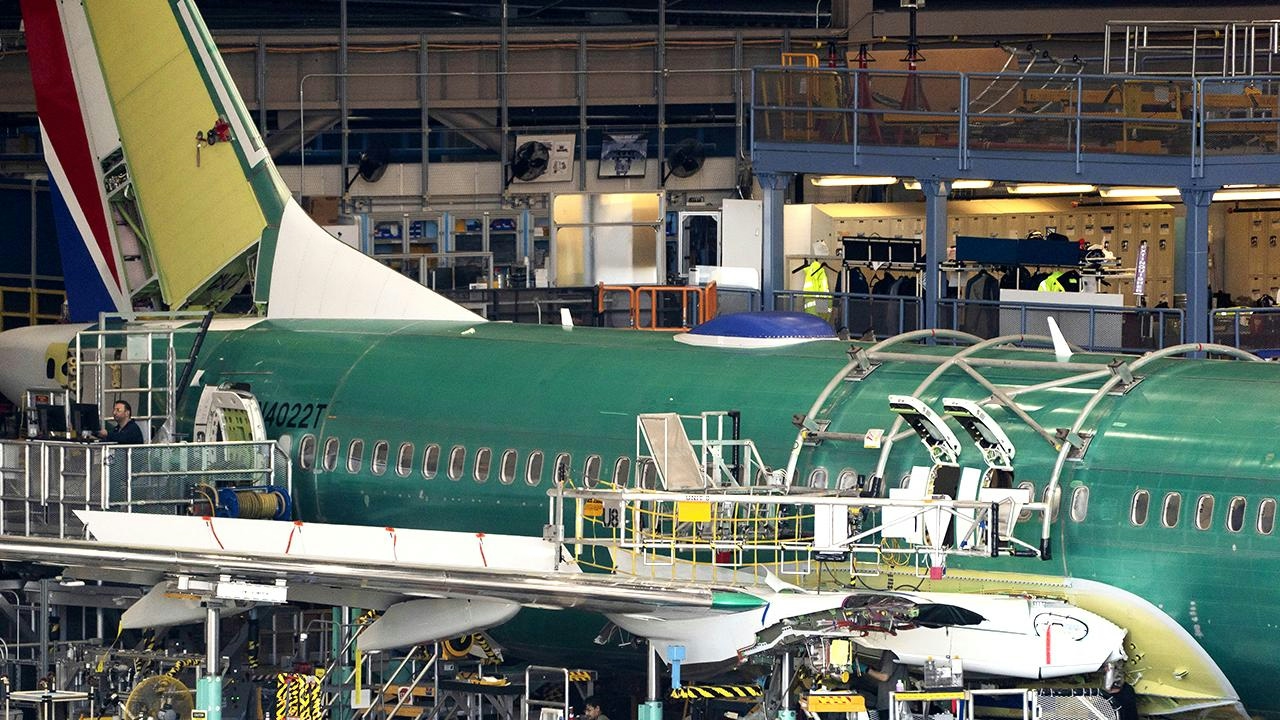
Chinese airlines are reportedly close to securing a historic agreement to purchase 500 aircraft from Boeing, marking the largest deal for the American manufacturer in China since 2017. This potential transaction follows a series of high-level discussions in Beijing involving U.S. lawmakers and Chinese officials, reflecting renewed efforts to strengthen commercial ties amid years of strained relations between the two nations.

Renewed Engagement and Strategic Importance

During a press conference on September 23, 2025, U.S. Representative Adam Smith underscored the significance of the prospective deal, noting the long hiatus since Boeing last sold planes in China and expressing optimism about resuming sales. The visit by the U.S. delegation, which commenced on September 21, was the first by House members to China since 2019, prior to the COVID-19 pandemic’s further complicating effects on bilateral relations.

The anticipated multi-billion-dollar order is viewed as a critical opportunity for Boeing, which has faced numerous challenges in recent years, including quality control concerns, certification delays, and a growing backlog of undelivered aircraft. Analysts suggest that a successful agreement could help Boeing reclaim market share in China, where European rival Airbus has made substantial advances. Notably, China’s largest airlines are reportedly dividing a comparable 500-aircraft order with Airbus, intensifying competition between the two manufacturers.

Market response to the news has been favorable, with Boeing’s stock rising on expectations of the deal’s completion. U.S. officials, including Ambassador to China David Purdue, have emphasized the deal’s importance, describing it as “very important to the president, to Boeing, and to China.” The agreement is widely regarded as part of a broader initiative to stabilize trade relations, although ongoing tensions and the potential for tariffs could complicate negotiations and delivery schedules.

Context and Industry Implications

While specific details such as delivery timelines and aircraft models remain under discussion, the order would signify a major thaw in Boeing’s business dealings with China. The last significant purchase by Chinese carriers occurred in November 2017, when China Aviation Supplies Holding Company signed for 300 Boeing jets during President Donald Trump’s state visit. Since then, Boeing has struggled to secure new orders amid the 737 MAX grounding, extended recertification processes, and geopolitical friction.

In 2024, China Development Bank Financial Leasing placed an order for 50 Boeing 737 MAX 8 jets, with deliveries planned between 2028 and 2031. Currently, Air China, China Southern Airlines, and China Eastern Airlines—the country’s three largest carriers—hold a combined backlog of 567 aircraft, though only 72 of these are pending deliveries from Boeing.

As negotiations approach finalization, officials from both countries have highlighted the broader significance of the deal, not only for the aviation sector but also for ongoing diplomatic and commercial dialogue. If concluded, the agreement would represent a major step toward restoring cooperation and could reshape the competitive dynamics in one of the world’s most critical aviation markets.

More news
Do Aircraft Engines Require Antifreeze in Winter?

Do Aircraft Engines Require Antifreeze in Winter?

Do Aircraft Engines Require Antifreeze in Winter? Modern jet engines are designed to endure extreme cold, but a comprehensive understanding of the interplay between fuel, oil, and temperature is essential for safe winter operations. While the notion of adding antifreeze to aircraft engines may appear reasonable, the reality is considerably more complex. Fuel Characteristics and Cold-Weather Operations The primary concern during cold-weather operations is the behavior of aviation fuel. Jet-A fuel, the standard for turbine engines, has a freezing point near -40°C, which generally suffices for most winter environments. Many commercial operators prefer Jet-A1, a variant enhanced with additives that lower the freezing point to approximately -47°C, offering additional safety margins for high-altitude or polar flights. Although the likelihood of fuel solidification within the tank is low at these temperatures, flight crews must remain vigilant when operating close to these thresholds. Thermal Management Within the Engine A vital component in many turbine engines is the Fuel Oil Heat Exchanger (FOHE), which exploits the temperature differential between hot engine oil and cold fuel. As fuel travels toward the combustion chamber, it passes through the FOHE, where it is warmed by the engine oil. This process maintains fuel fluidity while simultaneously cooling the oil, thereby optimizing engine performance. Crucially, the FOHE relies on the engine’s own thermal energy, obviating the need for chemical antifreeze additives. Challenges of Cold Soak and Operational Procedures Aircraft exposed to prolonged cold conditions experience a "cold soak," during which fuel, oil, hydraulic fluids, and metal components equilibrate to ambient temperatures. Under these circumstances, oil viscosity increases, potentially causing elevated oil pressures during engine start. Fuel may approach its freezing point or develop wax crystals that risk clogging filters. Hydraulic systems may respond sluggishly, and batteries or auxiliary power units can underperform. To mitigate these risks, flight crews undertake several precautionary measures. They monitor fuel and oil temperatures prior to engine start, employ preheating methods such as heaters or external power units when available, and initiate slow, controlled engine starts while closely observing oil and hydraulic pressures. Engines are gradually warmed during taxi to prevent undue stress on cold components, and control surfaces are carefully inspected for stiffness. Adherence to detailed documentation, winter checklists, and manufacturer cold-soak limitations is critical to ensuring safe operations and preventing mechanical damage. Industry Responses to Extreme Cold Conditions Despite advanced engineering, extreme cold continues to pose operational challenges. Recently, Airbus imposed restrictions on cold-weather takeoffs for certain aircraft equipped with Pratt & Whitney engines, following difficulties encountered in severe conditions characterized by freezing fog and visibility below 150 meters. This development highlights the ongoing imperative for engine reliability and adaptability in harsh winter environments. Pratt & Whitney is actively pursuing solutions to these issues, underscoring that even with sophisticated systems like the FOHE and specialized fuels, winter operations demand continuous vigilance and adaptation. Conclusion Modern turbine engines do not require traditional antifreeze additives, owing to advanced fuel formulations and integrated thermal management systems. Nonetheless, extreme cold conditions can still challenge engine performance, as evidenced by recent operational limitations. Through rigorous procedures and ongoing technological advancements, aircraft engines continue to operate safely and efficiently amid the most demanding winter conditions.
Biman Faces Worsening Fleet Shortage Amid Leasing Challenges

Biman Faces Worsening Fleet Shortage Amid Leasing Challenges

Biman Faces Worsening Fleet Shortage Amid Leasing Challenges Biman Bangladesh Airlines is confronting a deepening fleet shortage as rising passenger demand clashes with ongoing difficulties in securing leased aircraft. The national carrier’s operational fleet has contracted to 19 planes, down from 21 last year, following the return of two leased aircraft upon the expiration of their contracts. Despite conducting five rounds of tenders, Biman has been unable to acquire replacement planes, with international lessors showing little interest in engaging with the airline. Procurement Hurdles and Operational Impact Industry insiders and officials point to Biman’s slow response under stringent government procurement regulations as a key factor behind the leasing impasse. In a global market where aircraft leasing agreements are often concluded within days, the airline’s protracted procedures have placed it at a significant disadvantage amid a tight worldwide supply of aircraft. The shortage is already affecting Biman’s operations. The airline is preparing to reduce flights on several routes ahead of the Hajj season commencing in April, even as it plans to inaugurate a new Dhaka-Karachi service later this month under a bilateral agreement. A spokesperson for Biman, Boshra Islam, confirmed that a draft plan to cut flights during the Hajj season due to aircraft scarcity is ready and will be announced once finalized. She acknowledged that government procurement rules slow the leasing process, hindering the airline’s ability to respond swiftly to market opportunities. Currently, Biman’s fleet consists of four Boeing 777-300ERs, four Boeing 787-8s, two Boeing 787-9s, four Boeing 737s, and five Dash-8 Q400s, with the most recent addition being a Dash-8 Q400 delivered in March 2021. The airline operates 22 international routes and has ambitions to expand into East Asia, Europe, and the United States. Under a 10-year plan approved by its board in 2024, Biman aims to increase its fleet to 47 aircraft by 2034, acquiring at least 26 new planes. Uncertain Expansion and Industry Criticism However, these expansion targets face growing uncertainty. Procurement negotiations with both Boeing and Airbus remain unresolved, and any major aircraft purchase requires cabinet-level approval, with delivery timelines typically extending five to six years after contract signing. Biman’s managing director, Md Shafiqur Rahman, recently emphasized the urgency of acquiring aircraft to meet current passenger demand, stating that the airline has decided to engage directly with aircraft lessors. Despite this, the ongoing shortage has stalled plans for new routes and left the airline vulnerable in a competitive market. Former Biman board member and aviation analyst Kazi Wahidul Alam criticized the airline’s indecisiveness, asserting that the problem lies not in the availability of leased aircraft but in the failure to adopt realistic, practical, and internationally accepted procurement policies. He noted that international lessors are reluctant to respond because the government’s lengthy processes contrast sharply with the rapid timelines—often hours or days—on which lessors operate. Broader Repercussions for Biman The fleet shortage is expected to have wider implications for Biman’s operational stability and financial health. Disruptions and increased costs could undermine the airline’s market position, while regulators may intensify scrutiny. Passenger preferences may shift toward more reliable carriers, and competitors are likely to capitalize on Biman’s difficulties through aggressive marketing and strategic partnerships with leasing companies, further intensifying pressure on the national airline. With no immediate resolution in sight and new aircraft deliveries still several years away, Biman faces mounting challenges in sustaining its operations and competitiveness within a rapidly evolving global aviation landscape.
South Korea’s Eastar Jet Plans to Acquire Boeing 787s by 2027

South Korea’s Eastar Jet Plans to Acquire Boeing 787s by 2027

South Korea’s Eastar Jet Plans to Acquire Boeing 787s by 2027 Eastar Jet, a South Korean low-cost carrier based at Seoul Gimpo Airport, is preparing to enter the widebody aircraft market with plans to acquire Boeing 787s by 2027, according to reports from Yonhap News Agency. The airline has established a dedicated task force to assess the introduction of widebody jets and is currently engaged in discussions with Boeing regarding supply options. While the specific variant of the 787 has not been disclosed, Eastar Jet has confirmed it will make an official announcement once the details are finalized. Strategic Shift Towards Long-Haul Operations Since its founding in 2007, Eastar Jet has operated exclusively narrowbody aircraft. Its current fleet consists of ten Boeing 737-800s and ten Boeing 737-8s, with two additional 737-8s scheduled for delivery, according to ch-aviation data. The acquisition of Boeing 787s would mark a significant strategic shift, enabling the airline to launch long-haul routes. Initial destinations under consideration reportedly include Los Angeles International Airport and Sydney Kingsford Smith Airport, signaling Eastar Jet’s ambitions to expand its international footprint. The task force dedicated to this initiative was formed in September, with initial inquiries to Boeing made in early December. A company representative confirmed the ongoing evaluation, stating, “It is true that a new aircraft introduction task force has been formed, and we are checking the supply status of widebody aircraft with the manufacturer.” Boeing’s Challenges and Industry Context Eastar Jet’s plans come amid a challenging period for Boeing. The U.S. manufacturer has recently faced delivery delays and quality control issues. In November, Boeing delivered 44 aircraft, representing a 17% decrease from the previous month, while its main competitor, Airbus, delivered 72 planes during the same period. Despite these setbacks, Boeing’s Chief Financial Officer has projected increased deliveries of both the 737 and 787 models in the coming year, which could improve market sentiment. To address production and supply chain challenges, Boeing announced a $4.7 billion acquisition of Spirit AeroSystems, a key supplier. This strategic move aims to strengthen quality control and supply chain resilience, potentially mitigating some of the issues that could affect Eastar Jet’s acquisition timeline. Nevertheless, Boeing’s stock has remained volatile, influenced by delivery figures and cash-flow updates. Eastar Jet’s potential expansion into long-haul operations with the Boeing 787 represents a major milestone for the airline. However, the realization of these plans will depend on both the carrier’s internal preparations and the evolving situation at Boeing. The airline has indicated it will provide further details once its evaluation process is complete.
Clay Lacy Honored for Lifetime Achievement at Pearl Harbor Aviation Museum

Clay Lacy Honored for Lifetime Achievement at Pearl Harbor Aviation Museum

Clay Lacy Honored for Lifetime Achievement at Pearl Harbor Aviation Museum Aviation icon Clay Lacy has been bestowed with the Spirit of Aviation Award by the Pearl Harbor Aviation Museum, recognizing his profound and enduring contributions to the field. The award was presented during the museum’s 2025 For Love of Country Gala on December 6, highlighting Lacy’s remarkable career and his unwavering commitment to preserving the legacy of aviation. This accolade affirms his role as a pioneering figure whose influence extends well beyond the cockpit to the broader preservation and celebration of aviation history. Established in 2023, the Spirit of Aviation Award honors individuals whose leadership, vision, and passion have significantly shaped and inspired the aviation industry. Lacy’s selection not only acknowledges his personal milestones but also his dedication to advancing aviation and nurturing future generations of pilots and enthusiasts. A Legacy of Innovation Clay Lacy’s aviation career began at the age of 12 in Wichita, Kansas, and has since encompassed more than 50,000 flight hours across over 300 different aircraft types. He holds 29 world speed records and is widely regarded as a trailblazer in the industry. In 1968, Lacy founded Clay Lacy Aviation, a company that revolutionized private jet charter services on the West Coast and grew to operate the largest diversified charter fleet in the United States. His early adoption of innovations such as Blended Winglet technology further solidified his reputation as an industry leader, expanding the possibilities for both business and leisure air travel. Shaping Aviation History and Culture Beyond his extensive flying achievements, Lacy made significant contributions to air-to-air cinematography. He developed the Learjet Astrovision system, which transformed aerial filming techniques for movies and commercials. His involvement in iconic films such as *Top Gun* and *The Right Stuff* played a crucial role in shaping public perceptions of aviation and its cultural significance. Lacy’s humanitarian efforts have also been noteworthy. Through high-profile charity flights like Friendship One and UNICEF ONE, he helped raise millions of dollars for children’s charities, demonstrating aviation’s potential to serve global humanitarian causes and extending its impact beyond commercial and personal accomplishments. Honoring Heritage and Inspiring Dialogue The recognition of Clay Lacy at the Pearl Harbor Aviation Museum not only celebrates his individual achievements but also underscores the enduring importance of Pearl Harbor in military and aviation history. The award serves as a powerful reminder of the need to preserve aviation heritage, encouraging renewed public interest in the stories and lessons of the past. This prestigious honor is likely to stimulate greater public engagement with aviation history and Pearl Harbor-related events, potentially increasing museum attendance and awareness. It may also inspire other aviation museums and organizations to emphasize their own efforts in safeguarding the legacy of flight, fostering a wider conversation about the value of historical preservation within the industry. As Clay Lacy joins the distinguished group of Spirit of Aviation Award recipients, his career stands as a testament to innovation, leadership, and the lasting influence of those who dedicate their lives to flight and the preservation of its history for future generations.
VSE Acquires Aero to Expand Aviation Services

VSE Acquires Aero to Expand Aviation Services

VSE Acquires Aero 3 to Expand Global Aviation Services VSE Corporation, a prominent provider of aviation aftermarket distribution and repair services, has finalized its $350 million acquisition of Aero 3, a global maintenance, repair, and overhaul (MRO) service provider. This strategic move aims to reinforce VSE’s position within the aviation sector, particularly in the commercial wheel and brake aftermarket, while addressing the increasing demands of the global tourism industry. Strategic Expansion to Support Tourism and Aviation The acquisition of Aero 3 represents a calculated effort by VSE to enhance its service offerings and extend its international reach amid the critical role air travel plays in global tourism. Aero 3’s established operational model and extensive global footprint are expected to strengthen VSE’s aftermarket distribution and repair capabilities. This expansion will provide airlines and aviation businesses with improved reliability and efficiency as the tourism sector experiences a robust recovery worldwide. Furthermore, the acquisition aligns with VSE’s broader strategy to deepen collaborations with Original Equipment Manufacturers (OEMs) and broaden its presence in tourism-driven markets. As airlines face increasing pressure to deliver seamless travel experiences, VSE’s enhanced MRO services will be essential in maintaining the safety and operational efficiency of both commercial and business aviation fleets. Integration Challenges and Competitive Landscape Despite the promising outlook, VSE confronts significant challenges in integrating Aero 3’s operations. The successful merger of the two organizations will require meticulous management of cultural and operational differences to preserve and elevate service quality. Industry analysts have noted a cautious initial response from investors, reflecting concerns about the financial impact and strategic compatibility of the acquisition. Nevertheless, should VSE effectively harness Aero 3’s capabilities to expand its market share, positive market sentiment is anticipated. The acquisition also occurs within a highly competitive environment, as major players such as Boeing, Airbus, and ITP Aero continue to expand their MRO services through similar acquisitions. VSE’s ability to seamlessly integrate Aero 3 and execute its growth strategy will be closely monitored by investors and industry stakeholders alike. Strengthening Global Aviation Operations Aero 3’s global presence significantly enhances VSE’s network by providing access to a wider customer base and a more diversified service portfolio. With international tourism steadily recovering, the demand for efficient and dependable MRO services is intensifying. VSE’s expanded capabilities position the company to meet these demands, ensuring the continued safety and operational readiness of commercial and business aircraft. This acquisition forms a key component of VSE’s overarching strategy to solidify its role in the aviation aftermarket industry. By augmenting its MRO capabilities, VSE aims to support the aviation sector’s recovery and growth, particularly in emerging markets where tourism is rapidly expanding and air connectivity remains vital. Looking Ahead VSE’s acquisition of Aero 3 marks a pivotal advancement in addressing the evolving challenges of the aviation industry. As the company undertakes the complex process of integration amid heightened competition, its success will depend on maintaining rigorous service standards and capitalizing on emerging growth opportunities within the global tourism market.
Lufthansa Receives First Boeing 787 on Anniversary

Lufthansa Receives First Boeing 787 on Anniversary

Lufthansa Receives First Boeing 787 Dreamliner Marked by Centennial Livery **Frankfurt** — Lufthansa has officially taken delivery of its first Boeing 787-9 Dreamliner, adorned with a distinctive livery celebrating the airline’s 100-year heritage. The aircraft, registered as D-ABPU and named *Berlin*, arrived at Frankfurt Airport from Boeing’s Everett, Washington facility, attracting a large gathering of aviation enthusiasts, passengers, and airline personnel eager to witness this significant milestone. The Dreamliner’s design artfully combines tradition with contemporary aesthetics. Its deep blue fuselage is emblazoned with an oversized white crane emblem, Lufthansa’s iconic symbol, whose wings seamlessly extend into the aircraft’s own. Prominently displayed are the markings “100” alongside the years “1926 | 2026,” underscoring the centennial celebration. This aircraft will serve as the flagship of Lufthansa’s anniversary fleet, symbolizing the airline’s enduring legacy as it approaches its centenary in 2026. Lufthansa’s CEO, Jens Ritter, personally welcomed the new addition, emphasizing the symbolic importance of the delivery. He remarked, “The arrival of a new aircraft is always significant, but this centennial-themed Dreamliner carries added symbolic weight as we honor our legacy and look to the future.” Centennial Fleet and Strategic Outlook Lufthansa’s origins date back to January 6, 1926, with its inaugural flight taking place on April 6 of the same year. To commemorate its centenary, the airline plans to introduce a six-aircraft anniversary fleet by autumn 2026. Alongside the Boeing 787-9, this fleet will include an Airbus A380, Airbus A350-1000, Airbus A350-900, Airbus A320, and a Boeing 747-8, each progressively receiving the centennial livery. The airline’s fleet strategy unfolds amid a complex and competitive market environment. Boeing has announced intentions to increase deliveries of its 737 and 787 models next year, potentially intensifying competition among global carriers. Additionally, Lufthansa’s recent decision to sell two Boeing 747-8 aircraft to the US Air Force may influence its long-term fleet composition and operational planning. Operational challenges also remain a focus for Lufthansa. The airline is preparing to inspect 11 recently delivered Airbus aircraft for a potential fuselage flaw, underscoring ongoing quality assurance efforts. Meanwhile, Boeing’s $4.7 billion acquisition of Spirit AeroSystems aims to enhance production quality and supply chain resilience, developments that could have significant implications for market dynamics and competitive strategies in the near future. Entry Into Service and Future Prospects The newly delivered Boeing 787-9 is scheduled to commence regular passenger service in the coming weeks, marking the first opportunity for Lufthansa customers to experience the centennial livery in daily operations. As the airline advances toward its 100th anniversary, the arrival of this Dreamliner not only pays homage to its historical roots but also signals a commitment to fleet modernization amid a rapidly evolving aviation landscape.
Willis Lease Finance Secures $600 Million Aviation Partnership

Willis Lease Finance Secures $600 Million Aviation Partnership

Willis Lease Finance Secures $600 Million Aviation Partnership Willis Lease Finance Corporation (WLFC) has finalized a landmark investment partnership with Liberty Mutual Investments, securing up to $600 million to advance its credit strategy in aviation engine finance. The agreement, completed on December 18, 2025, is supported by a warehouse debt facility provided by Bank of America. The capital will be directed toward loan and loan-like engine financings, a niche that Willis Lease pioneered with its inaugural revolving credit lease in 2021. Strengthening Market Position Amid Challenges This substantial infusion of capital is poised to enhance Willis Lease’s asset management and credit platform, reinforcing its leadership within the aviation finance sector. The partnership reflects robust investor confidence, as evidenced by the recent analyst rating of “Buy” and a $140.00 price target for WLFC stock. Nevertheless, the deal arrives in a complex market environment. Industry experts have highlighted rising insurance rates anticipated for 2026, which could complicate the company’s financing operations. While some investors regard the partnership as a strategic move to expand Willis Lease’s aviation portfolio, others remain cautious about the financial pressures associated with such a significant capital commitment. Competitors in the aviation finance space are expected to respond diversely. Some may intensify efforts to grow their own portfolios to remain competitive, whereas others might prioritize cost reduction to mitigate the impact of Willis Lease’s expanded capabilities. Market Performance and Company Overview According to Spark, TipRanks’ AI Analyst, WLFC holds an “Outperform” rating, supported by strong earnings and a perception of undervaluation. However, technical indicators suggest bearish trends, and the company’s financial results are mixed due to high leverage and negative free cash flow, contributing to a complex outlook for the stock. Willis Lease Finance is a prominent lessor of large and regional spare commercial aircraft engines, auxiliary power units, and aircraft, serving a global clientele that includes airlines, engine manufacturers, and maintenance providers. Its operations are closely integrated with end-of-life engine and materials solutions through Willis Aeronautical Services. The company also provides engine repair, aircraft maintenance, disassembly, parking, storage, and ground handling services via its subsidiaries. Additionally, Willis Sustainable Fuels is actively developing projects aimed at decarbonizing aviation. As of the latest figures, WLFC maintains an average trading volume of 52,965 shares and a market capitalization of $915.8 million. While the technical sentiment remains “Buy,” market participants will be closely monitoring how Willis Lease navigates the opportunities and challenges presented by this significant new partnership.
IndiGo to wet-lease 7 aircraft from Qatar Airways and Freebird to boost domestic capacity

IndiGo to wet-lease 7 aircraft from Qatar Airways and Freebird to boost domestic capacity

IndiGo to Wet-Lease Seven Aircraft from Qatar Airways and Freebird to Enhance Domestic Capacity In an effort to reinforce its domestic operations amid recent challenges, IndiGo has entered into wet-lease agreements with Qatar Airways and Freebird Airlines, industry sources reveal. This strategic move follows a period marked by operational disruptions that have resulted in widespread flight cancellations, financial setbacks, and a 7% decline in the airline’s share price. The carrier has also faced increased regulatory scrutiny and compensation obligations, intensifying the pressure to stabilize its services. Details of the Wet-Lease Agreements Under the wet-lease contracts, which include provision of aircraft, crew, maintenance, and insurance by the lessors, IndiGo will lease a total of seven aircraft. Two of these will be sourced from Qatar Airways, with induction scheduled for December 2025 and January 2026. The remaining five Airbus A320 jets will come from Turkey-based Freebird Airlines and are expected to join IndiGo’s fleet as early as January. These additions are intended to rapidly expand IndiGo’s domestic capacity to meet growing passenger demand and alleviate operational constraints. Bengaluru will serve as the primary hub for the wet-leased aircraft. The Freebird planes, in particular, are planned to operate on regional routes connecting Bengaluru with cities such as Kolkata, Ahmedabad, and Surat. Sources indicate that IndiGo had already secured regulatory approvals for these wet leases prior to the recent operational crisis but is now accelerating the induction process to restore stability. Regulatory Context and Operational Implications The Ministry of Civil Aviation has emphasized that wet leasing is a common global practice, especially when airlines face supply-side challenges such as grounded aircraft due to technical issues or delays in new aircraft deliveries. IndiGo has requested a final extension for wet leasing until the arrival of its long-range A321-XLR aircraft, expected by February 2026. As part of regulatory compliance, IndiGo is required to provide regular updates on its recruitment and training initiatives for pilots and cabin crew. The airline must also demonstrate measures to prevent staffing shortages and ensure adherence to Flight Duty Time Limitations (FDTL). The wet-lease strategy is expected to offer some relief amid government-mandated reductions in IndiGo’s domestic schedule by 10%. Despite the scaled-down operations, the airline continues to operate over 2,000 flights daily, maintaining connectivity to all 138 operational destinations. Market Dynamics and Competitive Challenges This development occurs against a backdrop of intensifying competition in the domestic aviation market. The entry of Freebird and Qatar Airways’ broader expansion into Asia and Africa present new challenges to IndiGo’s market share. Rivals are poised to capitalize on the carrier’s recent operational difficulties. While the wet-lease agreements may address immediate capacity shortfalls, market analysts caution that IndiGo must continue to focus on restoring operational stability and safeguarding its position in an increasingly competitive environment.
Howmet’s $1.8B CAM Deal Targets the Aerospace Supply Chain’s Pressure Points

Howmet’s $1.8B CAM Deal Targets the Aerospace Supply Chain’s Pressure Points

Howmet’s $1.8 Billion Acquisition of CAM Strengthens Aerospace Supply Chain Position Howmet Aerospace has announced a landmark $1.8 billion all-cash acquisition of Consolidated Aerospace Manufacturing (CAM) from Stanley Black & Decker, marking a strategic effort to deepen its presence in aerospace manufacturing. Although CAM is not widely known outside the industry, its portfolio of precision fasteners, fluid fittings, latches, and engineered components plays a critical role in both commercial and defense aircraft globally. Strategic Importance of CAM’s Product Portfolio CAM’s extensive range of products includes well-established brands such as Bristol Industries, 3V Fasteners, Moeller, Aerofit, Voss Industries, QRP, E.A. Patten, and Prikos & Becker. These components are integral to major commercial aircraft programs, including Boeing’s 737 MAX and 787 Dreamliner, as well as Airbus’s A320neo, A350, and A330 platforms. The company also supplies parts for regional and business jets manufactured by Bombardier and Embraer. On the defense front, CAM’s hardware is utilized in frontline fighter jets like the F-35 Lightning II, F-15 Eagle, and F/A-18 Super Hornet, alongside heavy transport and tanker aircraft such as the C-17 Globemaster III and KC-46. The company’s reach extends to military helicopters from Bell and Sikorsky, and it provides components for propulsion systems including GE Aerospace’s GEnx and LEAP engines, Pratt & Whitney’s Geared Turbofan, and Rolls-Royce’s Trent family. Additionally, CAM supplies fluid distribution systems and high-pressure fittings for commercial launch vehicles and missile defense platforms. Financial Outlook and Industry Implications Howmet projects that CAM will generate between $485 million and $495 million in revenue for fiscal year 2026, with adjusted EBITDA margins exceeding 20 percent prior to synergies. Factoring in expected cost synergies and tax benefits, the acquisition values CAM at approximately 13 times adjusted EBITDA. The transaction, anticipated to close in the first half of 2026 subject to regulatory and other approvals, underscores the ongoing consolidation within the aerospace supply chain, particularly in high-margin sectors such as precision fasteners and fluid systems. While the acquisition offers significant strategic advantages, it also presents potential challenges. Regulatory scrutiny could delay the closing, and integrating CAM’s operations into Howmet’s existing framework may involve operational complexities or disruptions. Nevertheless, the deal positions Howmet to broaden its market reach and enhance its product offerings, reinforcing its status as a Tier 1 supplier to both commercial and defense aerospace customers. Market Impact and Competitive Dynamics The acquisition is expected to intensify competition among CAM’s rivals, who may need to recalibrate their strategies to sustain market share and customer relationships. For Howmet, incorporating CAM’s specialized brands will increase its content per aircraft across nearly all major platforms currently in production. As aircraft production rates accelerate and defense budgets remain strong, controlling these critical, hard-to-replace components could provide Howmet with enhanced pricing power, greater operational resilience, and increased strategic leverage with the industry’s largest customers.
AI-Driven Airline Pricing Adds to Holiday Travel Stress

AI-Driven Airline Pricing Adds to Holiday Travel Stress

AI-Driven Airline Pricing Adds to Holiday Travel Stress Holiday air travel has long been associated with heightened anxiety, but in 2025, the introduction of AI-powered pricing tools is intensifying the unpredictability and cost of securing flights. Airlines are increasingly employing artificial intelligence to adjust fares in real time, resulting in sudden and often steep price increases, particularly during peak travel periods such as Christmas and New Year’s. For many travelers, the process of searching for tickets has become akin to a high-stakes gamble, with prices fluctuating by the minute in response to demand patterns identified by AI algorithms. Delta Air Lines and the Expansion of AI Pricing Delta Air Lines is leading the industry’s adoption of AI-driven pricing strategies. During its July 2025 earnings call, the airline disclosed that it currently applies AI to optimize fares on approximately 3% of its flights, with plans to expand this to 20% by the end of the year. While dynamic pricing itself is not a novel concept, the integration of AI allows airlines to respond more swiftly and aggressively to market signals. Delta maintains that it does not personalize fares based on individual consumer data; however, critics contend that AI systems can still detect broader consumer trends, often resulting in higher prices for last-minute travelers and families during the busiest travel windows. Concerns Over Fairness and Transparency The rapid deployment of AI-driven pricing has provoked significant backlash from consumers and lawmakers alike. Critics have likened the technology to “the Grinch stealing holiday affordability,” highlighting that fare increases of $100 or more during the holiday season are becoming increasingly common and less predictable. Lawmakers have expressed concerns regarding transparency and consumer protection, questioning whether these algorithms might eventually incorporate personal data to set individualized prices—a practice airlines currently deny but have not ruled out in future regulatory discussions. Representative Ruben Gallego voiced a poignant warning in July, stating, “Imagine needing to fly home for a family emergency and AI knows you’re desperate, raising your ticket price.” While airlines argue that AI enhances operational efficiency and demand management, many travelers feel penalized for not booking well in advance, exacerbating the stress of holiday travel. Industry Response and Market Dynamics Despite the controversy, AI-driven pricing tools are gaining momentum across the airline industry. Some market analysts observe that the increased use of AI has occasionally contributed to lower average airfares and stimulated greater interest in holiday travel by enabling airlines to fill seats more efficiently. Nevertheless, the volatility of fares has left many consumers cautious and frustrated. In response, competitors such as United Airlines are investing in AI-powered features within their mobile applications aimed at alleviating travel stress. These enhancements include personalized trip planning and real-time customer support, reflecting an effort to balance the operational benefits of AI with a more customer-centric approach. The Broader Debate: Profitability Versus Fairness At the heart of the debate lies a fundamental question about the airline industry’s priorities. Having received $54 billion in taxpayer-funded bailouts during the COVID-19 pandemic, airlines are now leveraging advanced AI technologies to maximize profits, raising concerns about fairness and accessibility. Regulatory scrutiny is intensifying, with calls for greater transparency in AI pricing mechanisms and the implementation of safeguards to prevent potential abuses, including surveillance or discriminatory pricing practices. As AI continues to transform the travel landscape, airlines face the challenge of reconciling innovation and efficiency with fairness and consumer trust—particularly during the most demanding travel season of the year.
Ask AeroGenie









