
画像

エアロジニー — あなたのインテリジェントな副操縦士。

何でも尋ねてください。全てを分析してください。即座に行動してください。

現在のトレンド

Categories

EFW Secures New A330 Freighter Conversion Contract in China
February 12, 2026By ePlane AI
EFW Secures New A330 Freighter Conversion Contract in China
0
0
EFW
A330 Freighter Conversion
China Aviation Market

EFW Secures New A330 Freighter Conversion Contract in China

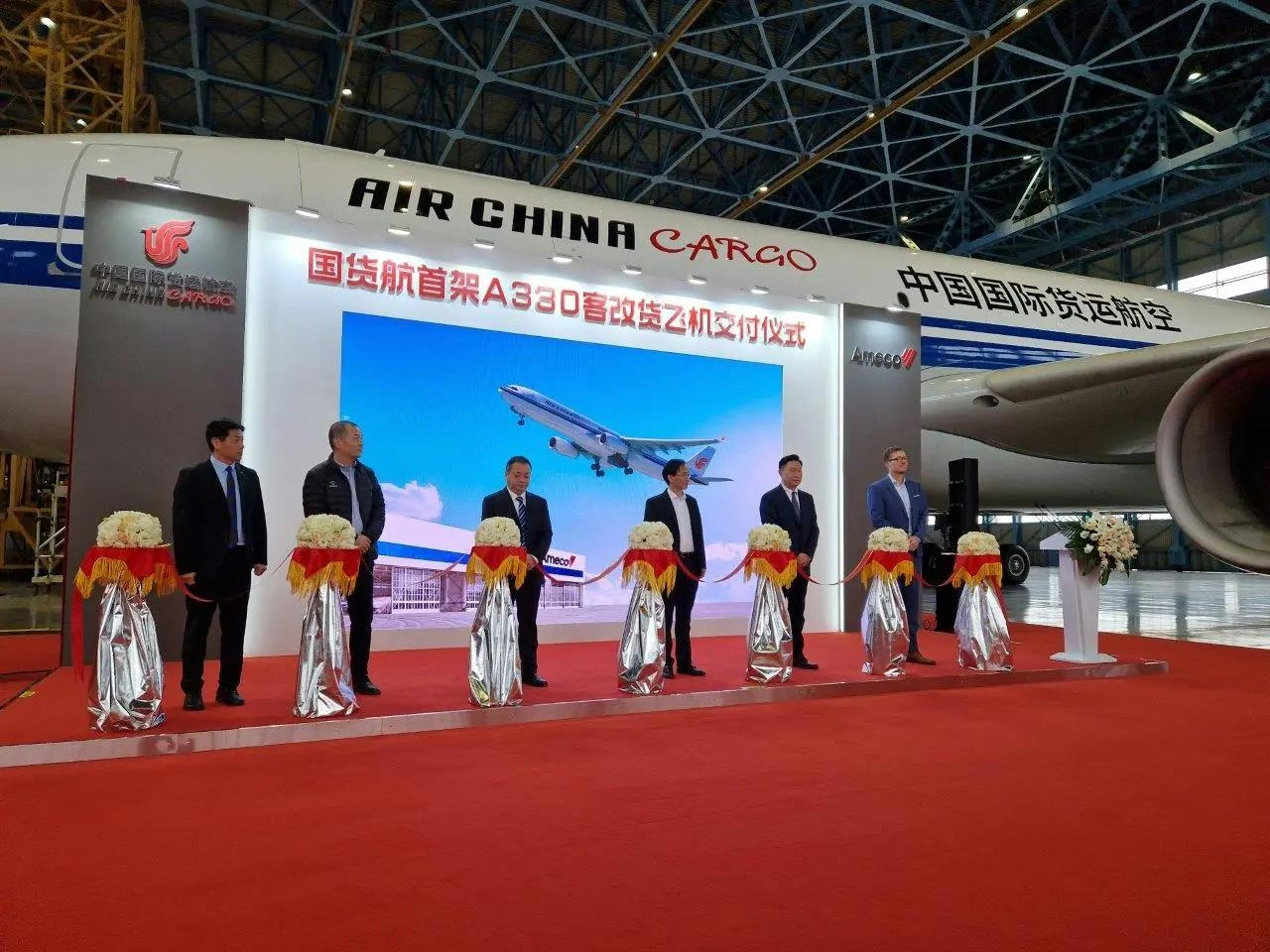
Elbe Flugzeugwerke (EFW), the joint venture between ST Engineering and Airbus, has entered into a new contract with Hengqin Winglet Aircraft Technology to convert Airbus A330 passenger aircraft into freighters. This agreement marks Hengqin Winglet’s inaugural involvement in EFW’s Airbus A330 passenger-to-freighter (P2F) programme, signaling an expansion of EFW’s footprint within China’s rapidly growing aviation market.

Details of the Conversion Agreement

Under the terms of the contract, EFW will conduct the A330P2F conversions at a partner facility located in China, with work slated to commence in mid-2026. The technical planning and certification processes will be overseen from EFW’s headquarters in Dresden, Germany. James Huang, Chief Executive Officer of Hengqin Winglet, emphasized the strategic nature of the collaboration, highlighting the company’s expertise in leasing, trading, and technical aircraft management as key factors in their decision to convert their A330 aircraft into advanced freighters.

The deal arrives amid robust growth in China’s aviation sector, driven primarily by surging demand in express logistics and cross-border e-commerce. This dynamic is prompting fleet expansions among operators and lessors, positioning China as a critical market for freighter conversions. Jordi Boto, CEO of EFW, expressed enthusiasm about welcoming Hengqin Winglet to the EFW family, underscoring the A330P2F as a leading solution for the medium-sized air freighter segment and anticipating collaborative efforts to expand Hengqin Winglet’s converted fleet.

Challenges and Market Implications

Despite the promising outlook, EFW faces notable challenges in executing this contract. The company must contend with competition from other aircraft conversion specialists eager to capitalize on the region’s burgeoning demand. Additionally, managing the conversion process at a partner site in China introduces logistical complexities, including ensuring adherence to local aviation regulations and maintaining consistent quality standards across international operations.

Industry analysts suggest that this contract may stimulate further demand for freighter conversions as China’s aviation market continues to expand. Competitors are likely to respond by enhancing their conversion capabilities or pursuing similar agreements within the region. While concerns persist regarding potential overcapacity in China’s widebody market, Airbus maintains a positive long-term outlook on demand, a perspective that indirectly supports EFW’s strategic positioning and the sustained interest in aircraft conversions.

With this latest contract, EFW reinforces its presence in China, aligning itself to address the evolving requirements of the global air cargo industry.

More news
AIR ONE Launches Personal Electric Aircraft

AIR ONE Launches Personal Electric Aircraft

AIR ONE Launches Personal Electric Aircraft, Redefining Urban Air Mobility The concept of urban air mobility is gradually transitioning from visionary aspirations to practical implementation, though progress has often been slower than anticipated. In this evolving landscape, AIR has introduced a distinctive strategy. At CES 2026, the company unveiled AIR ONE, a personal electric vertical takeoff and landing (eVTOL) aircraft, marking a deliberate shift away from the prevalent air taxi model embraced by many industry players. Emphasizing Personal Ownership Over Shared Mobility AIR’s strategy prioritizes personal ownership of eVTOL aircraft rather than the shared urban air taxi fleets that dominate much of the sector’s discourse. CEO Rani Plaut articulated this approach by drawing a parallel to commercial aviation’s origins: “People didn’t start with an Airbus A380; they started with something for the individual.” By focusing on individual users, AIR aims to reduce barriers to adoption, enabling early customers to accumulate flight hours and generate essential real-world safety data. This data is critical for building confidence among regulators and insurers, which is a prerequisite for broader market acceptance. In contrast, shared mobility models introduce operational complexities such as fleet management, scheduling logistics, and the need for commercial certification, all of which can delay consumer access. AIR’s approach accelerates technology validation by capturing operational insights from everyday flights. This pragmatic focus on safety and reliability before scaling distinguishes AIR in a market where many competitors continue to grapple with regulatory and technical challenges. Navigating a Competitive and Regulatory Landscape The launch of AIR ONE occurs amid significant challenges facing the electric aviation sector. Regulatory approval remains a formidable obstacle, with authorities rigorously evaluating new aircraft designs to ensure safety and reliability. AIR also contends with competition from established aerospace leaders like Airbus and Boeing, both intensifying their electric aircraft development efforts. Additionally, advancements in hybrid propulsion and software-defined aircraft technologies by companies such as Elbit and Saab are rapidly transforming the competitive environment, raising the technological standards for new entrants. Market responses to AIR’s announcement have been mixed. Traditional aviation stakeholders express skepticism regarding the practicality and safety of personal eVTOLs, while competitors may feel compelled to accelerate their own development programs in response to AIR’s consumer-centric model. The imperative to integrate advanced technologies while satisfying stringent certification requirements adds further complexity to the sector’s evolution. A Measured Approach to Innovation and Execution AIR’s innovation philosophy is characterized by cautious refinement rather than radical disruption. The company focuses on perfecting the aircraft itself, utilizing proven off-the-shelf components for motors and subsystems to mitigate risk and expedite certification processes. As Plaut observes, “Startups often sabotage themselves by trying to change everything at once.” By adopting an iterative development process and validating each improvement, AIR seeks to enhance safety and reliability incrementally, thereby fostering consumer trust with every successful flight. Addressing the Constraints of Battery Technology Despite its ambitions, AIR acknowledges the current limitations imposed by battery technology. The energy density of batteries remains a significant constraint for electric aircraft. Plaut highlights this challenge by noting, “For every pound of fuel, you need 30 pounds of battery,” underscoring the trade-off between range and payload capacity. AIR ONE is designed to serve trips ranging from 60 to 100 miles, targeting daily commutes and short regional flights. While hybrid propulsion systems could potentially extend range, substantial advancements in battery technology are still required to realize longer-distance electric flight. By setting realistic goals and emphasizing incremental progress, AIR aims to avoid the pitfalls of overpromising. As the market continues to evolve and competitors respond, AIR’s disciplined, consumer-first strategy may provide a pragmatic pathway toward making personal air mobility a viable and practical reality.
Amazon Invests in BETA Technologies Amid CTOL Debate Over eVTOL Prospects

Amazon Invests in BETA Technologies Amid CTOL Debate Over eVTOL Prospects

Amazon’s Strategic Investment in BETA Technologies Amazon has recently disclosed a 5.3% stake in BETA Technologies, an electric aircraft developer specializing in conventional takeoff and landing (CTOL) electric cargo planes. While the investment may appear modest financially, it signals a deliberate strategic preference for CTOL aircraft over the more widely publicized electric vertical takeoff and landing (eVTOL) air taxi models that dominate advanced air mobility discussions. Following the announcement, BETA’s shares surged approximately 16%, briefly reaching an 18% increase before settling back, reflecting investor optimism about Amazon’s involvement. Amazon’s relationship with BETA is not new; the company has supported BETA since 2021 through sustainability-linked investments aimed at advancing zero-emission air transportation. This latest move underscores Amazon’s commitment to integrating electric aviation into its logistics network, particularly focusing on cargo transport solutions. The CTOL vs. eVTOL Debate in Advanced Air Mobility Electric vertical takeoff and landing (eVTOL) aircraft have garnered significant attention for their potential in urban air mobility, especially as air taxis. However, these futuristic designs primarily target passenger transport and face substantial challenges related to certification, infrastructure development, and operational viability. In contrast, BETA Technologies has concentrated on CTOL aircraft, which share many characteristics with traditional fixed-wing planes. This similarity allows CTOL aircraft to support both passenger and cargo operations while integrating more seamlessly into existing airspace and airport infrastructure. CTOL electric aircraft are expected to reach practical commercial use sooner than eVTOL models, making them particularly suitable for Amazon’s short-haul cargo and regional transport needs. Although CTOL aircraft may lack the high-profile appeal of eVTOL air taxis, they offer a viable and sustainable solution for cargo delivery, especially in remote markets where traditional air transport is essential. Demonstrating Viability: BETA Technologies’ Norway Trials BETA Technologies has been building operational credibility through rigorous testing in regulated airspace, with one of the most notable examples occurring in Norway. The company’s ALIA electric aircraft has been conducting cargo missions between Stavanger and Bergen in partnership with Bristow Norway, serving as a proof of concept for zero-emission aviation. A significant milestone was achieved in January when the fully electric ALIA landed at Florø Airport, a regional airfield characterized by a shorter runway and remote location. This environment closely resembles the types of markets where electric aviation could initially prove most beneficial for Amazon. Avinor, Norway’s airport operator, highlighted the importance of this achievement, noting that the visit demonstrated electric aircraft’s capability to operate beyond major hubs. Karianne Helland Strand, Avinor’s executive vice president for sustainability and infrastructure, emphasized that such technology is crucial for regions reliant on air transport for both business and residents. The Florø stop was part of a six-month operational campaign designed to test multi-airport flexibility, charging logistics, and real-world dispatch operations. This included the innovative use of a mobile charging unit carried onboard the aircraft, showcasing the practical aspects of electric aviation deployment. Simon Newitt, Head of Sales & Support at BETA Technologies, described the project as a model for introducing electric aviation through a planned and safe approach, developed in close collaboration with regulators, operators, and airport authorities.
ETHZilla Introduces Aviation Token Secured by Jet Engines

ETHZilla Introduces Aviation Token Secured by Jet Engines

ETHZilla Launches Aviation-Backed Token Offering Lease Payment Exposure DeFi firm ETHZilla Corporation (Nasdaq: ETHZ) announced on February 11 the launch of Eurus Aero Token I, a novel tokenized asset secured by two commercial jet engines currently leased to a major U.S. airline. The tokens, issued on Ethereum Layer 2 networks and distributed via the Liquidityio platform, provide investors with direct exposure to the lease payments generated by these engines. ETHZilla acquired the engines for approximately $12.2 million, pricing each token at $100 with a minimum purchase requirement of 10 tokens. The company projects an annual return of around 16.5% over the duration of the leases, which extend through 2027 and 2028. Lease payments are collected monthly and distributed to token holders, offering a transparent and income-oriented investment alternative within the aerospace leasing sector. Notably, the engines are owned outright without debt financing, and ETHZilla has no plans to employ leverage to enhance returns on this product. Expanding Access to Institutional-Grade Real-World Assets ETHZilla’s CEO, McAndrew Rudisill, emphasized the company’s mission to democratize access to institutional-grade investments by enabling smaller investors to participate in real-world assets (RWAs) traditionally reserved for large institutions and private funds. While the offering is currently limited to accredited investors, tokenization technology allows for fractional ownership and greater market accessibility. This launch coincides with a broader surge in interest in tokenized RWAs across both cryptocurrency and traditional finance sectors. According to data from RWA.xyz, the distributed asset value of tokenized real-world assets recently rose to $23.87 billion, marking an 11% increase over the past month. The on-chain value of these assets also grew by over 8% to $21.41 billion, while the number of asset holders expanded by 34% month-over-month to 835,179. Although ETHZilla is contractually prohibited from disclosing the identity of the airline leasing the engines, a source familiar with the matter confirmed it is one of the largest and most profitable carriers in the United States. Future Tokenization Initiatives and Market Expansion Looking ahead, ETHZilla plans to broaden its tokenized asset offerings. The company recently acquired a portfolio of manufactured and modular home loans, valued within a $14 billion market, which it intends to tokenize. Rudisill highlighted that these loans represent a high-yield, high-quality asset class historically accessible only to select private lenders. By opening this market to a wider investor base, ETHZilla aims not only to create new investment opportunities but also to potentially support increased housing supply amid a national shortage. Beyond manufactured home loans, ETHZilla is exploring additional asset classes for tokenization, including auto loans and commercial real estate, to develop further income-generating products. The company, which rebranded from 180 Life Sciences in August 2025, continues to focus on building an Ethereum-based treasury infrastructure to facilitate these innovative financial instruments.
Willis Lease Finance Corporation Introduces In-House Engine Module Restoration Facility

Willis Lease Finance Corporation Introduces In-House Engine Module Restoration Facility

Willis Lease Finance Corporation Launches In-House Engine Module Restoration Facility Willis Lease Finance Corporation (NASDAQ: WLFC), a leading lessor of commercial aircraft engines and a global aviation services provider, has announced the successful completion of its inaugural core engine restoration at its U.S.-based Willis Engine Repair Center®. This milestone marks the introduction of Willis Module Shop™, the company’s new in-house engine module restoration capability. Advancing Technical Capabilities and Fleet Transition Support The first restoration involved a CFM56-7B core engine module and demonstrated significant recovery in exhaust gas temperature (EGT) margins during post-maintenance testing. This outcome underscores the precision and effectiveness of the company’s advanced restoration process. The development of Willis Module Shop™ represents a strategic expansion of WLFC’s internal technical and operational capabilities, validating the module shop concept as a critical component of its vertically integrated engine lifecycle services. As the aviation industry undergoes a transition from legacy to next-generation aircraft and engine platforms, this new facility enhances WLFC’s ability to support customers through this evolution. Willis Module Shop™ complements existing programs such as ConstantThrust® and ConstantAccess®, which collectively provide customers with reliable engine availability, predictable performance, disciplined core engine value restoration, improved asset utilization, cost efficiency, and long-term portfolio returns. Enhancing Competitive Advantage and Service Integration Austin C. Willis, Chief Executive Officer of WLFC, emphasized the strategic benefits of bringing core module restoration in-house. He noted that while the company has long engaged in module swaps and exchanges, internalizing this process reduces maintenance expenses for both WLFC and its customers. It also improves control over turnaround times and strengthens the company’s competitive position in the market. WLFC continues to broaden its aviation services platform, offering comprehensive support across the engine lifecycle. Its portfolio includes leasing and trading, engine and aircraft maintenance, repair and overhaul (MRO), disassembly, spare parts supply, consulting, and asset management. Through its subsidiaries—Willis Engine Repair Center®, Willis Aviation Services Limited, and Jet Centre by Willis—the company provides Part 145 engine maintenance, aircraft line and base maintenance, aircraft disassembly, parking and storage, as well as airport fixed-base operator (FBO) and ground and cargo handling services. About Willis Lease Finance Corporation Willis Lease Finance Corporation specializes in leasing large and regional spare commercial aircraft engines and aircraft to airlines, engine manufacturers, and MRO providers worldwide. Its leasing operations are integrated with engine and aircraft trading, lease pools, and asset management services. The company also offers end-of-life solutions for engines and aviation materials through Willis Aeronautical Services, Inc., reinforcing its position as a comprehensive provider in the aviation sector.
Willis Lease Opens New Module Shop to Reduce Engine Maintenance Costs

Willis Lease Opens New Module Shop to Reduce Engine Maintenance Costs

Willis Lease Finance Corporation Launches Willis Module Shop™ Willis Lease Finance Corporation (NASDAQ: WLFC), a leading lessor of commercial aircraft engines and a global provider of aviation services, has announced the successful completion of its first core engine restoration at its U.S.-based Willis Engine Repair Center®. This new in-house engine module restoration capability, branded as Willis Module Shop™, represents a significant advancement in the company’s technical and operational offerings. The inaugural restoration involved a CFM56-7B core engine module, marking a key milestone in WLFC’s strategy to enhance its vertical integration and expand internal capabilities. Post-maintenance testing revealed a strong exhaust gas temperature (EGT) margin recovery, underscoring the precision and effectiveness of the restoration process. This achievement supports WLFC’s broader fleet transition strategy as the aviation industry moves from legacy to next-generation aircraft and engine platforms. Strategic Implications and Industry Impact The introduction of Willis Module Shop™ complements WLFC’s existing programs such as ConstantThrust® and ConstantAccess®, which assist customers worldwide in managing fleet and engine asset transitions. Together, these initiatives aim to provide reliable engine availability, predictable performance, disciplined core engine value restoration, improved asset utilization, cost efficiency, and enhanced long-term portfolio returns. Austin C. Willis, Chief Executive Officer of WLFC, emphasized the strategic benefits of bringing core module restoration in-house. He noted that while the company has long engaged in module swaps and exchanges, internalizing this restoration process will reduce maintenance expenses for both WLFC and its customers. Additionally, it will improve control over turnaround times and strengthen the company’s competitive position in the market. WLFC continues to broaden its aviation services platform, offering comprehensive support across the engine lifecycle. Its services encompass leasing and trading, engine and aircraft maintenance, repair and overhaul (MRO), disassembly, spare parts supply, consulting, and asset management. Through its subsidiaries and service centers, including Willis Engine Repair Center®, Willis Aviation Services Limited, and Jet Centre by Willis, the company provides Part 145 engine maintenance, aircraft line and base maintenance, aircraft disassembly, parking and storage, as well as airport fixed-base operator (FBO) and ground and cargo handling services. About Willis Lease Finance Corporation Willis Lease Finance Corporation specializes in leasing large and regional spare commercial aircraft engines and aircraft to airlines, engine manufacturers, and MRO providers worldwide. Its leasing activities are integrated with engine and aircraft trading, lease pools, and asset management services. The company also offers end-of-life solutions for engines and aviation materials through Willis Aeronautical Services, Inc. Forward-Looking Statements This announcement contains forward-looking statements that involve risks and uncertainties. These statements reflect expectations about future events and are not guarantees of performance. Actual outcomes may differ materially due to various factors beyond the company’s control. Readers are cautioned not to place undue reliance on these forward-looking statements.
Air Taxi Service Could Significantly Reduce Travel Times, CII Report Finds

Air Taxi Service Could Significantly Reduce Travel Times, CII Report Finds

Air Taxi Service Could Significantly Reduce Travel Times, CII Report Finds Transforming Urban Mobility in Delhi-NCR The introduction of air taxi services is poised to revolutionize urban mobility, particularly in the Delhi-National Capital Region (NCR), by drastically reducing travel times. According to a recent report by the Confederation of Indian Industry (CII) titled *Navigating the Future of Advanced Air Mobility in India*, journeys that currently span nearly 100 kilometers and take several hours could be shortened to just 30 minutes. The report highlights that a peak-hour commute from East Delhi to Gurugram, which can take up to 90 minutes for a 20-kilometer stretch by road, could be reduced to approximately 15 minutes by air. Phased Rollout and Safety Considerations The CII report emphasizes a cautious and phased approach to the implementation of Advanced Air Mobility (AAM) services to ensure public trust and safety compliance. Initially, electric vertical takeoff and landing (eVTOL) aircraft operations would be dedicated to medical and emergency services, such as organ transport. These missions would operate from hospital rooftops and existing helipads, which would be upgraded for low-frequency use. Passenger services would only be introduced after rigorous validation of safety systems, stabilization of operations, and the establishment of mature regulatory frameworks. This incremental strategy is deemed essential for gaining public acceptance of this novel mode of urban transport. Infrastructure Innovation: Rooftop Vertiports A key element of the proposed AAM infrastructure is the use of rooftop vertiports rather than acquiring costly ground-level land in densely populated urban areas. The report suggests retrofitting rooftops of hospitals, office towers, technology parks, and high-rise buildings to serve as takeoff and landing pads. This approach could reduce capital expenditure by 30 to 50 percent and enable operational readiness within 12 months by bypassing the lengthy process of site acquisition. The vertiports are envisioned to include modular battery swapping stations, passenger lounges, biometric check-in systems, and emergency quick response facilities. Additionally, the report recommends integrating sustainable features such as rooftop solar panels, battery storage systems, and smart microgrid electrical networks to support environmentally responsible operations. Navigating the Complexity of Delhi’s Airspace Delhi’s congested and complex airspace presents significant challenges for the deployment of air taxi services. The proposed route from Gurugram would circumvent the northern part of the city, passing through Civil Lines and Punjabi Bagh, while avoiding restricted airspace over Lutyens’ Delhi, Delhi Cantonment, and Indira Gandhi International Airport. This detour would increase the distance to approximately 35 kilometers but would still allow for a flight time of under 12 minutes for this segment. The route from Connaught Place to Jewar would bypass areas such as Tughlakabad and Okhla before entering Uttar Pradesh airspace, maintaining compliance with existing aviation regulations. To manage low-altitude urban air traffic effectively, the report advocates for the implementation of an integrated urban air traffic coordination system (IUATCS) alongside a dedicated urban traffic management (UATM) framework. These systems would leverage artificial intelligence for route deconfliction and real-time tracking of aircraft, ensuring safe and efficient operations within the complex urban airspace.
Lufthansa Strike Cancels Hundreds of Flights

Lufthansa Strike Cancels Hundreds of Flights

Lufthansa Strike Grounds Hundreds of Flights Across Germany Strikes by pilots and cabin crew at Lufthansa have begun, significantly disrupting operations at Germany’s largest airline. According to a report by Spiegel, which cited confirmation from a spokeswoman for the Ufo union representing the staff, the all-day walkouts have led to the cancellation of hundreds of flights. Although Lufthansa has not provided an exact figure for the cancellations, it acknowledged “extensive flight cancellations” across its network. Impact on Flight Operations and Passenger Advisories Departure boards at major German airports, including Frankfurt and Berlin, show that only a limited number of Lufthansa flights are operating as scheduled. The airline has urged passengers to monitor updates primarily through digital channels and to avoid traveling to airports without confirmed flight information. In response to the disruption, Lufthansa has implemented large-scale electronic rebooking options to assist affected travelers. The airline does not anticipate a return to normal flight operations before Friday, February 13. Scale and Causes of the Industrial Action The German airport association ADV estimates that more than 460 flights will be cancelled nationwide due to the strike, affecting approximately 69,000 passengers. Around 4,800 pilots employed by Lufthansa and Lufthansa Cargo are participating in the industrial action. The strike centers on demands for higher employer contributions to company and transitional pension schemes. A ballot conducted last autumn saw a clear majority of union members vote in favor of strike action. Notably, the union had refrained from further industrial action in recent months before initiating the current walkouts.
Air Canada Adds Airbus A350 to Fleet

Air Canada Adds Airbus A350 to Fleet

Air Canada Expands Fleet with Airbus A350-1000 Acquisition Air Canada has officially joined the ranks of Airbus A350 operators, announcing on February 12 a firm order for eight A350-1000 aircraft. Deliveries are scheduled to commence in the second half of 2030. In addition to this confirmed purchase, the airline has secured rights to acquire eight more A350-1000s in the future. These aircraft had been listed in Airbus’s order book since November, though their customer was previously undisclosed. Strategic Fleet Renewal and Diversification The introduction of the A350-1000 marks a significant step in Air Canada’s ongoing fleet renewal strategy. The new widebody aircraft will diversify the airline’s long-haul fleet, which currently relies predominantly on Boeing models. This diversification is intended to support the carrier’s growth ambitions across its international network. Mark Galardo, Air Canada’s Executive Vice President and Chief Commercial Officer, emphasized the importance of the A350-1000 in the airline’s future, stating that the aircraft will provide operational flexibility and play a central role in connecting customers, hubs, and the country to global destinations. Ongoing Modernization Efforts Air Canada’s modernization program is already well advanced. The airline expects to receive fourteen Boeing 787-10 Dreamliners starting this year, alongside the delivery of its first Airbus A321XLRs this summer, with a total of thirty on order. Additionally, the carrier plans to integrate five leased Boeing 737 MAX aircraft in 2026, while continuing to take delivery of its Airbus A220 fleet, with 23 aircraft still outstanding. As of January 31, the Airbus A350 family had amassed 1,529 orders from 67 customers worldwide, with 698 aircraft delivered to date.
Air Canada Selects Airbus A350-1000 for Long-Haul Fleet Expansion

Air Canada Selects Airbus A350-1000 for Long-Haul Fleet Expansion

Air Canada Chooses Airbus A350-1000 for Long-Haul Fleet Expansion Air Canada has opted to expand its widebody fleet with Airbus, bypassing Boeing in its latest acquisition. The Montreal-based airline announced a firm order for eight Airbus A350-1000 aircraft, with options for an additional eight, marking a significant commitment to the European manufacturer’s flagship long-haul jet. Deliveries are scheduled to commence in the second half of 2030. Strategic Implications and Aircraft Capabilities Mark Galardo, Air Canada’s Chief Commercial Officer, emphasized that the addition of the A350-1000 will reinforce the airline’s status as a leading global carrier over the coming decade. He highlighted the aircraft’s advanced capabilities, including its extended range, enhanced payload capacity, and superior fuel efficiency, which collectively offer new opportunities for long-haul operations. Powered by two Rolls-Royce XWB-97 engines, the A350-1000 can cover approximately 9,000 nautical miles, enabling Air Canada to explore new routes or increase capacity on existing long-haul services currently operated by smaller widebody aircraft such as the Boeing 787-8 Dreamliner. This order represents Air Canada’s first widebody purchase from Airbus since 1997, although the airline is concurrently introducing Airbus single-aisle A321XLRs to its fleet. While the A321XLRs are intended to serve emerging long-haul markets with lower passenger demand, the A350-1000 is designed for high-capacity, long-distance travel. The twin-aisle aircraft typically accommodates between 375 and 400 passengers in a three-class layout and boasts a 25% reduction in fuel consumption compared to older aircraft in its category. This combination of efficiency and capacity positions the A350-1000 as a critical asset for routes where demand exceeds the capabilities of smaller jets. Continued Boeing Presence in Air Canada’s Fleet Despite this strategic pivot towards Airbus for its widebody expansion, Air Canada maintains a substantial Boeing presence. The airline currently operates a large fleet of Boeing widebodies and plans to introduce 14 Boeing 787-10 Dreamliners by the end of 2026. This ongoing integration of Boeing aircraft underscores a diversified approach to fleet modernization, balancing the strengths of both manufacturers to meet evolving operational requirements.
Air Canada Orders Eight Airbus A350-1000 Aircraft

Air Canada Orders Eight Airbus A350-1000 Aircraft

Air Canada Confirms Order for Eight Airbus A350-1000 Aircraft Air Canada has officially placed a firm order for eight Airbus A350-1000 widebody aircraft, marking the airline’s first commitment to the A350 program as part of its long-haul fleet renewal strategy. The order, which was previously undisclosed as of November 2025, also includes rights to purchase an additional eight A350-1000s. Deliveries are slated to commence in the second half of 2030. Enhancing Long-Haul Capabilities Mark Galardo, Executive Vice President and Chief Commercial Officer, and President of Cargo at Air Canada, emphasized the strategic significance of the acquisition. He stated that the Airbus A350-1000 will reinforce Air Canada’s position as a leading global airline over the coming decade. The aircraft’s advanced design offers an extended range, increased payload capacity, and improved fuel efficiency, thereby expanding the airline’s long-haul operational possibilities. Powered by Rolls-Royce XWB-97 engines, the A350-1000 boasts a maximum range of up to 9,000 nautical miles (16,668 kilometers). This capability enables nonstop flights from Canada to destinations across South Asia, Southeast Asia, and Australia. Airbus estimates that the A350-1000 achieves up to 25% lower fuel consumption compared to previous-generation widebody aircraft, underscoring its economic and environmental advantages. Fleet Modernization and Future Outlook Upon delivery, the A350-1000 will become the largest aircraft in Air Canada’s fleet. Currently, the airline operates six Boeing 777-200s and 19 Boeing 777-300ERs, with an average fleet age of approximately 16 years. While Air Canada has not explicitly outlined replacement plans, the A350-1000 is anticipated to assume the role of some 777-300ERs, given their comparable passenger capacities. The A350-1000’s primary competitor, Boeing’s 777X, continues to face delays and a significant order backlog, positioning the Airbus model as a timely addition to Air Canada’s fleet. This order aligns with Air Canada’s broader fleet renewal program. The airline expects to begin receiving 14 Boeing 787-10 aircraft later this year and is preparing to introduce 30 Airbus A321XLRs. Additionally, Air Canada continues to integrate Airbus A220s into its operations and plans to bring leased Boeing 737 MAX aircraft into service by 2026.
line









