
AIによるインサイトを行動へとつなげる

現在のトレンド
Categories
Embraer Aims for Nearly 30% Increase in Jet Deliveries
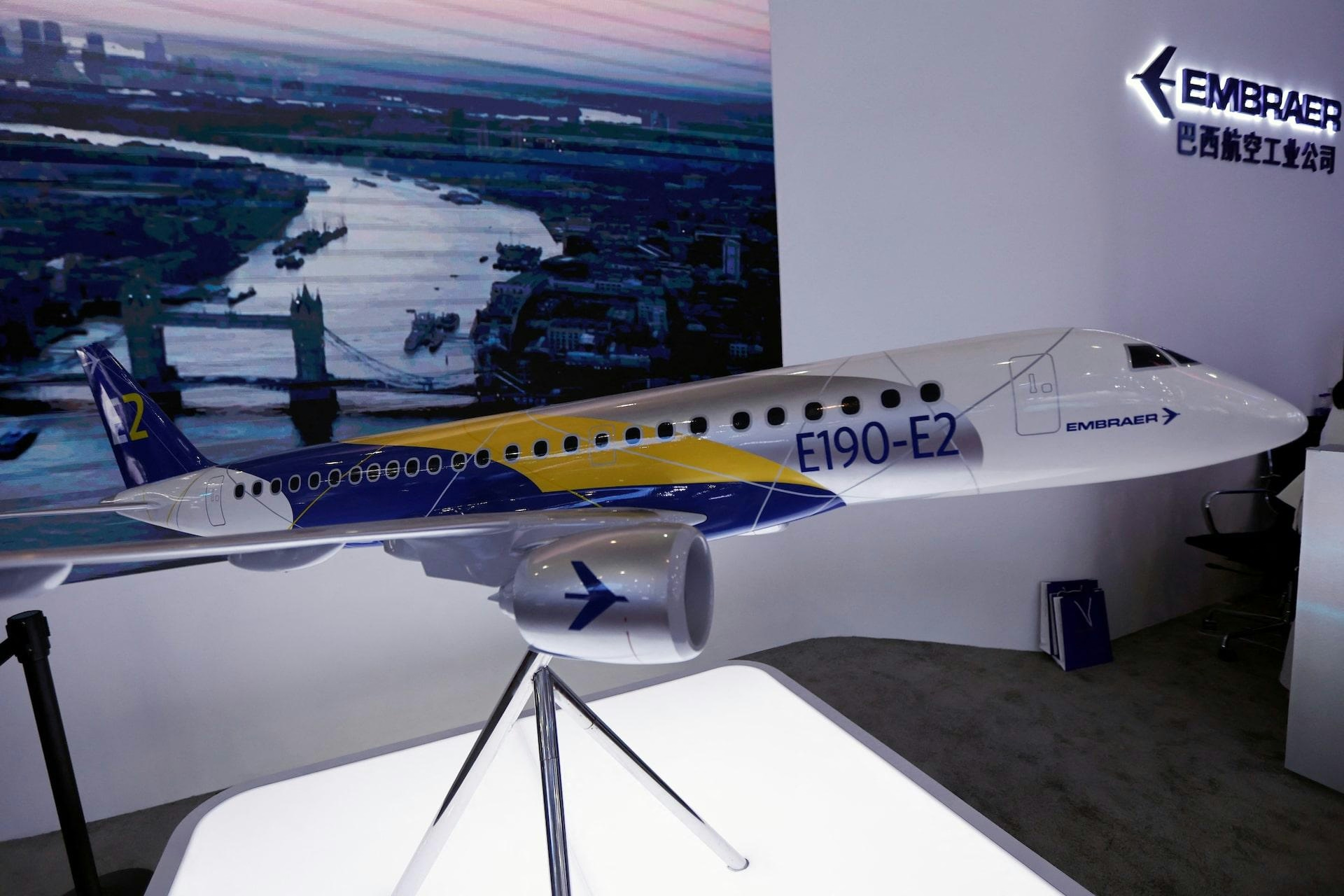
Embraer Aims for Nearly 30% Increase in Jet Deliveries Amid Rising Demand
Embraer has announced ambitious plans to increase its commercial aircraft deliveries by nearly 30% over the next two years, seeking to restore production levels to those seen before the COVID-19 pandemic. The Brazilian aerospace manufacturer’s commercial aviation chief, Arjan Meijer, revealed these targets ahead of the Airline Economics conference in Dublin, highlighting strong sales momentum and a robust order backlog as key drivers behind the company’s growth strategy.
Recovery and Growth in Regional Jet Market
In 2025, Embraer delivered 78 jets, aligning with its guidance range of 77 to 85 but still short of the approximately 100 units it shipped annually prior to the pandemic. Meijer emphasized that the company’s immediate goal is to reach 100 deliveries per year, with the possibility of exceeding this figure given the current demand and sales performance. The surge in orders has been particularly notable for Embraer’s E2 family of regional jets, which secured 131 net orders in 2025—quadrupling the previous year’s sales and significantly outpacing Airbus’ A220 program by a ratio of roughly three to one.
Key customers such as All Nippon Airways and LATAM have contributed to this renewed interest, reflecting a broader trend among both network and regional carriers to accelerate fleet renewals that were delayed during the pandemic. Embraer’s strategic focus on expanding E2 sales rather than developing new airliner models underscores its intent to capitalize on the ongoing replacement cycle within the aviation industry.
Production Challenges and Supply Chain Stability
While market reactions to Embraer’s delivery targets have been positive, the company faces operational challenges in scaling up production capacity and managing complex supply chain logistics. Supply chain performance remains a critical factor, particularly concerning engines and aerostructures. Meijer noted improvements in supply conditions compared to recent years but stressed the importance of maintaining stability throughout 2026 to support higher output levels.
Pratt & Whitney, the supplier of geared turbofan engines for the E2 jets, has largely resolved previous shortages and maintenance issues. Meijer pointed out that the engine variant used on Embraer’s aircraft has experienced fewer durability problems than similar engines deployed on other programs, benefiting from the E2’s smaller size, lighter weight, and later market entry. Consequently, the number of Embraer jets grounded due to engine maintenance delays has fallen dramatically, from a peak of 25 to 40 aircraft down to single digits, with expectations to eliminate such groundings entirely by the end of the year.
Market Dynamics and Geopolitical Risks
Despite losing a politically sensitive procurement campaign in Poland to Airbus, Embraer remains confident in sustained demand. Airlines worldwide are accelerating fleet replacements, supporting near-term growth even amid geopolitical uncertainties. Meijer affirmed, “We do not see the demand falling away,” underscoring the resilience of the regional jet market.
However, potential headwinds persist. In October 2025, Embraer warned that proposed US tariffs on Brazilian aircraft could disrupt order flows, with CEO Francisco Gomes Neto estimating that such tariffs might add $2 million per aircraft and cost the company $80 million in the current year. These tariffs could also affect US suppliers integrated into Embraer’s supply chain.
As Embraer advances its delivery ramp-up, competitors including Airbus and Boeing are expected to respond by adjusting their production rates and intensifying efforts to capture regional jet market share. Across the sector, manufacturers are navigating the tension between rising demand and constrained industrial capacity, with Embraer positioning itself to leverage opportunities in the recovering global aviation market.
Insights from Farnborough on Aerospace Growth and Orlando’s Emerging Role
LATAM Selects SES for In-Flight Connectivity on 60 Airbus and Embraer Jets

NARMA Introduces PXN Security-Hardened Flight Control Software for U.S. Drone Industry
Seventh Boeing 777-9 Enters Flight-Test Program
The Advantage of Dual Certification for Pilots and A&P Mechanics
BNDES Finances Porter's Next Series of E2 Deliveries

Enstrom Delivers First New 480B Helicopter to South Africa's Safomar Aviation

Icelandair Adds A320neo Aircraft Through Aircastle Agreement

LaGuardia Terminal B Introduces Robotics Pilot Program
Boeing Completes Final Certification Flight for 737-10
