
image

AeroGenie — あなたのインテリジェントな副操縦士。

何でも質問してください。すべてを分析し、即座に行動してください。

現在のトレンド

Categories

FedEx and UPS: Comparing Their Widebody Cargo Fleets
October 23, 2025By ePlane AI
FedEx and UPS: Comparing Their Widebody Cargo Fleets
0
0
FedEx Express
UPS Airlines
Widebody Cargo Aircraft

FedEx and UPS: Comparing Their Widebody Cargo Fleets

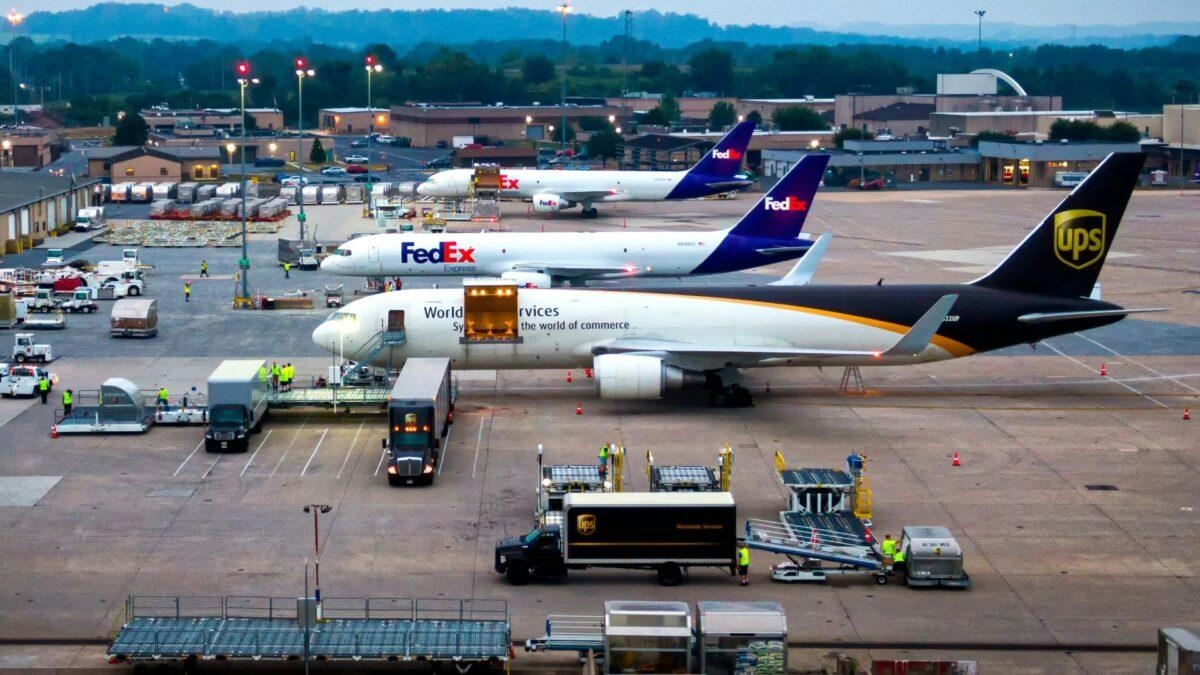
FedEx Express and UPS Airlines are two of the foremost cargo carriers globally, commanding significant influence over the air freight market through their extensive fleets and operational reach. Despite the emergence of new competitors such as Amazon Air, FedEx and UPS continue to dominate the industry, particularly through their deployment of widebody aircraft ranging from the Airbus A300-600RF to the Boeing 747-8F. These fleets are integral to their roles in facilitating global logistics and meeting the demands of international trade.

FedEx Express: Fleet Strategy and Global Operations

FedEx Express, the air delivery arm of FedEx Corporation, operates the largest cargo airline fleet worldwide, comprising nearly 400 aircraft that serve over 375 airports across more than 220 countries. Since its inception in 1971 and commencement of operations in 1973, FedEx has been a pioneer of the hub-and-spoke model, revolutionizing overnight delivery and reshaping global logistics networks. Its primary hub is located at Memphis International Airport, supported by major regional hubs in Indianapolis, Paris, and Guangzhou.

The company’s workforce includes pilots, maintenance personnel, and logistics experts, all supported by sophisticated tracking and routing technologies designed to optimize reliability and operational efficiency. Sustainability has become a central focus for FedEx, which has committed to achieving carbon-neutral operations by 2040. This commitment is underpinned by investments in Sustainable Aviation Fuel (SAF) and initiatives to reduce emissions in ground operations.

Despite these strengths, FedEx faces mounting challenges from a complex industrial environment and evolving logistics trends. According to JPMorgan, the company must navigate a shifting landscape as more shippers adopt regional supply chain models, which could alter demand patterns. Nevertheless, the global air freight forwarding market is expected to expand, driven by increasing global trade and the growth of e-commerce. FedEx anticipates higher peak parcel volumes in 2025, although shippers are preparing for increased fees.

Composition of FedEx’s Widebody Fleet

FedEx Express operates a total of 382 aircraft, with 295 classified as widebodies, making it one of the largest widebody cargo fleets in the world. The fleet includes the Boeing 777F, which offers a maximum payload capacity of 233,000 pounds and is well-suited for long-haul, intercontinental routes. The Boeing 767-300F, with a payload capacity of 127,000 pounds, serves medium-range routes efficiently, particularly across Europe and North America. The Airbus A300-600RF, though an older model, remains active on high-volume routes. The McDonnell Douglas MD-11F is gradually being retired as FedEx modernizes its fleet.

In response to changing global trade dynamics and supply chain uncertainties, FedEx recently introduced a direct cargo route between Dublin and Indianapolis, reflecting its adaptive network strategy.

UPS Airlines: Fleet Overview and Market Position

UPS Airlines, FedEx’s principal competitor, also operates a substantial widebody fleet that includes the Boeing 747-8F, 767-300F, and MD-11F aircraft. Its global operational scale and reach closely parallel those of FedEx. However, UPS’s growth trajectory has encountered setbacks, notably with the collapse of its planned acquisition of Mexican carrier Estafeta, which may impact its expansion ambitions in the Latin American market.

Outlook for 2025

As the air cargo industry approaches 2025, both FedEx and UPS are contending with a market environment shaped by expanding global trade, rising e-commerce demand, and evolving supply chain strategies. While FedEx faces near-term operational challenges, its ongoing investments in fleet modernization and sustainability initiatives, combined with a robust widebody fleet, position it to maintain a leading role in the competitive air freight sector.

More news
GACA and Archer Sign MoU to Advance Air Taxi Deployment

GACA and Archer Sign MoU to Advance Air Taxi Deployment

GACA and Archer Sign MoU to Advance Air Taxi Deployment in Saudi Arabia The General Authority of Civil Aviation (GACA) of Saudi Arabia has formalized a memorandum of understanding (MoU) with Archer Aviation to expedite the introduction of electric vertical take-off and landing (eVTOL) aircraft throughout the Kingdom. This collaboration represents a pivotal element of GACA’s broader strategy to develop the Advanced Air Mobility (AAM) ecosystem, in alignment with Saudi Arabia’s AAM Roadmap and the National Transport and Logistics Strategy (NTLS). The initiative underscores the Kingdom’s commitment to pioneering next-generation air transport solutions. Regulatory Collaboration and Demonstration Efforts Under the terms of the agreement, GACA and Archer will work jointly to refine the regulatory framework governing eVTOL operations in Saudi Arabia. A key focus will be harmonizing these regulations with Federal Aviation Administration (FAA) certification standards to ensure interoperability, enhance safety protocols, and facilitate the phased expansion of air taxi services. The partnership will also involve conducting proof-of-concept demonstrations and experimental flights aimed at validating regulatory approaches, supporting the development of necessary infrastructure, and fostering public acceptance of electric air taxi services. Captain Sulaiman bin Saleh Al-Muhaimedi, Executive Vice President for Aviation Safety and Environmental Sustainability at GACA, highlighted the significance of the MoU, stating, “This MoU is an important step in advancing the Kingdom’s vision for Advanced Air Mobility. By working with global partners such as Archer, we continue to strengthen the regulatory and operational foundations needed to safely integrate eVTOL aircraft into our aviation system. The initiative supports the AAM Roadmap and reinforces the Kingdom’s position as a regional leader in next-generation air transport.” Expanding Partnerships and Regional Leadership Archer’s engagement with GACA builds upon its existing collaborations within Saudi Arabia, including partnerships with The Helicopter Company and Red Sea Global to establish eVTOL testing environments. These efforts align with Saudi Arabia’s ambition to become an early adopter and regional leader in advanced air mobility technologies. Adam Goldstein, Archer’s Founder and CEO, remarked, “Saudi Arabia is moving with impressive speed and clarity to build a next-generation mobility ecosystem, and we are honored that GACA has chosen to work with Archer in this transformative effort. Harmonizing our certification work with the FAA and launching early demonstration operations in the Kingdom will help lay the groundwork for bringing safe, sustainable, and efficient air taxi travel to millions of people.” The Kingdom’s dedication to advancing air mobility is further evidenced by similar initiatives from other industry players. Joby Aviation has announced plans to deploy its electric air taxi services in Saudi Arabia, collaborating with GACA to establish an approval process aligned with FAA certification standards. These multi-faceted partnerships are positioning Saudi Arabia at the forefront of regional innovation in air mobility. Beyond Saudi Arabia, Archer is pursuing international expansion of its air taxi network, including plans to launch an electric air taxi service in Miami. This network aims to connect regional airports with properties owned by Miami Dolphins owner Stephen Ross, who is also developing a vertiport in West Palm Beach. As Saudi Arabia continues to invest in advanced air mobility, these strategic collaborations are expected to accelerate the integration of eVTOL aircraft into urban and regional transport systems, supporting the Kingdom’s vision for sustainable and innovative mobility solutions.
Environment, Health, and Safety Software for Aviation and Aerospace

Environment, Health, and Safety Software for Aviation and Aerospace

Environment, Health, and Safety Software in Aviation and Aerospace Ensuring the safety of passengers, crew, and ground personnel remains a paramount concern for airlines and aerospace companies. To meet these critical demands, Intelex has developed comprehensive safety management system (SMS) solutions specifically tailored for the aviation sector. These platforms facilitate the management of incidents and occurrences, audits, training, real-time risk assessments, and a broad spectrum of air and ground safety processes for airlines around the world. Tailored Safety Management Solutions Intelex’s SMS solutions are engineered to comply with Flight Data Integration requirements, enabling seamless interaction with flight data systems. This integration allows essential information—such as flight numbers, schedules, and crew details—to be automatically incorporated into various components of the SMS. Organizations have the flexibility to maintain all occurrences within a single dynamic form or to configure multiple forms that separately track air safety, ground incidents, and security events. The system further supports user-defined inspections and regulatory checklists, offering the option to preload industry-standard IOSA checklists or company-specific inspection protocols. At the core of the platform lies a centralized risk assessment matrix that underpins both incident management and inspections. This matrix provides a configurable yet standardized tool for assigning risk scores to any record, ensuring a consistent and rigorous approach to risk evaluation across all safety processes. Emerging Challenges and Industry Implications As the aviation and aerospace industries increasingly embrace advanced technologies, Environment, Health, and Safety (EHS) software providers face new challenges. The integration of artificial intelligence (AI) into safety systems presents significant opportunities for enhanced efficiency and predictive capabilities. However, companies must carefully balance these benefits with the imperative to safeguard sensitive operational data and maintain strict regulatory compliance. Recent industry developments have underscored the critical importance of software reliability. The postponement of the next SDA launch to 2026, attributed to software readiness issues, has highlighted the risks associated with deploying unproven systems. Similarly, the urgent recall of approximately 6,000 Airbus A320 aircraft for software corrections has drawn attention to the market’s sensitivity to software vulnerabilities and the necessity for swift, robust responses from both manufacturers and software providers. These events illustrate the mounting pressure on aviation and aerospace companies to implement EHS software solutions that not only adapt to technological advancements but also uphold the highest safety standards. In an environment of evolving risks and regulatory demands, the capacity to deliver reliable, secure, and adaptable EHS systems will be crucial for maintaining trust and operational integrity in this high-stakes industry.
AI Enhances Aircraft Weight and Balance Safety

AI Enhances Aircraft Weight and Balance Safety

AI Enhances Aircraft Weight and Balance Safety The aviation industry is increasingly leveraging artificial intelligence to enhance the safety of aircraft weight and balance (W&B) management. Accurate weight and balance calculations are critical to flight safety, directly influencing aircraft performance, stability, and controllability. Errors in these calculations, particularly overloading or improper distribution, can result in dangerous instability during critical phases such as takeoff and landing. By employing AI, industry innovators aim to provide precise, real-time measurements that reduce the risks associated with human error and outdated manual processes. Innovations in Weight and Balance Technology Texas-based Avix Aero has developed the Onboard Weight and Balance System (OBWBS), which automates the traditionally manual and assumption-based calculations involved in determining aircraft weight and center of gravity (CG). This system offers real-time, accurate data, addressing a persistent safety concern in aviation. Bill Tiffany, CEO of Avix Aero, highlighted the significance of weight and CG errors, citing findings from the European Union Aviation Safety Agency. He emphasized that these errors largely stem from manual calculations and loading procedures, which the OBWBS seeks to eliminate by automating the entire process. Similarly, Canadian IT firm Abomis Innovations is advancing W&B safety through an AI-driven platform that automates and verifies critical weight and balance decisions. Unlike conventional systems, Abomis’ solution integrates directly with baggage reconciliation systems (BRS), enabling access to precise weight data for baggage and cargo within each compartment or unit load device (ULD). Mike Masha, Product Owner at Abomis, noted that this seamless integration with BRS, which relies on direct inputs from airport scales, significantly mitigates the risk of human error in weight reporting. Expanding Applications and Industry Challenges While AI-driven W&B systems have traditionally focused on commercial airliners, business aviation is emerging as a significant market for these technologies. Business aircraft, characterized by variable passenger, cargo, and fuel loads, stand to benefit from the ability to verify weight and CG immediately after loading, thereby enhancing safety and operational efficiency. However, adapting AI systems to the diverse configurations of business aircraft presents considerable technical and operational challenges. Industry expert Albright pointed out that customizing W&B software to accommodate these variations demands substantial development and data modeling efforts. Although Abomis currently targets commercial and international operators, the company is actively working to extend its platform’s capabilities to support a wider range of aircraft types. Regulatory and Market Implications As AI-based W&B solutions gain momentum, the aviation sector faces the imperative of ensuring robust safety protocols and regulatory compliance. This is particularly important given recent scrutiny of leading AI companies regarding the adequacy of their safety practices. The market has responded with increased investment in AI safety technologies, exemplified by Honeywell’s recent partnerships in the United Arab Emirates aimed at enhancing aircraft capabilities. Competitors are similarly advancing their AI systems to maintain a competitive edge, while emphasizing safety to foster market confidence. The integration of artificial intelligence into aircraft weight and balance management represents a significant advancement in aviation safety. Nonetheless, as adoption expands, the industry must carefully balance innovation with stringent safety standards and regulatory oversight to realize the full potential of these technologies in delivering safer skies.
AI's Impact on Travel Industry Jobs

AI's Impact on Travel Industry Jobs

AI’s Impact on Travel Industry Jobs Workforce Reductions Amid AI Adoption Artificial intelligence is rapidly transforming the travel industry, with its disruptive effects becoming increasingly apparent through significant workforce reductions. The swift integration of AI technologies has not only escalated corporate investment but also led to the displacement of thousands of employees. According to data from Challenger, Gray & Christmas, company executives have attributed over 48,000 job cuts in the United States this year directly to AI. Within the travel sector, the influence of AI on employment manifests in diverse ways. Prominent companies such as Lufthansa Group, United Airlines, and Tripadvisor have explicitly identified AI or automation as the primary reasons behind recent layoffs. Meanwhile, other major players including Booking.com, Expedia, and American Airlines have cited terms like “efficiency,” “streamlining,” and “restructuring” in their announcements—phrases that often imply a strategic shift toward automation and AI-driven processes. These organizations are not only reducing their workforce but are also channeling the resulting cost savings into expanding AI capabilities, including the deployment of conversational bots and intelligent agents. Industry Implications and Strategic Responses The ramifications for the travel workforce are profound. Industry analysts forecast that as AI increasingly augments human roles and automates operational tasks, the hospitality sector could experience workforce reductions ranging from 20 to 30 percent in the coming years. This trend has generated skepticism regarding the long-term viability of jobs within the travel industry, as companies prioritize automation to enhance productivity and reduce expenses. In response, competitors are accelerating their own AI initiatives. Early adopters like Expedia have begun utilizing AI to integrate call-center data and provide more comprehensive traveler insights, resulting in double-digit improvements in first-call resolution rates and upselling performance. These strategic shifts highlight a broader industry movement toward leveraging AI not only to streamline operations but also to elevate customer service and secure a competitive advantage. The travel industry currently faces a pivotal moment. While AI offers the promise of increased efficiency and innovation, it also necessitates difficult decisions concerning workforce size and organizational structure. The ongoing wave of layoffs—whether explicitly linked to AI or framed as restructuring—signals a fundamental transformation in how travel companies operate and engage with their customers. As automation becomes more deeply embedded in the sector, balancing technological progress with the human element that has traditionally defined travel experiences remains a critical challenge.
Airlines to Increase Use of AI in Setting Fares by 2026

Airlines to Increase Use of AI in Setting Fares by 2026

Airlines to Increase Use of AI in Setting Fares by 2026 The Evolution of Airline Pricing Airline fare pricing has traditionally been a complex and rigid process, constrained by filed fares, fixed booking classes, and legacy global distribution systems (GDS). These systems limited price adjustments to predetermined increments, preventing airlines from responding fluidly to market fluctuations. However, this era is rapidly coming to an end as carriers embrace more flexible pricing models. Over the past decade, airlines have invested significantly in continuous pricing, a model that discards the limitations of traditional fare buckets and allows for virtually any price point to be set. Building on this foundation, artificial intelligence (AI) is now being integrated into these platforms, enabling airlines to determine fares with greater precision and responsiveness. This shift has gained prominence following Delta Air Lines’ recent use of AI to support its pricing decisions, a move that sparked debate about the potential for algorithms to drive fares higher. Delta is not alone; numerous airlines are experimenting with or have already implemented AI tools to enhance decision-making within their dynamic pricing frameworks. Vinay Varma, Senior Vice President and General Manager at AirGain by RateGain, shared insights on this transformation during the World Aviation Festival. AirGain provides AI-enabled pricing intelligence to carriers including Singapore Airlines, Air India, Thai Airways, Malaysia Airlines, and IndiGo, offering a unique vantage point on the rapid evolution of airline pricing. From Fare Buckets to AI-Driven Pricing For decades, airline pricing was anchored in ATPCO-filed fares and a complex array of booking classes within traditional GDSs. Today, an increasing number of carriers are transitioning to the New Distribution Capability (NDC) and continuous pricing models, where fares are dynamically calculated rather than selected from a fixed ladder. Early adopters such as Air France-KLM and the Lufthansa Group introduced continuous pricing on select markets via NDC several years ago and have since expanded its application. “Airline pricing has always been very traditional,” Varma explained. “Now we are looking at NDC pricing, dynamic and continuous pricing, which is really great for the business because you are not restricted to the old GDS pricing mechanisms.” With these constraints removed, AI’s potential is significantly enhanced. Algorithms can recommend any price point by analyzing factors such as demand, capacity, seasonality, competitor actions, and shopping data patterns. Industry analyses indicate that fully dynamic pricing strategies, supported by rich data, can increase revenue by several percentage points compared to traditional methods. Opportunities and Challenges Ahead While dynamic pricing powered by AI offers clear commercial benefits, it also presents challenges. Regulatory scrutiny is intensifying, with authorities focusing on transparency and consumer protection. Concerns have emerged regarding potential surveillance and the rise of hyper-personalized pricing, which may provoke consumer backlash over fairness and data privacy. Market reactions are mixed. Some travelers express unease about how their data is utilized and question the fairness of AI-driven pricing, while others may appreciate the prospect of more responsive and potentially competitive fares. Airlines face a strategic choice: to adopt AI-driven models and navigate regulatory pressures or to maintain traditional pricing approaches. For airlines, the incentive to harness AI is compelling. “Data is gold,” Varma remarked, “but airlines have so much data today that they do not know how to interrogate it.” Revenue and pricing teams are inundated with vast amounts of information—from fares scraped across hundreds of airlines and online travel agencies to demand forecasts and operational constraints. AI offers a means to process this data at scale, enhancing productivity and enabling more nuanced pricing decisions. As the industry accelerates the adoption of AI in fare setting, it stands on the cusp of a new era characterized by unprecedented pricing flexibility and heightened regulatory scrutiny. By 2026, AI-driven pricing is expected to become the standard, fundamentally reshaping how travelers experience and perceive airfare.
Archer Aviation Shares Rise 15% Following Miami Air Taxi Initiative and Tiltrotor Deal

Archer Aviation Shares Rise 15% Following Miami Air Taxi Initiative and Tiltrotor Deal

Archer Aviation Shares Rise 15% Following Miami Air Taxi Initiative and Tiltrotor Deal Archer Aviation’s shares surged 15% this week after the company announced plans to establish an electric air taxi network across the Miami metropolitan area and revealed an exclusive partnership with Karem Aircraft to utilize its validated tiltrotor technology. These developments highlight Archer’s strategic focus on connecting key destinations in South Florida with electric vertical takeoff and landing (eVTOL) aircraft, while simultaneously expanding its footprint in both commercial and defense sectors. Miami Air Taxi Network and Strategic Partnerships The Miami initiative involves collaboration with infrastructure and real estate partners to retrofit existing helipads and build new vertiports, positioning Miami as a flagship launch market alongside New York and select locations in the Middle East. The partnership with Karem Aircraft enhances Archer’s ambitions to develop a versatile aircraft platform capable of serving civilian and military applications. This dual-use approach aims to broaden the company’s market reach and technological capabilities. In a related development, Archer signed agreements to acquire control of Hawthorne Municipal Airport in Los Angeles for $126 million. The airport is intended to serve as the central hub for Archer’s planned Los Angeles air taxi network and function as an artificial intelligence aviation testbed, reinforcing the company’s presence in major urban markets. Financial Position and Legal Challenges To support these expansion efforts, Archer launched a $650 million registered direct offering, which will finance the Hawthorne acquisition and underpin ongoing growth initiatives. Despite the recent share price rally, the company continues to face significant financial challenges, reporting a GAAP operating loss of $129.9 million in the third quarter of 2025. Archer remains a pre-revenue, capital-intensive enterprise, and concerns persist regarding its ability to convert high-profile announcements into sustainable commercial and defense programs without further dilution or erosion of investor confidence. Complicating the company’s outlook is an ongoing legal dispute with competitor Joby Aviation. Joby has filed a lawsuit alleging that Archer improperly used proprietary information obtained from a former Joby employee to secure a partnership deal. This legal challenge, combined with persistent financial losses, continues to place Archer’s stock under close scrutiny despite recent positive momentum. Investor sentiment remains divided, with community fair value estimates for Archer ranging broadly from approximately $2 to $22 per share. This wide variance reflects uncertainty over the company’s execution risks and long-term prospects. While the Miami air taxi network and tiltrotor collaboration have bolstered Archer’s investment narrative, near-term catalysts such as progress on aircraft certification, clear service launch timelines, and transparent capital deployment will be essential to maintaining investor confidence. As Archer Aviation advances its vision for urban air mobility and dual-use aircraft, its ability to fulfill these ambitions while navigating legal and financial hurdles will be critical in determining whether the recent gains in its share price can be sustained.
The Cost of an Airbus A350

The Cost of an Airbus A350

The Cost of an Airbus A350 The Airbus A350 is widely regarded as one of the most advanced and efficient widebody aircraft in operation today. Its design emphasizes operational savings and environmental efficiency, positioning it as a preferred choice for airlines seeking to modernize their long-haul fleets. The success of the A350 has notably contributed to the decline of the Airbus A380 Superjumbo, as carriers increasingly prioritize more versatile and fuel-efficient aircraft. Nevertheless, the acquisition of an A350 represents a significant financial commitment, prompting many airlines to favor leasing arrangements over outright purchases. Pricing and Demand The price of an Airbus A350 varies considerably depending on the specific configuration, airline customization, and prevailing market conditions. In 2025, Emirates placed a substantial order for the A350-900 variant, with a reported price tag of $3.4 billion per aircraft. This figure reflects the premium associated with new, highly tailored jets. Market prices are subject to fluctuations influenced by factors such as inflation, supply chain challenges, and the particular features selected by customers. Airbus has experienced strong demand for the A350 family. As of November 2025, the company’s order book included 75 new aircraft, largely driven by commitments for the A350 widebody series. By January 2025, Airbus had secured orders for 1,363 A350s, delivered 644 units, and maintained a backlog of 643 aircraft. This backlog indicates that approximately half of all orders have been fulfilled to date. Features and Capabilities The A350 serves as Airbus’s flagship long-haul aircraft, directly competing with Boeing’s 777 and 787 families, as well as the forthcoming 777X. Developed at an estimated cost of $15 billion, the A350 incorporates advanced materials, with 53% of its structure composed of composite materials by weight. This construction makes the aircraft lighter, stronger, and more durable than previous models. The A350 holds the highest ETOPS certification—ETOPS-370—allowing it to operate flights up to 370 minutes from the nearest suitable airport, thereby covering 99.7% of the Earth’s surface. The A350-900ULR (Ultra Long Range) variant is notable for holding the record as the world’s longest-range commercial aircraft. This capability enables Singapore Airlines to operate nonstop flights from Singapore to New York-JFK and Newark Liberty airports. The A350-900 and the larger A350-1000 variants typically accommodate between 300 and 410 passengers in three-class configurations, with a maximum capacity of up to 480 passengers in a single-class layout. These aircraft are capable of flying routes up to 9,700 nautical miles. Market Trends and Future Developments Demand for the A350 family continues to grow, supported by market intelligence from firms such as IBA, which has observed rising values for midlife widebody aircraft. This trend is attributed to slow production ramp-ups and a limited supply of airworthy jets. Airbus has also reported interest in a stretched version of the A350, potentially equipped with a more powerful Rolls-Royce Trent XWB-97 engine. However, this variant has not yet been officially launched. Despite robust sales, Airbus has encountered challenges. In 2025, a supplier quality issue involving fuselage panels on certain A320 aircraft compelled the company to lower its commercial aircraft delivery target for the year to approximately 790 units. The Airbus A350 remains a pivotal asset in modern long-haul aviation, combining efficiency, range, and passenger comfort. While the acquisition cost is substantial, often reaching into the billions for some variants, the aircraft’s operational benefits and sustained market demand affirm its significance in the competitive commercial aviation sector.
Air Algérie Launches Tour Operator and MRO Subsidiary to Boost African Aviation

Air Algérie Launches Tour Operator and MRO Subsidiary to Boost African Aviation

Air Algérie Launches Tour Operator and MRO Subsidiary to Boost African Aviation Air Algérie has announced a comprehensive restructuring plan designed to reinforce its presence in the African aviation and tourism sectors. Central to this strategy is the establishment of a dedicated tour operator alongside the creation of a standalone subsidiary for its Maintenance, Repair, and Overhaul (MRO) division. These initiatives aim to enhance the airline’s operational capacity and competitiveness, with a target of transporting 8.5 million passengers by 2025. The airline’s renewed focus seeks to expand its influence across both aviation and tourism, fostering collaboration and improving service offerings. The introduction of the tour operator is intended to simplify travel arrangements for customers, while the MRO subsidiary is expected to elevate service reliability and unlock new business opportunities in aircraft maintenance throughout Africa. Tour Operator: Streamlining Travel Across Africa The newly launched tour operator is poised to transform the African tourism landscape by providing customized travel packages, booking services, and destination management for both outbound and inbound travelers. Leveraging Air Algérie’s extensive flight network, the operator will facilitate seamless multi-country itineraries, thereby easing access to Algeria and other African destinations. This initiative also aims to position Algeria as an emerging tourism hub, showcasing the country’s natural landscapes, historical landmarks, and rich cultural heritage. By partnering with regional and international stakeholders, the tour operator will offer bespoke travel experiences that align with Algeria’s broader national tourism objectives and enhance the continent’s attractiveness to global visitors. MRO Subsidiary: Strengthening Maintenance Capabilities Amid Competition Concurrently, Air Algérie’s MRO subsidiary will deliver comprehensive maintenance, repair, and overhaul services not only for its own fleet but also for other African carriers. By separating MRO operations from its core airline activities, Air Algérie intends to improve operational efficiency and responsiveness, addressing the increasing demand for reliable and cost-effective aircraft maintenance within the region. This expansion occurs in a competitive environment dominated by established players such as Lufthansa Technik and Rolls-Royce’s CorporateCare, both of which maintain a strong foothold in Africa. The market also includes companies like ExecuJet MRO Services, which recently renewed its FAA and African certifications, and Elevate MRO, known for engine maintenance services through StandardAero. These competitors may intensify efforts to broaden their service offerings or reinforce their market positions in response to Air Algérie’s entry. Despite these challenges, the new MRO subsidiary is expected to reduce Africa’s dependence on foreign service providers and contribute to the development of a more self-sufficient aviation industry. It is positioned to become a pivotal component of regional aviation infrastructure, supporting the growth and fleet management needs of African airlines. Strategic Outlook The simultaneous launch of a tour operator and an MRO subsidiary represents a significant advancement in Air Algérie’s growth strategy, aimed at enhancing travel experiences and aviation services across Africa. While the airline confronts competitive pressures from established industry leaders, these initiatives have the potential to foster improved connectivity, operational reliability, and tourism development throughout the continent.
UC Davis Advances Development of Air Taxi Technology

UC Davis Advances Development of Air Taxi Technology

UC Davis Advances Development of Air Taxi Technology The concept of flying cars has long been relegated to the realm of science fiction, yet the emergence of urban air mobility (UAM) suggests that this futuristic vision may soon become a practical reality. At the forefront of this technological evolution is Seongkyu Lee, a professor of mechanical and aerospace engineering at the University of California, Davis. Lee is actively engaged in advancing electric vertical takeoff and landing aircraft (eVTOLs) with the goal of integrating them into everyday urban transportation. Lee anticipates that air taxis could enter commercial use within the next few years. As eVTOL technology nears readiness for widespread deployment, researchers are addressing critical challenges, particularly in the field of aeroacoustics—the study of noise generated by moving air—to ensure these vehicles operate efficiently while meeting public expectations for noise levels. The Sound of Progress eVTOLs present several advantages over conventional helicopters. Powered by batteries, they produce zero greenhouse gas emissions and combine vertical takeoff and landing capabilities with airplane-like cruising, making them well-suited for congested urban environments. A key benefit is their significantly reduced noise footprint, achieved through the use of multiple small rotors rather than a single large one. However, Lee emphasizes that “quieter than a helicopter does not mean silence.” For instance, Joby Aviation, founded by UC Davis alumnus JoeBen Bevirt, conducted NASA tests on its S4 prototype in 2022. The aircraft registered approximately 45.2 decibels when flying overhead at 500 meters—comparable to the ambient noise of a refrigerator or moderate rainfall. During takeoff and landing, noise levels remained below 65 decibels, akin to normal conversation or a running vacuum cleaner. By comparison, helicopters typically generate noise levels between 78 and 87 decibels at similar altitudes. Lee’s research employs computational fluid dynamics to examine the interactions between tiltrotors, wings, and airflow, with the objective of further reducing noise emissions without compromising performance. He notes that the public is likely to accept eVTOLs more readily than helicopters due to their quieter operation, but stresses the importance of balancing noise reduction with vehicle efficiency. Industry Challenges and Competitive Landscape Despite significant technological advancements, the widespread adoption of air taxis faces considerable hurdles. Regulatory uncertainty remains a major obstacle, as aviation authorities in the United States and Europe have yet to establish definitive certification standards for eVTOL operations. Some companies’ intentions to launch air taxi services in regions such as the Middle East prior to securing these certifications have sparked criticism, raising concerns about safety and regulatory oversight. The competitive landscape is also evolving rapidly. Beta Technologies recently experienced a surge in its stock price following a substantial agreement with Eve Air Mobility, while Joby Aviation’s lawsuit against Archer Aviation highlights the intense rivalry within the sector. Additionally, Hopscotch Air’s plans for a mini-IPO underscore the financial and operational challenges confronting new entrants. As UC Davis and its collaborators continue to refine air taxi technologies, the future of urban air mobility will depend not only on engineering innovations but also on successfully navigating regulatory frameworks, market dynamics, and competitive pressures. For now, the prospect of quiet, efficient urban air travel is steadily transitioning from science fiction to tangible reality.
Täby Air Maintenance’s Saab 2000F Earns EASA Certification

Täby Air Maintenance’s Saab 2000F Earns EASA Certification

Täby Air Maintenance’s Saab 2000F Earns EASA Certification Täby Air Maintenance (TAM) has achieved a significant milestone with the awarding of a Supplemental Type Certificate (STC) from the European Union Aviation Safety Agency (EASA) for its Saab 2000 freighter conversion program. This certification, secured in collaboration with launch customer Jetstream Aviation Capital, paves the way for the delivery of the newly certified Saab 2000F to clients, thereby expanding TAM’s established portfolio of freight conversions. Advancing Regional Cargo Capabilities Building on its extensive experience with the Saab 340—of which more than 35 aircraft have been converted for cargo operations—TAM’s Saab 2000F conversion offers enhanced payload capacity and operational flexibility. The larger Saab 2000F can carry a maximum payload of 6,622 kilograms, distributed across six cargo positions each limited to 900 kilograms, along with two rear positions restricted to 800 and 400 kilograms respectively. Given that only 63 Saab 2000 aircraft were produced between 1992 and 1999, this freighter conversion represents a niche yet potentially valuable addition to the regional logistics market. The market response to the certification has been notably positive, with strong interest emerging from operators in both Europe and North America. The Saab 2000F’s combination of payload capacity and versatility is regarded as an attractive option for regional cargo carriers seeking to modernize or expand their fleets amid evolving market demands. Challenges and Competitive Landscape Despite this progress, TAM faces considerable challenges as it advances the Saab 2000F program. The regional logistics sector remains highly competitive, with established players already offering a variety of freighter conversions. To distinguish its offering, TAM must uphold rigorous standards in both maintenance and conversion services, ensuring ongoing regulatory compliance as operators deploy the aircraft across jurisdictions with varying requirements. Industry analysts anticipate that TAM’s certification may prompt competitors to accelerate their own freighter conversion initiatives or pursue similar regulatory approvals to safeguard and grow their market share. The successful introduction of the Saab 2000F will therefore depend not only on technical achievement but also on TAM’s capacity to navigate complex regulatory environments and address the diverse operational needs of its customers. With EASA certification now secured, TAM and Jetstream Aviation Capital are positioned to deliver the first Saab 2000F aircraft, aiming to establish a strong foothold in the dynamic and competitive regional freighter market.
Ask AeroGenie









