
画像

エアロジニー — あなたのインテリジェントな副操縦士。

何でも尋ねてください。全てを分析してください。即座に行動してください。

現在のトレンド

Categories

Final Engine Test of Hawker Siddeley Nimrod XV232
January 13, 2026By ePlane AI
Final Engine Test of Hawker Siddeley Nimrod XV232
0
0
Hawker Siddeley Nimrod
Aircraft Preservation
Coventry Airport

Final Engine Test of Hawker Siddeley Nimrod XV232 Faces Uncertain Future

Urgent Developments at Coventry Airport

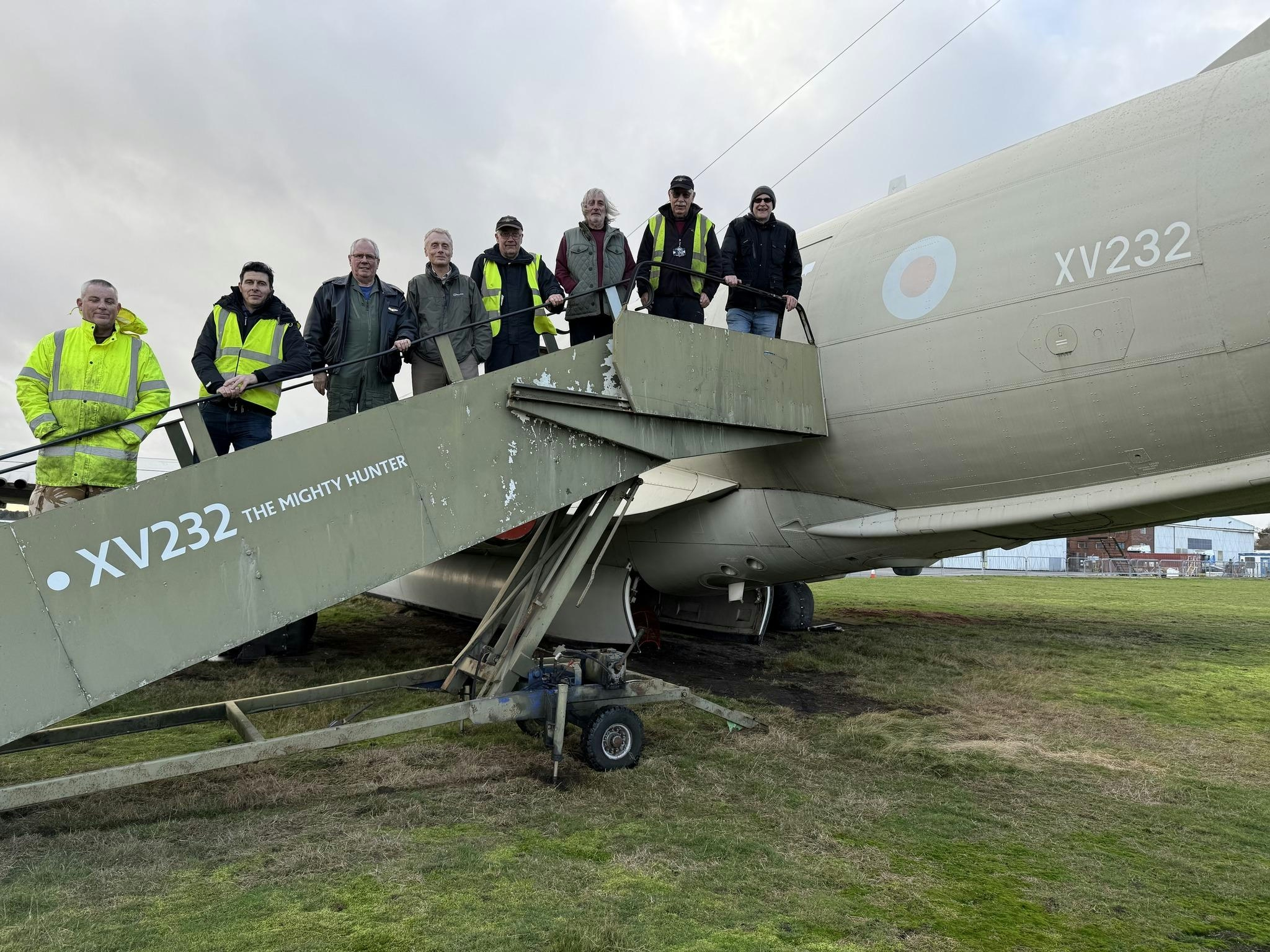
On November 9, 2025, the Nimrod Preservation Group announced critical developments concerning the future of the Hawker Siddeley Nimrod XV232, affectionately known as “The Mighty Hunter.” The group, alongside other tenants at Coventry Airport, received formal notification that all operations at the airfield must cease by May 9, 2026. This unexpected directive has compelled the preservation group to urgently reassess the options available for safeguarding the historic maritime patrol aircraft.

In an update issued in early December, the Nimrod Preservation Group outlined three potential courses of action. These include transporting XV232 by road to the RAF Manston History Museum, executing a one-time ferry flight to Manston International Airport, or, if neither option proves viable, scrapping the aircraft. The group emphasized that no final decision has been reached and reaffirmed its dedication to preserving XV232 wherever possible. Ongoing consultations with engineers, regulatory authorities, and partner organizations are focused on identifying a feasible path forward.

Regulatory and Economic Challenges

The preservation efforts face additional complications amid heightened regulatory scrutiny and safety concerns. Recent recommendations from the National Transportation Safety Board (NTSB) regarding Hawker stall tests, coupled with 2025 marking the worst year for business aviation safety since 2011, have intensified the pressure on any plans involving ferry flights or public demonstrations. Stricter safety standards now govern such activities, potentially limiting the feasibility of moving or operating the aircraft.

Economic uncertainty further clouds the project’s outlook. Market volatility anticipated in 2026, driven by Federal Reserve dissent and fluctuating valuations, threatens to complicate fundraising and sponsorship efforts. Meanwhile, the aerospace sector is rapidly evolving, with competitors focusing on innovations such as lunar missions, electric air taxis, and autonomous combat aircraft. These advancements may influence public and institutional interest in preserving legacy aircraft like the Nimrod.

Final Engine Run at Coventry Airport

As part of its longstanding fundraising initiatives, the Nimrod Preservation Group has regularly hosted public engine runs of XV232. However, due to the current uncertainty surrounding the aircraft’s future, these events will now conclude. A final engine run is scheduled for January 17 at Coventry Airport, featuring two engine runs and a possible third if required. This event will provide the last opportunity to witness the aircraft’s Rolls-Royce Spey turbofan engines in operation at the site. Although tickets have sold out, the group indicated that some members of the public may still attend subject to a donation.

A representative of the Nimrod Preservation Group described the occasion as one of the longest engine runs to date, offering a final chance to hear “The Mighty Hunter” come to life at Coventry Airport. The group pledged to continue providing updates as discussions regarding the aircraft’s future progress.

For further information about the Nimrod Preservation Group, visit www.xv232.com.

More news
Rolls-Royce Plans Return to Narrowbody Aircraft Engines

Rolls-Royce Plans Return to Narrowbody Aircraft Engines

Rolls-Royce Plans Return to Narrowbody Aircraft Engine Market Rolls-Royce’s 2025 full-year results brought encouraging news for investors, highlighted by a 40% surge in underlying operating profits, improved cash flow, and the announcement of a substantial share buyback program. Beyond these financial achievements and the company’s raised targets for 2028, the most consequential development for the aviation industry is Rolls-Royce’s strategic decision to re-enter the narrowbody aircraft engine market. Unlike previous efforts, the company intends to pursue this opportunity through partnerships rather than independently. Strategic Significance of Narrowbody Market Re-entry The narrowbody, or single-aisle, aircraft segment represents the largest volume market in commercial aviation. Industry forecasts from Boeing and Airbus anticipate the delivery of approximately 33,000 single-aisle aircraft globally over the next two decades. Rolls-Royce has remained absent from this market for over ten years, having exited its last major narrowbody program—the V2500 engine produced by the International Aero Engines consortium—during a prior strategic restructuring. Currently, the narrowbody engine market is dominated by two major players: CFM International, a joint venture between GE and Safran, and Pratt & Whitney. CFM’s LEAP engines power the Boeing 737 MAX and serve as an option for the Airbus A320neo, while Pratt & Whitney’s geared turbofan (GTF) engines are available on the A320neo and are the exclusive choice for the Airbus A220 and Embraer E2 jets. This duopoly has effectively limited opportunities for new entrants, making Rolls-Royce’s renewed interest particularly noteworthy. In its latest financial report, Rolls-Royce explicitly stated its intention to re-enter the narrowbody market leveraging its UltraFan technology, emphasizing a preference for partnership-based approaches. This declaration signals a firm strategic commitment to shareholders and sends a clear message to the industry about the company’s ambitions. Challenges and Technological Ambitions Rolls-Royce’s strong financial position, bolstered by robust profit growth and investor confidence, provides a solid foundation for this ambitious initiative. However, re-establishing a presence in the narrowbody segment will be challenging. The entrenched competitors are unlikely to relinquish market share without resistance, potentially responding with aggressive pricing strategies, accelerated technological innovation, or efforts to secure long-term commitments from airline customers. Such competitive dynamics could intensify market pressures, leading to price wars or accelerated technology development. Central to Rolls-Royce’s strategy is its UltraFan technology, which promises substantial improvements in fuel efficiency and performance but has yet to reach commercial availability. The company is betting that by combining this technological advantage with strategic partnerships, it can present airlines with a compelling alternative as the next generation of narrowbody aircraft replaces current models such as the A320neo and 737 MAX. For Rolls-Royce, this move represents more than a market re-entry; it is an attempt to compete for the most significant segment in commercial aerospace. The coming years will determine whether its technological innovation and collaborative approach can overcome established rivals and reshape the narrowbody engine market.
FTAI Aviation Details Engine Leasing Strategy and Associated Risks

FTAI Aviation Details Engine Leasing Strategy and Associated Risks

FTAI Aviation Details Engine Leasing Strategy and Associated Risks FTAI Aviation has articulated its engine leasing strategy, highlighting both its significant growth and the challenges posed by an increasingly competitive market. Specializing in aircraft engine leasing and maintenance services, the company has experienced remarkable expansion in its module repair business. Over the past two years, this segment has seen its EBITDA quadruple, reaching $180 million, reflecting a strong demand for efficient engine maintenance solutions. Market Competition and Emerging Challenges Despite this growth, FTAI Aviation faces intensifying competition, particularly with Willis Lease Finance’s recent entry into the module repair sector. Willis’s move directly targets a market segment where FTAI Aviation has established a solid foothold, signaling a shift that could prompt airlines to reevaluate their engine maintenance and leasing partnerships. This increased competition is likely to exert pressure on profit margins as pricing becomes more contested. Additionally, airlines may diversify their maintenance and leasing providers in pursuit of better value and service, posing risks to FTAI Aviation’s customer retention. In response to these challenges, FTAI Aviation may need to capitalize further on its established module repair capabilities and consider expanding its service offerings to maintain a competitive edge. The company’s management acknowledges that sustaining growth will require continued investment in technology, operational efficiency, and strengthening customer relationships. Strategic Outlook and Industry Position FTAI Aviation’s recent financial performance demonstrates resilience, with its ability to scale the module repair business and deliver strong EBITDA growth positioning it well amid evolving market conditions. Looking forward, the company’s strategy is expected to focus on consolidating market share through innovation and leveraging operational strengths. It remains attentive to industry trends and competitor activities, recognizing that the engine leasing sector is undergoing significant transformation as airlines and lessors adjust to new market dynamics. While FTAI Aviation has shown robust growth in its engine leasing and module repair operations, it must navigate the challenges of heightened competition and shifting customer preferences. Its continued success will depend on adaptability, innovation, and maintaining the confidence of its airline partners in a rapidly changing industry landscape.
Delta orders 34 more Airbus A321neo jets in fleet renewal push

Delta orders 34 more Airbus A321neo jets in fleet renewal push

Delta Expands Fleet with Order for 34 Additional Airbus A321neo Jets Delta Air Lines has announced an order for 34 more Airbus A321neo aircraft, reinforcing its ongoing fleet renewal strategy centered on fuel efficiency and enhanced premium seating. The new jets are expected to enter service beginning in 2029, further modernizing the airline’s narrowbody fleet. Strengthening the Narrowbody Fleet With this latest acquisition, Delta’s total commitment to the A321neo model rises to 189 aircraft. The carrier currently operates 92 of these jets, with 97 more on firm order and options for an additional 36. The A321neo has become a cornerstone of Delta’s domestic and short-haul international operations, prized for its low operating cost per seat and its configuration that offers more first-class and extra-legroom seats than any other single-aisle aircraft in the airline’s fleet. This order follows two other significant aircraft announcements by Delta in 2026. In January, the airline placed an order for 30 Boeing 787-10 widebody jets, followed by a commitment to 31 additional Airbus widebody aircraft. These moves collectively underscore Delta’s focus on fleet modernization through the acquisition of newer, more fuel-efficient planes that support its strategy of expanding premium cabin offerings. The airline has emphasized that most of its planned seat capacity growth will come from higher-priced premium cabins rather than the main cabin, aiming to increase revenue and improve the passenger experience. Market Implications and Challenges Delta’s decision arrives amid a competitive environment where rivals such as Southwest Airlines may reconsider their own fleet strategies. The expanded order is likely to intensify competition in the narrowbody aircraft market, particularly as airlines seek to attract premium travelers. Market analysts view Delta’s investment in modern, fuel-efficient jets as a positive signal to investors, reflecting a commitment to operational efficiency and long-term growth. Nevertheless, the airline’s ambitious fleet renewal faces potential challenges. Industry-wide supply chain disruptions and possible delivery delays could affect the integration timeline for the new aircraft. Additionally, heightened competition among aircraft manufacturers may influence future negotiations and fleet planning decisions. The new A321neo jets will be equipped with Pratt & Whitney GTF engines supplied by RTX, aligning with Delta’s goals for sustainability and operational efficiency.
Top Widebody Premium Seats Available for Booking

Top Widebody Premium Seats Available for Booking

Top Widebody Premium Seats Available for Booking Airlines are increasingly focusing their strategies on premium cabins, responding to a growing segment of travelers willing to pay for enhanced space, superior dining, and greater privacy—even on shorter routes. This shift has driven carriers to redesign cabin layouts and invest significantly in upgraded onboard experiences. Widebody aircraft, with their larger fuselage diameters, provide the space and flexibility necessary for innovative premium configurations, positioning them at the forefront of advancements in passenger comfort. Innovation in Premium Cabin Design Premium cabins—whether designated as first class, business class, or premium economy—are characterized by features such as lounge access, increased seat pitch and width, gourmet dining, generous baggage allowances, and priority services. These elements aim to elevate comfort and exclusivity, appealing to discerning travelers. JetBlue’s Mint service, for instance, has established a benchmark for premium experiences that many airlines seek to emulate. However, genuine innovation in aviation remains rare and challenging. Airlines must operate within strict constraints, including aircraft weight limits, safety certifications, cabin pressurization, turnaround times, and cost controls. Experimentation is both complex and costly, and any new feature must ultimately resonate with passengers. Emirates’ introduction of virtual windows in its Boeing 777 inner suites exemplifies this challenge; while inventive, the digital screens failed to fully replicate the psychological comfort of real windows, resulting in mixed reviews. Similarly, Emirates’ onboard shower spas in first class, though unique, have not seen widespread adoption, as many travelers prefer to shower after landing. True innovation in premium seating transcends merely adding features or upgrading existing ones. It demands thoughtful design that meaningfully enhances comfort and reinforces the premium experience, all while accommodating the operational realities of commercial aviation. Market Dynamics and Competitive Pressures The competition to deliver the best widebody premium seats is intensifying amid shifting market dynamics. Airbus continues to dominate single-aisle aircraft sales, while Boeing maintains a strong position in the widebody segment. This rivalry influences airline decisions, with many carriers seeking cost-effective premium solutions as both manufacturers face evolving challenges approaching 2026. Boeing is expected to concentrate on regaining ground in the narrowbody market, while Airbus leverages its dominance in single-aisle aircraft. The introduction of new aircraft models, such as Boeing’s BBJ ‘Freedom Plane’ and the hybrid-electric Airbus EL9, may further reshape the competitive landscape. These developments could prompt airlines to reconsider their premium offerings, balancing innovation with operational efficiency and passenger demand. Standout Widebody Premium Seats Despite these challenges, several airlines are setting new standards for premium travel. Air France’s La Première suite on the Boeing 777-300ER, for example, has been recognized as a finalist in the Crystal Cabin Awards for Innovative Cabin Concepts and ranked among the top ten in the 2025 Skytrax World Airline Awards. This suite exemplifies the blend of luxury, privacy, and thoughtful design that defines the next generation of premium cabins. As airlines and manufacturers navigate a rapidly evolving market, the future of widebody premium seating will be shaped by a careful balance of creativity, operational constraints, and the evolving expectations of travelers.
An-2 Successor Flies for First Time with Russian Engine

An-2 Successor Flies for First Time with Russian Engine

An-2 Successor Completes First Flight with Russian Engine Russia’s LMS-901 Baikal light utility aircraft has successfully completed its maiden flight powered by a domestically produced engine, marking a pivotal development in the country’s efforts to reduce reliance on Western aerospace technology amid ongoing international sanctions. The third flying prototype, developed by the Ural Civil Aviation Plant (UZGA), took off from the company’s airfield on February 23, conducting a 10-minute flight at approximately 1,000 feet altitude and reaching speeds near 118 mph before landing safely. This particular prototype, designated serial number 0005, is equipped with the Russian-made VK-800SP turboprop engine paired with the AV-901 propeller. Prior to this flight, the aircraft underwent an extensive ground testing program that evaluated all major systems and assemblies. The successful sortie follows Russia’s strategic push to localize critical aerospace components after Western sanctions, imposed in response to the 2022 invasion of Ukraine, disrupted deliveries of the originally intended General Electric H80 turboprop engine. In response, Russian authorities selected the VK-800 series, an engine adapted from a helicopter turboshaft, to power the new aircraft. UZGA engineers have incorporated several design modifications based on insights gained from earlier prototype testing. These include adjustments to the wing incidence angle to mitigate premature liftoff in gusty conditions, enhancements to the main landing gear, and a redesigned forward fuselage aimed at improving ergonomics and crashworthiness. Additional updates were made to onboard systems, including engine accessories, the fuel system, and flight controls. The aircraft is now scheduled to undergo further ground evaluations, such as wiring network inspections and vibration testing, before advancing to preliminary and certification flight trials. Design and Market Positioning The LMS-901 is intended as a modern replacement for the venerable Antonov An-2 biplane, which has long served remote regions across Russia. This single-engine, high-wing aircraft is designed to accommodate up to nine passengers or carry approximately 3,300 pounds of payload, with a maximum range of around 930 miles and a cruise speed reaching 155 mph. UZGA aims to position the LMS-901 for regional and special-mission operations, particularly in areas with limited airport infrastructure. The introduction of the LMS-901 occurs amid significant transformation within the global aviation industry. Companies such as Saab and Divergent Technologies are pioneering innovative software-defined fuselage designs, while Embraer focuses on promoting its E2 regional jets over the development of new airliners. Meanwhile, industry giants Airbus and Boeing continue to navigate challenges related to production rates and future aircraft strategies. The LMS-901’s entry into the market has the potential to disrupt the regional and cargo aircraft sectors, especially if it can deliver superior performance or cost advantages. However, it may also face challenges in gaining market acceptance and competing against established manufacturers responding to evolving customer demands. As the LMS-901 progresses toward certification, its development will be closely monitored both within Russia and internationally, representing not only a technical milestone but also a possible shift in the competitive landscape for regional utility aircraft.
From Sewing Machines to Sky Ships: The Lycoming-Zeppelin Connection

From Sewing Machines to Sky Ships: The Lycoming-Zeppelin Connection

From Sewing Machines to Sky Ships: The Lycoming-Zeppelin Connection As the nation recovers from a harsh winter, it is an opportune moment to reflect on a distinctive chapter in aviation history—one that bridges the “Golden Age” of flight with contemporary technological advancements. The story of how the iconic Goodyear Airship came to be powered by Lycoming IO-360 engines is not merely an engineering narrative but also a tale of unexpected partnerships and evolving industry dynamics. The Evolution of the Goodyear Blimp and the Zeppelin NT The Goodyear blimp is a familiar sight to many Americans, often seen hovering over major sporting events or at prominent aviation gatherings such as EAA AirVenture Oshkosh and SUN ‘n FUN. In Williamsport, Pennsylvania, the blimp holds a special local significance, making annual appearances during the Little League Baseball World Series near the home of Lycoming Engines. The transition from the classic “GZ-20” blimp to the advanced Zeppelin NT (New Technology) airship began with a fortuitous encounter in 1993 at AERO Friedrichshafen, Europe’s leading general aviation exhibition. Lycoming’s Munich-based team, including engineer Pierre Cornaz, sought out Zeppelin’s engineering group, who were then deeply engaged in designing a revolutionary semi-rigid airship. At the time, Zeppelin had yet to select an engine for their new craft. Unlike earlier blimps powered by two Continental IO-360 engines, the Zeppelin NT required three engines to operate its innovative thrust-vectoring system. This system allows the propellers to swivel 90 degrees, enabling vertical takeoff and precise hovering capabilities even in challenging crosswinds. After extensive technical discussions, the 200-horsepower Lycoming IO-360 was chosen as the optimal engine, providing the ideal combination of power, weight, and fuel-injected reliability necessary for extended flights. Today, the Zeppelin NT’s three engines—two mounted on forward pylons and one positioned transversely at the tail—are central to its distinctive performance. From Sewing Machines to Aerospace Innovation The partnership between Lycoming and Zeppelin represents more than a technical milestone; it embodies a broader transformation from Lycoming’s origins in sewing machine manufacturing to its current role at the forefront of aerospace technology. This evolution, however, is accompanied by significant challenges. Integrating traditional manufacturing expertise with cutting-edge aerospace innovation raises questions about market acceptance and scalability. Industry analysts have noted skepticism regarding the feasibility of such integration, while established aerospace competitors are likely to intensify research and development efforts to maintain their market positions. Additionally, regulatory compliance and the substantial investments required for new technologies and infrastructure add layers of complexity to this transition. A subsequent visit to Zeppelin’s flight test facility highlighted the global interconnectedness of the aviation industry. During this visit, an introduction to chief test pilot Scott Danneker—whose family roots trace back to Williamsport, just steps from the Lycoming plant—underscored the close-knit nature of the aviation community, where innovation and personal histories frequently intersect. The Lycoming-Zeppelin collaboration stands as a testament to technological ingenuity and the enduring spirit of cooperation, bridging continents, industries, and generations in the ongoing pursuit of flight.
Is the Boeing 777X Longer Than the Airbus A340-600?

Is the Boeing 777X Longer Than the Airbus A340-600?

Is the Boeing 777X Longer Than the Airbus A340-600? For many years, the Airbus A340-600 held the distinction of being the world’s longest passenger aircraft. Its notably slender and elongated fuselage earned it the nickname “the long pencil,” symbolizing an era when aircraft length and multiple engines were the primary means to achieve extended range and high passenger capacity. However, as the aviation industry has increasingly favored more efficient twin-engine designs, Boeing introduced a new contender: the 777X. The key question among aviation experts and industry observers has been whether Boeing’s latest flagship, the 777-9—the largest model in the 777X family—has surpassed the A340-600 in length. The answer is affirmative. The Boeing 777-9 is now the longest passenger aircraft in the world, narrowly but definitively exceeding the length of the A340-600. Marginal Differences, Major Implications The Boeing 777-9 measures 76.72 meters (251 feet 9 inches) from nose to tail, while the Airbus A340-600 is 75.36 meters (247 feet 3 inches) long. This difference of approximately 1.36 meters (4.5 feet) places the 777-9 ahead of the Airbus quadjet. Although the A340-600 held the title for nearly a decade, it was first overtaken by the Boeing 747-8 in 2011. Now, the 777-9 has extended the record further, marking the first time a twin-engine jet has claimed the title of the longest passenger aircraft. This milestone is enabled by the powerful General Electric GE9X engines, which provide the necessary thrust to lift a fuselage even longer than that of the 747-8. The additional length allows the 777-9 to accommodate between 400 and 426 passengers in a typical multi-class configuration, matching the capacity of older four-engine aircraft while delivering superior fuel efficiency. Design Philosophies and Industry Shifts The Airbus A340-600 epitomized the “long and thin” design philosophy, engineered to cover long distances with high passenger loads without the infrastructure demands associated with larger aircraft like the 747. In contrast, the 777-9 represents a new era in aircraft design. By stretching the fuselage of the 777-300ER by nearly three meters, Boeing has produced not only the longest twin-engine jet but also the longest passenger aircraft ever to enter production. This evolution reflects broader industry trends. When the A340-600 was developed in the late 1990s, airlines and regulators remained cautious about twin-engine jets operating over remote oceanic routes. Today, advances in engine reliability and efficiency have made such operations routine, enabling aircraft like the 777X to dominate the long-haul market. Operational Realities and Future Prospects Despite facing production delays and stringent safety mandates that have challenged both Boeing and Airbus, Boeing’s renewed emphasis on safety and an industrial reset have positioned the 777X as a formidable competitor in the widebody market. Deliveries of the 777X are expected to commence in 2027, offering airlines a combination of record-breaking size, enhanced efficiency, and cutting-edge technology. For passengers, the 777-9’s extended cabin promises a spacious and comfortable interior. For pilots, the aircraft’s unprecedented length requires careful handling during ground operations. As the 777X prepares to enter service, it not only sets new records but also heralds a new chapter in the evolution of widebody aircraft.
IndiGo Secures Japanese Financing for Aircraft, a First in Indian Aviation

IndiGo Secures Japanese Financing for Aircraft, a First in Indian Aviation

IndiGo Secures Japanese Financing for Aircraft, a First in Indian Aviation India’s largest airline, IndiGo, has achieved a significant milestone by becoming the first Indian carrier to secure Japanese equity financing for two Airbus A320 family aircraft. This landmark transaction, executed through a Japanese Operating Lease with Call Option (JOLCO), marks a pivotal development in the Indian aviation sector, reflecting growing international investor confidence in the creditworthiness of Indian airlines and the strength of India’s legal and regulatory framework. A New Financing Paradigm for Indian Aviation Japanese equity financing is generally more cost-effective than traditional debt instruments. Japanese investors, known for their conservative risk appetite, have historically limited their investments to top-tier, state-owned, or highly rated international airlines such as British Airways, Singapore Airlines, and Cathay Pacific. IndiGo’s successful access to JOLCO financing, previously unavailable to Indian carriers, signals a notable shift in global perceptions of Indian aviation credit risk. The transaction was facilitated through Gujarat International Finance Tec-City (GIFT City), a special economic zone designed to promote financial services. Aircraft leasing entities registered under the International Financial Services Centre (IFSC) in GIFT City benefit from significant tax incentives. To enable this deal, IndiGo established a dedicated leasing subsidiary, InterGlobe Aviation Financial Services IFSC Private Limited. Under the JOLCO structure, Japanese investors—including corporations and high-net-worth individuals—co-invest alongside bank debt to finance the aircraft, which are then leased to IndiGo. The airline retains the option to purchase the aircraft at the end of the lease term. Japanese tax laws allow these investors to claim depreciation allowances, reducing their dependence on lease income and enabling lower lease rates for the airline. A participant in the transaction noted that investors are willing to accept lower economic returns on equity because a substantial portion of their benefits derives from tax shields rather than lease income alone. Regulatory Reforms and Market Confidence Indian airlines have historically faced skepticism from global lessors due to a series of bankruptcies and weak insolvency laws that complicated aircraft repossession. The recent collapse of Go First, which resulted in prolonged legal disputes, highlighted these challenges. However, India’s adoption in February of legislation aligning with the Cape Town Convention—an international treaty that mandates aircraft repossession within 60 days of bankruptcy—has significantly mitigated jurisdictional risks. GIFT City has also addressed a critical impediment: the absence of a double taxation treaty between India and Japan, which had previously rendered direct JOLCO structures unfeasible. Ajay Kumar, Managing Partner at KLA Legal, which advises global lessors, remarked that JOLCO transactions through GIFT City offer an excellent opportunity for Japanese investors to participate in India’s expanding civil aviation sector. He emphasized that this development reflects both a reduction in credit risk and growing confidence in GIFT City’s financial structures. Operational Challenges Amid Financial Innovation Despite this financing breakthrough, IndiGo continues to confront operational challenges. Airspace closures over Pakistan and Iran have necessitated longer and more expensive flight detours, potentially affecting the airline’s operational efficiency and financial performance. These disruptions may attract heightened scrutiny from investors and market analysts. Meanwhile, competitors are likely to respond by leveraging their own financial resources or pursuing alternative financing arrangements to sustain their market positions. IndiGo’s successful acquisition of Japanese financing not only opens new avenues for Indian airlines but also highlights the evolving landscape of aircraft financing in India. Regulatory reforms and innovative financial structures are increasingly attracting global capital to the sector, signaling a transformative phase for Indian civil aviation.
Korean Air and Skyports Sign Memorandum of Understanding on Air Traffic

Korean Air and Skyports Sign Memorandum of Understanding on Air Traffic

Korean Air and Skyports Forge Partnership to Advance Urban Air Mobility Korean Air, South Korea’s national flag carrier, has formalized a Memorandum of Understanding (MoU) with Skyports Infrastructure, a prominent specialist in vertiport design, to collaborate on the future management of urban air mobility (UAM) services. The agreement, signed during the 2026 Drone Show Korea (DSK) exhibition, seeks to jointly develop and analyze air traffic management solutions tailored for next-generation aviation technologies. Collaboration on Air Traffic Management Systems The partnership will focus on leveraging the strengths of both organizations by integrating Skyports’ Vertiport Automation System (VAS) with Korean Air’s Air Control & Routing Orchestrated Skyway System (ACROSS). This collaboration aims to facilitate the seamless operation of vertiports—specialized hubs designed for electric vertical take-off and landing (eVTOL) aircraft—within urban landscapes. By doing so, the two companies hope to revolutionize the movement of passengers and cargo in densely populated areas, potentially reshaping urban transportation networks. Challenges and Industry Context Despite the promising outlook, the initiative faces notable challenges, particularly in regulatory compliance. Korean Air is currently embroiled in a dispute with South Korean competition authorities concerning fines related to its proposed merger with Asiana Airlines. This ongoing regulatory uncertainty may affect the pace and scope of the UAM project, introducing risks that have elicited cautious responses from some investors. Market reactions to the partnership have been mixed. While some stakeholders remain wary due to the regulatory environment surrounding Korean Air, others recognize the innovative potential of the vertiport concept and its capacity to transform urban mobility. The collaboration may also influence competitive dynamics within the aviation sector, prompting rival airlines to consider similar strategic alliances to maintain relevance amid rapid technological change. The broader aviation industry is contending with significant disruptions, as evidenced by recent operational challenges across Asia’s air transport network. Such instability could further complicate the rollout and success of emerging ventures like the vertiport initiative. Nonetheless, Korean Air and Skyports have reaffirmed their commitment to advancing urban air mobility. Their partnership exemplifies a wider industry trend toward embracing innovation and adapting to evolving transportation demands and technological progress.
Kazakhstan Advances as Regional Travel Hub with SCAT Airlines’ Boeing MRO Facility and Fleet Expansion

Kazakhstan Advances as Regional Travel Hub with SCAT Airlines’ Boeing MRO Facility and Fleet Expansion

Kazakhstan Advances as Regional Travel Hub with SCAT Airlines’ Boeing MRO Facility and Fleet Expansion Kazakhstan is taking significant steps to establish itself as a central travel hub in Central Asia, driven by SCAT Airlines’ plans to develop a Boeing Maintenance, Repair, and Overhaul (MRO) facility at Shymkent International Airport alongside an expansion of its fleet. This strategic move aims to enhance the airline’s operational capabilities while supporting Kazakhstan’s broader vision of becoming a pivotal player in the region’s aviation sector. Strategic Development of Boeing MRO Facility SCAT Airlines, one of Kazakhstan’s leading carriers with a predominantly Boeing fleet, has long served key domestic and international routes. The airline is now exploring the creation of a cutting-edge MRO facility in partnership with Boeing, which would enable aircraft maintenance to be conducted domestically rather than relying on foreign service centers. This development is expected to bring substantial benefits not only to SCAT Airlines but also to other regional carriers, positioning Kazakhstan as a vital aviation maintenance hub in Central Asia. The proposal for the MRO center was a focal point during a recent high-level meeting between Kazakh President Kassym-Jomart Tokayev and Boeing executives in the United States. The collaboration promises to introduce world-class technical expertise to Kazakhstan’s aviation infrastructure, ensuring the SCAT fleet remains in optimal condition. Moreover, the facility is anticipated to attract regional and international airlines seeking cost-effective and efficient maintenance services, thereby enhancing Kazakhstan’s strategic standing in the global aviation market. Challenges and Market Dynamics Despite these promising developments, Kazakhstan’s ambition to become a regional travel hub faces several challenges. The aviation industry in Central Asia is marked by intense competition, with neighboring countries investing heavily in their own infrastructure to capture a larger share of regional air traffic. Additionally, ongoing supply chain disruptions and volatile fuel prices continue to complicate efforts to expand fleets and improve operational efficiency. In response, airlines across the region are prioritizing fleet modernization and forming strategic partnerships to navigate these complexities. Market responses to SCAT Airlines’ initiatives have been significant, with increased interest from regional travelers and airlines seeking dependable maintenance solutions. Competitors are likely to respond by upgrading their facilities or adjusting routes and services to protect their market positions. Recent industry data highlights the critical role of modernization and collaboration as airlines adapt to shifting market conditions. As SCAT Airlines advances its MRO facility and fleet expansion plans, Kazakhstan stands to enhance regional connectivity, stimulate tourism growth, and bolster its economy. The ultimate success of these initiatives will depend on the country’s ability to overcome industry challenges while leveraging emerging opportunities within the rapidly evolving aviation landscape.
line









