
AIによるインサイトを行動へとつなげる

現在のトレンド
Categories
Flow5 Enhances Aerodynamic Simulations for Aviation and Marine Design
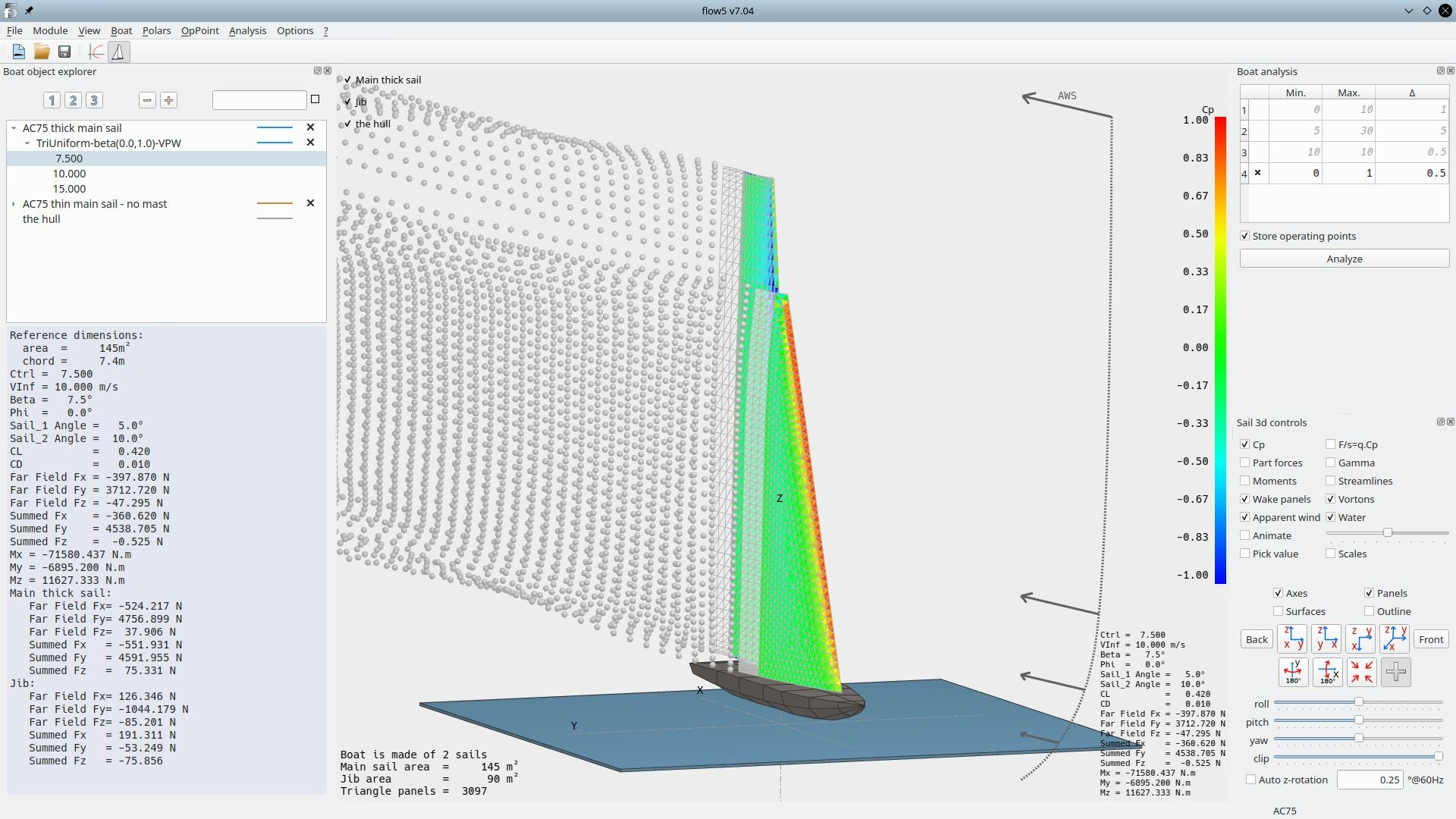
Flow5 Enhances Aerodynamic Simulations for Aviation and Marine Design
Technical Advancements and Open-Source Transition
Flow5, an aerodynamic simulation software originating from the open-source xflr5 project, is advancing computational fluid dynamics tools for both aviation and marine design. The software initially combined xflr5’s aircraft analysis capabilities with sail7’s boat modeling features, and has since undergone continuous refinement to improve accuracy and compatibility for a diverse user base ranging from hobbyists to industry professionals.
The latest version introduces several significant enhancements. A key update is the integration of XFoil for real-time viscous drag calculations during three-dimensional analyses. This functionality, available in open-source builds, enables the interpolation of two-dimensional viscous data into three-dimensional inviscid solutions, overcoming limitations present in earlier tools. Additionally, the update addresses bugs related to sail export and import processes, particularly for spline-type models in XML formats, and corrects errors involving inverted beta angles within the sail module. Improvements to scripted Vortex Lattice Method (VLM) analyses now allow for the proper exclusion of fuselage panels when unnecessary. Furthermore, users can export meshes to STL files for both aircraft and marine vessels, facilitating smoother workflows for designers.
Flow5’s transition to a fully open-source model marks a strategic shift aimed at encouraging community-driven development and broadening accessibility. Previously available through subscription during its beta phase, the software is now hosted on GitHub, inviting direct contributions from users and accelerating innovation. This open development environment is particularly conducive to advancements such as the implementation of three-dimensional Galerkin formulations, which promise more precise simulation results.
Compatibility, Documentation, and Industry Reception
Maintaining broad platform support remains a priority for Flow5’s developers. While the underlying codebase has been updated to Qt6, the distributed binaries continue to rely on Qt5 to ensure compatibility with older systems and minimize user disruption. New documentation has been released to guide users through the improved viscous loop processes and two-dimensional data interpolation, enhancing the software’s utility, especially when benchmarking against wind tunnel experiments.
The open-source release has been met with enthusiasm within aviation and marine communities, as reflected in online forums and social media discussions. Users have praised Flow5’s expanded capabilities to evaluate full-vehicle configurations within VLM environments, moving beyond traditional focus areas such as wings and tails. This development positions Flow5 as a valuable resource for designers of homebuilt aircraft and sailboats who face increasingly complex aerodynamic challenges.
Industry Context and Future Considerations
Flow5’s advancements emerge amid a backdrop of economic and industry uncertainties. Market volatility, influenced by internal divisions within the Federal Reserve and concerning economic indicators, has heightened scrutiny of technological innovations. In this environment, investors and industry stakeholders are closely monitoring how tools like Flow5 contribute to efficiency and competitiveness. Competitors are likely to accelerate the adoption of similar simulation technologies to maintain their market positions, particularly as the shipping sector confronts rapid digitalization, intensifying decarbonization demands, and evolving regulatory frameworks.
Version 7.24 of Flow5 also introduced modifications to the .fl5 project file format, enhancing data integrity but rendering new files incompatible with earlier software versions. While this change may inconvenience some legacy users, it is a necessary step to ensure long-term reliability.
As Flow5 continues to develop, its combination of technical rigor, open-source accessibility, and responsiveness to evolving industry needs positions it as a leading tool in aerodynamic simulation, even as it navigates the challenges posed by a shifting economic and regulatory landscape.

Adobe Warns AI-Driven Trip Planning Challenges Travel Sites

The Global Parts Shortage
GE Aerospace's Robust Capital Position Fuels Higher Shareholder Returns
AI Advances Support Sustainable Aviation and Efficient Flight Paths

Airbus Faces Freighter Deadline Amid Weak Order Growth and Stagnant Shares

Integrated CNS System for Low-Altitude Aircraft

Chinese Robots Debut in Aviation and Military Roles at WRC 2026
Kenya Airways Aims to Resume Operations of Grounded Fleet by Early 2027

Avora Aviation Completes A320 Sale-Leaseback Agreement with FTAI
StandardAero Expands Bombardier Global MRO Services at Van Nuys Facility
