
AIによるインサイトを行動へとつなげる

現在のトレンド
Categories
Fraport AG Implements Certified AI Security at Frankfurt Airport
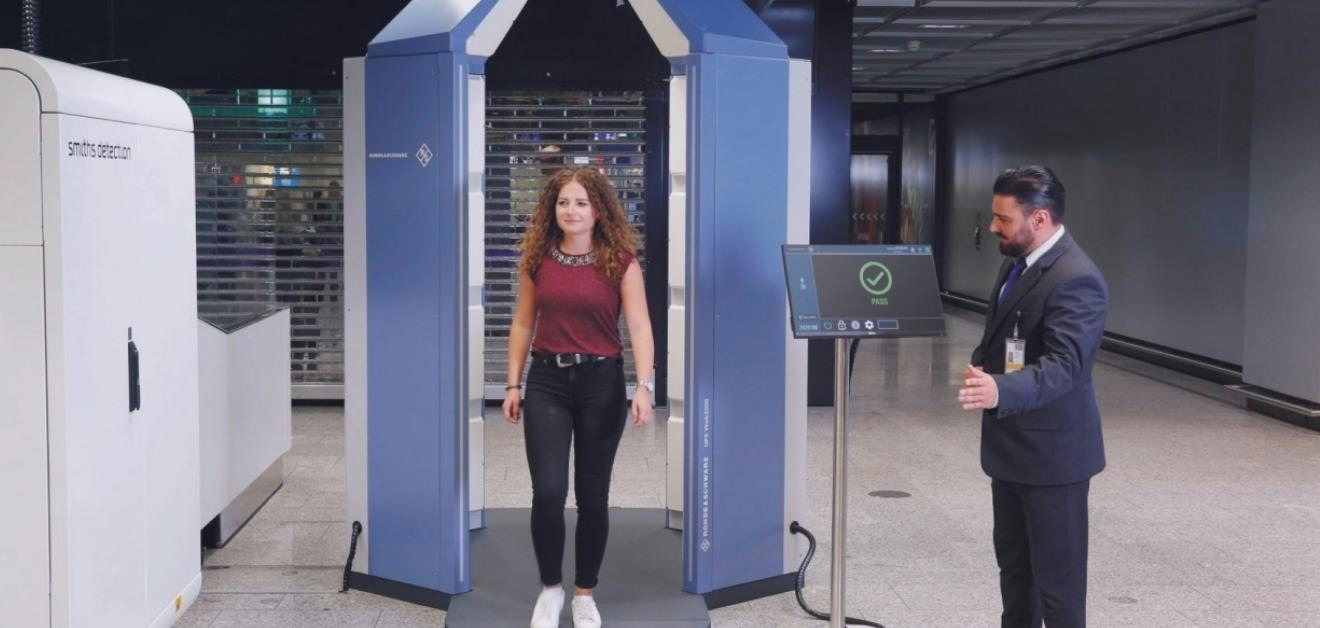
Fraport AG Implements Certified AI Security at Frankfurt Airport
Fraport AG has introduced a certified artificial intelligence (AI) security system at Frankfurt Airport, representing a significant advancement in airport screening technology. The newly deployed software, known as APIDS (Automatic Prohibited Item Detection Systems), is now operational across more than 50 Smiths Detection CT scanners throughout all terminals. This system identifies potentially hazardous items in carry-on luggage, thereby streamlining the decision-making process for security personnel.
Pioneering AI-Assisted Screening in Europe
Frankfurt Airport distinguishes itself as the first European airport to implement AI-assisted screening on such a large scale with full regulatory certification. Unlike ongoing AI trials at Amsterdam Schiphol or the CT-focused upgrades at London Heathrow and Gatwick, Frankfurt’s approach emphasizes national regulatory approval achieved through close collaboration and rigorous testing with authorities. This ensures that while the AI system highlights suspicious objects, the ultimate decision-making authority remains with human officers.
Operational Mechanism and Benefits
During routine operations, such as a busy Monday morning, trays pass through CT scanners that generate detailed 3D images of luggage contents. APIDS analyzes these scans in real time, detecting dense or unusual shapes—such as a charger entangled with a metal water bottle—and marking them with a red outline on the screen. This visual cue serves as an alert rather than a definitive judgment. Security officers can then examine the flagged area in greater detail by rotating and zooming the image, enabling them to quickly determine whether a secondary inspection is warranted. This process results in faster passenger throughput and reduces staff fatigue by minimizing the frequency of exhaustive manual searches.
Operational Gains and Emerging Challenges
The deployment of certified AI at Frankfurt Airport has yielded clear operational advantages, including enhanced efficiency, more consistent screening outcomes, and improved passenger flow. However, the integration of AI also presents new challenges. The potential for false alarms and automation bias persists, and regulatory constraints may limit operational flexibility. Security personnel must adapt to revised workflows and receive additional training to effectively collaborate with AI systems.
Beyond immediate operational concerns, the adoption of AI-driven security introduces broader enterprise risks. As organizations like Fraport increasingly utilize generative AI tools, they face heightened security threats, the need for continuous security posture management, and the imperative to prevent unauthorized AI usage that could compromise compliance, intellectual property, or reputation. The industry is responding with intensified scrutiny of AI data handling practices and demands for robust certification and attestations. This environment is likely to accelerate AI security investments among competitors, fostering further innovation and funding within the sector.
Contextualizing AI Security Across European Airports
Frankfurt’s certified AI-assisted screening sets a new benchmark in Europe. In contrast, Amsterdam Schiphol is currently engaged in AI trials and partnerships, such as Project DARTMOUTH, positioning AI as a collaborative tool rather than a fully certified solution. Meanwhile, London Heathrow and Gatwick focus on modernizing CT technology to enhance passenger convenience, allowing liquids and electronics to remain in bags, with an emphasis on speed and comfort.
While UK airports highlight the benefits of advanced 3D scanners, Frankfurt’s approach is defined by the integration of certified AI systems that automatically detect prohibited items, thereby establishing a new standard for security operations. As AI becomes increasingly embedded in airport security frameworks, the interplay between technological innovation, regulatory compliance, and operational risk will continue to be a critical area of focus.

Etihad Airways Suspends Airbus A380 Flights on Key Route

Aditya Birla Group Seeks Approval for Aircraft Leasing in GIFT City

Qatar Airways Highlights Innovation and Connectivity at Arabian Travel Market 2026

Hong Kong's Five-Year Plan Includes Andrew Fan's Aircraft Parts Processing Hub Proposal

ACIA Aero Leasing Delivers ATR72-600 to Air Nostrum

RTX Appoints Jill Albertelli as Head of Pratt & Whitney

TAT Technologies Joins Beyond Aero Hydrogen Aircraft Program

AURAK Study Highlights Barriers to Air Taxi Adoption in Emerging Economies

Xiamen Air Selects Altitude for 787 Maintenance at Heathrow

Etihad and Swissport Extend Global Partnership
