
AIによるインサイトを行動へとつなげる

現在のトレンド
Categories
How Cabin Crew Rest on the Boeing 747-8
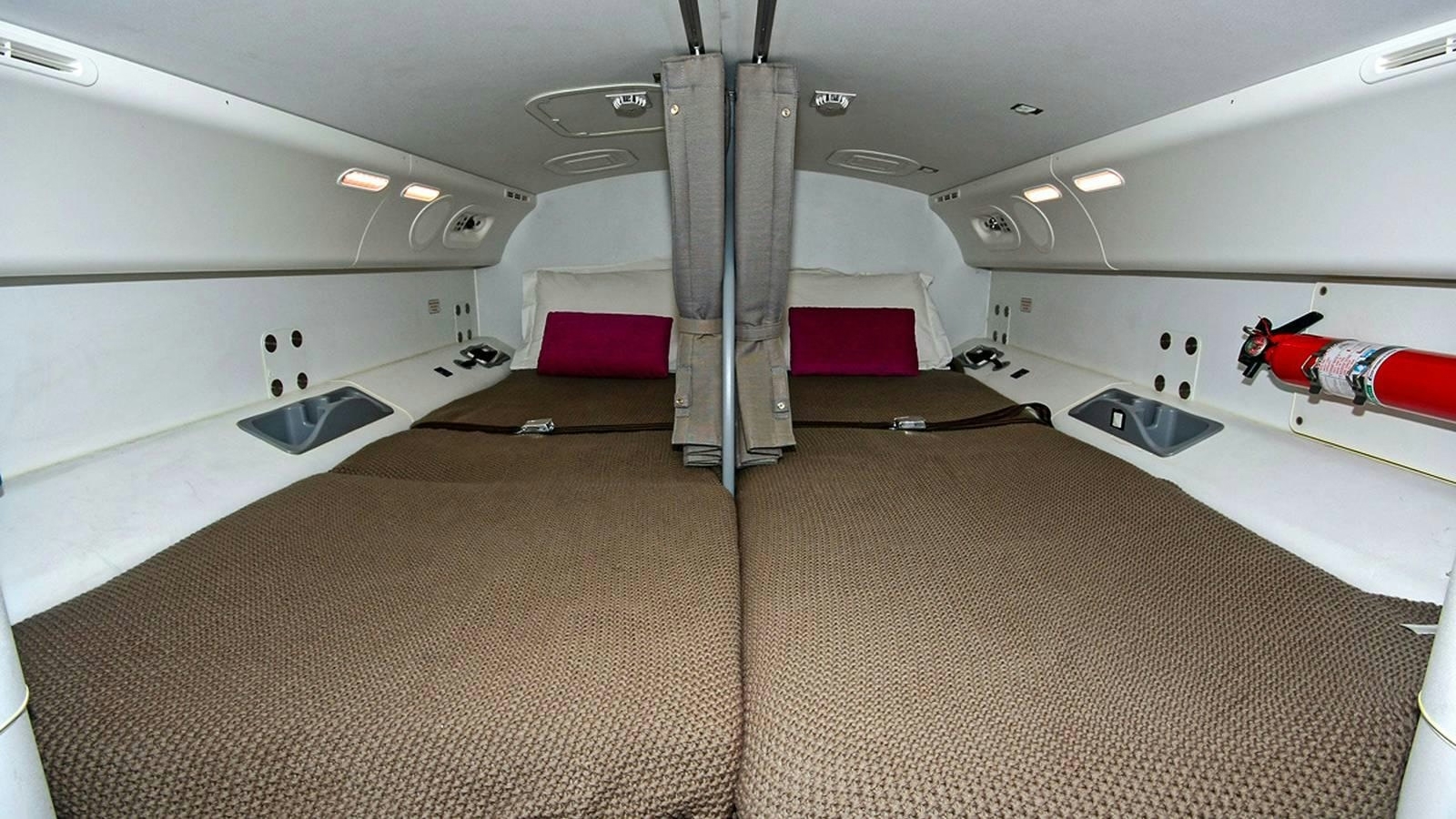
How Cabin Crew Rest on the Boeing 747-8
The Boeing 747-8, often hailed as the "Queen of the Skies," has significantly transformed long-haul air travel by enabling flights of unprecedented duration. This advancement necessitated a heightened focus on crew rest and alertness, as fatigued cabin crew not only compromise service quality but also pose safety risks during emergencies. In response, Boeing incorporated dedicated rest areas for both pilots and cabin crew, refining earlier designs and aligning with evolving industry standards.
Rest Facilities on the 747-8
The 747-8 features a pilot rest compartment located immediately behind the flight deck, typically equipped with two bunks and occasionally additional rest seats. This arrangement allows pilots to rotate shifts and maintain vigilance throughout extended flights. For cabin crew, a more spacious rest area is positioned at the rear of the aircraft, above the aft passenger seats. Accessed via a steep staircase, this compartment contains multiple bunks, enabling some crew members to rest while others remain on duty. The specific layout varies by airline; for instance, Lufthansa’s configuration includes a small front room with lockers and a telephone for communication, followed by a main area housing ten beds. Although the space is compact—just tall enough to stand—the bunks provide privacy curtains and bedding, with crew members describing the environment as “super comfortable.”
Industry Trends and Operational Challenges
The enhancement of crew rest facilities reflects a broader industry trend, as airlines strive to improve in-flight environments for both passengers and staff. Carriers such as Air France, Air New Zealand, and United Airlines have invested in passenger comfort innovations, including Air New Zealand’s Skynest sleep pods and Air Canada’s Signature Plus Suite on the Boeing 787-10. These developments underscore a competitive market where the quality of rest for both crew and passengers is increasingly viewed as a key differentiator.
Despite these advancements, challenges persist. Access to the 747-8’s crew rest areas can be difficult due to steep staircases and confined spaces, prompting calls for further enhancements. External factors, including geopolitical tensions, have disrupted aircraft delivery schedules, complicating efforts to modernize fleets with improved rest facilities. Additionally, labor disputes such as the recent Lufthansa cabin crew strike highlight the critical importance of addressing working conditions—including rest provisions—to sustain operational efficiency and staff morale.
Comparison with the Airbus A380
In comparison to its principal competitor, the Airbus A380, the 747-8’s rest areas are functional but less spacious. The A380’s pilot rest compartment, situated above the avionics bay and nose landing gear, offers greater room and amenities. Similarly, the cabin crew rest facilities on the A380 are generally regarded as more advanced, reflecting the ongoing rivalry between manufacturers to provide superior working environments for flight personnel.
The Critical Role of Crew Rest
Dedicated rest areas are indispensable on widebody aircraft, particularly for ultra-long-haul flights. These facilities not only support high service standards but are vital for ensuring safety. While some older or smaller widebody aircraft lack such accommodations, the prevailing industry trajectory is clear: as airlines and manufacturers respond to market demands and labor concerns, the emphasis on crew rest will remain a fundamental consideration in aircraft design and airline operations.

Bangladesh Launches Initiative to Become Regional Aviation Hub
Russia Transports PD-8 Engine to India for International Certification

Kyrgyzstan to Adopt EMPIC GmbH Software for Flight Safety Oversight

Why Hawaiian Airlines Is Waiting Until 2028 To Add A Premium Economy Cabin To Its Airbus A330 Fleet

Engine Fault Causes Royal Navy Helicopter Crash Fatality

Joby Aviation Begins Texas Air Taxi Test Flights Amid Stock Decline

Iberia Receives Full Approval for Airbus A350 Heavy Maintenance

NetJets to Construct Terminal and Hangar at Dallas Love Field

Using AI in Aircraft Purchases

CIAM Unveils RPD-150T Engine to Replace Rotax 150 hp Model
