
AIによるインサイトを行動へとつなげる

現在のトレンド
Categories
Korean Air Finalizes Order for 103 Boeing Jets and Engines

Korean Air Finalizes Order for 103 Boeing Jets and Engines
Korean Air has confirmed a landmark order for 103 Boeing aircraft and engines, representing one of the most significant fleet investments in the airline’s history. This strategic acquisition aims to modernize the carrier’s fleet and improve operational efficiency amid intensifying competition within the global aviation industry.
Strategic Implications and Market Reactions
The scale of the order presents considerable challenges, particularly regarding the substantial upfront costs and long-term financial commitments involved. Market responses have been mixed; some investors regard the deal as a forward-looking move that positions Korean Air for future growth and enhanced fuel efficiency. Conversely, others express concern over the potential financial strain this large purchase may impose on the airline’s balance sheet.
Industry analysts observe that Korean Air’s decision aligns with a broader trend among major carriers investing heavily in fleet modernization. Airlines such as Air Canada and Flydubai have recently announced significant aircraft orders, signaling an industry-wide push toward expansion and renewal. This wave of investment is expected to reshape market dynamics, prompting competitors to consider similar large-scale acquisitions or to adjust their fleet management and operational cost strategies to maintain competitiveness.
Environmental Considerations and Regulatory Context
The timing of Korean Air’s order coincides with increasing scrutiny of the aviation sector’s environmental impact and sustainability commitments. In the United Kingdom, the Climate Change Committee (CCC) has recently recommended that approval for Heathrow Airport’s third runway should be contingent upon the enactment of stricter legislation to ensure the aviation industry finances its own decarbonization efforts by 2050. This development underscores the mounting pressure on airlines globally to reconcile growth ambitions with environmental responsibility.
As Korean Air advances with its ambitious fleet renewal, it faces the dual challenge of managing the financial implications of its investment while adapting to an evolving regulatory environment. The airline’s approach and its outcomes will be closely monitored by industry stakeholders, investors, and competitors worldwide.

Korean Air Finalizes $36.2 Billion Deal with Boeing

Embraer E195-E2 Features Distinctive Engine Placement Among Regional Jets

What Passengers Can Expect on Boeing’s New 777X Jet

How Ethiopian Airlines Became Africa’s Leading Carrier Amid Gulf Competition

Joby Aviation Extends Autonomous Flight Capabilities with Cross-Country Tour

Strengthening Europe's Aviation Supply Chain Amid Uncertainty

The Evolution of the Aircraft Maintenance Engineer Role
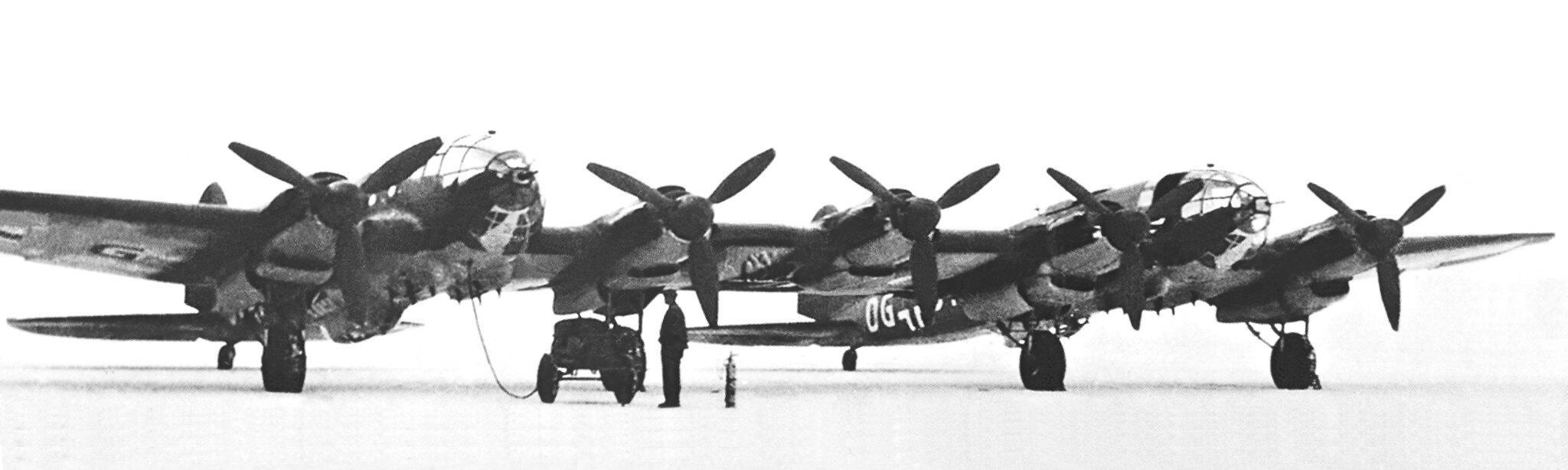
He 111Z Zwilling: Twin Fuselages, Five Engines, One Pilot
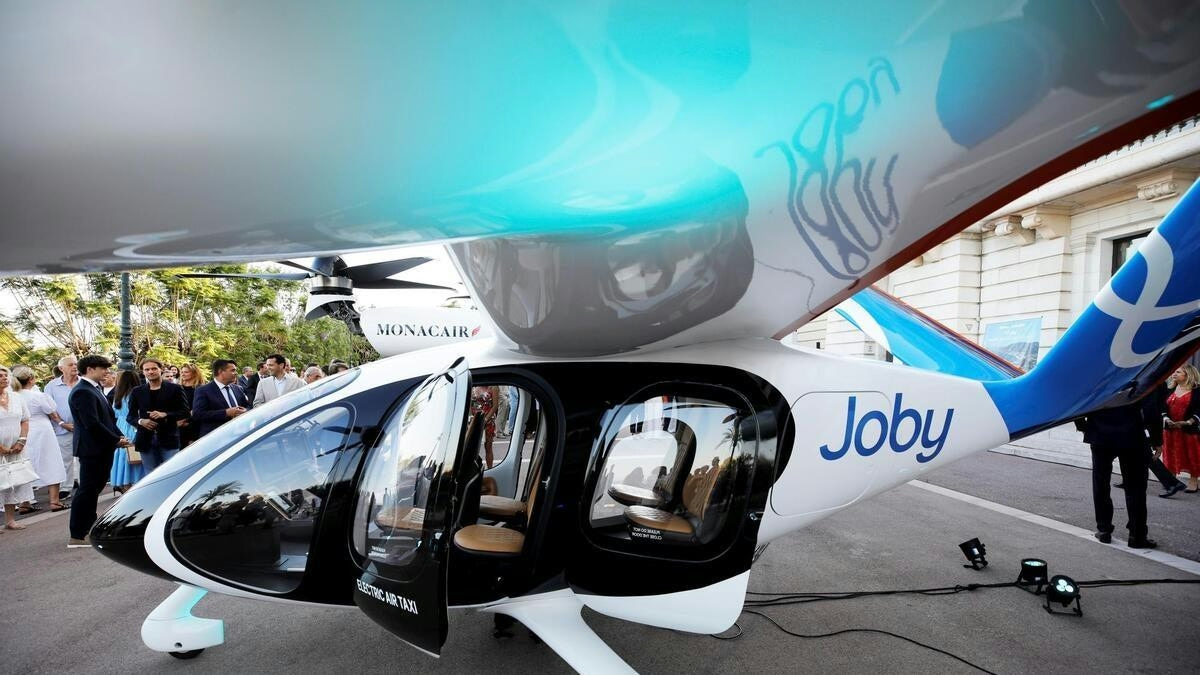
Monacair Plans Electric Air Taxi Service Between Monaco and Nice by 2029
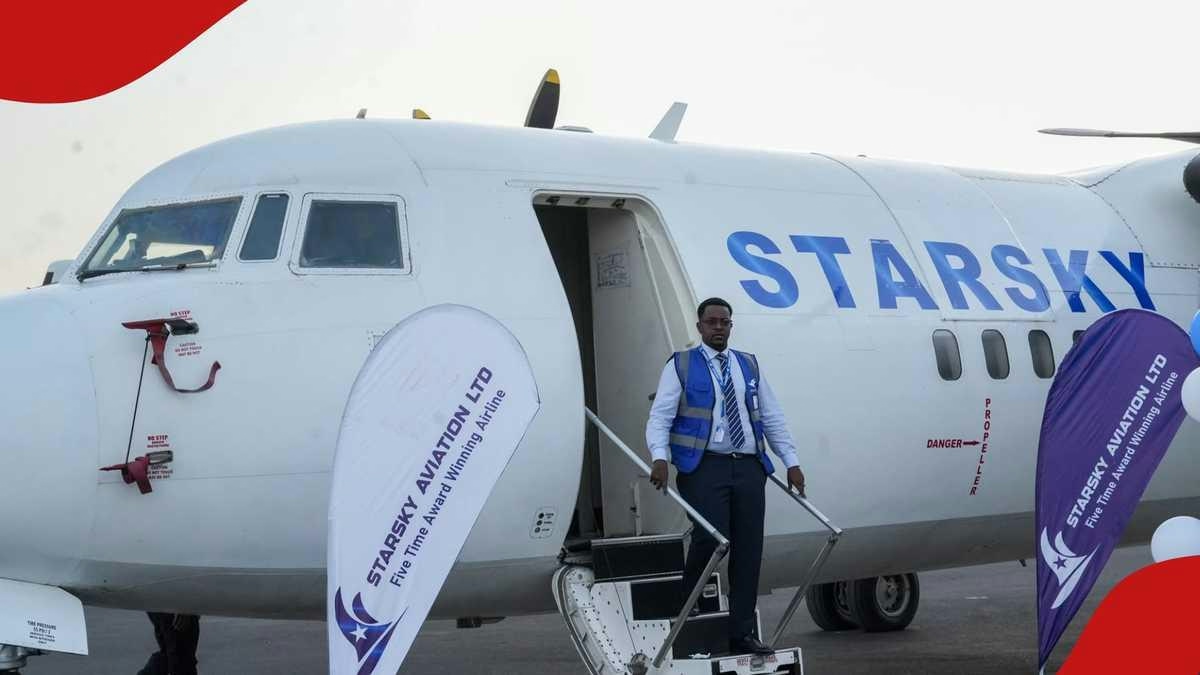
Somalia’s Starsky Aviation Plans International Expansion
