
AIによるインサイトを行動へとつなげる

現在のトレンド
Categories
New US Reactor Technology Aims to Cut Aviation Fuel Emissions by 95%
New US Reactor Technology Aims to Cut Aviation Fuel Emissions by 95%
Innovative Modular Platform for Synthetic Aviation Fuel
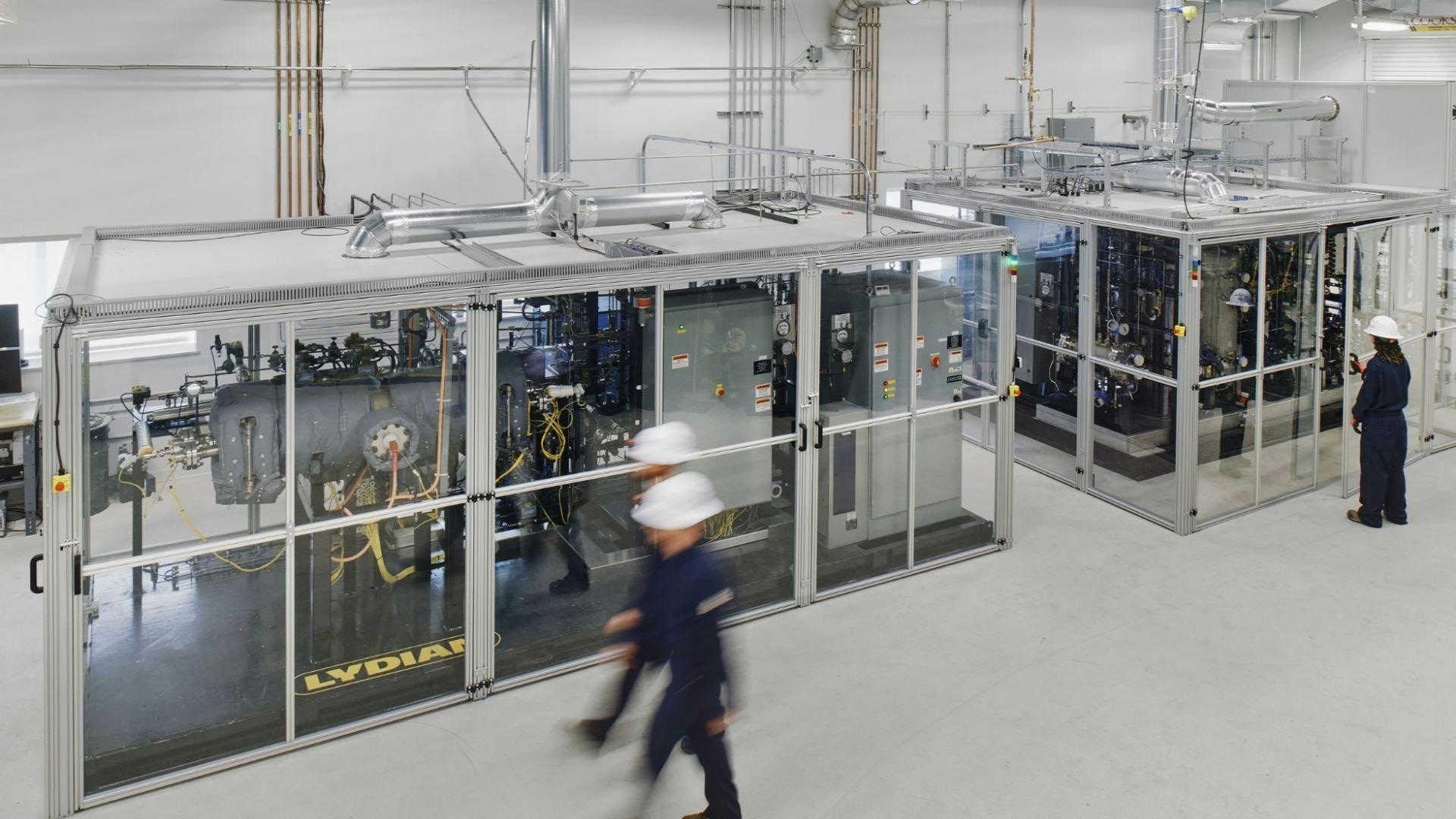
Boston-based clean-fuel developer Lydian has secured $43 million in Series A funding to advance the commercialization of its modular production platform designed to significantly reduce the cost and complexity of synthetic aviation fuel manufacturing. The funding round was led by Breakthrough Energy Ventures, with participation from AP Ventures, Builders Vision, and existing investors. This capital injection will accelerate the deployment of PIVOT, Lydian’s integrated system that combines proprietary reactors, catalysts, process engineering, software, and plant equipment into standardized, factory-built modules.
Lydian asserts that its platform can cut plant capital costs by more than 50% compared to conventional synthetic fuel production methods, while achieving up to a 95% reduction in lifecycle emissions. Unlike most synthetic fuel projects that rely on adapting gas-to-liquids technologies for large, centralized facilities, Lydian’s purpose-built reactors are engineered to operate efficiently with renewable electricity, accommodate fluctuating power prices, and support smaller, modular installations.
Joe Rodden, CEO and Co-founder of Lydian, emphasized the distinctiveness of the approach: “PIVOT represents a fundamentally different approach to synthetic fuel production. By designing every part of the system for lower capital costs, greater operational flexibility, and faster deployment, we’ve created a platform for commercially competitive synthetic fuel projects. This financing gives us the resources to bring that vision to market.”
Flexibility and Standardization to Drive Cost-Effective Production
The PIVOT platform integrates reactor technologies and catalysts with advanced software that dynamically adjusts operations in response to intermittent renewable power availability. This operational flexibility enables facilities to increase production when electricity prices are low, addressing one of the most significant cost drivers in synthetic fuel manufacturing.
The system’s factory-built, pre-engineered modules are intended to reduce project risk and shorten development timelines by up to two years by minimizing site-specific engineering and simplifying construction processes. Standardization facilitates repeatable plant designs that can be deployed across multiple locations. The platform is designed to produce ASTM-approved, drop-in sustainable aviation fuel compatible with existing aircraft and fuel infrastructure.
Carmichael Roberts of Breakthrough Energy Ventures highlighted the importance of this innovation for the aviation sector: “Decarbonizing aviation will require advanced fuels that compete on cost, work within today’s aviation infrastructure, and deliver the performance flyers and airlines expect. Lydian is taking on that challenge with a purpose-built approach to synthetic aviation fuel production. Its PIVOT platform combines strong technical innovation with a practical path to better project economics, offering the aviation industry a low-carbon fuel capable of cost-competitive, commercial-scale production.”
Development Timeline and Industry Challenges
Lydian currently operates a tonne-scale pilot plant at its Boston research center and plans to establish a commercial demonstration facility by 2028, followed by its first full-scale commercial project by 2030. The recent funding will support the transition from pilot operations to commercial deployment.
Despite the promising technology, the path to widespread adoption faces several challenges. Regulatory hurdles, substantial initial investment requirements, and the necessity for extensive testing and validation to ensure safety and efficiency may slow progress. Additionally, market skepticism from traditional fuel suppliers and airlines could pose obstacles, while competitors may intensify efforts to develop alternative technologies such as hybrid-electric generators and other sustainable aviation fuels. The ultimate success of Lydian’s reactor technology will depend on overcoming these barriers and securing broad industry acceptance.
If successful, the PIVOT platform could provide airlines and fuel producers with a lower-cost, scalable method for synthetic fuel production, reducing dependence on conventional jet fuel supply chains and supporting domestic fuel production near renewable energy sources.

Etihad and Swissport Extend Global Partnership

Sepehran Airlines B737 Returns to Mashhad After Tyre and Engine Issues

Etihad Deploys Widebody Fleet to Meet Strong Demand

Korean Air Finalizes $36.2 Billion Deal with Boeing

Australia’s RFDS Queensland Section Orders Six King Air 260Cs

Korean Air Finalizes Order for 103 Boeing Jets and Engines

Embraer E195-E2 Features Distinctive Engine Placement Among Regional Jets

What Passengers Can Expect on Boeing’s New 777X Jet

How Ethiopian Airlines Became Africa’s Leading Carrier Amid Gulf Competition

Joby Aviation Extends Autonomous Flight Capabilities with Cross-Country Tour
