
AIによるインサイトを行動へとつなげる

現在のトレンド
Categories
Rolls-Royce Estimates Airlines Could Save Up to $10 Million Annually with New Airbus A350 Engine
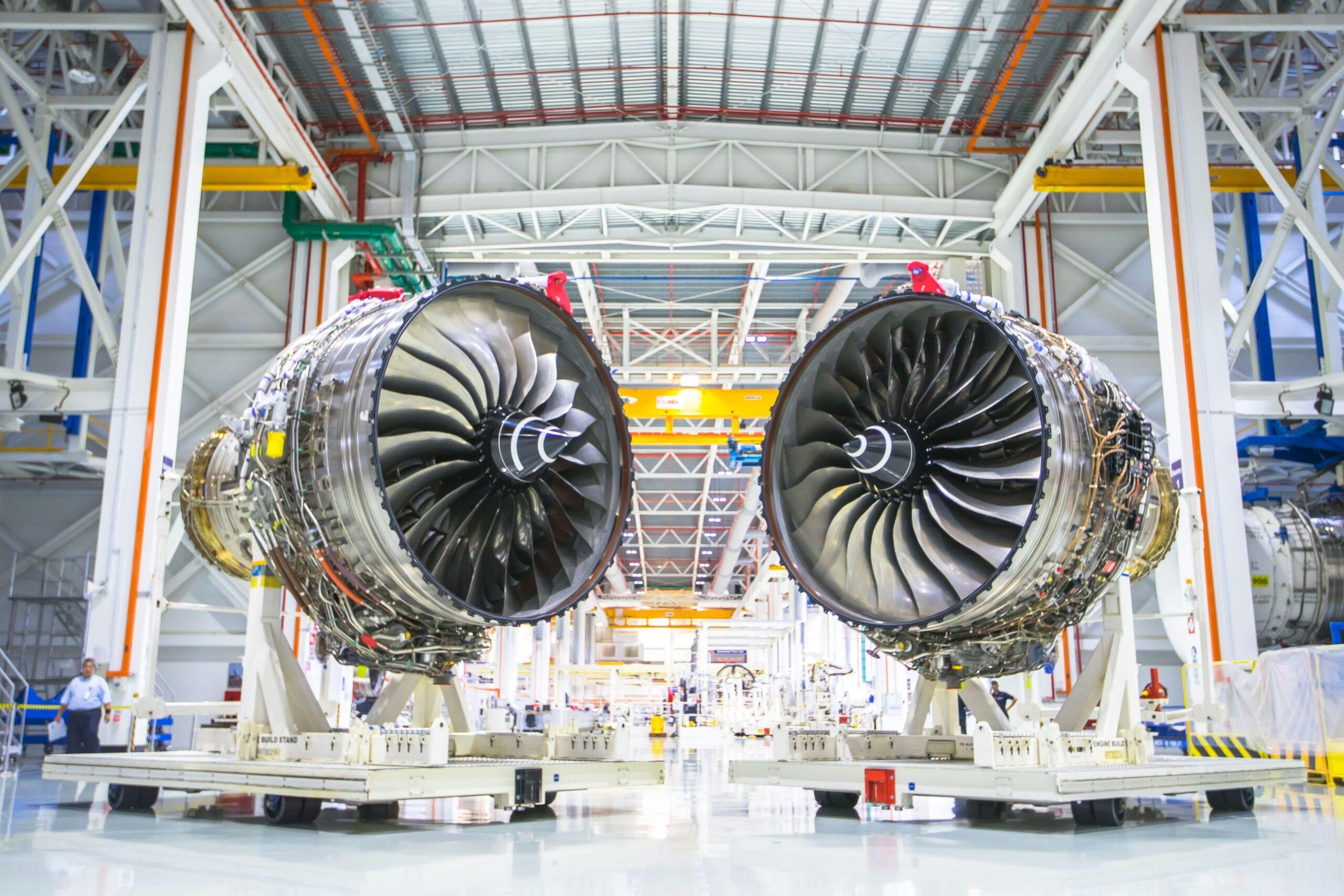
Rolls-Royce Projects Significant Fuel Savings with Upgraded Airbus A350 Engine
Rolls-Royce has announced that its latest enhancements to the Trent XWB-84 EP engine, which powers the Airbus A350, could enable airlines operating fleets of 20 aircraft to save up to $10 million annually in fuel costs. The engine manufacturer revealed these projections during a roundtable event ahead of the Farnborough Airshow, emphasizing the improved thrust-specific fuel consumption (SFC) achieved through recent upgrades.
Initially targeting a 1% improvement in SFC, Rolls-Royce now reports gains of up to 1.8%. Rob Watson, President of Civil Aerospace at Rolls-Royce, explained that a 1% improvement in SFC corresponds to nearly $500,000 in annual fuel savings per aircraft. For airlines with larger A350 fleets, these efficiencies could translate into substantial cost reductions amid ongoing volatility in jet fuel prices.
Engine Performance and Environmental Impact
The Trent XWB-84 EP entered service last year with Delta Air Lines as the launch customer and has since accumulated over 100,000 operational hours. Renowned for its industry-leading fuel efficiency and reliability, the engine has been selected by 90% of profitable airlines operating the A350. Notably, the Trent XWB-84 EP is capable of operating with up to 50% sustainable aviation fuel (SAF), with a long-term goal of achieving 100% SAF compatibility. This capability positions the engine as a forward-looking option for carriers seeking to reduce carbon emissions and environmental impact.
Industry Challenges and Market Dynamics
Despite these advancements, some challenges persist for airlines considering the new engine. Emirates has expressed concerns regarding long-term engine durability, while United Airlines CEO Scott Kirby has highlighted ongoing engine shortages that could complicate fleet planning and operations. These issues illustrate the complexities airlines face when integrating new technology, even as they aim to benefit from fuel savings and environmental improvements.
Market response to the enhanced Trent XWB-84 EP has been largely positive, with growing interest in the Airbus A350-900 as carriers pursue fleet modernization and cost reduction strategies. However, competition remains intense. General Electric continues to dominate the Boeing 787 market, influencing airline and manufacturer decisions on engine selection and potentially shaping future developments within the widebody aircraft segment.
Investment and Certification
Rolls-Royce’s $1.33 billion (£1 billion) investment in the Trent XWB-84 EP program underscores its commitment to continuous innovation. The engine received certification from the European Union Aviation Safety Agency (EASA) in December 2024, following extensive redevelopment and thousands of hours of rigorous ground and flight testing. These improvements not only enhance fuel efficiency and reduce emissions but also contribute to quieter and more reliable operations for airlines worldwide.
As the aviation industry confronts increasing pressure to enhance sustainability and manage operational costs, advancements in engine technology such as those embodied by the Trent XWB-84 EP will be pivotal in shaping the future of long-haul air travel.

Hong Kong's Five-Year Plan Includes Andrew Fan's Aircraft Parts Processing Hub Proposal

ACIA Aero Leasing Delivers ATR72-600 to Air Nostrum

RTX Appoints Jill Albertelli as Head of Pratt & Whitney

TAT Technologies Joins Beyond Aero Hydrogen Aircraft Program

AURAK Study Highlights Barriers to Air Taxi Adoption in Emerging Economies

Xiamen Air Selects Altitude for 787 Maintenance at Heathrow

Etihad and Swissport Extend Global Partnership

Sepehran Airlines B737 Returns to Mashhad After Tyre and Engine Issues

Etihad Deploys Widebody Fleet to Meet Strong Demand

Korean Air Finalizes $36.2 Billion Deal with Boeing
