
AIによるインサイトを行動へとつなげる

現在のトレンド
Categories
Uzbekistan Introduces AI-Powered Customs Robot at Tashkent Airport
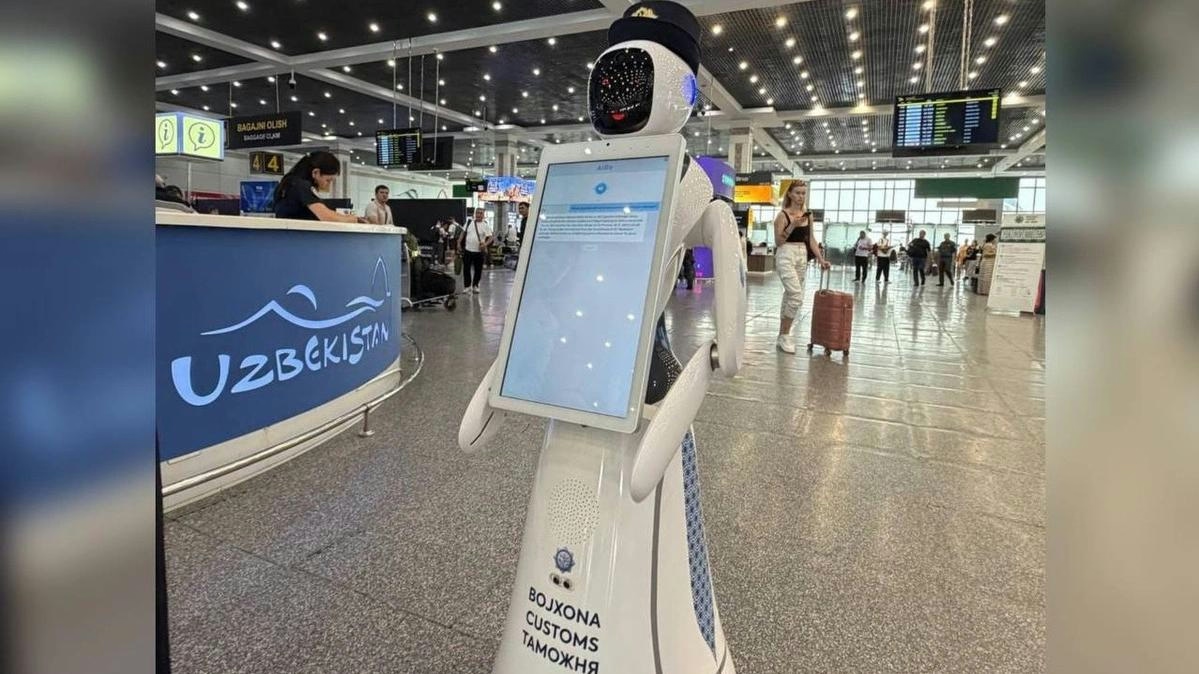
Uzbekistan Introduces AI-Powered Customs Robot at Tashkent Airport
Uzbekistan has taken a significant step in modernising its border services with the introduction of AiRo, an AI-powered customs robot now operational at Tashkent International Airport. Installed in the airport’s international terminal, AiRo was developed in collaboration with the State Customs Committee’s IT specialists to provide passengers with real-time guidance on customs regulations.
Enhancing Passenger Experience Through AI
AiRo addresses a persistent challenge faced by customs authorities: many violations occur due to passengers’ limited understanding of import and export rules. Travellers often hesitate to approach customs officers with questions about items such as mobile phones, foreign currency, jewellery, or medicines, which can inadvertently lead to breaches of regulations. The robot offers quick and accessible information, explaining the rules surrounding the transport of these goods, as well as clarifying the use of Uzbekistan’s green and red customs channels and declaration requirements.
The Customs Committee stresses that AiRo is designed to complement human officers rather than replace them. Its primary function is to improve information accessibility, streamline procedures for travellers, and help prevent violations before they occur, thereby enhancing the overall efficiency of customs operations.
Advancing Digitalisation in Customs Services
The deployment of AiRo forms part of a broader initiative by Uzbekistan to digitalise and integrate its customs services. According to Islom Umarov, Head of the Customs Committee’s IT and Cybersecurity Department, the number of information systems employed by customs authorities has expanded from nine in 2021 to 37 today. Electronic customs services have similarly increased from 26 to 41, while mobile applications have grown from one to 11 within the same timeframe.
These digital platforms are now interconnected with 33 government agencies and 45 airlines, and data exchange mechanisms have been established with 10 international organisations and foreign customs administrations. Such integration aims to accelerate border procedures, enhance transparency, and improve convenience for both passengers and businesses, while reinforcing compliance with customs regulations.
Prospects and Challenges
The introduction of AiRo is anticipated to improve processing times for travellers and cargo, potentially attracting greater international business to Uzbekistan. However, officials acknowledge several challenges, including ensuring the robot’s reliability and accuracy across diverse cargo types, achieving seamless integration with existing customs systems, and managing the transition for customs personnel adapting to new technologies.
Industry observers suggest that Uzbekistan’s adoption of AI-driven customs solutions may encourage other countries to follow suit, intensifying global competition in border technology. The success of such innovations will ultimately depend on their capacity to adapt to evolving regulations and meet the needs of both travellers and customs authorities.

Etihad Airways Suspends Airbus A380 Flights on Key Route

Aditya Birla Group Seeks Approval for Aircraft Leasing in GIFT City

Qatar Airways Highlights Innovation and Connectivity at Arabian Travel Market 2026

Hong Kong's Five-Year Plan Includes Andrew Fan's Aircraft Parts Processing Hub Proposal

ACIA Aero Leasing Delivers ATR72-600 to Air Nostrum

RTX Appoints Jill Albertelli as Head of Pratt & Whitney

TAT Technologies Joins Beyond Aero Hydrogen Aircraft Program

AURAK Study Highlights Barriers to Air Taxi Adoption in Emerging Economies

Xiamen Air Selects Altitude for 787 Maintenance at Heathrow

Etihad and Swissport Extend Global Partnership
