画像

エアロジニー — あなたのインテリジェントな副操縦士。

何でも尋ねてください。全てを分析してください。即座に行動してください。

現在のトレンド

Categories

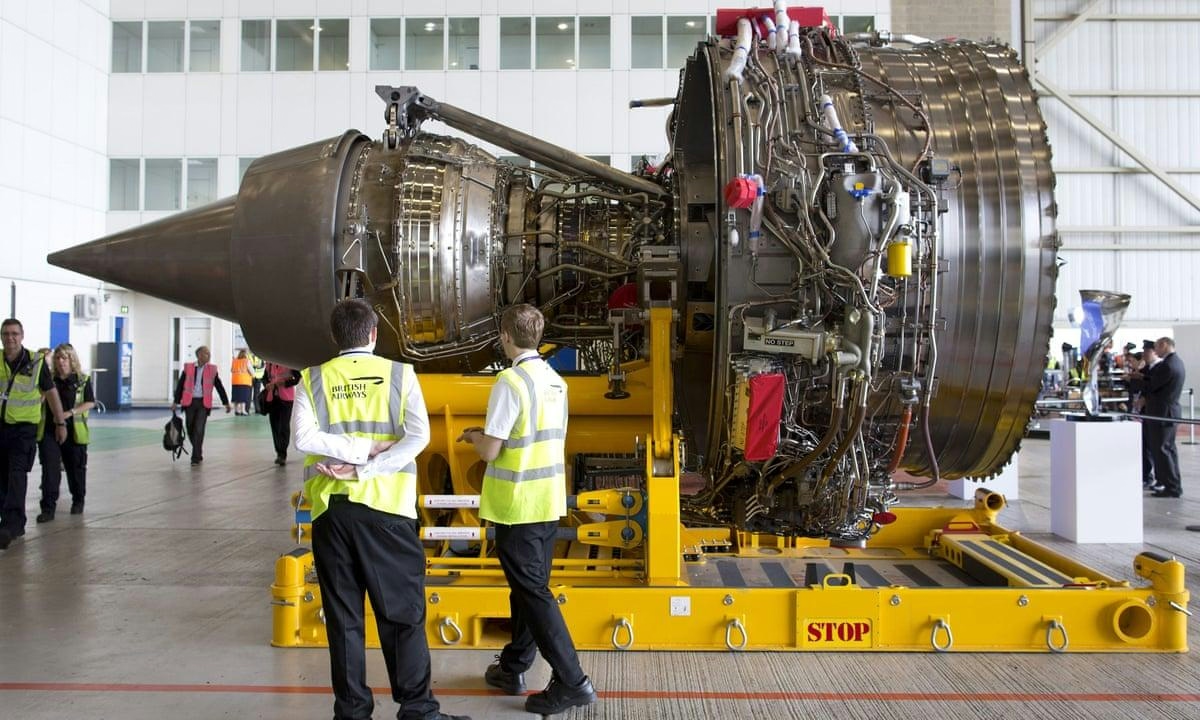
Rolls-Royce Signs LATAM Deal as Trent 1000 XE Expands Globally
April 30, 2026By ePlane AI
Rolls-Royce Signs LATAM Deal as Trent 1000 XE Expands Globally
0
0
Rolls-Royce
Trent 1000 XE
LATAM Airlines

Rolls-Royce Secures LATAM Deal as Trent 1000 XE Expands Globally

Rolls-Royce Holdings has secured a pivotal order from LATAM Airlines Group to equip three new Boeing 787 Dreamliners with its upgraded Trent 1000 XE engines. This agreement marks a significant milestone in Rolls-Royce’s efforts to reaffirm its leadership in next-generation widebody aircraft propulsion. The deal also reflects renewed confidence in the company’s technology, following a period of scrutiny over earlier Trent 1000 reliability challenges that had previously led LATAM to opt for rival GEnx engines.

Technical Advancements and Operational Benefits

Central to the Trent 1000 XE’s appeal is a series of technical enhancements introduced through Rolls-Royce’s certified two-phase durability programme. The most notable upgrade is a redesigned high-pressure turbine blade, which increases cooling airflow by 40% and more than doubles the engine’s time-on-wing compared to previous models. These improvements are intended to reduce maintenance intervals and enhance performance, particularly in demanding environments such as regions experiencing extreme heat. This is a critical factor for airlines expanding long-haul operations in emerging markets, including Africa.

Rolls-Royce reports that the combination of enhanced durability, expanded maintenance, repair and overhaul (MRO) capacity, and improved in-service reliability is already yielding measurable benefits. Several airline customers now operate entire fleets without any aircraft grounded due to engine-related issues, underscoring the effectiveness of the upgrades. Chief Executive Tufan Erginbilgic described the LATAM agreement as a clear indication of growing trust in Rolls-Royce’s technology. He emphasized that continued investment in engine longevity and global MRO infrastructure is positioning the Trent 1000 XE as a competitive option for airlines pursuing growth.

Strategic Implications for LATAM and the Market

For LATAM, the deal not only renews a longstanding partnership with Rolls-Royce but also aligns with the airline’s strategic ambitions. CEO Roberto Alvo highlighted that the upgraded engines will improve operational efficiency and provide greater flexibility as the airline expands its long-haul network. Confidence in the Trent 1000 XE is further reinforced by operational data, with the redesigned turbine blade technology having already accumulated over two million flight hours on the Trent 7000 platform, demonstrating a proven track record.

The positive market response to LATAM’s decision signals a broader shift in sentiment toward Rolls-Royce, as the company works to restore its reputation following earlier reliability setbacks. This development may prompt competitors such as GE Aerospace to enhance their GEnx offerings to maintain market share, especially as Rolls-Royce accelerates its MRO expansion and engine upgrade programmes.

To support its expanding customer base, Rolls-Royce has invested in new dedicated Trent 1000 XE service centres in the United Kingdom, Singapore, and Germany. These facilities increase maintenance capacity and reduce turnaround times. Additionally, an expanded inventory of spare engines is helping to minimize disruptions caused by unplanned maintenance. These initiatives form part of a broader £1 billion investment programme aimed at advancing the Trent engine family and consolidating Rolls-Royce’s position in the competitive widebody engine market.

More news
Sanctions Target Kyrgyzstan and UAE Networks in Russia’s Aviation Supply Chain

Sanctions Target Kyrgyzstan and UAE Networks in Russia’s Aviation Supply Chain

Sanctions Target Kyrgyzstan and UAE Networks in Russia’s Aviation Supply Chain Intensified Sanctions on Kyrgyzstan Amid Allegations of Sanction Evasion Sanctions targeting post-Soviet states involved in supplying aviation spare parts to Russia have escalated, placing Kyrgyzstan under heightened international scrutiny. The Kyrgyz government has publicly defended its financial institutions and companies following the European Union’s expansion of its sanctions package to include several Kyrgyz banks and cryptocurrency firms. In a statement issued on Tuesday, Kyrgyzstan’s Foreign Ministry expressed concern over the EU’s decision, calling for open and depoliticized dialogue with the European Commission. The ministry underscored Kyrgyzstan’s commitment to adhering to international law and emphasized the importance of resolving disputes through diplomatic channels rather than unilateral punitive measures. Kyrgyzstan, a close ally of Russia with a population of approximately seven million, has faced mounting accusations of acting as a conduit for circumventing Western sanctions. The EU’s 20th sanctions package, introduced last week, not only blacklists Kyrgyz entities but also imposes new export restrictions on goods destined for Kyrgyzstan, citing fears that these products could be rerouted to Russia. Kyrgyz officials have firmly rejected these allegations, maintaining that all national activities comply with both domestic and international legal frameworks. Bishkek has also voiced apprehension about the increasing use of unilateral sanctions that affect third countries, advocating instead for dispute resolution through direct dialogue. Complex Supply Chains Linking the UAE and Kyrgyzstan to Russian Aviation Investigations reveal intricate supply chains involving sanctioned goods shipped from the United Arab Emirates to Kyrgyz businessmen. Central to this network is Golden Falcon Aviation (GFA), which began supplying aircraft and parts to Russia shortly after the outbreak of the conflict, marketing its services as low-risk. To conceal its operations, GFA established a parallel entity, Casper Aviation, which operated for over a year before being sanctioned. Subsequently, a new company, UCA, emerged and continues to operate within this supply chain. The owner of GFA, Asif Aziz, has distanced himself from formal ownership, presenting himself instead as a sales manager. Aziz also owns Codot Aviation, a logistics firm involved in transporting sanctioned goods to Russia. Codot Logistics is officially registered under Kyrgyz citizen Dmitrii Eremin. Online records reveal extensive documentation between GFA and Siberian Airlines, including invoices, contract addendums for professional aviation equipment, and air waybills indicating direct deliveries to Russia via Aeroflot. According to a former employee of S7 Siberian Airlines, Aziz and Eremin supplied the airline with nearly $20 million worth of materials in 2025. The source highlighted GFA’s particular expertise in sourcing Airbus parts, facilitated by an active subscription to Satair, an Airbus original equipment manufacturer and exclusive supplier of certain proprietary components. Since the Russian invasion of Ukraine, direct airline accounts with such suppliers have been severed, but intermediaries like GFA have enabled Russian airlines to maintain critical supply lines. Impact on the Aviation Industry and Supply Chain Challenges The imposition of these sanctions is already affecting the aviation supply chain, resulting in increased costs and delays. Airlines are reportedly rerouting flights to avoid conflict zones, facing higher insurance premiums, and seeking alternative suppliers to mitigate disruptions. The ongoing geopolitical tensions, combined with tariffs and the evolving sanctions landscape, are further straining the integrity of supply chains. In response, industry players are adopting proactive risk management strategies to navigate the mounting challenges posed by this complex and shifting environment.
JETNET Expands AI Integration into Customer Tools and Workflows

JETNET Expands AI Integration into Customer Tools and Workflows

JETNET Expands AI Integration into Customer Tools and Workflows JETNET, a prominent provider of aviation intelligence, has announced significant enhancements to its JETNET AI platform, enabling users to access aviation insights directly within popular collaboration tools such as Microsoft Teams, Slack, and soon WhatsApp. This advancement utilizes Model Context Protocol (MCP) technology, allowing aviation professionals to query billions of data points using natural language and receive structured, source-verified responses without leaving their everyday work environments. Comprehensive Data and Streamlined Access JETNET’s proprietary dataset encompasses over 170,000 airframes, hundreds of aircraft models, and millions of supporting data points, including ownership records, pricing trends, and flight activity. Recognized as one of the most comprehensive and reliable sources in the aviation industry, the data is continuously updated and verified through direct research and curated sources to ensure accuracy for critical business decisions. By embedding JETNET AI into widely used collaboration platforms, the company aims to simplify processes such as deal sourcing, asset evaluation, market trend analysis, and operational decision-making. This integration allows users to obtain actionable insights instantly, eliminating the need to switch between platforms or manually gather information. Greg Kimball, Chief Product Officer at JETNET, emphasized the impact of this development, stating, “JETNET AI’s MCP capabilities make our data more accessible and actionable. We are bringing powerful answers from our uniquely comprehensive aviation dataset directly into the tools our customers use every day, removing friction and enabling faster, more informed decisions.” These new features are available to customers subscribed to the Marketplace Live plan, offering a seamless extension of JETNET AI’s existing functionality. By integrating with platforms already embedded in daily workflows, JETNET seeks to promote faster analysis, enhanced collaboration, and more informed decision-making throughout the aviation sector. Challenges and Industry Context Despite the promising advancements, JETNET’s expansion into AI-driven workflow integration faces notable challenges. As AI becomes increasingly embedded in customer tools, regulatory scrutiny is expected to intensify, particularly in sectors such as legal and finance where AI-generated advice is subject to stringent oversight. The competitive landscape is also rapidly evolving, with established legal technology firms like Harvey already leading the market and poised to accelerate their own AI integrations. Industry experts highlight that success in this domain will require not only advanced technology but also deep understanding of end-market needs and seamless integration into existing workflows. Zak Ewen, an industry analyst, notes that differentiation in an increasingly commoditized market will depend on how effectively companies like JETNET tailor their solutions to the specific requirements and processes of their clients. JETNET’s latest initiative underscores the growing significance of AI-powered intelligence in aviation, illustrating both the opportunities and complexities involved in embedding advanced analytics into the daily operations of industry professionals. About JETNET JETNET is a leading provider of aviation intelligence, offering comprehensive and trusted data on business and commercial aircraft worldwide. Its platform supports investment, operations, and strategic decision-making across the global aviation industry.
MTU Aero Engines Reports Q1 Gains Amid Geopolitical Challenges

MTU Aero Engines Reports Q1 Gains Amid Geopolitical Challenges

MTU Aero Engines Reports Q1 Gains Amid Geopolitical Challenges Germany’s MTU Aero Engines delivered a strong financial performance in the first quarter of 2026, demonstrating resilience amid ongoing geopolitical tensions. The company reported adjusted revenues of €2.2 billion, marking a 7% increase compared to the same period last year. Adjusted operating profit rose by 6% to €320 million, while the adjusted EBIT margin held steady at 14.2%. Adjusted net income also saw a modest increase of 3%, reaching €229 million. Performance Across Divisions MTU’s growth was driven by robust results in both its military and commercial aftermarket segments. The military division experienced a significant 25% rise in adjusted revenue, reaching €142 million and surpassing market expectations. This surge was largely attributed to strong demand for the EJ200 engine, which powers the Eurofighter, and the TP400-D6 engine used in the A400M military transport aircraft. Conversely, the commercial engine segment faced a 5% decline in revenue to €479 million year-on-year. However, when measured in US dollars, commercial engine revenues remained stable. The commercial maintenance, repair, and overhaul (MRO) business demonstrated continued strength, with revenues increasing by 8% to €1.6 billion, underscoring sustained aftermarket demand. Addressing investors, CEO Johannes Bussmann highlighted the impact of geopolitical tensions, particularly the conflict involving Iran, which has contributed to rising jet fuel prices and increased supply chain risks for airlines. While some carriers have announced moderate capacity reductions, Bussmann emphasized that these are expected to primarily affect older, less fuel-efficient aircraft. Demand for modern, fuel-efficient planes and engines remains robust, with no indication of weakening aftermarket activity. Outlook and Order Backlog MTU reaffirmed its full-year guidance, forecasting adjusted revenues between €9.2 billion and €9.7 billion, up from €8.7 billion in 2025. Adjusted EBIT is projected to range from €1.35 billion to €1.45 billion, supported by anticipated growth across all business segments and a strong order book. At the end of March, the company’s order backlog stood at €31.6 billion, a 7% increase from the previous year, effectively securing production capacity for the next three years. The Pratt & Whitney GTF engine family, particularly the PW1100G-JM, along with the V2500 engine, constitute the largest portion of this backlog. The GTF fleet management program remains on track, with MRO output rising 23% in the first quarter. Improved supply chain conditions have shortened turnaround times, and airlines report that longstanding issues grounding parts of their fleets are beginning to ease. The GTF engine, which has been in service for over a decade accumulating more than 50 million flight hours and an order book of 8,000 units, continues to be a cornerstone of MTU’s commercial operations. Expansion into Advanced Propulsion Technologies Beyond its core business, MTU has expanded its footprint in advanced propulsion technologies through the acquisition of AeroDesignWorks. This move enhances the company’s capabilities in propulsion systems for uncrewed aircraft systems, reflecting a strategic commitment to innovation in emerging aerospace sectors. Despite the challenging geopolitical environment, MTU Aero Engines’ diversified portfolio and strong aftermarket performance have positioned the company for sustained growth throughout 2026.
Premier Aviation Services Plans Targeted Expansion

Premier Aviation Services Plans Targeted Expansion

Premier Aviation Services Pursues Strategic Growth Amid Competitive Pressures Premier Aviation Services, operating under the brand Premier Private Jets, is poised to continue its measured expansion strategy, as outlined by Stephen West, Senior Vice President of Charter Sales. Since its inception in 2013 by founder Josh Birmingham, the company has adhered to a deliberate growth model, focusing on augmenting its charter fleet, fixed-base operations (FBOs), infrastructure, maintenance, repair, and operations (MRO), as well as enhancing its product offerings. Focused Growth in Charter and Service Operations Currently, approximately 75% of Premier’s charter business operates on a wholesale basis, a segment the company intends to preserve. By owning its fleet, Premier streamlines operations by eliminating the need for owner approvals. Simultaneously, the company is expanding its retail presence through its jet card program and the innovative Florida Jet Club. These initiatives cater primarily to customers traveling east of the Mississippi River, offering guaranteed availability and fixed pricing. The Florida Jet Club, for instance, provides flat-rate flights to and from any Florida airport—excluding Key West—and destinations east of the Mississippi, with the exception of Minnesota and Maine. Flights are sold in packages of four, eight, or sixteen, with light jet flights starting at $20,985 for a four-flight bundle, exclusive of taxes and surcharges. The program also allows for additional stops to enhance passenger convenience. Premier’s operational footprint includes a floating fleet concentrated in the eastern United States, supported by maintenance facilities in Stuart, Florida; Dayton, Ohio; Detroit, Michigan; and Cincinnati & Northern Kentucky International Airport. The company’s FBOs are located at Dayton (DAY), Portsmouth (PTK), and Cincinnati/Northern Kentucky (CVG), the latter acquired from Wheels Up in April 2025. To bolster winter operations and expand hangar capacity, Premier is actively seeking a location in the Northeastern United States, reinforcing its strategic focus between Florida and the Upper Midwest. The current fleet comprises ten Hawker 800 series midsize jets alongside five Citation Bravo and Ultra light jets. Expansion Driven by In-House Maintenance and Market Dynamics Premier’s fleet growth is underpinned by its robust in-house MRO capabilities. The company targets aircraft approaching major scheduled maintenance—often overlooked by other owners—refurbishing and repainting these assets to facilitate cost-effective expansion. This strategy has yielded significant results, contributing to a 30% year-over-year increase in 2025, with flight hours rising by an additional 30% in 2026 to date. This targeted expansion unfolds amid intensifying competition from major industry players such as Embraer and Textron Aviation, both of which are expanding their service networks. The evolving competitive landscape may invite heightened regulatory scrutiny aimed at ensuring fair competition and maintaining safety standards. Competitors are likely to respond with strategic partnerships or increased investment in their own MRO facilities to safeguard market share. Premier also faces logistical challenges in integrating new service centers and sustaining seamless operations across its growing network. Despite these challenges, Premier remains committed to its geographic focus, with no plans to expand beyond the Mississippi River. The company is set to increase its consumer visibility as a sponsor of a post-tournament amateur event at the PGA Cadillac Championship, taking place this weekend at Trump National Doral.
Breeze Airways Named One of TIME's 100 Most Influential Companies in 2026

Breeze Airways Named One of TIME's 100 Most Influential Companies in 2026

Breeze Airways Recognized Among TIME's 100 Most Influential Companies in 2026 Breeze Airways has been named one of TIME magazine’s 100 Most Influential Companies in 2026, marking a significant achievement for the rapidly expanding airline. This annual list, curated by TIME editors, celebrates organizations that demonstrate exceptional innovation, leadership, and global impact across various industries. Rapid Growth and Industry Impact Since its founding in 2021, Breeze Airways has quickly established itself as a notable player in the competitive airline industry. The company’s customer-focused strategy, competitive pricing, and targeted expansion into underserved markets have distinguished it from traditional carriers. Its inclusion on TIME’s prestigious list highlights the airline’s growing influence within the travel and tourism sector, reflecting its ability to reshape market dynamics through innovation and accessibility. Challenges Ahead Amid Rising Profile While the recognition affirms Breeze Airways’ success, it also introduces new challenges as the company embarks on its next phase of growth. To maintain its competitive advantage, the airline must continue to innovate and uphold operational excellence. Additionally, increased visibility will likely attract greater regulatory scrutiny, requiring the company to navigate evolving industry standards and government oversight carefully. Market volatility presents another significant challenge. The announcement is expected to boost investor interest, which could lead to fluctuations in Breeze Airways’ stock price. Although heightened attention may provide opportunities for capital infusion, it also intensifies the pressure on the airline to deliver consistent financial and operational results. Competitive Response and Industry Dynamics Breeze Airways’ elevated status is anticipated to provoke strategic responses from established competitors. Rival airlines may intensify marketing efforts, expand route networks, and pursue new partnerships to protect their market share. These developments could accelerate innovation and collaboration across the sector, further transforming the competitive landscape. As Breeze Airways celebrates its recognition among TIME’s 100 Most Influential Companies, the airline faces a critical juncture. Its capacity to adapt to emerging challenges and sustain its momentum will be closely monitored by investors, regulators, and industry peers alike.
GA Telesis Invests $4.1 Million in Aviation Workforce Development at Broward College

GA Telesis Invests $4.1 Million in Aviation Workforce Development at Broward College

GA Telesis Invests $4.1 Million in Aviation Workforce Development at Broward College GA Telesis, LLC, a global leader in integrated aviation and aerospace solutions, has announced a $4.1 million investment in Broward College’s aviation maintenance programs. Central to this initiative is the donation of two Rolls-Royce Trent 800 jet engines, which will provide students with direct access to modern, in-service jet engine technology. This investment aims to revolutionize the training of future aviation technicians by offering hands-on experience with current-generation widebody engine platforms. Enhancing Technical Education with Real-World Experience The donated Trent 800 engines will serve as cornerstone assets within Broward College’s aviation curriculum, enabling students to disassemble, inspect, and understand the powerplants they are likely to encounter in their professional careers. This practical exposure is intended to bridge the gap between theoretical classroom instruction and the operational demands of the aviation industry, thereby significantly improving workforce readiness. Abdol Moabery, President and CEO of GA Telesis, emphasized the strategic nature of the contribution, stating, “This is more than a donation; it is a strategic investment in the future of our industry. By providing students with access to modern engine technology, we are fundamentally changing how aviation technicians are trained. This initiative raises the standard of technical education and ensures graduates are prepared to meet the evolving demands of global fleets.” Addressing Workforce Challenges in Florida’s Aviation Sector The timing of GA Telesis’s investment is particularly significant given the current talent shortages facing Florida’s aviation industry. The Florida Chamber Foundation has highlighted concerns that these shortages could undermine the state’s economic strength, especially in critical fields such as aviation maintenance. By equipping students with the necessary skills and experience, GA Telesis’s contribution directly addresses these workforce challenges and supports the development of a qualified labor pool. Russell McCaffery, Dean of the Emil Buehler Aviation Institute at Broward College, acknowledged the importance of the partnership, noting, “GA Telesis continues to be a vital partner in connecting our students to current industry equipment. These Trent 800 engines let our technicians disassemble, inspect, and understand the powerplants they’ll work on throughout their careers.” The enhanced training capabilities position Broward College at the forefront of aviation maintenance education, strengthening its ability to attract and develop the next generation of technical professionals. Industry-Wide Efforts to Secure Skilled Aviation Technicians GA Telesis’s investment aligns with broader industry efforts to address skills gaps through workforce development. Initiatives such as the GE Aerospace Foundation’s $30 million “Lifting Futures” program similarly focus on advanced manufacturing and aviation training, reflecting a sector-wide commitment to securing a skilled labor force. Competitors are also increasing investments in workforce training, often collaborating with community colleges to ensure a steady pipeline of qualified technicians. Beyond this recent contribution, GA Telesis has demonstrated ongoing dedication to workforce development through support of the ISTAT Foundation and a five-year scholarship commitment to ALTA’s Girls with Goals initiative. With a global network spanning 54 locations in 30 countries, the company continues to drive innovation in aerospace solutions, sustainability, and technical education, reinforcing its role as a key player in shaping the future of aviation.
Airbus Faces Challenges Meeting 2026 Delivery Targets Amid Rising Inventory

Airbus Faces Challenges Meeting 2026 Delivery Targets Amid Rising Inventory

Airbus Faces Challenges Meeting 2026 Delivery Targets Amid Rising Inventory Production-Delivery Discrepancy and Its Implications Airbus is encountering significant obstacles in meeting its 2026 delivery target of 870 aircraft, as recent data reveals a widening gap between production output and actual deliveries. Despite maintaining strong production rates, the European aerospace giant has struggled to convert completed aircraft into customer deliveries. To date this year, only 70.4% of produced aircraft have been delivered, a shortfall largely attributable to the A320neo family. This model, which constitutes the bulk of Airbus’s production, has seen a delivery conversion rate of just 70.2%. This nearly 30% discrepancy contrasts sharply with Boeing’s performance, which has delivered 93.2% of its produced aircraft across all programs, including a 94.6% conversion rate for the 737 MAX. Boeing’s superior delivery efficiency highlights a growing operational divide between the two manufacturers and raises concerns about Airbus’s ability to meet its annual guidance if the situation does not improve. Supply Chain Constraints and Financial Impact A critical factor contributing to Airbus’s delivery bottleneck is the limited supply of Pratt & Whitney engines, which has directly impeded A320neo production. This supply chain disruption has had a pronounced financial impact on the company. Airbus reported an 11% decline in first-quarter commercial aircraft revenues alongside an 84% drop in adjusted earnings for the division. The company has described the operating environment as “dynamic and complex,” grappling not only with engine shortages but also with broader supply chain and completion challenges. These issues have compounded the difficulty of converting produced aircraft into delivered units, resulting in a growing inventory of undelivered planes. Risks to Delivery Targets and Market Context The accumulation of undelivered aircraft poses a significant risk to Airbus’s ability to meet its 2026 delivery goals. If the current conversion rate persists, a portion of the expected deliveries for 2026 may be deferred into 2027, further exacerbating inventory build-up and making the annual target increasingly elusive. While Airbus remains committed to its forecast of 870 deliveries for the year, the company’s success hinges on resolving the delivery bottlenecks, particularly those related to engine availability and supply chain disruptions. Airbus is not alone in facing delivery challenges. Boeing, despite outperforming Airbus in delivery efficiency, and China’s C919 program, which is also experiencing delays, illustrate the broader difficulties confronting the global aerospace industry. Nonetheless, the gap between production capacity and delivery execution remains the central issue for Airbus as it strives to meet its ambitious targets in a competitive market environment.
Financing Nigeria’s Aviation Sector: Debt, Leasing, and Alternative Investment Structures

Financing Nigeria’s Aviation Sector: Debt, Leasing, and Alternative Investment Structures

Financing Nigeria’s Aviation Sector: Debt, Leasing, and Alternative Investment Structures Nigeria’s aviation industry is rapidly emerging as one of Africa’s most promising investment destinations. This growth is underpinned by significant advancements in airport infrastructure, the introduction of new indigenous airlines, and enhanced access to aircraft financing. Notably, Nigeria’s compliance with international aviation standards has improved markedly, with its Cape Town Convention compliance rating rising from 49% to over 75%. These developments have strengthened confidence among lenders and aircraft owners, fostering deeper collaboration between Nigerian operators and global aviation and financial institutions. Additionally, development finance institutions are demonstrating increased interest, signaling a transition from a sector focused on survival to one oriented towards long-term sustainability. Despite these positive trends, the sector continues to face considerable challenges. The persistent Jet A1 fuel shortage poses a serious threat to flight operations, prompting the federal government to explore debt relief options for struggling airlines. Market responses to these challenges are divided; while some investors view the situation as an opportunity for debt restructuring, others remain cautious about the long-term viability of domestic carriers. These difficulties are reflective of broader structural issues confronting African airlines. Meanwhile, global leasing companies such as TrueNoord are expanding their footprint across the continent. Recent industry developments, including the acquisition of Air Lease by SMBC Aviation Capital and its partners, highlight the intensifying competition within the global aviation leasing market—factors that are likely to influence investment strategies in Nigeria. Commercial and Investment Pathways Debt financing continues to be a principal mechanism for investment in Nigeria’s aviation sector. Local financial institutions have played a pivotal role in supporting fleet expansion for indigenous airlines. For instance, Access Bank Plc provided a naira-denominated loan facility to Green Africa, facilitating the acquisition of two fully owned aircraft. These loans are typically secured against the aircraft or other agreed collateral to mitigate risk for lenders. Depending on the scale and complexity of the transaction, funding may be sourced from a single lender or a syndicate. In the current environment, debt financing is also being considered as a strategic tool for restructuring, particularly as airlines contend with operational pressures such as fuel shortages. Aircraft leasing has become the dominant global model for fleet financing, with more than half of commercial aircraft worldwide operated under lease agreements. In Nigeria, leasing arrangements are increasingly prevalent, offering airlines operational flexibility without the financial burden of outright ownership. Leasing structures generally fall into two categories. A dry lease involves the lessor providing only the aircraft, while the airline assumes responsibility for crew, maintenance, insurance, and regulatory compliance. For example, Air Peace recently dry-leased a Boeing 737-700 NG from AerCap, one of the world’s largest lessors. This model is typically preferred by established operators with sufficient technical capacity. Conversely, a wet lease includes the provision of the aircraft along with crew, maintenance, and insurance, offering a more comprehensive solution for airlines lacking in-house resources. The competitive landscape of aircraft leasing is evolving rapidly, with global leasing giants consolidating and expanding their presence. This trend, combined with Nigeria’s regulatory improvements and ongoing operational challenges, is shaping a market where investment opportunities extend beyond emergency funding. Structured participation through debt, leasing, airport concessions, joint ventures, and public-private partnerships is increasingly attracting investor interest. As Nigeria’s aviation sector continues to navigate both opportunities and challenges, investors are seeking sustainable and well-structured pathways to engage with its growth trajectory.
Flying Taxis Are Now Real. But Would You Want Them Flying Over Your House?

Flying Taxis Are Now Real. But Would You Want Them Flying Over Your House?

Flying Taxis Are Now Real. But Would You Want Them Flying Over Your House? Flying taxis, once a staple of science fiction and futuristic visions, have taken a significant step toward becoming a tangible part of urban life. This week, Joby Aviation, a prominent player in the urban air mobility sector, conducted a series of piloted electric air taxi demonstration flights in New York City. These flights operated between John F. Kennedy International Airport and several heliports in Manhattan, utilizing actual city and airport infrastructure rather than isolated test sites. This milestone marks a crucial advancement for the industry, signaling a move from conceptual trials to real-world urban testing. Progress and Potential Although these flights are not yet available for commercial booking, they represent a critical phase in the development of flying taxis. Joby Aviation must still navigate regulatory approvals before it can offer paid passenger services in the United States. Nevertheless, the demonstrations highlight the potential benefits of this new mode of transport. The appeal is clear: travelers familiar with the often frustrating and time-consuming journey from major airports to city centers may soon have a faster alternative. Joby suggests that a trip from JFK to Manhattan could be completed in mere minutes, a stark contrast to the frequent traffic congestion and unpredictable delays currently experienced. Public Concerns and Urban Impact While the promise of convenience is compelling, the introduction of flying taxis raises important questions for urban residents. Most city dwellers may never ride in these vehicles, yet they will inevitably encounter them overhead. This reality shifts the discussion from technological feasibility to issues of public acceptance and quality of life. Safety remains a paramount concern—would residents feel secure with a new class of aircraft regularly flying above densely populated neighborhoods? Noise pollution is another critical factor, as the tolerance of frequent flights over homes, parks, and schools is uncertain. Additionally, questions of equity arise: will the benefits of aerial mobility be accessible only to a wealthy few, and how will cities reconcile increased aerial traffic with broader social and economic considerations? These concerns are not merely hypothetical. As the technology advances, debates intensify over who stands to gain from flying taxis and who may bear the burden of their presence. Industry Dynamics and Future Outlook The rapid progress in urban air mobility has attracted significant attention beyond local communities. Investors have responded positively, viewing the sector as a potentially transformative force in transportation. Joby Aviation faces competition from several rivals, leading to legal disputes such as the ongoing court case against Archer Aviation, which involves allegations of misrepresentation and trade secret theft. Despite these challenges, the market for flying taxis is expanding. Joby plans to initiate passenger flights in New York, Texas, and Florida as early as the latter half of this year, contingent on regulatory clearance. As these services approach operational reality, the fundamental question remains: are urban populations prepared to integrate flying taxis into their daily environment? For now, Joby’s flights in New York serve as demonstrations, but the prospect of urban air travel is closer than ever—and accompanied by complex social and regulatory considerations. Would you be comfortable with flying taxis passing over your neighborhood?
FAA Administrator Faces Questions Over Delayed Stock Divestment

FAA Administrator Faces Questions Over Delayed Stock Divestment

FAA Administrator Under Senate Scrutiny for Delayed Stock Divestment The Federal Aviation Administration (FAA) Administrator, Bryan Bedford, is facing intensified scrutiny following calls from three Democratic senators for an investigation into his delayed divestment of airline stock. Bedford, who previously served as CEO of Republic Airways, is accused of violating his ethics agreement by retaining a substantial equity stake in the airline well beyond the mandated deadline. This delay potentially allowed him to benefit financially from a subsequent merger involving Republic Airways. Allegations and Political Response Reports indicate that Bedford was contractually obligated to divest his holdings in Republic Airways by October 7. However, the sale was not finalized until February, several months after Republic Airways completed its merger with Mesa Airlines in November 2025. At the time of divestiture, Bedford’s shares were valued between $6 million and $30 million. The senators contend that by postponing the sale, Bedford may have profited from the increased share value following the merger. In a formal letter addressed to the Inspector General of the Department of Transportation, the senators asserted that Bedford “intentionally held on to his shares until the airline completed a lucrative merger, likely significantly boosting the value of his holdings.” The Senate Commerce Committee is reportedly monitoring the situation closely, intensifying the political pressure on the FAA chief. Context of the Republic Airways-Mesa Airlines Merger The merger between Republic Airways and Mesa Air Group, initiated in April 2025 and completed in November of the same year, resulted in the formation of Republic Airways Holdings Inc., now the largest operator of Embraer E-Jets in North America. The combined airline operates a fleet exceeding 300 Embraer E170 and E175 aircraft and serves as a key regional partner for major carriers including United Airlines, Delta Air Lines, and American Airlines. Notably, United Airlines, which previously held a stake in Mesa Airlines, maintained an interest in the merged entity, further consolidating its position in the regional aviation market. Broader Economic and Industry Implications This controversy emerges amid a period of heightened market volatility and economic uncertainty. Rising oil prices and geopolitical tensions have unsettled financial markets, with prominent figures such as JPMorgan Chase CEO Jamie Dimon warning of a potential recession and bear market. Market sentiment has also been influenced by ambiguous remarks from former President Donald Trump regarding the Iran conflict, alongside fluctuating performances from major corporations like Intel and Tesla. While the response from competitors to the Republic-Mesa merger remains unclear, the aviation sector is navigating a challenging environment. The ongoing investigation into Bedford’s conduct adds complexity to the situation, as lawmakers and regulators consider the broader implications for government ethics and the stability of the airline industry. As the FAA and its administrator confront mounting questions, the outcome of this inquiry could have significant consequences for federal oversight and public confidence in the agency during a time of economic and industry uncertainty.
line