
AIによるインサイトを行動へとつなげる

現在のトレンド
Categories
Seablade Aims to Break 92-Year-Old Speed Record
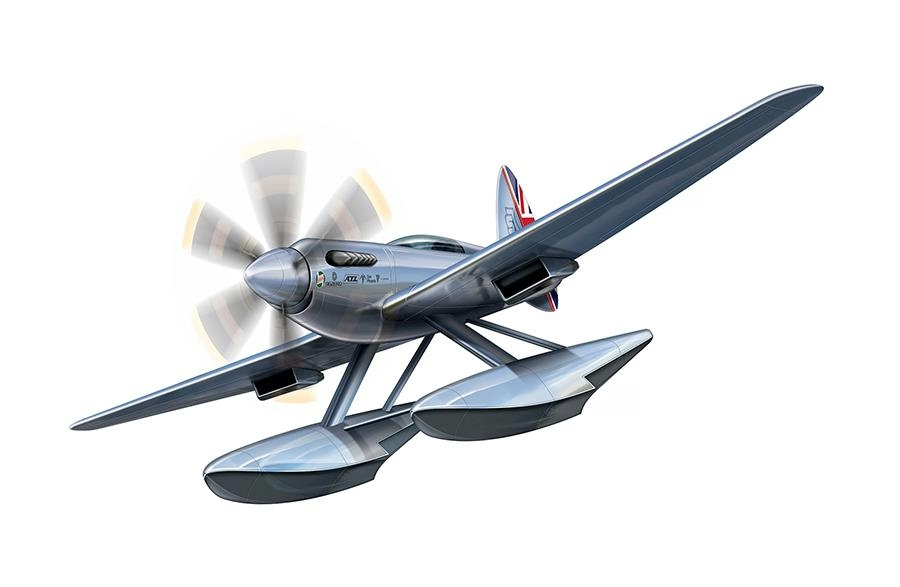
Seablade Aims to Break 92-Year-Old Speed Record
A Legacy of British Aviation Excellence
On 13 September 1931, half a million spectators gathered along the Calshot coastline in Hampshire to witness a defining moment in British aviation history. The Supermarine S.6B, piloted by Flight Lieutenant John Boothman of the Royal Air Force’s High Speed Flight, secured the Schneider Trophy for Great Britain by completing seven laps at a top speed of 340.08 mph. Although Boothman faced no competition and did not push the aircraft’s Rolls-Royce R Type racing engine to its full 2,350 horsepower potential, the victory marked Britain’s third consecutive win and permanent possession of the trophy. Yet, the team behind the achievement—led by designer Reginald J. Mitchell and engine developer Arthur Rowledge—remained driven to push the boundaries further.
Seventeen days later, Flight Lieutenant George Stainforth piloted a second S.6B across the Solent, setting a new world air speed record of 407.5 mph. Though witnessed by few, this milestone left an enduring legacy. The S.6B’s design would inspire the legendary Spitfire fighter, while the R Type engine laid the groundwork for the development of the iconic Merlin engine, which powered much of Britain’s air effort during World War II.
The Italian Challenge and the Enduring Record
Britain’s dominance was soon challenged by Italy, where Prime Minister Benito Mussolini commissioned Mario Castoldi to design the Macchi M.C.72 for the 1931 Schneider Trophy. Despite initial engine difficulties that prevented its participation, Mussolini’s continued investment aimed to secure both the speed record and a demonstration of Italian technological prowess. With the expertise of Francis Rodwell ‘Rod’ Banks, who had developed the high-octane fuel used by Supermarine, the M.C.72 overcame fatal setbacks. On 10 April 1933, Warrant Officer Francesco Agello flew the aircraft to a new world speed record of 424 mph. A subsequent ‘sprint’ variant of the AS.6 engine pushed the record further to 440.681 mph on 23 October 1934.
Although Germany claimed the overall world air speed record in 1939, Agello’s 1934 flight remains the fastest ever recorded by a piston-powered seaplane. This record has stood unchallenged for nearly a century—until now.
Project Seablade: A New Chapter
Led by Scottish property developer Peter Thomson, Project Seablade seeks to reclaim this historic record for Britain. Currently in the concept stage, the project has yet to finalize its design specifics. The team faces significant challenges, including unpredictable weather conditions, potential technical malfunctions, and the intense physical and mental endurance required for such a demanding attempt.
The team’s previous success in breaking the Mississippi River speed record in 2023 demonstrates their capability and preparation. However, the unique obstacles presented by the Missouri River’s conditions may test even the most experienced members of the team.
Market interest in extreme sports and record-breaking feats has already begun to grow in response to Seablade’s ambitions. Competitors are expected to enhance their own training and equipment, intensifying the competition within this specialized field.
As Project Seablade advances toward its record attempt, the global community watches closely to see if Britain can once again claim the title and shatter a 92-year-old aviation milestone.

Etihad and Swissport Extend Global Partnership

Sepehran Airlines B737 Returns to Mashhad After Tyre and Engine Issues

Etihad Deploys Widebody Fleet to Meet Strong Demand

Korean Air Finalizes $36.2 Billion Deal with Boeing
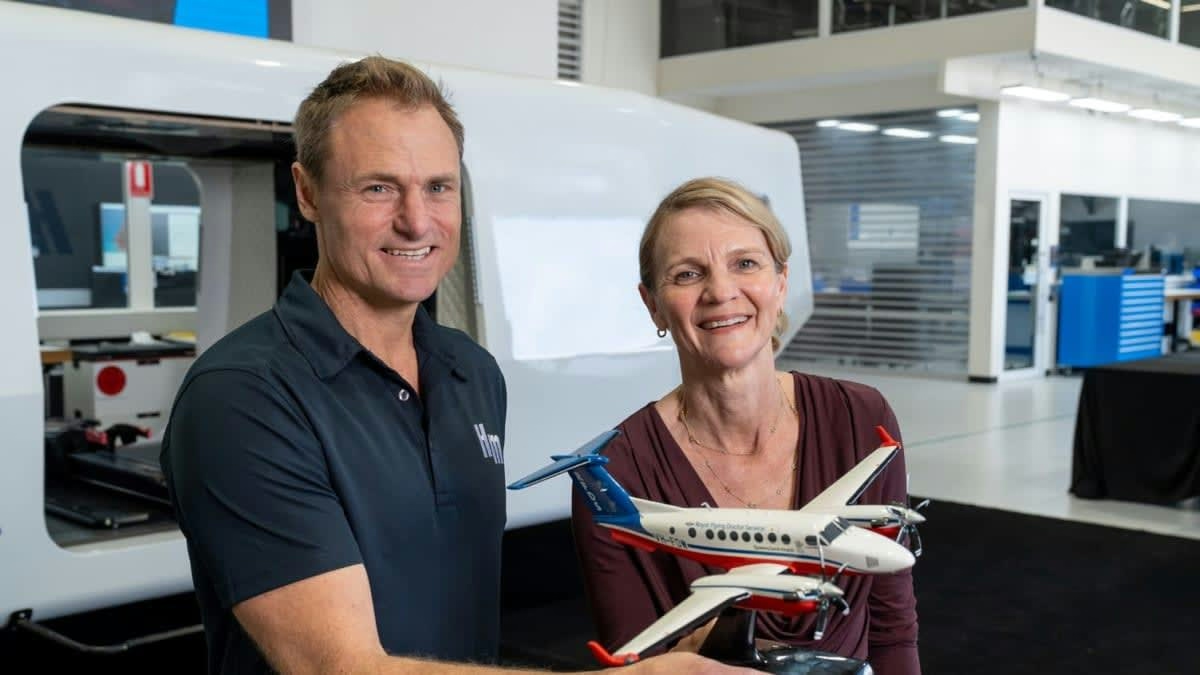
Australia’s RFDS Queensland Section Orders Six King Air 260Cs

Korean Air Finalizes Order for 103 Boeing Jets and Engines
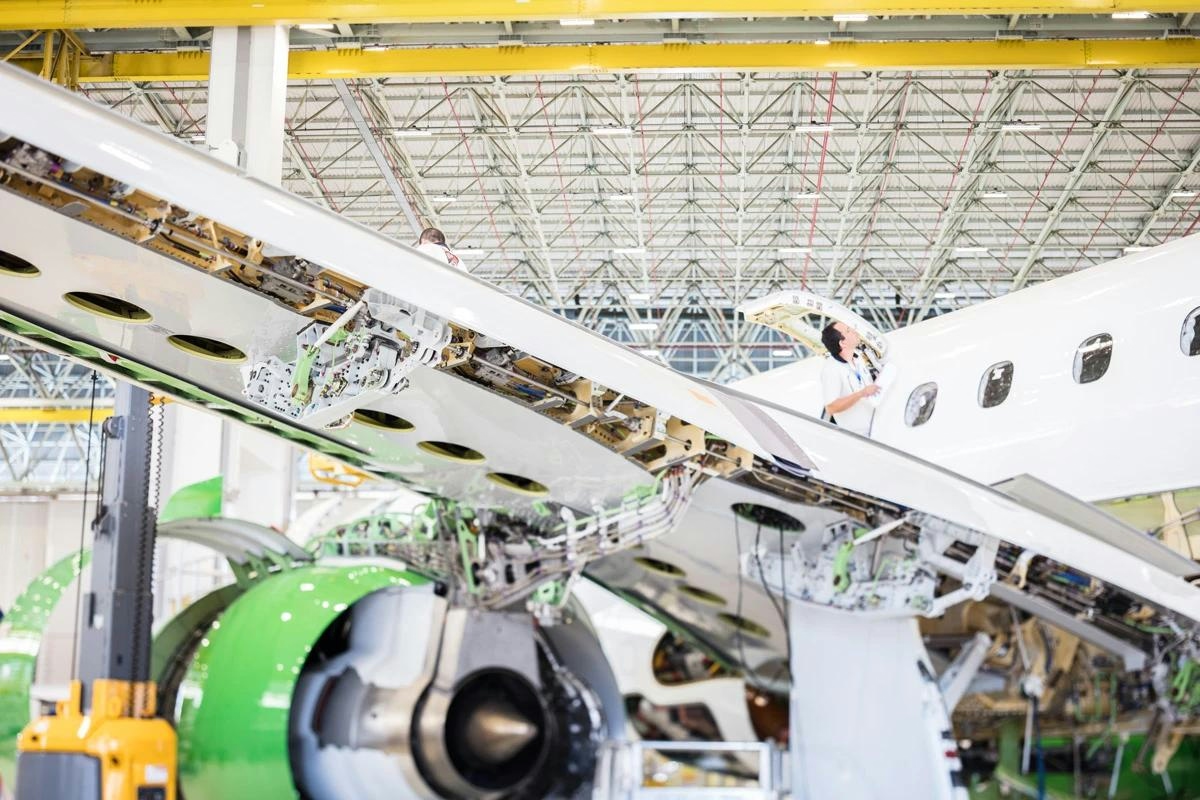
Embraer E195-E2 Features Distinctive Engine Placement Among Regional Jets
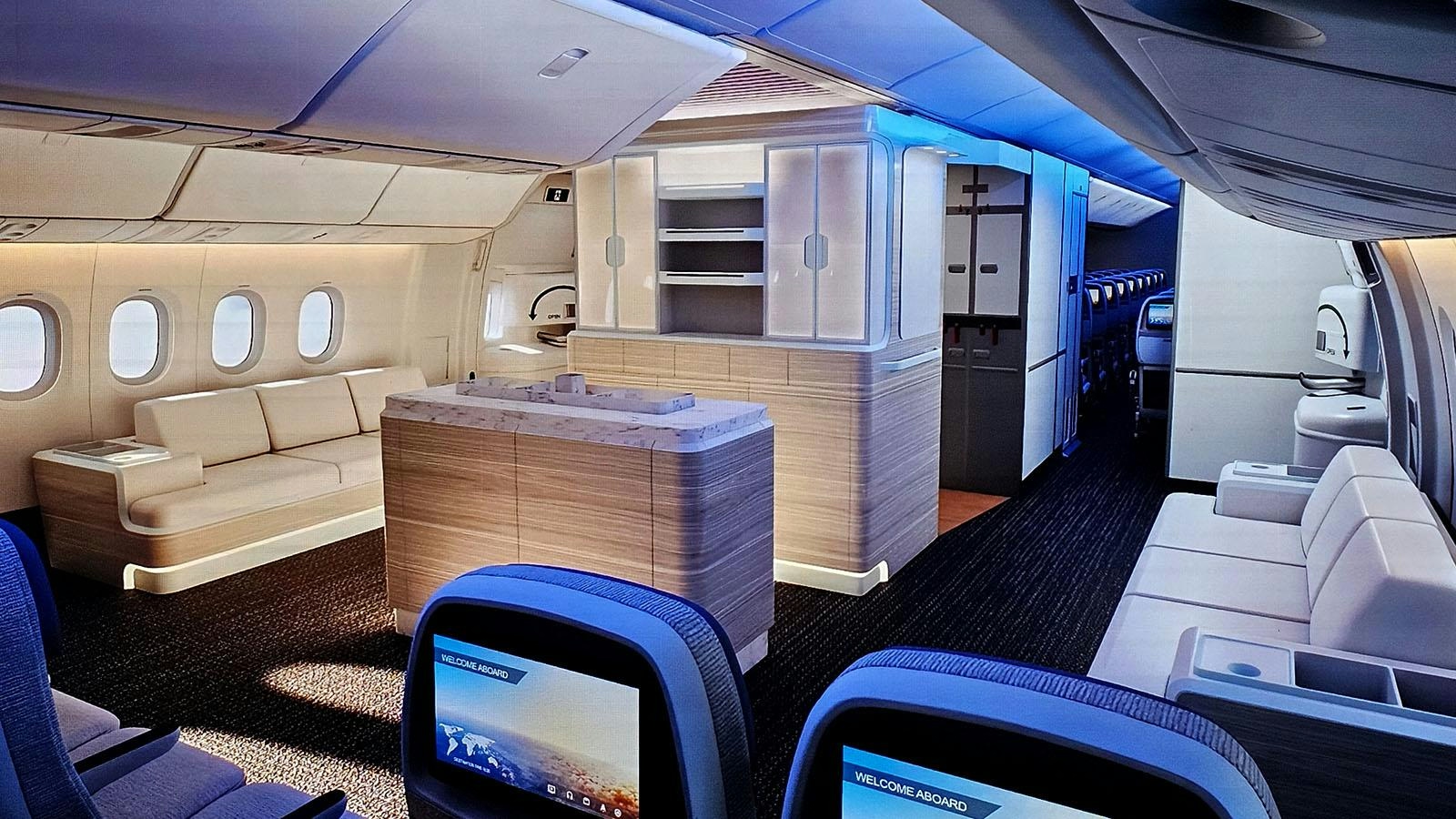
What Passengers Can Expect on Boeing’s New 777X Jet

How Ethiopian Airlines Became Africa’s Leading Carrier Amid Gulf Competition
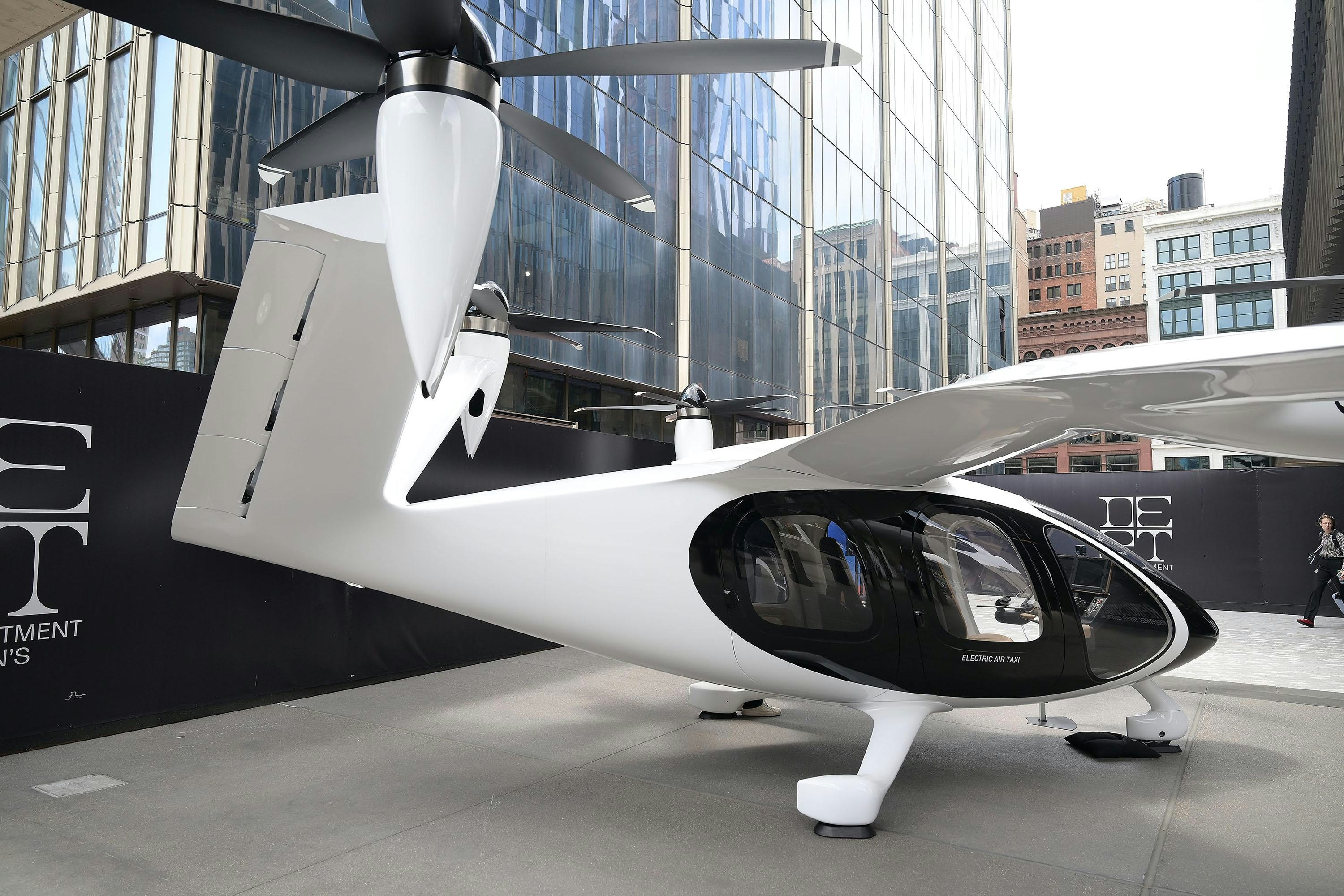
Joby Aviation Extends Autonomous Flight Capabilities with Cross-Country Tour
