
AIによるインサイトを行動へとつなげる

現在のトレンド
Categories
South African YouTuber Develops Solar-Powered Drone That Flies Without Batteries
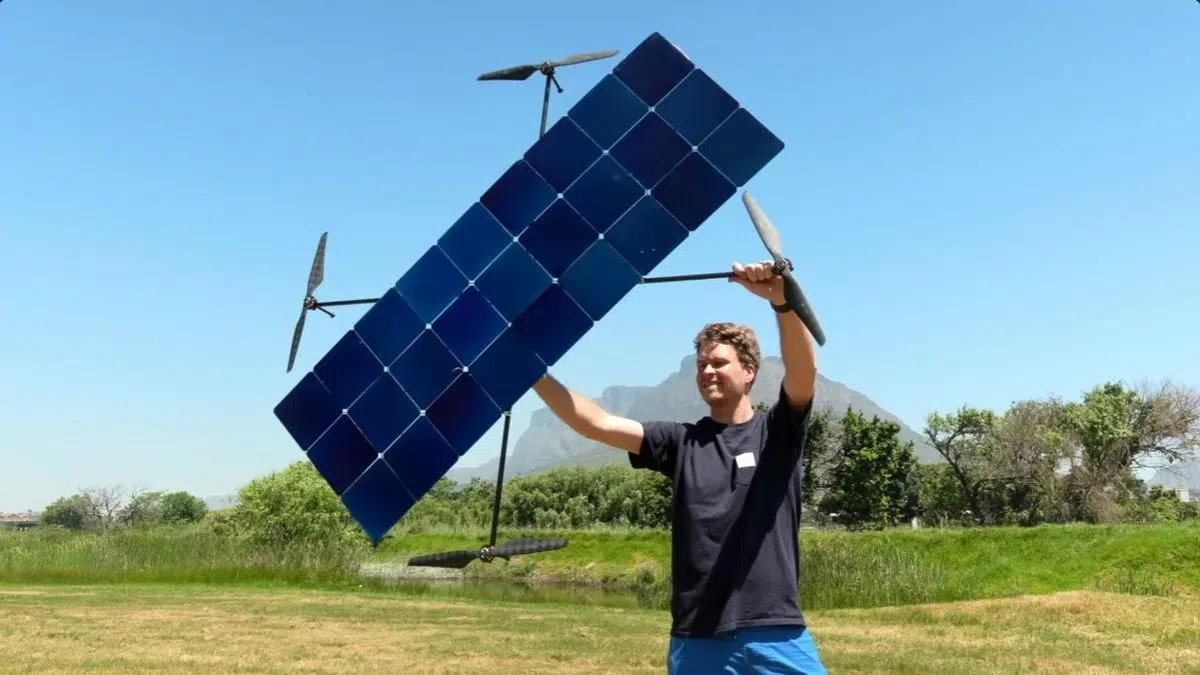
South African YouTuber Develops Solar-Powered Drone That Flies Without Batteries
South African content creator Luke Máximo Bell has unveiled a pioneering prototype of a drone powered entirely by solar energy, representing a notable advancement in sustainable and autonomous aviation technology. Bell’s work exemplifies how innovation and technical skill can expand the horizons of aerial engineering.
Innovative Design and Technical Specifications
At the heart of Bell’s drone is the T-Motor Antigravity MN4004 300kv brushless motor, selected for its ultra-thin profile, efficient cooling capabilities, and low electrical resistance. These attributes are critical for optimizing energy efficiency, a fundamental requirement for a drone that operates solely on solar power. To further enhance aerodynamic performance, Bell integrated the motor cables within the drone’s arms, reducing drag and electrical interference.
The drone’s most distinctive feature lies in its solar panels, which are seamlessly embedded into the frame. The installation process was carefully managed to prevent damage to the solar cells and to ensure an even distribution of weight. This solar array connects to a robust T-Motor F60A Mini 8S electronic speed controller and a central flight controller, creating a lightweight yet powerful system.
To maximize flight efficiency, Bell equipped the drone with T-Motor NS 18×6 ultralight carbon fiber propellers. These propellers contribute to weight reduction, durability, and an optimal thrust-to-power ratio, enabling longer and more stable flights, particularly in outdoor conditions.
Performance Testing and Efficiency Metrics
Initial tethered tests allowed Bell to fine-tune the drone’s stability, culminating in nearly silent hovering capabilities. During these trials, the motors generated 17 grams of thrust per watt consumed, while the entire drone achieved an efficiency of 0.7 grams per watt. Although these figures may appear modest, the design is approximately 24 times more efficient than conventional vertical takeoff configurations.
Broader Implications and Industry Relevance
Bell’s solar-powered drone extends beyond a personal project, aligning with similar initiatives pursued by major technology firms and startups, such as Meta’s former Aquila project and various European ventures focused on solar-powered telecommunications drones. Potential applications for this technology include continuous forest fire monitoring, precision agriculture without the need for frequent recharging, delivery of medical supplies to remote locations, and environmental surveillance in protected or maritime areas.
Given the aviation sector’s challenges in reducing carbon emissions, solar-powered drones like Bell’s could become instrumental in the industry’s transition toward cleaner energy. If scaled effectively or integrated with smart grid systems, these drones could operate autonomously for extended periods with minimal environmental impact.
Challenges and Market Outlook
Despite its promise, the technology faces significant hurdles. The high costs and complex manufacturing processes associated with solar-powered drones, especially when compared to established liquid electrolyte battery technologies, may impede widespread adoption. Market responses are expected to be varied, with early interest likely from niche sectors such as military operations that prioritize extended flight endurance. Concurrently, competitors may accelerate the development of alternative technologies or enhance existing battery systems to remain competitive with solar-powered innovations.
“It’s not just about a drone. It’s about rethinking how we use energy to fly,” Bell remarked, highlighting the broader significance of his work. While still in the experimental stage, his solar drone prototype lays the groundwork for a future in which sustainable aviation becomes more accessible across diverse industries.

Etihad Airways Suspends Airbus A380 Flights on Key Route

Aditya Birla Group Seeks Approval for Aircraft Leasing in GIFT City

Qatar Airways Highlights Innovation and Connectivity at Arabian Travel Market 2026

Hong Kong's Five-Year Plan Includes Andrew Fan's Aircraft Parts Processing Hub Proposal

ACIA Aero Leasing Delivers ATR72-600 to Air Nostrum

RTX Appoints Jill Albertelli as Head of Pratt & Whitney

TAT Technologies Joins Beyond Aero Hydrogen Aircraft Program

AURAK Study Highlights Barriers to Air Taxi Adoption in Emerging Economies

Xiamen Air Selects Altitude for 787 Maintenance at Heathrow

Etihad and Swissport Extend Global Partnership
