
AIによるインサイトを行動へとつなげる

現在のトレンド
Categories
SriLankan Airlines Reports $60 Million Loss on CFM-Engined Airbuses, Faces Additional $172 Million Loss
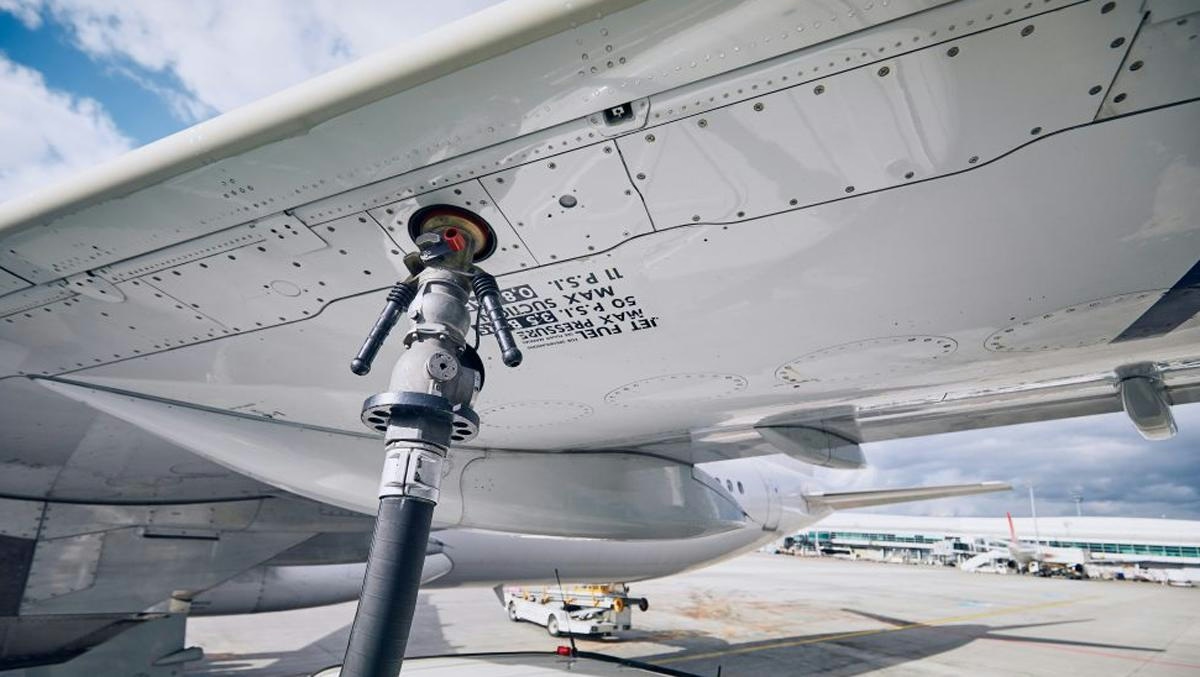
SriLankan Airlines Reports $60 Million Loss on CFM-Engined Airbuses, Faces Additional $172 Million Loss
Grounding of Airbus A320neo Fleet and Financial Impact
SriLankan Airlines has disclosed a $60 million loss related to its fleet of Airbus A320neo aircraft acquired in 2018, which have been grounded due to persistent defects in their CFM LEAP engines. The airline initiated discussions to acquire the A321 aircraft in 2017, finalizing the purchase the following year. However, design flaws in the CFM LEAP engines have caused ongoing technical difficulties, resulting in the grounding of six aircraft. According to Minister of Ports and Civil Aviation Anura Karunathilaka, by October 31, these aircraft had been out of service for a combined total of 131 months, with one aircraft still grounded. During this period, the airline incurred $60 million in costs without generating any revenue from these planes.
The financial burden was further intensified by the absence of a comprehensive engine maintenance agreement at the time of leasing, leading to an additional $71 million in maintenance expenses. Minister Karunathilaka cautioned that SriLankan Airlines anticipates further losses amounting to $172 million over the coming years, imposing a significant strain on the national carrier and the broader economy.
In 2025, the airline reported an operating profit of $29 million, while maintenance costs reached $23 million. The decision in 2018 to select CFM LEAP engines for the six A320neo aircraft marked a departure from SriLankan’s traditional preference for Rolls-Royce engines. This shift was influenced by Rolls-Royce’s exit from the smaller engine market, leaving CFM and Pratt & Whitney as the primary suppliers.
Industry-Wide Engine Reliability Challenges
The engine reliability issues faced by SriLankan Airlines are not isolated. Other carriers operating A320neo aircraft equipped with Pratt & Whitney’s PW1000G (GTF) engines have encountered even more severe challenges. As of November 2025, industry estimates indicate that approximately half of the global A320neo fleet powered by GTF engines—around 1,200 aircraft—remain grounded due to extended repair lead times and parts shortages. This situation has driven up demand for operational engines, with some operators reportedly leasing engines at rates as high as $200,000 per month and dismantling nearly new aircraft to salvage parts.
Analysts attribute these widespread engine problems to an industry-wide emphasis on fuel efficiency and innovation at the expense of durability, a trend driven by elevated oil prices and increasing environmental regulations.
Broader Industry Context and Future Outlook
The financial pressures on SriLankan Airlines may necessitate operational adjustments, cost-cutting initiatives, and potential renegotiations of engine maintenance contracts. Meanwhile, other major carriers continue to demonstrate confidence in Airbus products. Emirates, for example, has placed substantial orders for the A350-900, while Ethiopian Airlines is diversifying its fleet by leasing ATR turboprops alongside ordering Airbus A350s, a strategy that could influence the regional aircraft market.
Elsewhere in the aviation sector, Embraer has assured that supply shortages will not disrupt its 2025 production targets, even as Spirit AeroSystems faces financial difficulties. These developments underscore the broader challenges confronting aircraft manufacturing and supply chains.
Despite the current difficulties faced by SriLankan Airlines, ongoing investments by leading carriers in new Airbus models reflect the complex and evolving dynamics of the global aviation industry.

Etihad Airways Suspends Airbus A380 Flights on Key Route

Aditya Birla Group Seeks Approval for Aircraft Leasing in GIFT City

Qatar Airways Highlights Innovation and Connectivity at Arabian Travel Market 2026

Hong Kong's Five-Year Plan Includes Andrew Fan's Aircraft Parts Processing Hub Proposal

ACIA Aero Leasing Delivers ATR72-600 to Air Nostrum

RTX Appoints Jill Albertelli as Head of Pratt & Whitney

TAT Technologies Joins Beyond Aero Hydrogen Aircraft Program

AURAK Study Highlights Barriers to Air Taxi Adoption in Emerging Economies

Xiamen Air Selects Altitude for 787 Maintenance at Heathrow

Etihad and Swissport Extend Global Partnership
