
エアロジニー — あなたのインテリジェントな副操縦士。

現在のトレンド
Categories
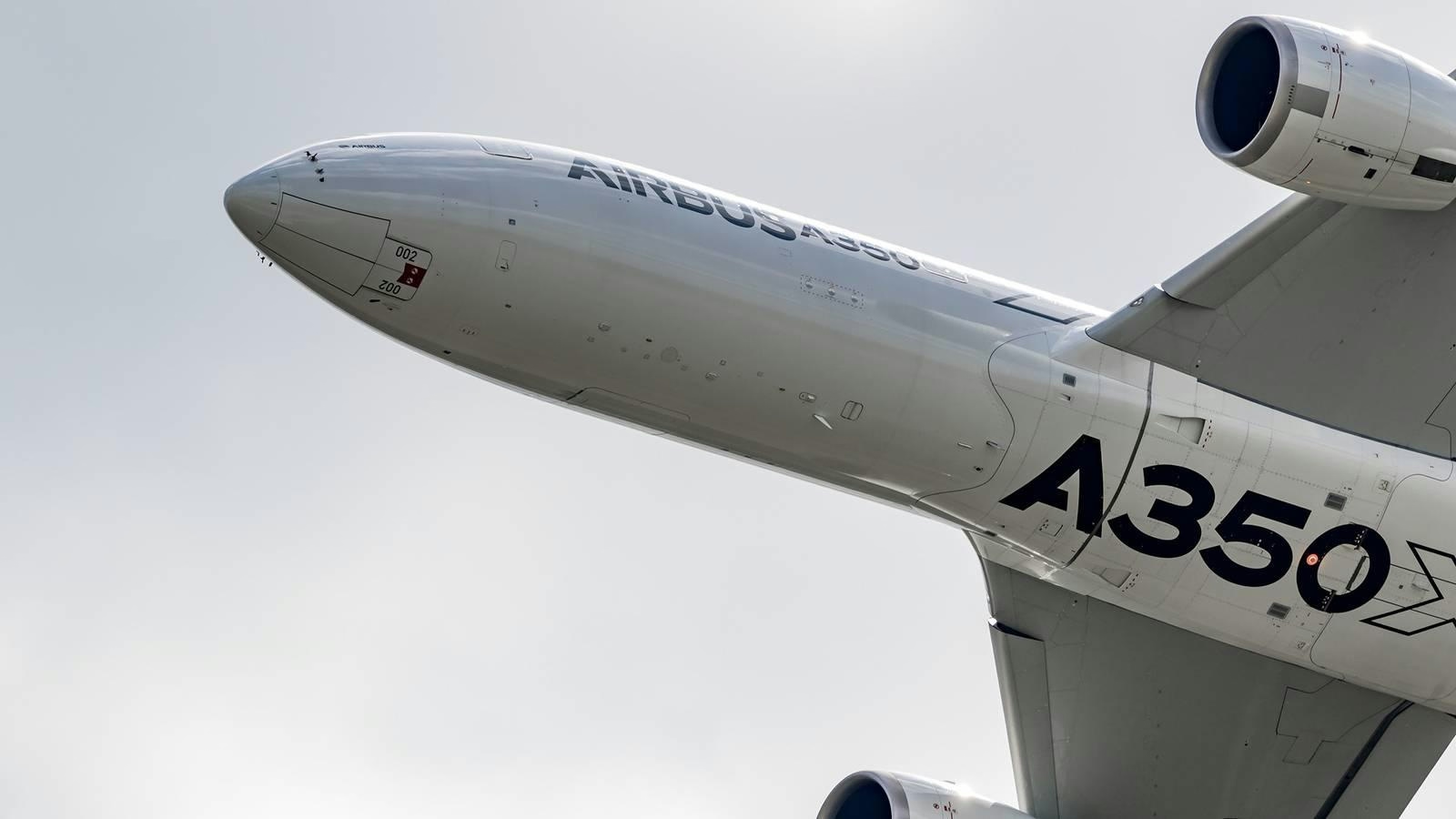
The Airbus A350 Will No Longer Be the Widest Widebody Twinjet
The Airbus A350 Will No Longer Be the Widest Widebody Twinjet
Since its introduction, the Airbus A350 XWB (Extra Wide Body) has been recognized for setting a new standard in cabin comfort among twin-aisle aircraft, largely due to its spacious interior design. This distinction, however, is now being challenged by emerging competitors. Boeing’s forthcoming 777X is poised to surpass the A350 in internal cabin width, while new entrants from United Aircraft are also preparing to redefine the widebody twinjet market.
The A350’s Legacy of Cabin Comfort
At the time of its launch, the Airbus A350’s defining feature was its notably wide cabin. With an internal width measuring approximately 5.61 meters (18.4 feet) between wall panels, the aircraft allowed airlines to implement comfortable seating arrangements, typically a 3-3-3 configuration in economy class, alongside generous space in premium cabins. The “XWB” designation underscored this extra width, achieved through a meticulously engineered fuselage cross-section and optimized sidewall geometry, which together enhanced passenger comfort and operational efficiency.
Boeing 777X: Setting New Standards in Cabin Width
Boeing’s 777X directly challenges the A350’s cabin width advantage. Although the 777X maintains much of the external dimensions characteristic of the classic 777 family, Boeing has significantly reengineered the interior. By utilizing thinner sidewall insulation, redesigned framing, and sculpted sidewalls, the 777X attains an internal cabin width of approximately 5.97 meters (19.6 feet), making it not only wider than the A350 but also four inches broader than its predecessor, the 777-300ER.
This increase in cabin width is more than a technical milestone; it offers tangible benefits for both airlines and passengers. The additional space can be allocated to wider seats, broader aisles, or enhanced onboard amenities, all of which are critical as airlines strive to attract and retain both premium and economy travelers in a highly competitive market.
Emerging Competition from United Aircraft
The contest for the widest widebody twinjet is further intensified by United Aircraft’s proposed new family of widebody twinjets. Designed to compete with models such as the Boeing 787, this new series will include three variants accommodating between 240 and 320 passengers. These aircraft are expected to feature competitive cabin widths that may exceed the current benchmarks established by Airbus and Boeing, signaling a potential shift in the market dynamics of widebody aircraft.
Industry Implications and Market Dynamics
The arrival of new widebody designs is prompting established manufacturers to reevaluate their production strategies and market positioning. As airlines increasingly prioritize cabin spaciousness and passenger comfort, even incremental improvements in internal width can significantly influence purchasing decisions. This evolving competitive environment may lead to changes in airline preferences and adjustments within aerospace supply chains, as manufacturers respond to shifting market demands and seek to maintain their competitive edge.
The Future of Widebody Cabin Comfort
With Boeing’s 777X set to surpass the A350 in cabin width and new contenders like United Aircraft entering the fray, the era of the A350 as the widest widebody twinjet is drawing to a close. As aircraft manufacturers continue to innovate and airlines adapt to evolving passenger expectations, the next generation of widebody aircraft promises ongoing enhancements in cabin comfort and onboard amenities.
Emirates Unveils Cabin Design for New Boeing 777X
Eighteen Years On, the Airbus A380 Remains Central to a $34 Billion Airline

How a boom in luxury airline seats is slowing down jet deliveries

Navitaire Outage Attributed to Planned Maintenance

Airbus Plans Record Delivery of 870 Aircraft in 2026

DigiYatra Debuts Outside Aviation at India AI Impact Summit

Vietnam Orders Strengthen Boeing’s Commercial Outlook

Airbus Signals Uncertainty Over Future A400M Orders

JobsOhio Awards $2 Million Grant to Hartzell Propeller for Innovation Center
Collins Aerospace Tests Sidekick Autonomy Software on YFQ-42A for U.S. Air Force CCA Program
