
AIによるインサイトを行動へとつなげる

現在のトレンド
Categories
The Dynamics of a Virtuous Circle
The Dynamics of a Virtuous Circle
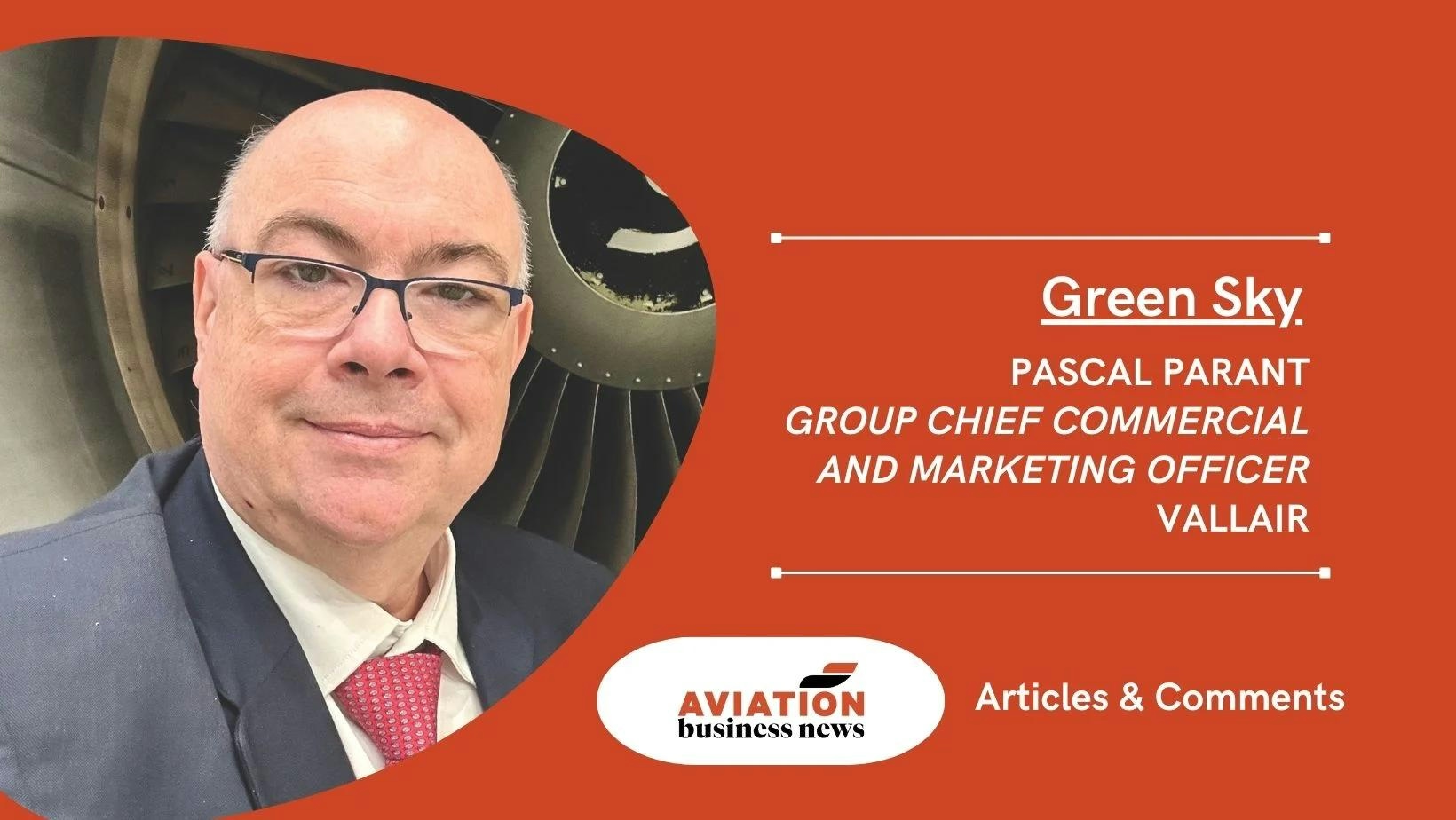
Pascal Parant, group chief commercial and marketing officer at Vallair, underscores the transformative impact of circular-economy principles on modern aircraft retirement, emphasizing their role in generating both environmental and economic value within the aviation industry. With approximately 32,000 commercial aircraft currently in service or storage worldwide, each represents a substantial lifetime asset. The industry’s enduring commitment to sustainability—manifested through new aircraft programs and incremental technological improvements—has resulted in platforms such as the Boeing 737 and Airbus A320 evolving over several decades, often maintaining commonality in parts across successive generations.
End-of-Life Pathways and Component Reuse
This durability has given rise to two primary end-of-life pathways for aircraft. Older “n-2” generation aircraft are generally dismantled for scrap or repurposed materials, whereas newer models yield high-value components including engines, auxiliary power units (APUs), landing gears, and line-replaceable units (LRUs). These parts undergo overhaul, recertification, and reintegration into airline maintenance cycles. Notably, even the latest “n” generation aircraft are increasingly being parted out; for instance, over a dozen A320neo airframes equipped with GTF engines were dismantled in the past year, with their components helping to mitigate ongoing supply-chain constraints.
Currently, up to 95% of an aircraft’s mass can be reused, recycled, or valorised. However, the recycling process entails significant environmental, social, and governance (ESG) as well as legal responsibilities. Aircraft contain hazardous substances such as fluids, metals, batteries, composites, and small radioactive sources. Under European legislation, the final owner bears responsibility for compliant dismantling, making proper teardown an imperative governed by environmental, regulatory, and safety standards set forth by EASA, ICAO Annex 16, and EU waste directives.
Economic and ESG Implications
The use of overhauled components, commonly referred to as used serviceable material (USM), can reduce CO₂ emissions by 50 to 90 percent depending on the part, aligning closely with circular economy principles advocated by the EU, ICAO, and the Aircraft Fleet Recycling Association (AFRA). From a financial perspective, the end-of-life value recovered from a narrowbody aircraft ranges between $2.5 million and $8 million, with engines accounting for 70 to 85 percent of this sum. In the context of global supply shortages, returns on investment can be realized within six to twelve months. Moreover, reusing “green time” on engines and landing gear can yield an additional 15 to 30 percent value during the final months of operation. USM also provides airlines with a strategic tool to manage rising original equipment manufacturer (OEM) catalogue prices, which have increased by 8 to 15 percent annually since 2022, enabling operators to reduce maintenance costs by 20 to 40 percent and assisting lessors in preserving asset value.
Vallair’s Role and Market Context
Vallair plays a pivotal role in supporting aircraft throughout their lifecycle, offering services ranging from base maintenance and storage to component maintenance, repair, and overhaul (MRO), as well as teardown operations. Its Montpellier facility specializes in narrowbody maintenance and limited dismantling, while the Châteauroux site provides widebody capabilities and full teardown services. By collaborating with specialized recyclers, Vallair ensures turnkey value maximization and strict regulatory compliance. High-value components are meticulously managed to extend their operational lifespan, thereby reducing the demand for carbon-intensive new production. Vallair’s vertically integrated approach, which includes passenger-to-freighter conversions that can extend aircraft life by more than 15 years, exemplifies its commitment to maximizing value while minimizing environmental impact.
These circular-economy strategies gain heightened significance amid broader economic uncertainties. The U.S. stock market faces potential volatility in 2026, influenced by internal divisions within the Federal Reserve, extreme market valuations, and a disconnect between investor expectations for rate cuts and the central bank’s hawkish stance. Global market dynamics are further shaped by the anticipated AI-driven technological revolution, which promises to reshape productivity and earnings growth. Concurrently, the Bank of Japan may tighten monetary policy sooner than expected due to yen weakness, while China’s persistent trade surplus is viewed as a drag on growth, underscoring the need for structural reforms.
Within this complex economic landscape, the aviation sector’s emphasis on asset longevity, resource efficiency, and regulatory compliance not only advances environmental objectives but also enhances resilience amid shifting global economic conditions.

Etihad Airways Suspends Airbus A380 Flights on Key Route

Aditya Birla Group Seeks Approval for Aircraft Leasing in GIFT City

Qatar Airways Highlights Innovation and Connectivity at Arabian Travel Market 2026

Hong Kong's Five-Year Plan Includes Andrew Fan's Aircraft Parts Processing Hub Proposal

ACIA Aero Leasing Delivers ATR72-600 to Air Nostrum

RTX Appoints Jill Albertelli as Head of Pratt & Whitney

TAT Technologies Joins Beyond Aero Hydrogen Aircraft Program

AURAK Study Highlights Barriers to Air Taxi Adoption in Emerging Economies

Xiamen Air Selects Altitude for 787 Maintenance at Heathrow

Etihad and Swissport Extend Global Partnership
