
AIによるインサイトを行動へとつなげる

現在のトレンド
Categories
The Role of AI in Military Aircraft: Current Applications and Future Prospects
The Role of AI in Military Aircraft: Current Applications and Future Prospects
Artificial intelligence (AI) is increasingly reshaping military aviation, not by supplanting human pilots but by augmenting decision-making, enhancing safety, and improving mission effectiveness. As military aircraft systems become more sophisticated, AI plays a crucial role in managing vast amounts of data, alleviating pilot workload, and preparing air forces for the complexities of future combat scenarios.
Understanding AI in Military Aviation
Within military aviation, AI encompasses advanced software capable of analyzing data, recognizing patterns, and supporting real-time decision-making processes. These systems operate in tandem with human pilots and commanders, proving especially valuable in modern air combat environments where rapid information processing and response are essential.
Current Applications of AI
AI is already integrated into numerous operational military aircraft, primarily serving supportive functions that enhance efficiency, situational awareness, and safety. One significant application is pilot assistance, where AI handles routine tasks and prioritizes critical information. This allows pilots to concentrate on mission execution rather than system management. Key functions include threat detection and prioritization, sensor data organization, and continuous monitoring of flight systems.
In addition, AI contributes to situational awareness and decision support by fusing data from radar, sensors, and communication networks to create a comprehensive operational picture. This integration improves reaction times and reduces the likelihood of human error during high-pressure engagements.
Predictive maintenance is another area where AI demonstrates considerable value. By analyzing aircraft data, AI systems can forecast component wear and potential failures, enabling proactive maintenance and enhancing reliability. Companies such as Astronics Corporation are advancing this field through AI-enabled avionics-grade computing systems, although regulatory and safety concerns continue to pose significant challenges.
AI in Unmanned and Optionally Piloted Aircraft
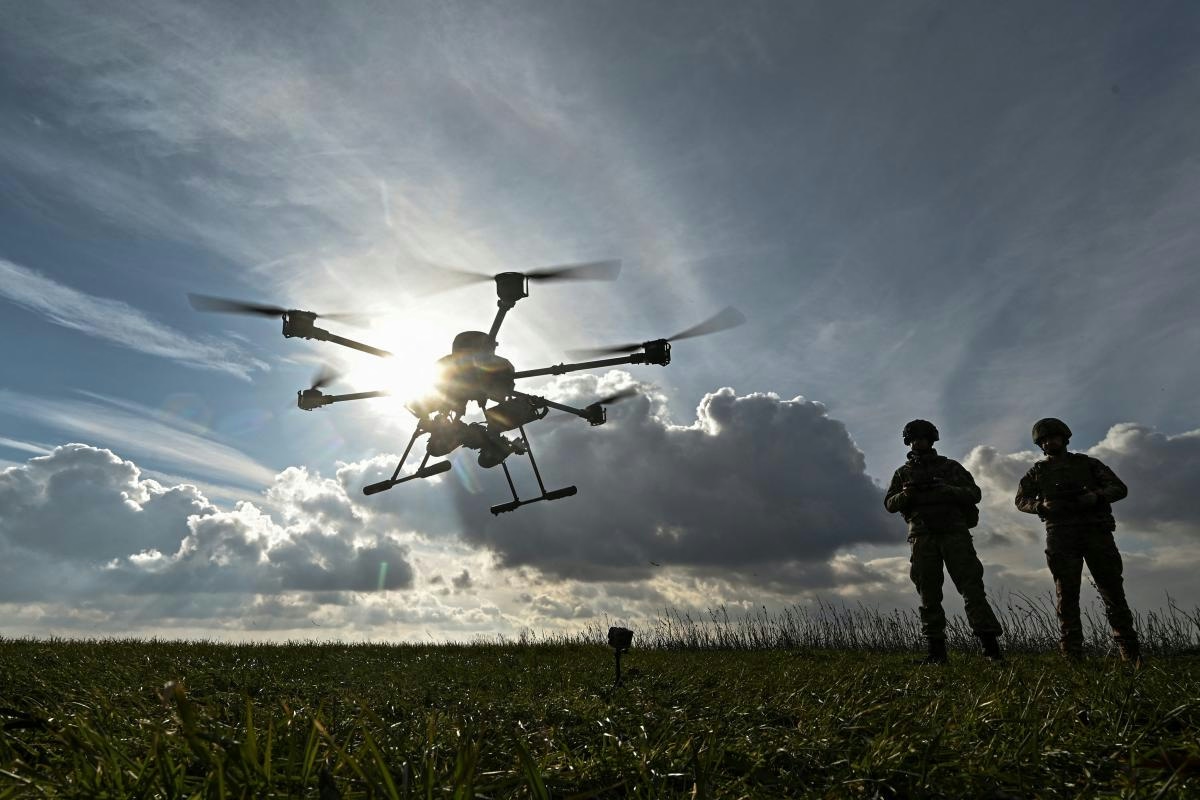
Unmanned and optionally piloted aircraft rely heavily on AI to ensure safe and effective operation. These systems must autonomously navigate, avoid obstacles, and adapt missions in real time without direct human control. The U.S. Navy’s ongoing testing of autonomous flight control software on target drones exemplifies this trend, signaling a strategic shift toward uncrewed fighter aircraft. This development promises to extend operational reach while mitigating risks to human pilots.
Human-AI Teaming in Air Combat
Rather than replacing human operators, AI functions as a digital partner in what is known as human-AI teaming. This collaborative approach leverages the complementary strengths of human judgment and machine speed, resulting in faster threat responses, reduced cognitive workload, and enhanced mission coordination. Defense analysts emphasize that human-AI collaboration is becoming a cornerstone of future air combat doctrine. The U.S. Air Force, for instance, is expanding machine learning pipelines to support classified intelligence networks, underscoring the growing reliance on AI-enabled systems.
Ethical, Operational, and Market Challenges
The integration of AI into military aviation raises profound ethical and operational considerations. It remains imperative that human operators retain ultimate authority over the use of force, as AI systems are designed to provide recommendations rather than independently execute lethal actions. Ensuring the reliability and cybersecurity of AI platforms is critical, given the risks of data corruption, cyber interference, and system manipulation.
Training and oversight are essential to maintain human moral judgment and problem-solving at the core of AI-enabled operations. These concerns are heightened by the rapidly expanding military aircraft market, projected to exceed $2.7 trillion by 2035. Substantial investments in AI technologies are intensifying competition among defense contractors, further complicating the landscape.
Future Prospects
Looking forward, AI is expected to evolve from a primarily assistive role toward greater autonomy in military aviation. Anticipated advancements include AI-controlled drone wingmen, real-time mission re-planning capabilities, and sophisticated threat prediction algorithms. Leading research institutions such as MIT are at the forefront of developing these next-generation AI applications. Meanwhile, industry and military stakeholders continue to grapple with regulatory, safety, and ethical challenges as they strive to maintain technological superiority.

Etihad Airways Suspends Airbus A380 Flights on Key Route

Aditya Birla Group Seeks Approval for Aircraft Leasing in GIFT City

Qatar Airways Highlights Innovation and Connectivity at Arabian Travel Market 2026

Hong Kong's Five-Year Plan Includes Andrew Fan's Aircraft Parts Processing Hub Proposal

ACIA Aero Leasing Delivers ATR72-600 to Air Nostrum

RTX Appoints Jill Albertelli as Head of Pratt & Whitney

TAT Technologies Joins Beyond Aero Hydrogen Aircraft Program

AURAK Study Highlights Barriers to Air Taxi Adoption in Emerging Economies

Xiamen Air Selects Altitude for 787 Maintenance at Heathrow

Etihad and Swissport Extend Global Partnership
