
AIによるインサイトを行動へとつなげる

現在のトレンド
Categories
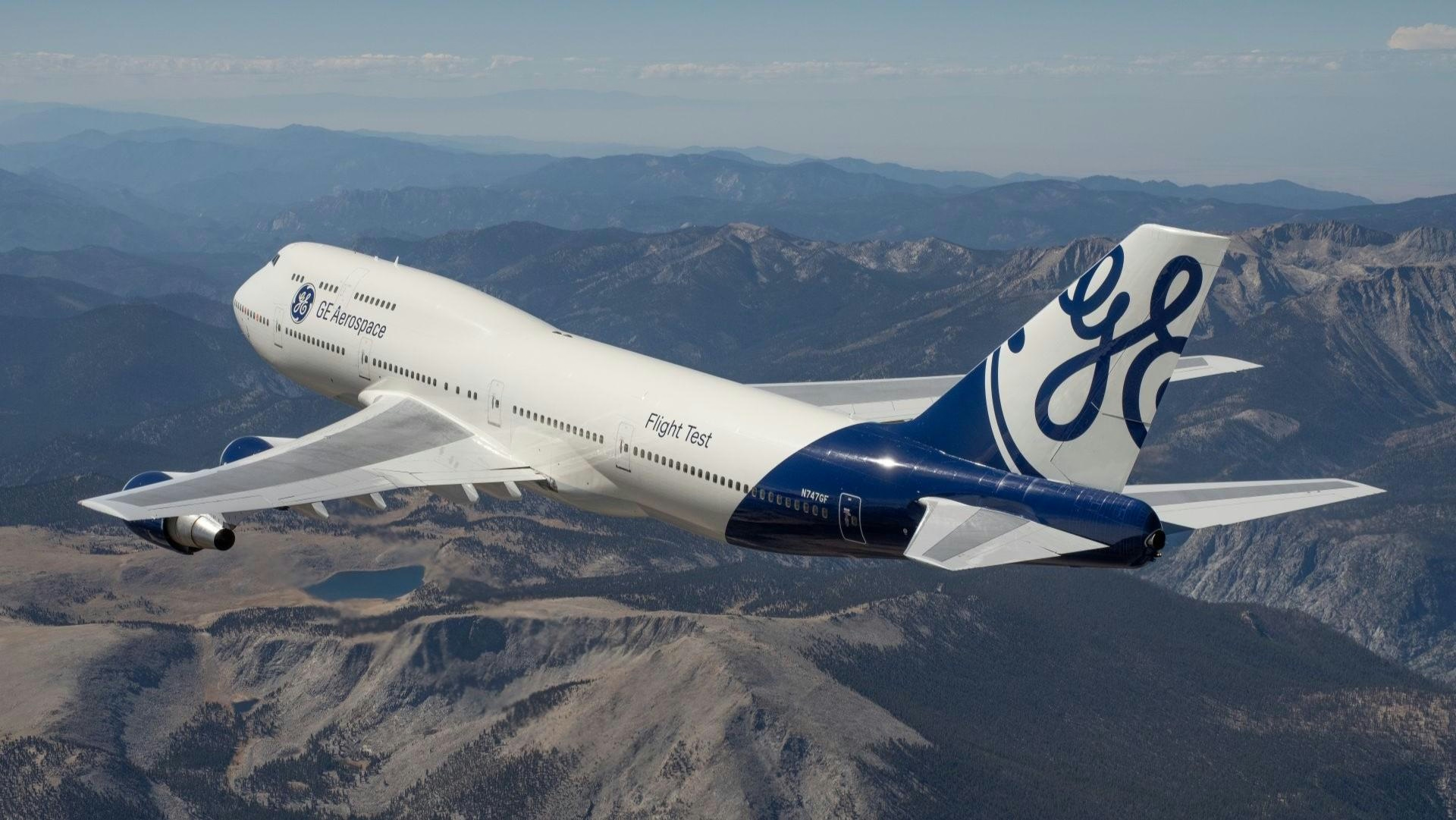
The Unusual Fifth Engine on a Boeing 747 and Its Critical Role
The Unusual Fifth Engine on a Boeing 747 and Its Critical Role
The Boeing 747, famously known as the "Queen of the Skies," remains one of the most iconic aircraft in aviation history. Since its introduction more than fifty years ago, over 1,500 units have been delivered to more than 100 customers worldwide. Throughout its extensive service, the 747 has accumulated approximately 188 million flight hours and nearly 23 million flight cycles. Among the many variants of this legendary aircraft, a rare and distinctive modification stands out: the addition of a fifth engine.
A Unique Configuration for Testing Purposes
While the standard Boeing 747 is recognized for its four-engine layout, a select few models feature an additional engine mounted on a stub wing. This unusual configuration is not a mere design anomaly but a purposeful adaptation serving a critical function. Today, only two of these five-engine 747s remain operational, both owned by Pratt & Whitney, a leading manufacturer of aircraft engines.
These specialized aircraft function as flying testbeds, enabling engineers to assess new engine designs and technologies under authentic flight conditions. The interior of these planes is stripped of the conventional passenger seating and replaced with workstations and sophisticated monitoring equipment. This setup allows technical teams to gather and analyze vital data during flight tests. The sight of a 747 equipped with five engines is striking, and these aircraft play an indispensable role in advancing aviation technology.
The Importance of Rigorous Engine Testing
The significance of such testbeds has been underscored by recent challenges in the aviation industry. Boeing and GE Aerospace are currently addressing a potential durability issue with the GE9X engine, which is slated to power the forthcoming 777X model. The concern involves a seal within the engine, though Boeing has assured that this issue will not impact the aircraft’s expected delivery in 2027. Nonetheless, the 777X program is already six years behind schedule, with Boeing absorbing over $15 billion in charges related to delays and technical difficulties.
These setbacks highlight the inherent complexities of modern engine development and the essential need for comprehensive testing—precisely the role fulfilled by aircraft such as the five-engine 747. As Boeing and its main competitor, Airbus, compete for leadership in the commercial aviation market, any significant technical problems can have profound consequences for market share and corporate reputation. Concurrently, the broader aviation engine sector faces additional challenges, including fluctuating demand for industrial gas turbines, which adds further uncertainty to the industry landscape.
Despite these obstacles, the continued operation of the five-engine 747s reflects ongoing innovation in engine technology. By providing a platform for real-world testing, these unique aircraft help ensure that future engines meet the highest standards of safety, reliability, and performance. In doing so, they contribute to maintaining the Boeing 747’s legacy and support the broader aviation industry’s pursuit of progress.

Etihad Airways Suspends Airbus A380 Flights on Key Route

Aditya Birla Group Seeks Approval for Aircraft Leasing in GIFT City

Qatar Airways Highlights Innovation and Connectivity at Arabian Travel Market 2026

Hong Kong's Five-Year Plan Includes Andrew Fan's Aircraft Parts Processing Hub Proposal

ACIA Aero Leasing Delivers ATR72-600 to Air Nostrum

RTX Appoints Jill Albertelli as Head of Pratt & Whitney

TAT Technologies Joins Beyond Aero Hydrogen Aircraft Program

AURAK Study Highlights Barriers to Air Taxi Adoption in Emerging Economies

Xiamen Air Selects Altitude for 787 Maintenance at Heathrow

Etihad and Swissport Extend Global Partnership
