
AIによるインサイトを行動へとつなげる

現在のトレンド
Categories
United Airlines Uses AI to Manage Flight Delays and Preserve Connections at Major U.S. Airports
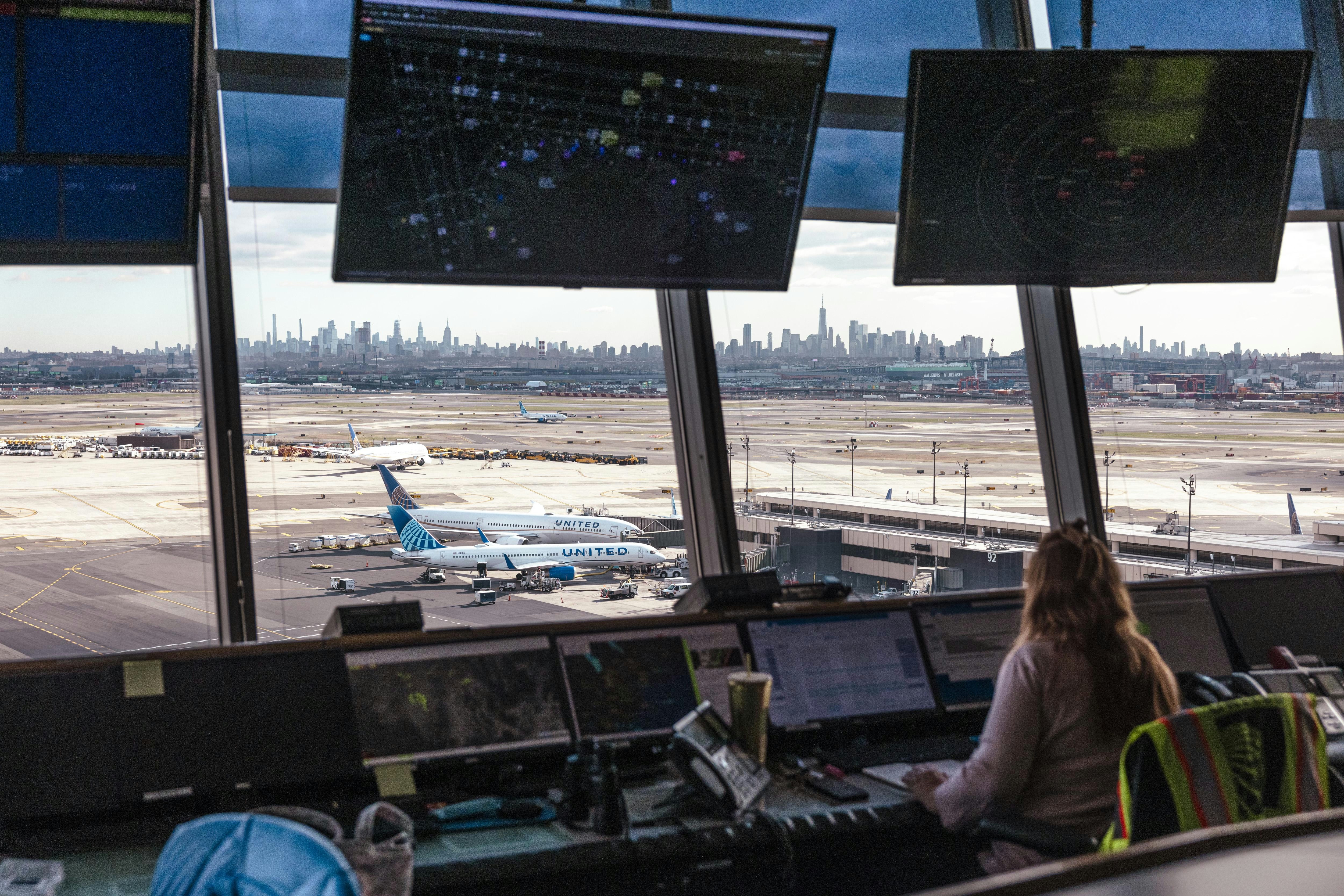
United Airlines Employs AI to Mitigate Flight Delays and Safeguard Connections at Key U.S. Airports
United Airlines has introduced an advanced artificial intelligence system, ConnectionSaver, at several major U.S. hubs to assist passengers in making tight flight connections and to reduce delays. This AI-driven platform processes real-time data—including gate activity, crew schedules, taxi times, aircraft routing, and weather conditions—to assess whether holding a departing flight for late-arriving passengers is feasible without causing broader schedule disruptions.
Currently operational at Denver International, Chicago O’Hare, and Newark Liberty airports, ConnectionSaver has helped United preserve over 54,000 passenger connections this year. The system has demonstrated particular value for international travelers arriving from prominent markets such as France, Spain, the United Kingdom, Mexico, and Canada. This aligns with data from the U.S. National Travel and Tourism Office, which identifies these countries as leading sources of inbound travelers.
Addressing Increasing Travel Demand and Operational Complexities
The anticipated surge in global travel demand by 2026 is placing heightened pressure on airlines to maintain punctuality, especially at congested hubs prone to bottlenecks. Historically, decisions to hold flights for connecting passengers were made manually, often resulting in excessive delays or missed connections. The complexity of these decisions is compounded by factors such as weather variability, air traffic control constraints, and tight scheduling windows.
ConnectionSaver automates and expedites this intricate decision-making process, enabling airport personnel to make swift, data-driven judgments. The system enhances on-time performance by mitigating the risk of cascading delays across the network and improves the passenger experience by increasing the likelihood of successful tight connections while reducing travel-related stress. Additionally, it facilitates automatic rebooking for travelers who miss their connections and provides real-time operational insights to gate agents and staff. Importantly, the system ensures that flight holds do not compromise safety or scheduled arrival times, offering particular benefits for high-volume international routes between Europe and North America.
Navigating Regulatory Constraints and Competitive Dynamics
United’s deployment of AI technology occurs amid regulatory challenges, including Federal Aviation Administration (FAA) restrictions on flight operations at Chicago O’Hare. These limitations recently compelled United to reduce over 9,000 departures, underscoring the operational difficulties airlines face in balancing efficiency with regulatory compliance. Competitors such as American Airlines, similarly affected by FAA slot constraints, may accelerate their adoption of AI solutions to optimize operations and protect market share.
While other carriers are observing the development of comparable technologies, United is the first to implement AI-driven flight-holding decisions at scale. This initiative not only bolsters United’s operational reliability but also establishes a new industry standard for leveraging technology to enhance passenger outcomes.
Passenger Impact and Industry Reception
For travelers, the introduction of ConnectionSaver translates into higher probabilities of making tight connections, a reduced need for involuntary rebooking, and automatic rebooking accompanied in some cases by compensation for meals or accommodations. Operational data from United’s major hubs indicate a significant improvement in connection success rates and a decline in missed transfers. Despite the automation, pilots and operational staff retain ultimate authority over flight holds, ensuring that safety remains the overriding priority.
United underscores that its commitment to customer experience and operational dependability is central to its strategic approach. Although competing airlines recognize the benefits of AI, widespread industry adoption remains limited as carriers navigate regulatory frameworks and market pressures.

Etihad Airways Suspends Airbus A380 Flights on Key Route

Aditya Birla Group Seeks Approval for Aircraft Leasing in GIFT City

Qatar Airways Highlights Innovation and Connectivity at Arabian Travel Market 2026

Hong Kong's Five-Year Plan Includes Andrew Fan's Aircraft Parts Processing Hub Proposal

ACIA Aero Leasing Delivers ATR72-600 to Air Nostrum

RTX Appoints Jill Albertelli as Head of Pratt & Whitney

TAT Technologies Joins Beyond Aero Hydrogen Aircraft Program

AURAK Study Highlights Barriers to Air Taxi Adoption in Emerging Economies

Xiamen Air Selects Altitude for 787 Maintenance at Heathrow

Etihad and Swissport Extend Global Partnership
