
image

AeroGenie — あなたのインテリジェントな副操縦士。

何でも質問してください。すべてを分析し、即座に行動してください。

現在のトレンド

Categories

UrbanV and Pax Aeroportos to Develop Vertiport Networks in Brazil
January 13, 2026By ePlane AI
UrbanV and Pax Aeroportos to Develop Vertiport Networks in Brazil
0
0
UrbanV
Vertiport Infrastructure
Advanced Air Mobility

UrbanV and Pax Aeroportos to Develop Vertiport Networks in Brazil

Partnership to Advance Urban Air Mobility

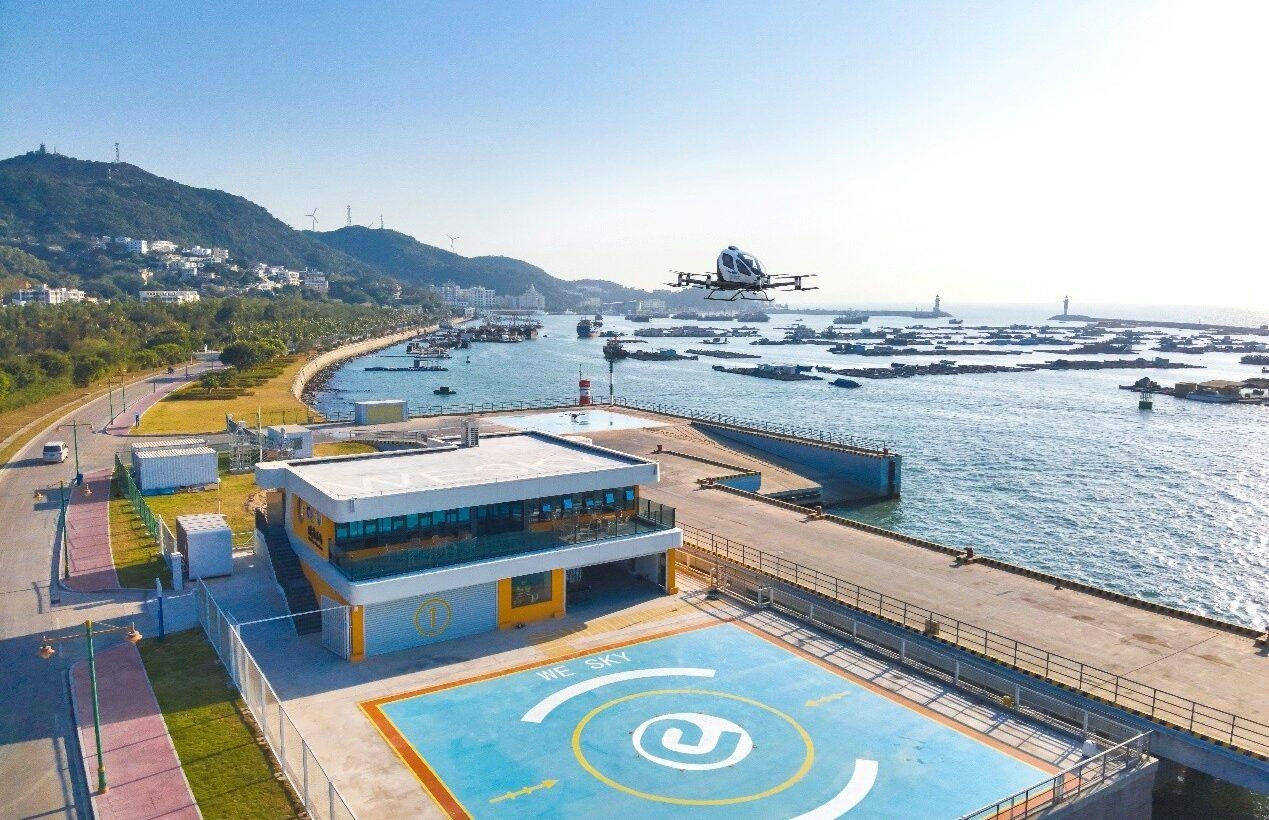
Italian vertiport provider UrbanV and Brazilian airport operator Pax Aeroportos have entered into a strategic partnership to develop vertiport infrastructure at two pivotal urban airports in Brazil: Campo de Marte in São Paulo and Jacarepaguá in Rio de Janeiro. This collaboration aims to integrate dedicated facilities for electric vertical takeoff and landing (eVTOL) aircraft within existing airport estates, positioning these sites as key gateways for Advanced Air Mobility (AAM) in the country.

The partnership combines UrbanV’s international expertise in vertiport network design and operations with Pax Aeroportos’ established presence and long-term vision for urban aviation in Brazil. Ivan Bassate, Chairman of UrbanV, emphasized the significance of the initiative, stating, “Together with Pax Aeroportos, we are building the foundations for future air mobility networks in Brazil, starting from airports that already play a central role in urban aviation.”

Development Plans and Strategic Importance

Development work has already commenced at Campo de Marte, where a regulatory sandbox has been established in collaboration with Brazil’s National Civil Aviation Agency (ANAC). This initiative is described by both companies as a foundational step toward creating scalable and integrated AAM networks across Brazil.

Campo de Marte, situated near São Paulo’s city center, is envisioned as a central hub for metropolitan air mobility. The facility will offer hangar capacity and connections to high-demand destinations including São Paulo’s main international airports, the Faria Lima business district, Alphaville, Campinas, and the port city of Santos. Meanwhile, Jacarepaguá is poised to become a critical access point for western Rio de Janeiro, with potential links to Copacabana, Niterói, and Rio’s principal airports. This development builds upon Jacarepaguá’s established role in executive and helicopter aviation.

Rogerio Augusto Prado, CEO of Pax Aeroportos, described Advanced Air Mobility as a natural progression of urban aviation. He highlighted the opportunity to integrate “next-generation air mobility solutions into our airports and the cities they serve,” reflecting the company’s commitment to evolving urban transport infrastructure.

Challenges and Market Context

Despite the promising outlook, the initiative faces significant challenges. Regulatory complexities, the need for substantial infrastructure investment, and competition from established players such as Joby Aviation and Skyports present potential obstacles. Market analysts have expressed skepticism about the feasibility and profitability of urban air mobility, particularly as global competitors accelerate their vertiport development efforts. For instance, Joby Aviation’s recent partnership with Metropolis Technologies in the United States underscores the intensifying global race to secure strategic vertiport locations.

The broader global trend toward integrating electric air taxis into urban transportation systems is influencing both market dynamics and regulatory frameworks in Brazil. As the AAM ecosystem continues to mature, the collaboration between UrbanV and Pax Aeroportos reflects a shared ambition to leverage existing airport infrastructure while maintaining flexibility for future expansion and adaptation to evolving industry standards.

Both companies assert that their partnership represents a significant step toward establishing Brazil as a leader in urban air mobility, with the capacity to accommodate additional projects as the sector develops.

More news
Boeing Surpasses Airbus in 2025 Aircraft Orders

Boeing Surpasses Airbus in 2025 Aircraft Orders

Boeing Surpasses Airbus in 2025 Aircraft Orders Boeing has overtaken Airbus in net aircraft orders for 2025, marking its first annual lead over the European manufacturer since 2018. According to company reports, Boeing secured 1,175 net new orders, surpassing Airbus’s total of 1,000. This achievement represents a significant turnaround for Boeing following several difficult years characterized by production challenges and safety concerns. Production Improvements Drive Order Growth The increase in Boeing’s orders is primarily attributed to enhancements in production quality and delivery efficiency, especially within its 737 Max program. The company experienced a notable surge in momentum during the final quarter of the year, recording 354 orders—more than double the 153 orders logged in the preceding quarter. This growth reflects renewed confidence among customers in Boeing’s capacity to fulfill its commitments reliably. In the commercial aerospace sector, order volumes are a critical indicator of future revenue potential. Boeing’s strong performance in securing orders throughout 2025 suggests it is regaining competitiveness in the commercial jet market. However, it is important to note that orders only translate into revenue once aircraft are delivered to customers. Airbus Maintains Lead in Deliveries Despite Boeing’s lead in orders, Airbus continued to dominate in actual aircraft deliveries. The European manufacturer delivered 793 aircraft in 2025, exceeding its revised annual target of 790 and representing a 4% increase compared to the previous year. Boeing, by contrast, delivered 600 jets during the same period. Although this marks progress for Boeing, it remains behind Airbus in this crucial metric, which directly impacts revenue realization. The data underscores a shifting dynamic within the aerospace industry. Boeing’s resurgence in orders signals restored market confidence and operational improvements, while Airbus’s sustained delivery performance highlights its robust production capabilities and ability to meet customer demand effectively. As both companies look to the future, the competition between Boeing and Airbus remains intense. Boeing’s recovery in orders positions it favorably for growth, but narrowing the gap in deliveries will be essential for the company to fully capitalize on its order backlog and maintain its upward trajectory.
Alaska Airlines Debuts First Branded Widebody Jet Following Major Boeing Order

Alaska Airlines Debuts First Branded Widebody Jet Following Major Boeing Order

Alaska Airlines Debuts First Branded Widebody Jet Amid Major Boeing Order Alaska Airlines has introduced its first branded widebody aircraft, a Boeing 787-9 Dreamliner, marking a pivotal moment in the carrier’s expansion into long-haul international markets. The Dreamliner, now operating routes such as Seattle to Tokyo, coincides with Alaska’s announcement of its largest-ever aircraft order: 110 planes from Boeing, comprising 105 737 Max-10s and five 787-10 Dreamliners. This strategic investment signals the airline’s commitment to growing its global footprint and modernizing its fleet. Overcoming Past Safety Challenges This significant order follows a challenging period for Alaska Airlines and Boeing. In January 2024, a safety incident involving a Boeing 737 Max-9 raised serious concerns when a mid-cabin door plug, missing critical bolts, detached at 14,800 feet. The event prompted Alaska to ground its entire 737 Max-9 fleet. An investigation by the National Transportation Safety Board subsequently identified major lapses in Boeing’s manufacturing oversight and quality control, concluding that the door plug had not been properly secured during production. Despite these setbacks, Alaska Airlines’ renewed partnership with Boeing reflects restored confidence in the manufacturer’s ability to deliver safe, reliable aircraft. At the Dreamliner unveiling in Seattle, Alaska CEO Ben Minicucci addressed Boeing employees, acknowledging their efforts over the past two years. He emphasized the airline’s high standards for quality, safety, performance, and efficiency, affirming a shared commitment to success between the carrier and the manufacturer. Strategic Vision and Industry Impact Minicucci outlined an ambitious vision to elevate Alaska Airlines to become America’s fourth-largest global carrier, positioning it to compete directly with United, Delta, and American Airlines. The launch of the Dreamliner on direct Seattle-Tokyo flights represents a tangible step toward this goal, with ticket sales already underway. The debut of Alaska’s branded widebody jet and its substantial Boeing order have attracted considerable attention within the aviation sector. Market responses have been predominantly positive, reflecting increased investor confidence in Boeing’s capacity to address prior safety issues and meet delivery schedules. Alaska’s endorsement is widely viewed as a significant vote of confidence in Boeing’s ongoing recovery, particularly as the manufacturer accelerates production of both the 737 Max and 787 Dreamliner following recent certification milestones. Competitors are closely monitoring Alaska’s fleet expansion, with some reportedly reevaluating their own aircraft orders and production timelines. As Boeing strives to rebuild its reputation and satisfy growing demand, the industry is poised for further adjustments in fleet strategies and competitive positioning. Alaska Airlines’ bold expansion highlights the complex interplay of opportunity and challenge confronting U.S. carriers and aircraft manufacturers alike, as they navigate evolving safety standards, operational reliability, and intensifying global competition.
Boeing Leads Airbus in 2025 Aircraft Orders Amid Strong Narrowbody Demand

Boeing Leads Airbus in 2025 Aircraft Orders Amid Strong Narrowbody Demand

Boeing Surpasses Airbus in 2025 Aircraft Orders Amid Strong Narrowbody Demand In a notable shift in the commercial aviation market, Boeing has outpaced Airbus in net aircraft orders for 2025, marking the first time in seven years that the American manufacturer has overtaken its European rival. Boeing reported 1,173 net commitments compared to Airbus’s 889, signaling a significant turnaround for the U.S. company following a prolonged period of crisis. This resurgence was further underscored by Boeing delivering its highest number of aircraft since 2018, reflecting renewed momentum in its commercial operations. Delivery Performance and Production Challenges Despite trailing Airbus in net orders, Boeing lagged behind in deliveries. Airbus handed over 793 aircraft in 2025, exceeding its revised annual target of 790, while Boeing delivered 600 aircraft. This delivery gap highlights the ongoing challenge both manufacturers face in converting strong order books into near-term output, particularly amid persistent supply chain constraints and production pressures. Narrowbody Aircraft Drive Demand Narrowbody aircraft remained the primary driver of demand for both companies. Airbus’s A320neo family dominated its order intake, accounting for 560 net commitments. The A321neo was the standout model, securing 496 net orders after cancellations, while the A320neo added 64. The A220 program also contributed 44 net orders across its -100 and -300 variants. Airbus’s ability to secure a major order from China Aircraft Leasing Group Holdings Limited for 30 A320neo Family jets demonstrated sustained appetite for its single-aisle offerings, despite challenges such as a software upgrade recall and fuselage panel issues. Widebody demand at Airbus remained solid as well. The A350 family recorded 283 net orders, including 83 A350-900s, 82 A350-1000s, and 20 freighter variants. The A330neo program added 98 net orders for the A330-900 and two for the A330-200. In total, Airbus reported 1,000 gross orders and 111 cancellations, resulting in 889 net aircraft. Boeing’s Broad-Based Recovery Boeing’s order book was led by the 737 MAX, which accounted for 591 gross orders. The company also secured 163 gross orders for the 777X and 381 across the three 787 variants. Military derivatives contributed to Boeing’s intake, with 15 767-2C airframes for the KC-46A tanker and 10 737-800-based P-8A maritime patrol aircraft. Unlike Airbus, Boeing did not provide a detailed breakdown of cancellations by model, reporting only two cancellations against 1,175 gross orders for a net total of 1,173. The contrasting order book profiles reflect differing strategic focuses and market strengths. Airbus continues to rely heavily on the A321neo as its primary growth engine, while Boeing’s results indicate a broad-based recovery across both narrowbody and widebody segments, albeit with less transparency regarding cancellations. Military derivatives, though smaller in volume, remain a consistent component of Boeing’s order intake. The developments in 2025 underscore a shifting competitive landscape, with Boeing reclaiming the lead in aircraft orders as both manufacturers contend with operational challenges and sustained demand for new aircraft.
Air France Flight from Bengaluru to Paris Diverted to Turkmenistan Due to Engine Problem

Air France Flight from Bengaluru to Paris Diverted to Turkmenistan Due to Engine Problem

Air France Flight from Bengaluru to Paris Diverted to Turkmenistan Due to Engine Problem Emergency Diversion and Passenger Impact An Air France flight en route from Bengaluru to Paris was forced to divert to Ashgabat, Turkmenistan, early Tuesday morning following a reported engine malfunction. Flight AF191A, operated by a Boeing 777, departed Bengaluru at 11:22 pm IST on January 12, 2026. Shortly after takeoff, the flight crew identified a technical issue with one of the aircraft’s two engines and made the decision to divert to the nearest suitable airport, landing safely in Ashgabat at 3:37 am local time. Passengers and crew were initially required to remain onboard due to Turkmenistan’s stringent entry requirements. Once disembarkation was permitted, airport staff provided assistance, and accommodations were arranged at nearby hotels. Air France expressed regret for the inconvenience caused by the extended delay, which left passengers stranded for more than 15 hours. Operational Challenges and Industry Context To facilitate the continuation of the journey, Air France dispatched a replacement flight, AF386V, to Ashgabat. This aircraft was scheduled to depart later the same day, with an estimated arrival in Paris at 2:40 am local time on January 14. The airline has not disclosed the number of passengers affected by the diversion. This incident highlights the immediate safety and logistical challenges airlines face when technical issues necessitate unscheduled landings in countries with complex entry protocols. Air France must navigate not only the technical resolution of the engine problem but also the coordination of passenger care in a region operating in a time zone half an hour behind India, complicating scheduling and communication efforts. Industry analysts note that engine-related diversions are a recurring issue across the aviation sector. Recent reports from carriers such as United Airlines and Air Canada reveal similar incidents, underscoring ongoing challenges with engine reliability. In an increasingly volatile operating environment, airlines are under heightened pressure to maintain operational integrity and reassure passengers. Competitors may leverage such events to emphasize their own safety records. Air France has affirmed its commitment to minimizing disruption and ensuring the safety and comfort of all passengers as it manages the aftermath of this diversion. The episode serves as a reminder of the operational risks inherent in global air travel and the critical importance of robust contingency planning within the industry.
Hirth Engines and ePropelled Collaborate on Hybrid UAV Power Systems

Hirth Engines and ePropelled Collaborate on Hybrid UAV Power Systems

Hirth Engines and ePropelled Collaborate on Hybrid UAV Power Systems Hirth Engines and ePropelled have announced a strategic partnership to develop hybrid propulsion systems tailored for the unmanned aerial vehicle (UAV), aerospace, and defence sectors. This collaboration leverages Hirth’s longstanding expertise in two-stroke engine technology alongside ePropelled’s advanced electric propulsion and power-management capabilities. Together, they aim to address the increasing demand for lightweight, energy-efficient propulsion solutions suited to the rigorous requirements of modern aerial platforms. Technical Integration and Performance Advantages The hybrid propulsion systems under development will integrate Hirth’s high-performance 3508HF engine—a liquid-cooled, two-cylinder two-stroke engine capable of operating on heavy fuel—with ePropelled’s intelligent starter-generators and electronic engine starters. This fusion of mechanical and electric power generation is designed to provide operational flexibility, particularly for military and commercial UAVs that require compatibility with jet fuel. Both companies emphasize that the hybrid solutions will enhance fuel efficiency, extend flight endurance, increase payload capacity, and reduce lifecycle operating costs. The design prioritizes reliability and redundancy, critical factors for mission-critical applications and compliance with stringent regulatory standards. Additionally, the systems aim to deliver superior power-to-weight ratios and consistent performance, essential for UAVs operating in challenging and diverse environments. Market Context and Industry Implications The partnership enters a competitive landscape where established aerospace firms such as Rolls-Royce and Honeywell are also advancing hybrid and electric propulsion technologies for UAVs and collaborative combat aircraft. While Hirth and ePropelled’s hybrid-electric approach has garnered investor interest, industry analysts remain cautiously optimistic about the technology’s maturity and the pace of its market adoption. The emergence of this collaboration may prompt accelerated research and development efforts among competitors, potentially intensifying innovation within the UAV propulsion sector. Applications and Development Outlook The joint venture targets a broad spectrum of applications, including UAVs, uncrewed systems, advanced air mobility platforms, defence and surveillance operations, and industrial aerial tasks. Bruno-Gerard König, CEO of Hirth Engines, highlighted that the partnership expands the capabilities of their engines and opens new opportunities in rapidly growing sectors such as UAVs and advanced air mobility. Nick Grewal, CEO and Founder of ePropelled, noted that combining their intelligent electric power-generation systems with Hirth’s engines establishes a new standard for performance and efficiency in hybrid propulsion. Research, development, and system integration efforts are currently in progress, with prototype demonstrations scheduled for upcoming project cycles. The companies plan to unveil their hybrid propulsion prototypes at UMEX in Abu Dhabi in January 2026, providing industry stakeholders with an opportunity to evaluate the technology firsthand. Hirth Engines, headquartered near Stuttgart, Germany, brings nearly a century of experience in aviation and UAV engine manufacturing. ePropelled, based in Laconia, New Hampshire, holds 40 patents related to smart propulsion and energy-management systems for uncrewed vehicles. Further details are available on their respective websites.
Delta’s 787-10 Order and Its Impact on Airbus

Delta’s 787-10 Order and Its Impact on Airbus

Delta’s 787-10 Order and Its Impact on Airbus Delta’s Fleet Modernization Strategy Delta Air Lines has announced a substantial expansion of its fleet with an order for 30 Boeing 787-10 Dreamliners, reinforcing its commitment to modernizing operations, improving fuel efficiency, and enhancing the passenger experience. This acquisition will complement Delta’s earlier order of 100 Boeing 737-10 MAX aircraft, with deliveries scheduled to commence following certification. The introduction of the 787-10 marks a strategic shift for Delta, which had previously canceled an inherited 787 order from its merger with Northwest Airlines. The 787-10 is recognized for its industry-leading fuel efficiency and advanced passenger amenities. Data from the U.S. Department of Transportation and Skailark highlight the aircraft’s superior performance, with United Airlines reporting it as the most fuel-efficient widebody on a per-seat basis. In 2025, the 787-10 achieved a fuel burn rate 51% better than the industry average, underscoring its operational advantages and sustainability credentials. Implications for the Aerospace Market and Airbus Delta’s order, which includes options for up to 60 Boeing 787 Dreamliners and an additional 30 787-10s, carries significant implications for the competitive dynamics of the widebody aircraft market. The airline’s preference for Boeing, along with the domestically designed and manufactured GE engines powering the aircraft, is viewed as a strong endorsement of the U.S. aerospace sector. Market analysts have responded positively, noting that the 787-10’s combination of lower fuel consumption and enhanced passenger comfort is likely to influence other carriers seeking to upgrade their fleets. This development intensifies competition for Airbus, which now faces increased pressure to innovate and present compelling alternatives to maintain its market share. The potential acquisition by Delta of the high gross weight (HGW) variant of the 787-10, offering extended range and improved efficiency, could further erode Airbus’s presence within Delta’s twin-aisle fleet. In response, competitors such as American Airlines are accelerating premium upgrades across their fleets, incorporating both Boeing and Airbus aircraft to reclaim market share from Delta and United. This competitive environment is expected to drive further innovation and investment throughout the industry. Delta’s latest order not only consolidates its own market position but also signals a broader shift in the aerospace landscape, challenging Airbus to respond and ensuring continued advancements in aircraft technology and efficiency for airlines and passengers worldwide.
Spirit Aero Issues Delay A350 Deliveries

Spirit Aero Issues Delay A350 Deliveries

Spirit AeroSystems Delays Impact Airbus A350 Deliveries Deliveries of the Airbus A350 experienced a notable decline in 2025 compared to the previous year, highlighting persistent supply chain challenges within the aerospace sector. Christian Scherer, former CEO of Airbus Commercial Aircraft, clarified that the slowdown was not due to diminished market demand but rather production difficulties linked to a critical supplier. He explained during Airbus’s annual media briefing that the bottleneck centered on the fuselage’s center section, manufactured by the company formerly known as Spirit AeroSystems. “They ran into trouble. They were the pacing item,” Scherer stated, emphasizing that the issue was rooted in production rather than customer interest. Following Spirit AeroSystems’ merger with Boeing in December, Airbus acquired Spirit’s Airbus-related business to regain control over essential components. Scherer expressed confidence that this strategic move would facilitate the resumption of the A350 production ramp-up. “Now that we have regained, let’s say, control of that particular center fuselage piece on section 15 of the A350, you will see the A350 continue its ramp up,” he said. Delivery Figures Reflect Supply Chain Strains The repercussions of these supply chain disruptions were evident in Airbus’s 2025 delivery statistics. The company delivered a total of 793 aircraft, marking its third-highest annual output after 2019 and 2018. While single-aisle aircraft deliveries exceeded pre-pandemic levels—reaching 700 compared to 690 in 2019—widebody deliveries lagged considerably. Only 93 widebody aircraft were delivered in 2025, a sharp decline from the 2019 peak of 173 and even below figures recorded in 2008. The majority of year-on-year growth was driven by the A220 program, whereas the A350 faced the most significant production hurdles. Scherer highlighted Airbus’s ongoing efforts to resolve these bottlenecks and quality concerns by working closely with its supply chain partners. He noted substantial investments aimed at modernizing and expanding Airbus’s industrial capabilities worldwide. “We managed to further solidify our ramp-up and our industrial system. To achieve this, we made and continue to make substantial investments, modernizing our industrial capabilities by upgrading and expanding our global system,” Scherer said. All final assembly lines are now capable of producing the A321, and two new A320 family assembly lines were inaugurated in Asia and America in 2025 to support the planned increase in production rates to 75 aircraft per month by 2027. Strategic Acquisition and Industry Implications The acquisition of Spirit AeroSystems’ Airbus-related work is viewed as a strategic initiative to secure the production ramp-up of both the A350 and A220 programs. By bringing key work packages such as wings, pylons, and fuselage sections in-house, Airbus aims to mitigate supplier risks and enhance control over its manufacturing processes. This development occurs amid broader industry concerns, as Spirit AeroSystems has faced ongoing supply chain disruptions and production delays affecting not only Airbus but also Boeing, which relies heavily on Spirit for components. These challenges have contributed to market volatility, with Boeing’s stock experiencing fluctuations amid regulatory scrutiny, including the Federal Aviation Administration’s ongoing review of the 737 MAX 10. Such factors add further uncertainty to Boeing’s delivery schedules. In response, Airbus is streamlining its industrial flow from parts manufacturing to final assembly, upgrading customer delivery lines, and expanding its facilities. Notably, a new site in Germany dedicated to the A321XLR rear center tank was established in 2025. These measures are designed to reduce supplier risks and ensure that production targets are met, even as competitors and regulators closely monitor the evolving aerospace landscape.
Final Engine Test of Hawker Siddeley Nimrod XV232

Final Engine Test of Hawker Siddeley Nimrod XV232

Final Engine Test of Hawker Siddeley Nimrod XV232 Faces Uncertain Future Urgent Developments at Coventry Airport On November 9, 2025, the Nimrod Preservation Group announced critical developments concerning the future of the Hawker Siddeley Nimrod XV232, affectionately known as “The Mighty Hunter.” The group, alongside other tenants at Coventry Airport, received formal notification that all operations at the airfield must cease by May 9, 2026. This unexpected directive has compelled the preservation group to urgently reassess the options available for safeguarding the historic maritime patrol aircraft. In an update issued in early December, the Nimrod Preservation Group outlined three potential courses of action. These include transporting XV232 by road to the RAF Manston History Museum, executing a one-time ferry flight to Manston International Airport, or, if neither option proves viable, scrapping the aircraft. The group emphasized that no final decision has been reached and reaffirmed its dedication to preserving XV232 wherever possible. Ongoing consultations with engineers, regulatory authorities, and partner organizations are focused on identifying a feasible path forward. Regulatory and Economic Challenges The preservation efforts face additional complications amid heightened regulatory scrutiny and safety concerns. Recent recommendations from the National Transportation Safety Board (NTSB) regarding Hawker stall tests, coupled with 2025 marking the worst year for business aviation safety since 2011, have intensified the pressure on any plans involving ferry flights or public demonstrations. Stricter safety standards now govern such activities, potentially limiting the feasibility of moving or operating the aircraft. Economic uncertainty further clouds the project’s outlook. Market volatility anticipated in 2026, driven by Federal Reserve dissent and fluctuating valuations, threatens to complicate fundraising and sponsorship efforts. Meanwhile, the aerospace sector is rapidly evolving, with competitors focusing on innovations such as lunar missions, electric air taxis, and autonomous combat aircraft. These advancements may influence public and institutional interest in preserving legacy aircraft like the Nimrod. Final Engine Run at Coventry Airport As part of its longstanding fundraising initiatives, the Nimrod Preservation Group has regularly hosted public engine runs of XV232. However, due to the current uncertainty surrounding the aircraft’s future, these events will now conclude. A final engine run is scheduled for January 17 at Coventry Airport, featuring two engine runs and a possible third if required. This event will provide the last opportunity to witness the aircraft’s Rolls-Royce Spey turbofan engines in operation at the site. Although tickets have sold out, the group indicated that some members of the public may still attend subject to a donation. A representative of the Nimrod Preservation Group described the occasion as one of the longest engine runs to date, offering a final chance to hear “The Mighty Hunter” come to life at Coventry Airport. The group pledged to continue providing updates as discussions regarding the aircraft’s future progress. For further information about the Nimrod Preservation Group, visit www.xv232.com.
Werner Aero Sells A319 Aircraft to Regourd Aviation

Werner Aero Sells A319 Aircraft to Regourd Aviation

Werner Aero Sells A319 Aircraft to Regourd Aviation Amid Market Shifts Werner Aero, LLC has finalized the sale of an Airbus A319 aircraft, bearing manufacturer serial number 2716, to Regourd Aviation. This transaction represents a key milestone in Werner Aero’s strategic approach to aircraft asset management, which encompasses acquisition, strategic deployment, and long-term value optimization. The deal underscores the company’s commitment to maintaining a dynamic and responsive asset lifecycle management framework. Strategic Partnership and Fleet Expansion Tony Kondo, Chief Executive Officer and President of Werner Aero, highlighted that the sale exemplifies the company’s dedication to fostering enduring industry partnerships and delivering customized solutions tailored to client needs. He remarked, “Working with Regourd Aviation on the A319 sale reinforces our role as a trusted partner capable of supporting a wide range of operational and investment objectives across the sector.” Regourd Aviation confirmed that the newly acquired A319 will play a pivotal role in expanding its long-range executive fleet. Alain Regourd, Chief Executive Officer of Regourd Aviation and Amelia, welcomed the collaboration, emphasizing the aircraft’s significance in advancing the group’s strategic development plans. The acquisition aligns closely with Regourd Aviation’s focus on specialized A319 platforms designed for executive and long-range missions. Industry Context and Market Dynamics The sale occurs amid ongoing challenges within the aviation sector, where Werner Aero, like many industry players, contends with supply chain disruptions and volatile fuel prices that continue to impact operational efficiency. Recent analyses from the Aviation Week Network have underscored these pressures, while market observers remain attentive to the financial stability of asset management firms, particularly in economically uncertain regions such as Latin America and the Caribbean. In response to such market conditions, competitors may adjust their fleet strategies to capitalize on opportunities created by transactions like this one. For instance, LAM Mozambique has recently undertaken fleet revitalization efforts, while other industry participants are increasingly exploring advanced air mobility solutions to mitigate potential revenue impacts stemming from traditional aircraft sales. Despite these challenges, Werner Aero continues to broaden its portfolio of aircraft and parts, serving a diverse clientele that includes airlines, maintenance and repair organizations, and leasing companies worldwide. The company remains focused on sourcing, managing, and placing assets that address the evolving operational, commercial, and technical requirements of its customers, demonstrating adaptability amid shifting market conditions.
JetZero Secures $175 Million in Series B to Advance Aircraft Technology

JetZero Secures $175 Million in Series B to Advance Aircraft Technology

JetZero Secures $175 Million in Series B to Advance Aircraft Technology Major Investment to Propel All-Wing Aircraft Development JetZero, a U.S.-based aerospace startup pioneering the world’s first commercial all-wing airplane, has successfully raised approximately $175 million in a Series B funding round. The investment was led by global firm B Capital, with significant participation from United Airlines Ventures, Northrop Grumman, 3M Ventures, and RTX Ventures, the corporate venture arm of RTX. This latest infusion of capital brings JetZero’s total funding, including government grants, incentives, and commercial agreements, to over $1 billion. The new capital will accelerate the development of JetZero’s full-scale Demonstrator prototype, which is designed to achieve at least a 30% improvement in aerodynamic efficiency compared to conventional tube-and-wing aircraft. The company plans for the Demonstrator’s inaugural flight in 2027, marking a critical milestone in its technological advancement. Tom O’Leary, JetZero’s co-founder and CEO, emphasized the strategic importance of the diverse investor base, stating that it reflects both the momentum behind the company and the broader industry’s readiness to transform aviation. He highlighted the collaboration across the value chain—from demand and supply to implementation—as essential to delivering an aircraft that enhances passenger experience, strengthens American leadership in advanced manufacturing and exports, and fortifies the aviation supply chain. Technological Innovation and Industry Implications JetZero’s flagship Z4 aircraft is projected to offer up to 50% greater fuel efficiency and significantly lower carbon emissions relative to current commercial airliners. This positions the company as a key player in meeting the aviation sector’s ambitious 2050 net-zero emissions targets. The company is collaborating closely with the U.S. Air Force, NASA, and the Federal Aviation Administration (FAA), leveraging decades of research into blended wing technology. JetZero aims to commence commercial operations in the early 2030s. Jeff Johnson, General Partner at B Capital, underscored the urgency of innovation in the face of rising emissions and fuel costs. He expressed confidence in JetZero’s potential to reshape the aviation industry through its groundbreaking technology and affirmed B Capital’s commitment to supporting the company’s progress. JetZero’s substantial funding round arrives amid intensifying competition within the advanced aircraft sector. Established aerospace companies such as Dassault, Bombardier, and Boeing-backed Evio are also advancing next-generation aircraft technologies. Industry analysts suggest that JetZero’s advancements may stimulate increased investor interest in sustainable aviation solutions and prompt competitors to accelerate their own research, development, and commercialization efforts. The rapid pace of technological innovation and capital influx is expected to attract heightened regulatory scrutiny, particularly concerning environmental impact and safety standards for novel aircraft designs. As the race to develop more efficient and sustainable aircraft intensifies, both investors and regulators will closely monitor how JetZero and its competitors address these challenges. About JetZero Founded in 2020 by Tom O’Leary and aerospace engineer Mark Page, JetZero is dedicated to commercializing all-wing aircraft technology with the goal of transforming efficiency and sustainability in the aviation industry.
Ask AeroGenie









