
AIによるインサイトを行動へとつなげる

現在のトレンド
Categories
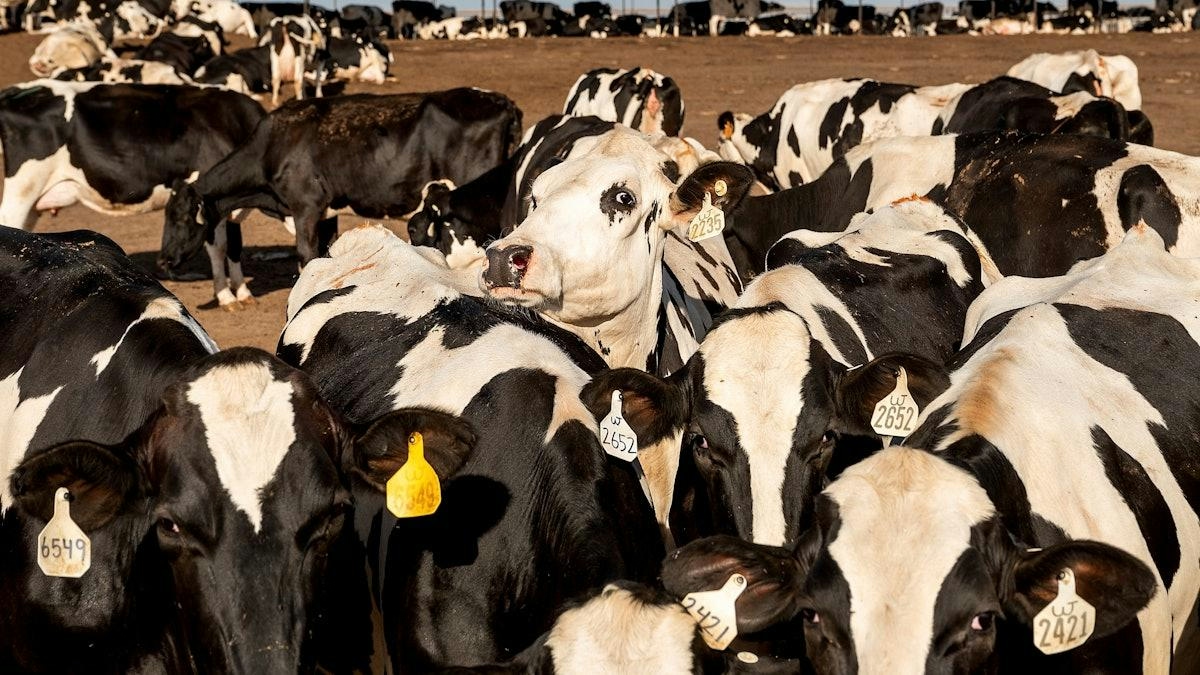
US Reactor Converts Cow Manure into Jet Fuel at Reduced Cost
US Reactor Converts Cow Manure into Jet Fuel at Reduced Cost
Innovative Technology Transforms Agricultural Waste
Circularity Fuels has developed a groundbreaking reactor that converts cow manure into jet fuel at a fraction of the traditional cost, potentially revolutionizing the economics of sustainable aviation fuel (SAF). This new system operates at just one one-hundredth of the capital cost associated with conventional technologies, making on-site fuel production feasible for individual farms. Such a development could significantly alter the landscape of renewable fuel production by decentralizing the process and empowering farmers to become direct contributors to the aviation fuel supply chain.
Untapped Potential in Livestock Waste
In the United States alone, over 20,000 large livestock farms produce nearly a trillion pounds of manure annually. Despite this vast quantity, less than 6% of the biogas generated from this waste is currently captured and utilized. Dr. Stephen Beaton, CEO and Founder of Circularity Fuels, emphasized the opportunity this represents: “Farmers in the U.S. and around the world are sitting on an untapped goldmine. We’re giving them the ability to turn waste into a profitable product that airlines desperately need.” By harnessing this resource, the technology could not only provide a new revenue stream for farmers but also contribute to the growing demand for sustainable aviation fuels.
Challenges and Market Implications
Sustainable aviation fuel has traditionally been produced in large, centralized facilities, often hindered by high capital costs and logistical complexities. The compact design and reduced capital requirements of Circularity Fuels’ reactor could enable widespread adoption at the farm level, increasing the availability of renewable jet fuel and reducing the aviation industry’s dependence on fossil fuels. However, significant challenges remain before the technology can achieve broad market penetration. Scaling production to meet the aviation sector’s demands will require substantial investment and coordination. Additionally, compliance with environmental regulations and maintaining cost competitiveness amid alternative renewable energy sources are critical factors that must be addressed.
The market’s growing interest in sustainable aviation fuels suggests that innovations like this could drive down prices and stimulate further technological advancements. Competitors may respond by enhancing their own waste-to-energy solutions or by developing alternative sustainable fuels, including hydrogen or synthetic fuels derived from plastic waste. If these obstacles are successfully navigated, the technology could unlock the vast potential of agricultural waste, transforming a persistent environmental challenge into a valuable asset for the clean energy transition.

Etihad Airways Suspends Airbus A380 Flights on Key Route

Aditya Birla Group Seeks Approval for Aircraft Leasing in GIFT City

Qatar Airways Highlights Innovation and Connectivity at Arabian Travel Market 2026

Hong Kong's Five-Year Plan Includes Andrew Fan's Aircraft Parts Processing Hub Proposal

ACIA Aero Leasing Delivers ATR72-600 to Air Nostrum

RTX Appoints Jill Albertelli as Head of Pratt & Whitney

TAT Technologies Joins Beyond Aero Hydrogen Aircraft Program

AURAK Study Highlights Barriers to Air Taxi Adoption in Emerging Economies

Xiamen Air Selects Altitude for 787 Maintenance at Heathrow

Etihad and Swissport Extend Global Partnership
