
AIによるインサイトを行動へとつなげる

現在のトレンド
Categories
Vertical Aerospace Conducts Piloted Electric Air Taxi Transition Flight
Vertical Aerospace Completes First Piloted Electric Air Taxi Transition Flight
Vertical Aerospace has reached a significant milestone in the development of its electric air taxi by successfully conducting its first piloted “transition” flight on April 2 at Cotswold Airport in southwest England. Test pilot Paul Stone skillfully managed the full-scale demonstrator as it took off vertically, transitioned seamlessly into forward, wingborne flight, and landed conventionally on a runway. This flight demonstrated the aircraft’s critical capability to shift from vertical to forward flight, a key step toward achieving commercial viability.
The company announced the accomplishment on April 6, describing it as “the most significant technical milestone in Vertical’s 10-year history” and marking the completion of the first half of a “two-way” transition sequence. The flight was conducted under the supervision of the UK Civil Aviation Authority (CAA), representing a first for a piloted, full-scale electric vertical takeoff and landing (eVTOL) aircraft of this class in the United Kingdom.
Industry Context and Competitive Landscape
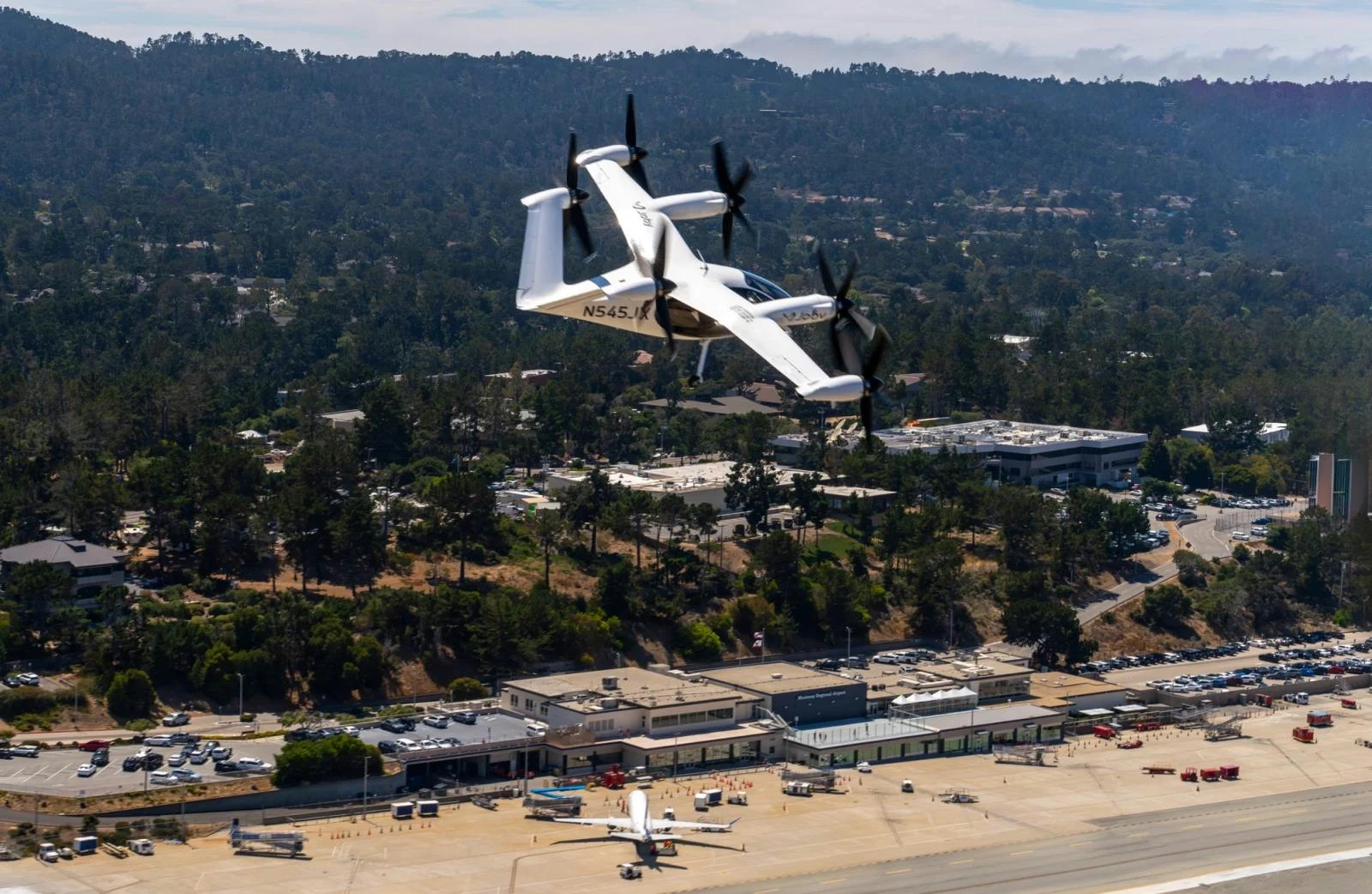
Vertical Aerospace’s progress comes amid intensifying competition within the eVTOL sector. While competitors such as Joby Aviation and Beta Technologies have also completed piloted transition flights, other developers including Archer Aviation, Eve Air Mobility, and Wisk Aero have yet to publicly demonstrate similar achievements with full-scale, piloted prototypes. The race to secure regulatory certifications and attract sufficient funding remains fierce, as companies compete for a foothold in the emerging electric air taxi market.
The successful transition flight positions Vertical Aerospace on course to obtain certification for its production aircraft, known as Valo, by 2028. The company intends to pursue initial certifications from both the UK’s CAA and Europe’s European Union Aviation Safety Agency (EASA). Despite this progress, Vertical faces considerable challenges, including navigating complex regulatory frameworks, achieving market acceptance, and responding to competitive pressures. Notably, Eve Air Mobility has advanced its own flight testing program, while Archer Aviation recently filed a counterclaim against Joby Aviation, highlighting the high-stakes environment in which these companies operate.
Vertical’s immediate objective is to complete a “two-way transition” flight, which involves taking off vertically, transitioning to forward flight, and then returning to hover for landing. The company emphasized that this flight demonstrated the aircraft’s ability to perform one of aviation’s most complex maneuvers: transferring lift from propellers to wings under real-world conditions at full scale.
Financial Position and Market Outlook
Financial stability remains a critical concern for Vertical Aerospace. As of late March, the company reported $58 million in cash and equivalents, sufficient to fund operations through the middle of the year. However, its outlook improved following a $50 million capital raise through a new share issue on March 30, with plans to secure an additional $30 million. Furthermore, Vertical disclosed a new financing agreement in principle that could provide up to $800 million in long-term funding.
Market reactions to Vertical’s progress have been mixed, with investors closely monitoring the company’s ability to achieve further technical milestones and secure regulatory approval. Meanwhile, competitors are expected to intensify their efforts to obtain certifications and expand their presence in the rapidly evolving electric air taxi sector.

Etihad Airways Suspends Airbus A380 Flights on Key Route

Aditya Birla Group Seeks Approval for Aircraft Leasing in GIFT City

Qatar Airways Highlights Innovation and Connectivity at Arabian Travel Market 2026

Hong Kong's Five-Year Plan Includes Andrew Fan's Aircraft Parts Processing Hub Proposal

ACIA Aero Leasing Delivers ATR72-600 to Air Nostrum

RTX Appoints Jill Albertelli as Head of Pratt & Whitney

TAT Technologies Joins Beyond Aero Hydrogen Aircraft Program

AURAK Study Highlights Barriers to Air Taxi Adoption in Emerging Economies

Xiamen Air Selects Altitude for 787 Maintenance at Heathrow

Etihad and Swissport Extend Global Partnership
