
Orchestrate AI insights into action

Trending
Categories
787 Instability Delays Program Ramp-Up and Affects Boeing’s Commercial Deliveries
787 Instability Delays Program Ramp-Up and Affects Boeing’s Commercial Deliveries
Production Challenges and Supply Chain Bottlenecks
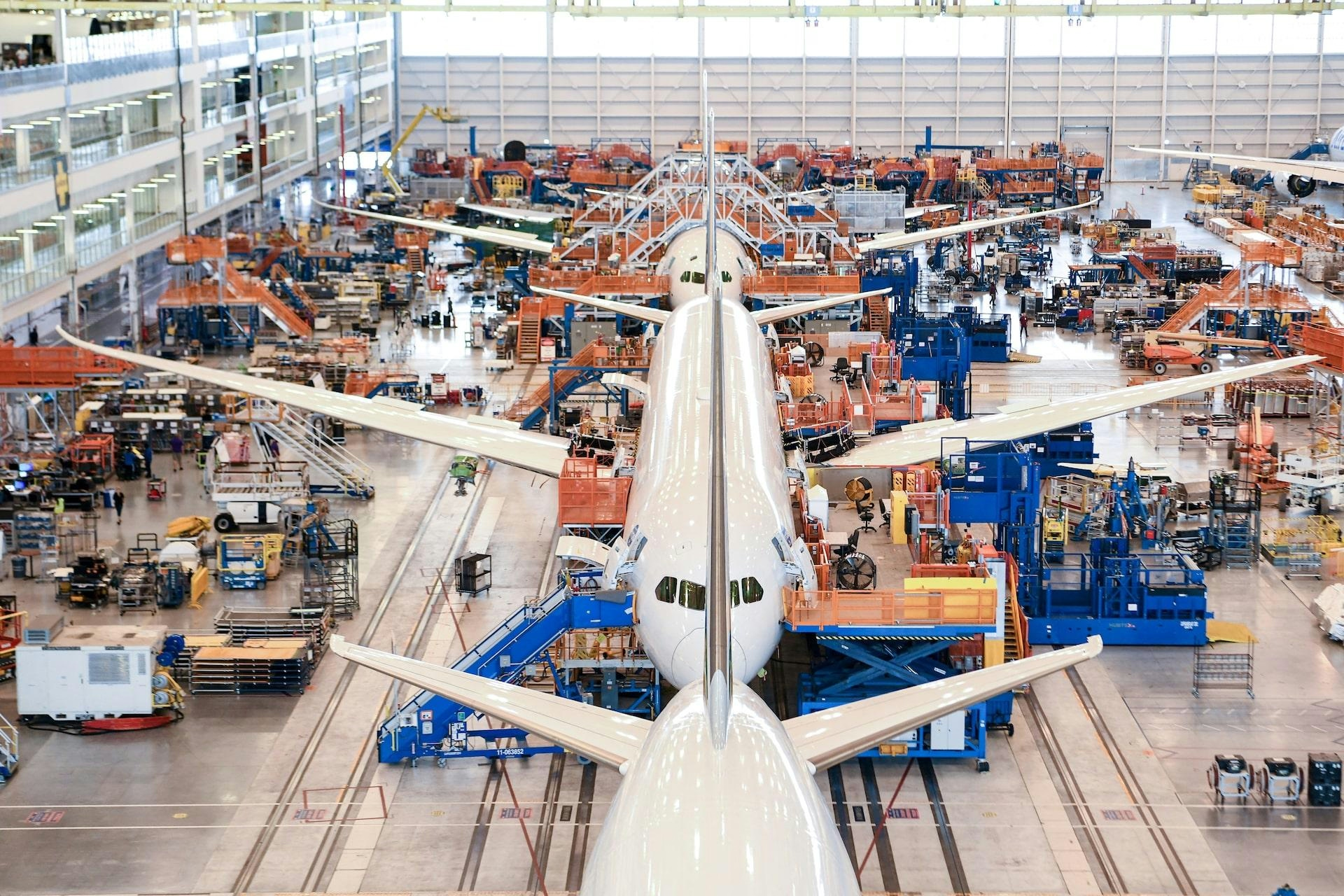
Boeing’s 787 Dreamliner program, once praised for its recovery and stabilization at a production rate of eight aircraft per month, is encountering renewed difficulties as supply chain disruptions continue to affect both manufacturing and delivery schedules. After a difficult start to 2025, the program gained momentum in the latter half of the year. However, production rates began to decline below the targeted level in early 2026, primarily due to delays in the GEnx engine program. Despite these engine-related setbacks, Boeing managed to maintain delivery targets by utilizing its stored inventory.
As engine supply constraints have started to ease and production rates have approached the eight-per-month goal once again, a new challenge has arisen. Delivery rates are now falling behind production because of persistent shortages in premium business class seating. Unlike previous years, Boeing no longer has sufficient inventory to compensate for this bottleneck, resulting in a growing disconnect between assembly line output and actual deliveries. This ongoing issue is expected to continue, contributing to instability within the 787 program.
Implications for Boeing and Market Response
The 787 Dreamliner remains a critical component of Boeing’s commercial aircraft portfolio, projected to be the company’s second-most delivered model in 2026, representing 15.4% of total annual commercial deliveries, just behind the 737 MAX. Consequently, the performance of the 787 program is central to Boeing’s ability to meet its corporate objectives and revenue forecasts for the commercial airplanes segment.
Market reactions to the program’s instability have been mixed. Some investors have voiced concerns regarding the potential impact on Boeing’s revenue and the company’s capacity to resolve these issues promptly, a sentiment reflected in recent stock price fluctuations. Conversely, other investors maintain a positive outlook on the long-term prospects of the 787 program, highlighting the easing of engine delays and Boeing’s ongoing efforts to address supply chain challenges.
Competitors have seized upon Boeing’s difficulties by intensifying their focus on their own product lines, seeking to capture market share amid the Dreamliner’s delays. Meanwhile, the persistent supply chain headwinds may discourage suppliers from expanding capacity, potentially hindering Boeing’s ambitions to stabilize production at ten aircraft per month.
As Boeing continues to tackle these bottlenecks, the health of the 787 program will remain a vital indicator of the company’s broader commercial performance and its ability to fulfill both investor expectations and customer commitments.

Etihad Airways Suspends Airbus A380 Flights on Key Route

Aditya Birla Group Seeks Approval for Aircraft Leasing in GIFT City

Qatar Airways Highlights Innovation and Connectivity at Arabian Travel Market 2026

Hong Kong's Five-Year Plan Includes Andrew Fan's Aircraft Parts Processing Hub Proposal

ACIA Aero Leasing Delivers ATR72-600 to Air Nostrum

RTX Appoints Jill Albertelli as Head of Pratt & Whitney

TAT Technologies Joins Beyond Aero Hydrogen Aircraft Program

AURAK Study Highlights Barriers to Air Taxi Adoption in Emerging Economies

Xiamen Air Selects Altitude for 787 Maintenance at Heathrow

Etihad and Swissport Extend Global Partnership
