
Orchestrate AI insights into action

Trending
Categories
A Day in the Life of Alfred, the Robot That Builds Aircraft Engines
A Day in the Life of Alfred, the Robot That Builds Aircraft Engines
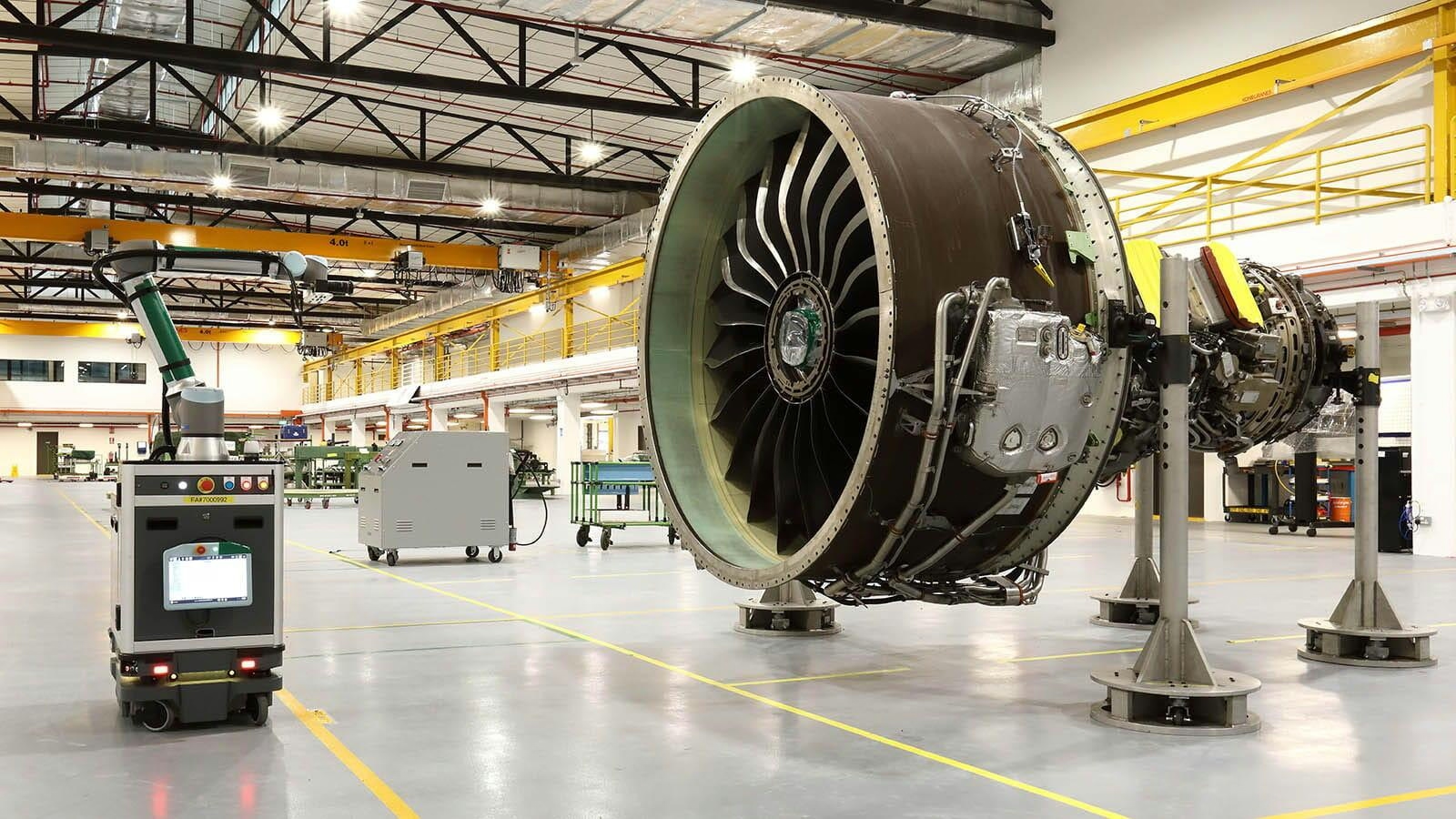
Inside a 26-by-20-foot enclosure at Pratt & Whitney, an RTX business, a robot named Alfred methodically prepares aircraft engine rotors. Alfred’s daily routine is marked by precision and repetition: it places rotors into an industrial oven, waits for them to cool, and then transfers them to a hydraulic stacking system for alignment. This task demands unwavering accuracy and consistency, qualities that Alfred is engineered to deliver. “Alfred doesn’t mind the pressure. He’s built for it,” explains Gilbert Sim, director of Aftermarket Operations, CORE and Technology Transformation at Pratt & Whitney.
Technological Integration and Industry Challenges
Alfred’s deployment on the factory floor exemplifies broader transformations and challenges within the manufacturing sector. As robots like Alfred become increasingly prevalent, concerns about their impact on the labor market have intensified. Traditional labor unions, recalling skepticism surrounding Hyundai’s use of Atlas robots, express apprehension about potential job displacement and the evolving role of human workers in automated environments.
The integration of advanced robotics into established manufacturing processes also presents significant technical and operational challenges. Companies must ensure that these new automation systems function seamlessly alongside existing workflows while upholding the stringent safety standards essential to aerospace manufacturing. In response, regulatory bodies have introduced rigorous safety and operational guidelines designed to protect both workers and the integrity of production lines.
Industry Response and Market Dynamics
Market reactions to automation remain mixed. While some industry leaders view robotics as a means to enhance efficiency and maintain competitiveness, others advocate for caution, emphasizing the importance of workforce retraining and sustained human oversight in critical operations. Competitors are simultaneously accelerating their investments in robotics, intensifying the industry’s focus on balancing innovation with responsibility.
Recent data from the sector highlights this delicate balance. Manufacturers are channeling resources not only into automation technologies but also into programs aimed at retraining employees, seeking to combine human expertise with robotic precision. As Alfred quietly performs its tasks, it embodies both the promise and the complexities of the next chapter in aircraft engine manufacturing—where technological advancement and human collaboration must progress hand in hand.

Etihad Airways Suspends Airbus A380 Flights on Key Route

Aditya Birla Group Seeks Approval for Aircraft Leasing in GIFT City

Qatar Airways Highlights Innovation and Connectivity at Arabian Travel Market 2026

Hong Kong's Five-Year Plan Includes Andrew Fan's Aircraft Parts Processing Hub Proposal

ACIA Aero Leasing Delivers ATR72-600 to Air Nostrum

RTX Appoints Jill Albertelli as Head of Pratt & Whitney

TAT Technologies Joins Beyond Aero Hydrogen Aircraft Program

AURAK Study Highlights Barriers to Air Taxi Adoption in Emerging Economies

Xiamen Air Selects Altitude for 787 Maintenance at Heathrow

Etihad and Swissport Extend Global Partnership
